Vietnamese crab exporter

Topic

Advertisement
TOPIC

Sensex

The Sensex (Stock Exchange Sensitive Index) is the benchmark stock index of the Bombay Stock Exchange (BSE) in India. It represents the 30 largest and most actively traded companies listed on the BSE, spanning diverse sectors such as finance, IT, energy, and consumer goods. These companies are selected based on their market capitalization, liquidity, and sector representation, making the Sensex a key indicator of India's stock market performance.

Established in 1986, the Sensex serves as a barometer of investor sentiment and economic conditions in India. It is calculated using the free-float market capitalization method, which adjusts the weight of a stock based on the proportion of shares available for public trading.

Movements in the Sensex are influenced by factors like corporate earnings, government policies, global market trends, inflation, interest rates, and geopolitical events. A rising Sensex signals investor confidence and economic growth, whereas a decline may indicate market concerns.

  • ALL
  • STORIES
  • VIDEOS

STORIES

Load More

VIDEOS

Sensex & Nifty Plunge to Six-Month Lows, IOC Secures Discount Iraqi Crude & GLP-1 Race Heats Up

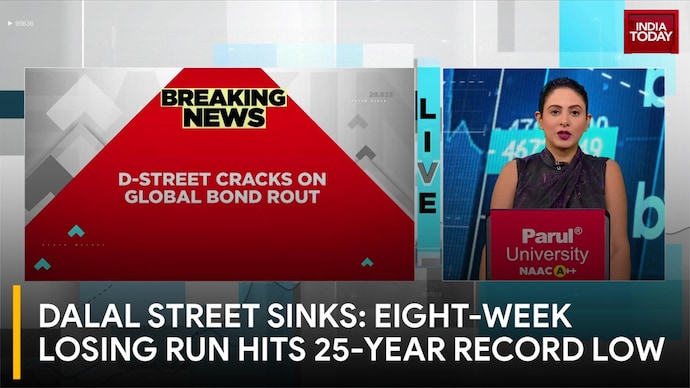
Indian benchmark equity indices registered an eighth consecutive week of losses, marking their longest weekly losing streak in 25 years. The BSE Sensex settled near 71,910 while the NSE Nifty traded around 22,420, erasing six lakh crore rupees in investor wealth and turning financial year returns negative. Market weakness was driven by elevated global bond yields, foreign portfolio outflows, and geopolitical conflict in West Asia. Sectoral declines affected auto, FMCG, metals, and infrastructure, while information technology and private banking stocks showed relative stability. In the energy sector, Indian Oil Corporation procured two million barrels of Iraqi Basrah medium crude at a 32-dollar per barrel discount amid transit disruptions through the Strait of Hormuz. Additionally, global pharmaceutical firms Novo Nordisk and Eli Lilly are progressing regulatory clearances for oral GLP-1 weight-loss medications in India by 2027, while airline operator KLM highlighted India's scope to manufacture sustainable aviation fuel.

Markets Fall Near 22,600, Maharashtra Halts Farm Loan Recovery, Rabi MSP Hiked

On the Business Today Show, anchor Sakshi Batra tracks closing action across Dalal Street as the Nifty slips 95 points to end near 22,620 and Sensex trades weak under pressure from elevated crude oil prices and global bond yield spikes. Market expert Pankaj Pandey analyses persistent equity market volatility, rate hike expectations from the Reserve Bank of India, credit quality concerns in the microfinance space, and emerging opportunities in railway and premium consumption stocks. The broadcast reviews Union Finance Minister Nirmala Sitharaman's scheduled meeting with traders over the proposed 0.4% UPI merchant discount rate fee. Meanwhile, the Maharashtra government declares 265 talukas drought-hit, directing banks and financial institutions not to harass farmers for crop loan recoveries while announcing a 10% urban water cut. Additionally, the Union Cabinet approves a 1.86 lakh crore rupee outlay for rabi minimum support price increases, including hikes for wheat and safflower, alongside the PM Dhara renewable scheme approval.

Markets Open Flat, Tata Boardroom Tussle Deepens and Donald Trump Renames AI

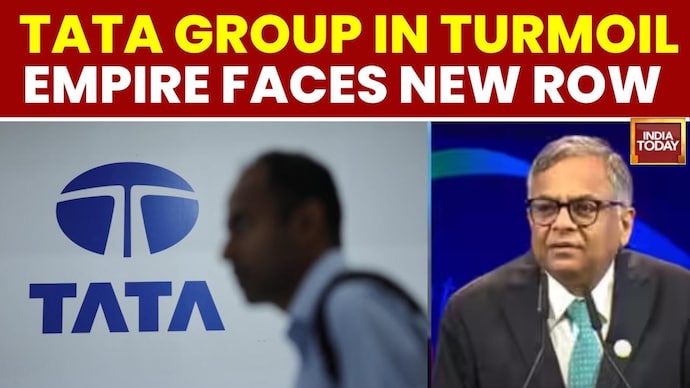
Indian equity markets opened flat amid heightened volatility, with the Nifty fluctuating near 22,700 levels. Broader market indices and select sectors such as PSU banks, IT, and oil and gas registered modest gains, while metal and pharma stocks witnessed profit-taking. Meanwhile, the internal rift within the Tata Group intensified after trustee Venu Srinivasan reportedly approached the Maharashtra Charity Commissioner seeking an immediate probe into alleged governance lapses at Sir Dorabji Tata Trust and Sir Ratan Tata Trust. At the same time, Noel Tata voiced opposition against listing Tata Sons, citing potential constraints on supporting group companies during financial difficulties. Analysts advised caution, noting that elevated US bond yields and crude oil prices continue to drive foreign capital outflows from emerging markets. Additionally, global headlines featured former US President Donald Trump meeting with technology leaders, where he proposed terming artificial intelligence as super intelligence alongside discussing self-regulation frameworks.

Stock Markets Bleed, SC Flags Drug Overpricing, Govt Eyes New Air Routes

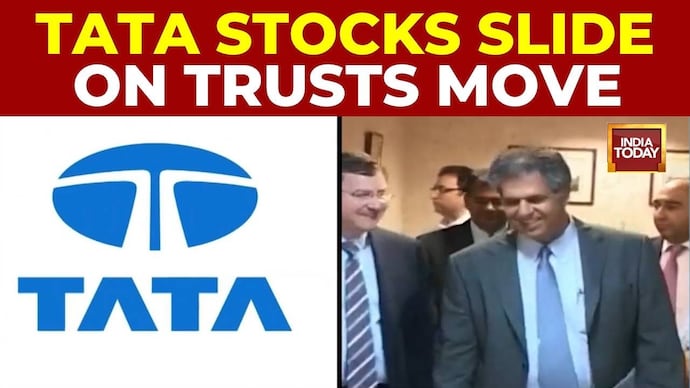
The Business Today Show reviews volatile market activity as benchmark indices Sensex and Nifty rebounded from intraday lows following a severe sell-off. Key corporate developments, including declines in Tata Group shares following merger proposals and crude oil supply concerns, impacted market sentiment. The Supreme Court questioned excessive pricing of essential medicines at corporate hospitals, noting huge markups between retailer prices and bills presented to patients, seeking a uniform sixteen percent cap. Meanwhile, India explores alternative Westbound flight paths involving China and Bhutan to circumvent Pakistan's airspace ban. ONGC Videsh prepares to resume operations in Venezuela's San Cristobal field, subject to gazette notification. Market analysts Sharad Bassi and Dinshaw Irani provided perspectives on market valuations, crude movements, and investment strategies ahead of the festive season.

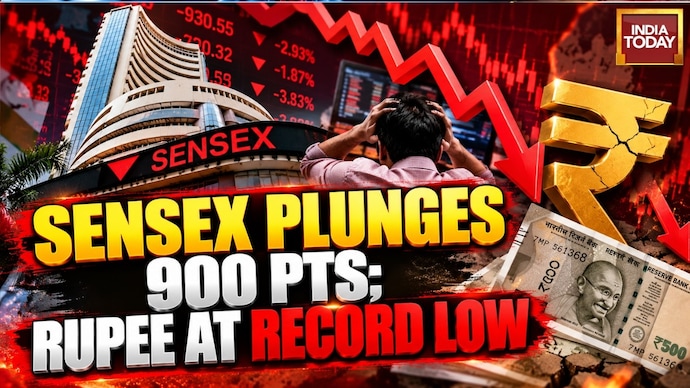
Sensex Tumbles 900 Pts, Brent Crude Hits $107 & Rupee Sinks: Market Crash Triggers

A severe sell-off triggered a manic trading session as the Sensex plunged over 900 points and the Nifty slipped below 22,850, wiping out nearly six lakh crore rupees in market value. The crash was driven by escalating US-Iran tensions following the US rejection of a ceasefire proposal, alongside Brent crude surging towards 107 dollars per barrel. Surging US ten-year treasury yields crossing 5.2 percent and the rupee sliding to 95.89 against the dollar added further pressure. Across the board, all 30 Sensex stocks and 48 Nifty stocks traded in the red, with the India VIX surging over 14 percent.

Markets Slip Below 23,000 as Rupee Hits 95.88; Big Suspense over Tata Sons AGM

Indian equity markets opened the week on a sharp negative note, with the Nifty breaching the crucial 23,000 mark and tumbling over 225 points amid fears of a potential Reserve Bank of India repo rate hike, rising crude prices, and sustained foreign institutional investor selling. The rupee weakened to 95.88 per US dollar, while MCX gold and silver also logged notable declines. Amid broad market weakness, banking and financial shares suffered significant cuts, while India VIX rallied over 11 percent, underscoring elevated market volatility. Separately, attention remained focused on Tata Sons as uncertainty continues regarding the schedule of its annual general meeting alongside decisions regarding the reappointment of N. Chandrasekaran and a potential listing. Additionally, scrutiny over the US H-1B visa program under the Trump administration presents emerging challenges for the domestic information technology sector.

Markets Slide Amid Global Cues; Insurance Stocks Plunge On Draft Norms

Indian benchmark indices opened lower, with the Nifty declining around two hundred points and slipping towards 23,200 levels amid rising crude oil prices and spiking US Treasury and domestic bond yields. Financial and banking counters led the losses across sectors, while insurance stocks witnessed severe selling following draft consultation proposals by the insurance regulator to tighten commission caps from financial year 2028. PB Fintech, Turtlemint, Max Financial, and ICICI Prudential Life recorded sharp cuts in early trade. Meanwhile, primary market activity remained in focus with anticipation surrounding the National Stock Exchange listing, even as recent entrants like Hero Motors and SS Retail traded higher. In another development, the Food Safety and Standards Authority of India initiated penal action against major quick-commerce and delivery platforms, including Amazon, Swiggy Instamart, BigBasket, Flipkart India, and Zepto, citing non-compliance, misleading claims, and listings of prohibited food articles.

India Growth Outlook Raised by Global Agencies, Market Rallies, No Fuel Hike on Cards

On the Business Today Show, host Sakshi Batra tracks Dalal Street closing action alongside key corporate developments. Top global rating agencies, including S&P, Fitch, ADB, and Moody's, have raised India's FY27 economic growth projections to around 7%, triggering a rally across domestic equities. Sensex and Nifty closed firmly higher, led by gains in metals, real estate, FMCG, and PSU banking stocks. Market expert Abhishek Basumallick discusses how global rating revisions impact sentiment, the influence of elevated crude oil prices hovering near 100 dollars a barrel, and investment opportunities in the metals and consumption sectors. Additionally, the broadcast reveals that no retail petrol or diesel price hikes are planned by the Indian government despite rising crude volatility. The report also highlights corporate updates, including Airtel Money's planned London Stock Exchange listing, Microsoft job cuts across Xbox teams, and significant single-day moves in shares of Whirlpool India and Optiemus Infracom ahead of the upcoming National Stock Exchange listing.

Markets Open Flat, S&P Ups GDP Target & SC Flags Medicine Pricing

Indian equity markets opened on a steady note above 23,400 levels, supported by gains in financial and banking stocks alongside broad-based sector participation. S&P raised India's FY27 GDP growth forecast by 40 basis points to 7 per cent, citing robust industrial activity, strong exports, and government spending, while projecting a repo rate hike by the Reserve Bank of India. Meanwhile, the Supreme Court raised serious concerns over the significant gap between the price to retailer (PTR) and the maximum retail price (MRP) of essential and life-saving medicines, questioning why more drugs are not covered under the drug price control order. Pharma companies, represented in court, cited research and development alongside marketing expenses for the variance in pricing. Additionally, global geopolitical developments remained in focus as Donald Trump highlighted sweeping tariff authorities and expressed support for the India-Middle East-Europe Economic Corridor.

Sitharaman on Family Disputes, Airfare Surge Amid ATF Hike & TRAI Mandate

In this edition of the Business Today Show, anchor Sakshi Batra details major corporate, financial, and regulatory developments. Union Finance Minister Nirmala Sitharaman emphasised the importance of corporate governance and separating ownership from management in family-run businesses, urging companies to engage constructively with regulators rather than resorting immediately to litigation. In the aviation sector, Civil Aviation Minister Ram Mohan Naidu highlighted how rising Aviation Turbine Fuel costs amid the West Asia conflict are pushing up festive season airfares, reiterating the government's push for greater airline competition. Telecom regulator TRAI introduced new rules mandating separate voice and SMS-only packages to benefit over 20 crore non-data users across India. Market expert Avinash Gurakshakar shared insights on equity market volatility, mid-cap strategies, IT stocks, and aviation market dynamics. Additionally, Uttar Pradesh Principal Secretary Alok Kumar outlined progress on the 3,700 crore rupees India Chip semiconductor OSAT manufacturing facility.

Markets Rally, Chemists Oppose CCTV Mandate, Starbucks Sets Up GCC in Chennai

On The Business Today Show, anchor Sakshi Batra details closing market developments as the Nifty and Sensex rebound following six consecutive weeks of losses, with the Nifty closing above 23,400 points supported by gains in FMCG, real estate, and pharmaceutical stocks. ICICI Direct Head of Research Pankaj Pandey provides analysis on crude oil pricing trends, banking sector valuations, and pharmaceutical Schedule M compliance. The report reviews India's 15% export growth over the initial five months of the fiscal year amid geopolitical tensions, pending free trade agreements with the UK and EU, and potential adjustments to Russian crude oil imports under US sanctions. Additionally, the broadcast highlights Starbucks signing an MoU to open its first overseas Global Capability Centre in Chennai to create 800 technology jobs, opposition by the All India Organisation of Chemists and Druggists to mandatory pharmacy CCTV surveillance, and primary market forecasts estimating 1.5 trillion dollars in IPO market capitalization additions.

Markets Fall Amid Crude Surge, NPCI Holds UPI Fee Meet, RBI Files Caveat On Tata Sons Listing

Indian equity benchmarks reversed early gains to trade sharply lower as elevated crude oil prices and rising global bond yields weighed on market sentiment. The Nifty slipped below the 23,200 mark while the Sensex registered steep losses, with real estate and metal stocks leading the downturn even as select information technology shares bucked the trend. Meanwhile, the National Payments Corporation of India held discussions regarding Merchant Discount Rate charges on merchant UPI transactions above 2,000 rupees following a Finance Ministry notification. In the corporate domain, the Reserve Bank of India filed a caveat in the Bombay High Court ahead of an anticipated appeal by Tata Sons seeking exemption from mandatory listing norms, triggering a rally in several Tata Group shares including Tata Chemicals and Tata Investment Corporation. The bulletin also examined market trends, crude oil volatility, and the upcoming National Stock Exchange initial public offering.

Markets Slide 200 Pts As Crude Surges, NSE Sets IPO Price Band, Metals Down

Indian benchmark indices opened lower, with Nifty falling around one per cent and metals and financials facing sharp selling pressure amid rising crude oil prices, surging global bond yields, and currency depreciation. The market decline reflects broad-based global weakness, higher domestic market volatility, and continued foreign institutional investor pullbacks. Alongside opening market movements, details emerged on the National Stock Exchange Initial Public Offering, with the price band set at seventeen hundred to seventeen eighty-five rupees. The offer for sale size was scaled down to 12.64 crore shares after major institutional shareholders, including State Bank of India and Bank of Baroda, reduced their proposed offloading. In corporate updates, HDFC Bank won all seven Bahrain cases concerning Credit Suisse Additional Tier 1 bond mis-selling claims after the court cited insufficient evidence. Meanwhile, Coforge shares dropped following governance clarifications regarding board evaluation reports.

Nifty Slips Below 23,500, Adani Airports Stake Sale, JSW-VW Joint Venture

Indian equity markets opened lower with the Nifty breaching the crucial 23,500 support mark amid rising crude oil prices nearing 100 dollars a barrel. The domestic currency opened at 94.87 against the US dollar, registering a five paise downtick. Major IT stocks including Infosys, HCL Tech, Tech Mahindra, Wipro, and TCS emerged as top laggards, pulling the IT index down significantly. Meanwhile, Adani Airport Holdings announced plans to raise 9,825 crore rupees by selling a 5.5 per cent stake to global investors including BlackRock, Temasek, and Premji Invest, valuing the airport business at 1.78 lakh crore rupees. In the auto sector, JSW Group signed a non-binding pact with Skoda Auto Volkswagen Group for a proposed 51-49 joint venture. Additionally, the primary market witnessed a historic rush with six initial public offerings opening on a single day to raise around 4,300 crore rupees.

Markets Slip as Brent Crude Nears $100, Defence Stocks Surge on ₹1.1 Lakh Cr Nod, Primary Market Buzz

Indian benchmark equity indices extended their losses as elevated Brent crude oil prices approached nearly $100 per barrel, sparking fresh macroeconomic concerns and dragging the Indian rupee lower. The Sensex fell over 500 points towards 75,600, while the Nifty slipped below key support levels around 23,650, heavily impacted by banking, financial, and oil and gas stocks. In contrast, defence stocks rallied after the Defence Ministry approved procurement proposals worth over ₹1.1 lakh crore, with Data Patterns, BEL, HAL, and Paras Defence surging. The primary market also witnessed robust traction with twelve IPOs lined up for the week, alongside the listing pipeline of Arcil and other niche offerings. In other sectoral trends, copper and cable stocks buzzed following record commodity prices, whereas NBFCs expanded strategies in gold financing amid price volatility.

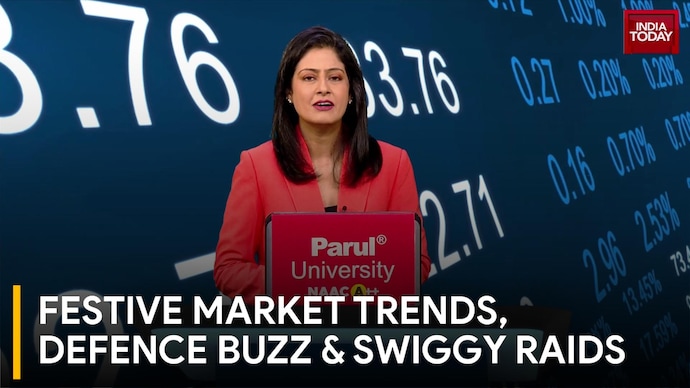
Festive Market Outlook, Defence PSU Stocks Buzz, Swiggy Instamart Bengaluru Raids

Indian equity markets opened on a cautious note as the Nifty index fell below the 23,700 mark during range-bound trading. Precious metals including gold and silver recorded gains due to global tensions, while Brent crude oil remained near 97 dollars per barrel. In corporate updates, Samsung India reduced its workforce by 80 to 100 executive positions following declines in smartphone sales and rising chip costs. Shiprocket narrowed its quarterly net loss to 13.7 crore rupees, reporting a revenue increase of over 33 percent year-on-year. Sector analyses showed input cost pressures and high base effects affecting growth in automobile and consumer durables, alongside order inflows for defence, aerospace, and shipbuilding companies. Metropolis Healthcare outlined a three-year strategy to expand its collection network to 7,500 centres and increase margins. Meanwhile, food safety officials in Bengaluru conducted surprise inspections at Swiggy Instamart and Lio Mart outlets in Lingarajapuram, temporarily seizing a facility after discovering expired food products on the premises.

Stock Markets Slip, JLR Cuts 4,000 UK Jobs, Pharma Gains On GLP-1 Weight Loss Drugs

Stock markets faced downward pressure as rising crude oil prices and simmering US-Iran tensions weighed on investor sentiment, dragging Nifty down to 23,779 amid steep declines in IT and metal shares. In corporate developments, Jaguar Land Rover announced 4,000 job cuts in the UK over two years to save 2.3 billion dollars amid tariff pressures and cyberattack impacts. Meanwhile, the domestic pharmaceutical sector witnessed robust momentum driven by weight loss and diabetes treatments, with Eli Lilly's Mounjaro recording over 500 percent sales growth and RPG Life Sciences preparing to launch its GLP-1 drug. Ashok Leyland highlighted strong growth in defense, with revenues tripling to over 1,200 crore rupees alongside a new production facility planned in Saudi Arabia. Market expert Abhishek Basumallik shared an optimistic outlook on the pharmaceutical and chemical sectors while advising caution regarding cyclical peaks in the automotive space and evaluating the surge of new public offerings.

Goldman Sachs Bullish On Rupee, Tata Motors Bids For Iveco & SC Hears Airfare Plea

The Indian rupee strengthened to 94.39 against the US dollar amid bullish commentary from Goldman Sachs, which projected the currency to outperform Asian peers due to Reserve Bank of India policy measures, reduced Russian oil imports, and improved trade discussions with the United States. Meanwhile, benchmark equity indices traded range-bound, opening flat around 23,888, with IT stocks facing downward pressure while broader market counters showed resilience. Tata Motors launched an all-cash voluntary offer worth 3.82 billion euros to acquire full ownership of Italian vehicle manufacturer Iveco Group through its Dutch arm TML CV Holdings. On retail data, August vehicle registrations grew 18% year-on-year, driven by robust non-tractor segments. Separately, the Supreme Court took up a petition demanding restrictions on unpredictable airfares and ancillary charges alongside the establishment of an independent aviation regulatory body, as the central government works on framed rules under the Bharatiya Vayuyan Vidheyak framework.

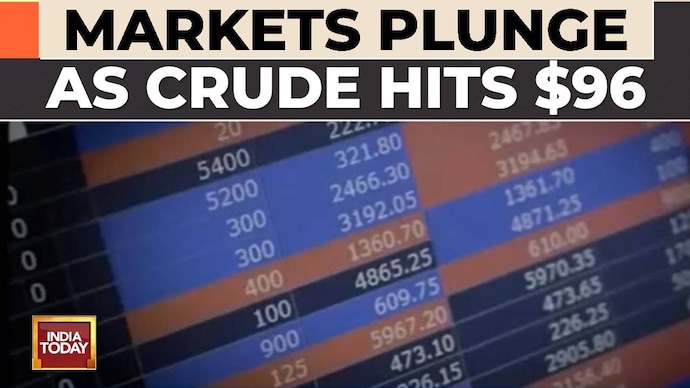
Markets Plunge Amid West Asia Tensions, Crude Price Surge & Key Stock Movements

Indian benchmark indices witnessed selling pressure as escalating US-Iran tensions and surging crude oil prices rattled global and domestic investor sentiment. Brent crude surged past 96 dollars a barrel, stoking concerns over fuel costs, rising inflation, and widening import bills. The Nifty slipped amid losses in IT and automobile stocks, while Coal India bucked the market trend on the back of strong demand and Mahanadi Coalfields' proposed IPO. Market expert G. Chokalingam analyzed key factors constraining secondary market liquidity, including FII and retail funds shifting to the primary IPO market and monsoon deficits. The report also covered auto industry challenges, including cybersecurity risks and export logistics issues discussed by Maruti Suzuki MD Hisashi Takeuchi, alongside global updates on India-Russia LNG talks, proposed US visa policy changes under the Trump administration, and LIC CEO R. Doraiswami's insights on Gen Z investment trends.

Sensex Down 700 Pts, Auto Exports Hit Amid Conflict, Gold & Silver Drop

Indian equity benchmark indices opened significantly lower as a broad-based market sell-off pushed the Sensex down over 700 points, while the Nifty fell below the 23,800 mark and Nifty Bank slipped under 57,000. Key sectors including banking, IT, metals, financial services, and automobiles faced severe downward pressure, impacting major stocks such as Infosys, TCS, Wipro, Shriram Finance, and Mahindra & Mahindra. Brent crude oil prices surged toward 97 dollars per barrel, triggering selling pressure in crude-sensitive counters like InterGlobe Aviation, while Coal India and ONGC traded higher. Rising US bond yields, global debt market declines, and heightened West Asia geopolitical tensions fueled investor anxiety. Additionally, automobile exports for Maruti Suzuki and Hyundai Motor India encountered severe disruptions due to international shipping container shortages and cargo vessel scarcities. Meanwhile, multi-year high bond yields and rate hike expectations pressed precious metals lower, with MCX gold declining to 1.5 lakh rupees per 10 grams and MCX silver dropping to 2.26 lakh rupees per kilogram.