Vietnamese crab exporter

Topic

Advertisement
TOPIC

Share Market

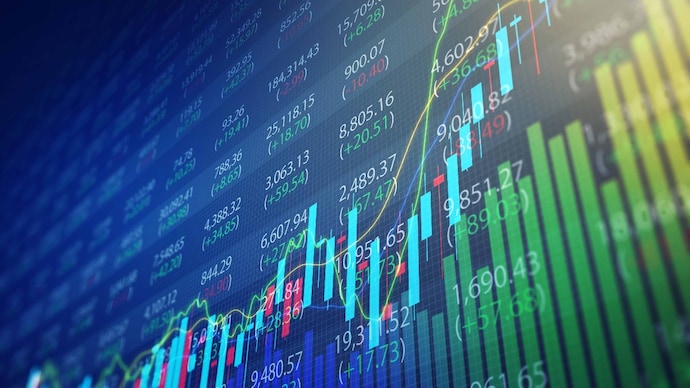
The share market, also known as the stock market, is a platform where shares of publicly listed companies are bought and sold. It plays a crucial role in the economy by enabling businesses to raise capital and giving investors an opportunity to participate in a company’s growth. Shares represent ownership in a company, and their prices fluctuate based on performance, market conditions, and investor sentiment.

For investors, the share market offers opportunities for wealth creation through capital appreciation and dividends, but it also involves risk due to market volatility. Factors such as economic indicators, corporate earnings, global events, and government policies influence market movements. Understanding how the share market works is essential for making informed investment decisions, managing risk, and building long-term financial stability.

  • ALL
  • STORIES
  • VIDEOS

STORIES

Why are Kotak Mahindra Bank shares rising today?

Kotak Mahindra Bank shares rose on Thursday after the lender named Anup Kumar Saha as CEO and managing director. The move brought clarity on the bank's leadership transition ahead of Ashok Vaswani's exit on December 31.

NSE shares jump 5% after listing at Rs 1,800

NSE listed at Rs 1,800 on the BSE and climbed to Rs 1,878 in debut trade. The listing followed a 5.71-times-subscribed IPO and put investor focus on valuation and trading-driven earnings.

Load More

VIDEOS

Sensex & Nifty Plunge to Six-Month Lows, IOC Secures Discount Iraqi Crude & GLP-1 Race Heats Up

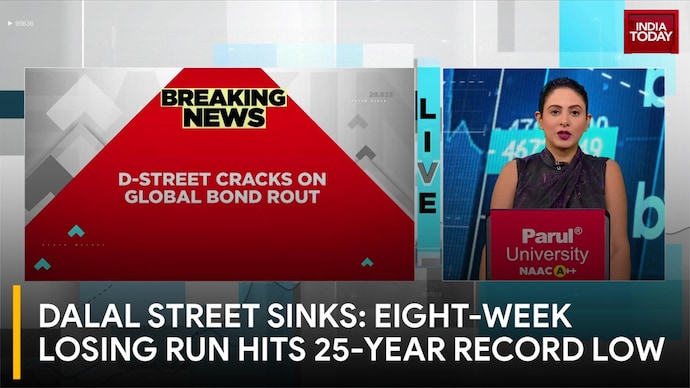
Indian benchmark equity indices registered an eighth consecutive week of losses, marking their longest weekly losing streak in 25 years. The BSE Sensex settled near 71,910 while the NSE Nifty traded around 22,420, erasing six lakh crore rupees in investor wealth and turning financial year returns negative. Market weakness was driven by elevated global bond yields, foreign portfolio outflows, and geopolitical conflict in West Asia. Sectoral declines affected auto, FMCG, metals, and infrastructure, while information technology and private banking stocks showed relative stability. In the energy sector, Indian Oil Corporation procured two million barrels of Iraqi Basrah medium crude at a 32-dollar per barrel discount amid transit disruptions through the Strait of Hormuz. Additionally, global pharmaceutical firms Novo Nordisk and Eli Lilly are progressing regulatory clearances for oral GLP-1 weight-loss medications in India by 2027, while airline operator KLM highlighted India's scope to manufacture sustainable aviation fuel.

Markets Open Flat, Tata Boardroom Tussle Deepens and Donald Trump Renames AI

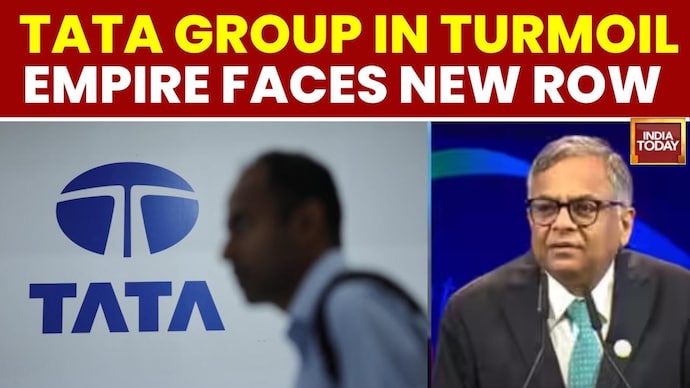
Indian equity markets opened flat amid heightened volatility, with the Nifty fluctuating near 22,700 levels. Broader market indices and select sectors such as PSU banks, IT, and oil and gas registered modest gains, while metal and pharma stocks witnessed profit-taking. Meanwhile, the internal rift within the Tata Group intensified after trustee Venu Srinivasan reportedly approached the Maharashtra Charity Commissioner seeking an immediate probe into alleged governance lapses at Sir Dorabji Tata Trust and Sir Ratan Tata Trust. At the same time, Noel Tata voiced opposition against listing Tata Sons, citing potential constraints on supporting group companies during financial difficulties. Analysts advised caution, noting that elevated US bond yields and crude oil prices continue to drive foreign capital outflows from emerging markets. Additionally, global headlines featured former US President Donald Trump meeting with technology leaders, where he proposed terming artificial intelligence as super intelligence alongside discussing self-regulation frameworks.

Markets Slide Amid Global Cues; Insurance Stocks Plunge On Draft Norms

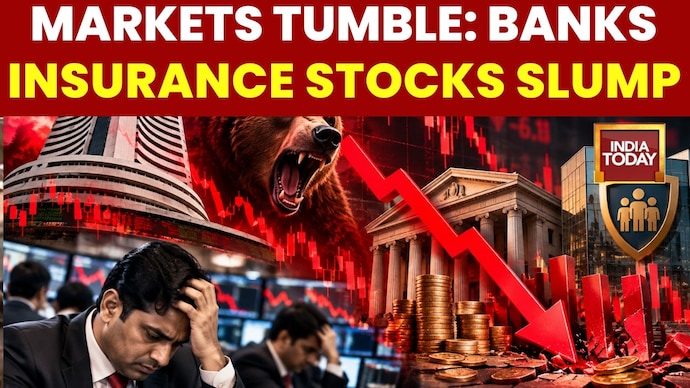
Indian benchmark indices opened lower, with the Nifty declining around two hundred points and slipping towards 23,200 levels amid rising crude oil prices and spiking US Treasury and domestic bond yields. Financial and banking counters led the losses across sectors, while insurance stocks witnessed severe selling following draft consultation proposals by the insurance regulator to tighten commission caps from financial year 2028. PB Fintech, Turtlemint, Max Financial, and ICICI Prudential Life recorded sharp cuts in early trade. Meanwhile, primary market activity remained in focus with anticipation surrounding the National Stock Exchange listing, even as recent entrants like Hero Motors and SS Retail traded higher. In another development, the Food Safety and Standards Authority of India initiated penal action against major quick-commerce and delivery platforms, including Amazon, Swiggy Instamart, BigBasket, Flipkart India, and Zepto, citing non-compliance, misleading claims, and listings of prohibited food articles.

Sitharaman on Family Disputes, Airfare Surge Amid ATF Hike & TRAI Mandate

In this edition of the Business Today Show, anchor Sakshi Batra details major corporate, financial, and regulatory developments. Union Finance Minister Nirmala Sitharaman emphasised the importance of corporate governance and separating ownership from management in family-run businesses, urging companies to engage constructively with regulators rather than resorting immediately to litigation. In the aviation sector, Civil Aviation Minister Ram Mohan Naidu highlighted how rising Aviation Turbine Fuel costs amid the West Asia conflict are pushing up festive season airfares, reiterating the government's push for greater airline competition. Telecom regulator TRAI introduced new rules mandating separate voice and SMS-only packages to benefit over 20 crore non-data users across India. Market expert Avinash Gurakshakar shared insights on equity market volatility, mid-cap strategies, IT stocks, and aviation market dynamics. Additionally, Uttar Pradesh Principal Secretary Alok Kumar outlined progress on the 3,700 crore rupees India Chip semiconductor OSAT manufacturing facility.

Markets Open Range-Bound, Crude & Geopolitical Risks Rise, Tata Sons Dispute Intensifies

Indian equity markets opened range-bound amid expanding geopolitical tensions in West Asia and a busy week in the primary markets. Global crude refining dynamics face disruptions following drone attacks on Russian refineries and escalating strikes involving the Houthis. Discussion highlights that domestic liquidity is partially diverted towards numerous IPO listings, including the mega National Stock Exchange listing, even as Indian refining capacities remain vital globally. Meanwhile, the boardroom dispute at Tata Sons draws legal scrutiny as Tata Trusts questions the reappointment process of Chairman N. Chandrasekaran. Market analysts note that while elevated wholesale inflation and global rate hikes pose margin pressures for corporates, domestic credit growth and government-backed industrial infrastructure present solid opportunities across sectors such as private banks, telecom, and capital goods.

Markets Slide 200 Pts As Crude Surges, NSE Sets IPO Price Band, Metals Down

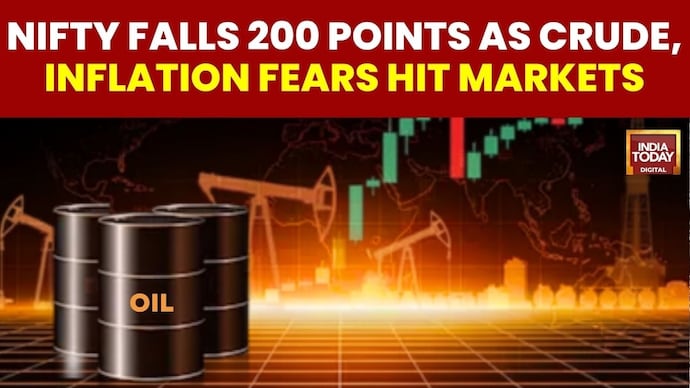
Indian benchmark indices opened lower, with Nifty falling around one per cent and metals and financials facing sharp selling pressure amid rising crude oil prices, surging global bond yields, and currency depreciation. The market decline reflects broad-based global weakness, higher domestic market volatility, and continued foreign institutional investor pullbacks. Alongside opening market movements, details emerged on the National Stock Exchange Initial Public Offering, with the price band set at seventeen hundred to seventeen eighty-five rupees. The offer for sale size was scaled down to 12.64 crore shares after major institutional shareholders, including State Bank of India and Bank of Baroda, reduced their proposed offloading. In corporate updates, HDFC Bank won all seven Bahrain cases concerning Credit Suisse Additional Tier 1 bond mis-selling claims after the court cited insufficient evidence. Meanwhile, Coforge shares dropped following governance clarifications regarding board evaluation reports.

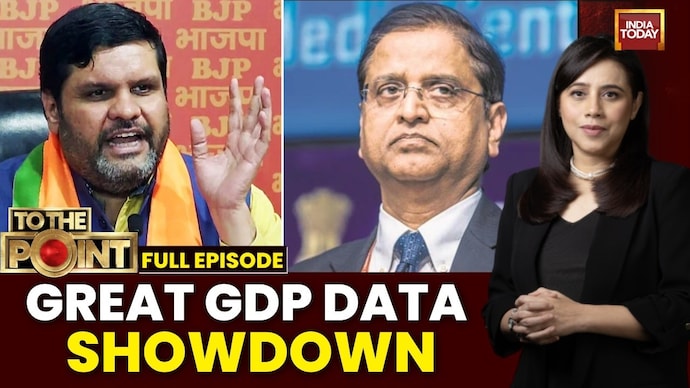
India's Q1 GDP Grows 7.8%, Congress Alleges Data Fudging, Centre Defends New Base Series

India's gross domestic product registered a 7.8 percent growth rate in the first quarter, exceeding Reserve Bank of India projections and triggering political debate over economic calculation methodology. Former Finance Secretary Subhash Chandra Garg raised questions regarding base revisions that reduced previous year nominal GDP figures from 86 lakh crore rupees to 80 lakh crore rupees, contending that earlier estimates reflect lower real growth while pointing to labor market concerns. Opposition leaders cited inflation and unemployment figures, alleging data inconsistency. Defending the official figures, economists and government spokespersons, including Sanjeev Sanyal and Gaurav Vallabh, stated that updated base series integrate comprehensive GST filings, corporate financial disclosures, and expanded sectoral surveys. They highlighted indicators such as gross fixed capital formation, automobile sales, and public capital expenditure to support the reported economic trajectory.

Markets Plunge Amid West Asia Tensions, Crude Price Surge & Key Stock Movements

Indian benchmark indices witnessed selling pressure as escalating US-Iran tensions and surging crude oil prices rattled global and domestic investor sentiment. Brent crude surged past 96 dollars a barrel, stoking concerns over fuel costs, rising inflation, and widening import bills. The Nifty slipped amid losses in IT and automobile stocks, while Coal India bucked the market trend on the back of strong demand and Mahanadi Coalfields' proposed IPO. Market expert G. Chokalingam analyzed key factors constraining secondary market liquidity, including FII and retail funds shifting to the primary IPO market and monsoon deficits. The report also covered auto industry challenges, including cybersecurity risks and export logistics issues discussed by Maruti Suzuki MD Hisashi Takeuchi, alongside global updates on India-Russia LNG talks, proposed US visa policy changes under the Trump administration, and LIC CEO R. Doraiswami's insights on Gen Z investment trends.

Sensex Down 700 Pts, Auto Exports Hit Amid Conflict, Gold & Silver Drop

Indian equity benchmark indices opened significantly lower as a broad-based market sell-off pushed the Sensex down over 700 points, while the Nifty fell below the 23,800 mark and Nifty Bank slipped under 57,000. Key sectors including banking, IT, metals, financial services, and automobiles faced severe downward pressure, impacting major stocks such as Infosys, TCS, Wipro, Shriram Finance, and Mahindra & Mahindra. Brent crude oil prices surged toward 97 dollars per barrel, triggering selling pressure in crude-sensitive counters like InterGlobe Aviation, while Coal India and ONGC traded higher. Rising US bond yields, global debt market declines, and heightened West Asia geopolitical tensions fueled investor anxiety. Additionally, automobile exports for Maruti Suzuki and Hyundai Motor India encountered severe disruptions due to international shipping container shortages and cargo vessel scarcities. Meanwhile, multi-year high bond yields and rate hike expectations pressed precious metals lower, with MCX gold declining to 1.5 lakh rupees per 10 grams and MCX silver dropping to 2.26 lakh rupees per kilogram.

Gold ETFs Plunge, GST Cut On Mobiles Likely, Large-Cap Blue Chips Slump

Indian benchmark indices traded lower as crude oil volatility, global macroeconomic factors, and US Federal Reserve interest rate concerns weighed on market sentiment, pulling the Nifty 50 below the 24,100 level. Broad-based selling erased 49 lakh crore rupees in market capitalisation from peak levels across 47 Nifty 50 stocks, with major drags including Tata Consultancy Services, Reliance Industries, Infosys, and HDFC Bank. HDFC Bank shares dropped after Managing Director and CEO Sashidhar Jagdishan announced he will step down in October without seeking reappointment. Commodity markets saw gold and silver exchange-traded funds decline up to 4% due to profit-taking and US rate trajectories. In policy developments, the central government notified the Semicon 2.0 scheme with a 1.27 lakh crore rupee capital outlay to bolster semiconductor design and manufacturing. Additionally, the GST Council is set to review a proposal to reduce the Goods and Services Tax on mobile phones from 18% to 5% at its September 12 meeting following a drop in quarterly smartphone shipments.

TCS Signs €1.25B Porsche Deal, Reliance Enters Aluminum Business, Bitcoin Surges Past $80,000

Bitcoin crossed eighty thousand dollars for the first time since May, driven by lower Treasury yields and strong exchange-traded fund inflows. In major corporate developments, Tata Consultancy Services announced the acquisition of Porsche AG's IT consulting arm, MHP Management, for an enterprise value of three hundred and twenty million euros. The deal includes a five-year strategic agreement valued at one point two five billion euros aimed at scaling artificial intelligence across manufacturing operations, engineering, and customer experience, onboarding thousands of employees and establishing a dedicated mobility center. Meanwhile, Indian equity markets opened with consolidation near key levels as financial stocks faced pressure amid global market uncertainties and tariff concerns. Reliance Industries is preparing to enter the aluminum business by participating in bauxite block auctions to complement coal gasification ventures. Additionally, the government launched an offer for sale in Hindustan Copper at a floor price discount to raise funds. Analysts noted sector rotations toward specialty chemicals and precious metals while cautioning against near-term momentum in auto stocks.

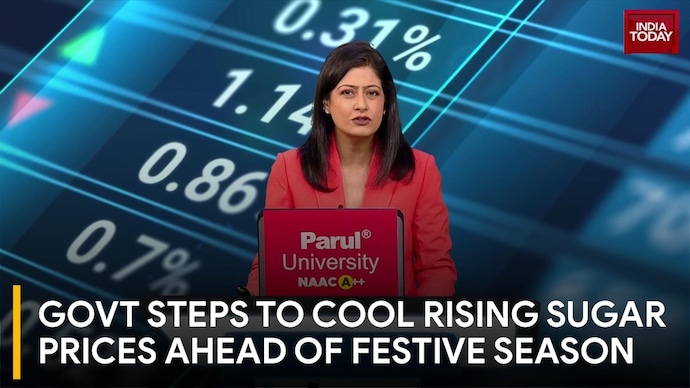
Indian Share Markets Open Steady, Govt Steps In To Cool Sugar Prices Ahead Of Festive Season

Indian stock markets opened on a steady note with the Nifty hovering around the 24,285 to 24,290 level, while the Indian rupee traded near 95.64 against the US dollar. Expert market commentary indicated positive momentum driven by easing crude prices and global cues, alongside strong investor appetite in the primary market and upcoming IPOs. Meanwhile, domestic sugar prices witnessed a sharp surge, prompting the central government to initiate measures, including stock limits and temporary raw sugar imports, to ensure domestic availability ahead of the festive season. Union Food and Consumer Affairs Minister Pralhad Joshi stated that water scarcity caused by El Niño conditions and red rot disease impacted agricultural production. Analyst discussions noted that global sugar supply constraints, such as sugarcane diversion for ethanol in Brazil, contribute to the supply pressure. Sectoral movements showed gains across IT, auto, metals, and jewelry stocks, supported by expectations of strong consumer demand during the upcoming festive and wedding seasons.

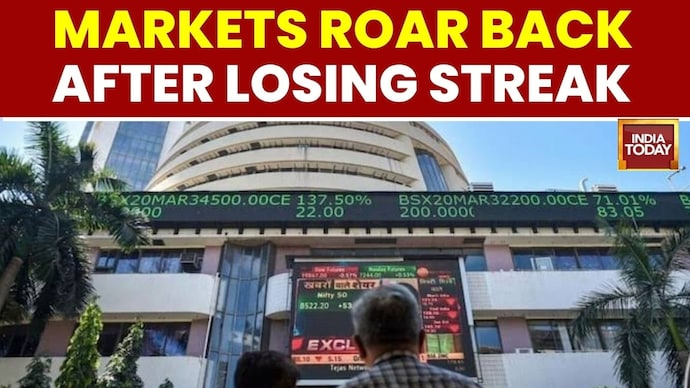
Nifty Snaps 7-Day Losing Streak; Starlink Reapplies In India; Evergrande Founder Sentenced To Life

The Nifty snapped its seven-day losing streak, surging 150 points to near 24,250, while the Sensex jumped 600 points near 77,500. All sectors traded in the green, led by banks, IT, and real estate stocks. Easing global bond yields, foreign institutional investments, and a strengthening rupee supported the market recovery. Sugar stocks like Balrampur Chini rallied over 18% after the government reduced inventory limits to 15 days from September 1. Gold finance stocks Manappuram Finance and Muthoot Finance gained up to 4% as gold hit a two-month high. Meanwhile, a Chinese court sentenced Evergrande founder Hui Ka Yan to life imprisonment over fundraising fraud and property default liabilities exceeding $300 billion. Elon Musk's Starlink reapplied for regulatory approval from InSpace to launch a satellite internet network of nearly 30,000 satellites in India. Additionally, IRDAI and healthcare industry leaders are working to address medical inflation running at 8 to 10%.