Vietnamese crab exporter

Topic

Advertisement
TOPIC

Subhash Chandra

Subhash Chandra is an Indian media entrepreneur and the founder of Zee TV, which he launched in 1992 as India's first private satellite television channel. He later launched Zee News in 1999 and served as chairman of the Essel Group, a conglomerate with interests in media, infrastructure and entertainment. Chandra also served as a Rajya Sabha member from Haryana between 2016 and 2022.
 

Chandra has been at the centre of personal insolvency proceedings linked to corporate loan guarantees he provided for Essel Group entities. The proceedings relate to liabilities of group companies for which he had acted as a personal guarantor. Creditors had raised objections to the proposed repayment plan, while the NCLT considered factors including the value of Chandra's personal estate and the potential recovery prospects for creditors.  

Follow Subhash Chandra on

  • ALL
  • STORIES
  • VIDEOS

STORIES

GDP dust settles, but trust emerges as the real fault line

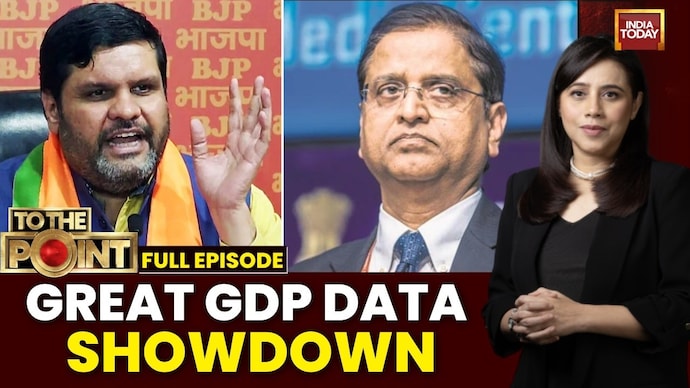
India’s 7.8% GDP growth has triggered a debate over data credibility, methodology and revisions. While Arvind Subramanian flagged a trust deficit and sought greater transparency, KV Subramanian defended the figures and dismissed the alternative 2.6% growth estimate as “absolutely bogus.”

Subhash Chandra case: NCLAT defers hearing to October 7 after NCLT challenge

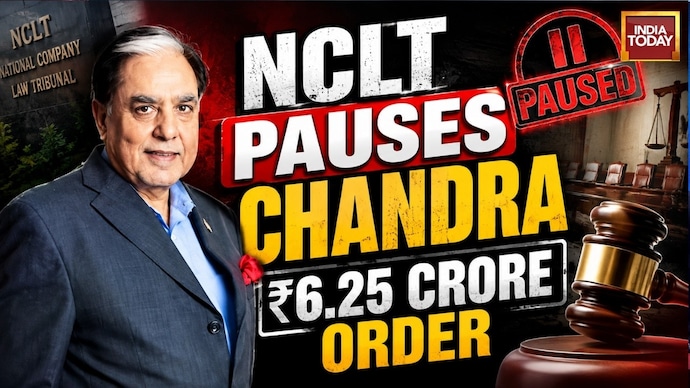
The NCLAT has deferred the hearing in Subhash Chandra's personal insolvency case to October 7 after his counsel challenged the five-member NCLT bench examining his repayment plan. The dispute keeps the Rs 6.25 crore plan under challenge as the tribunal reviews conflicting orders and creditor objections.

Load More

VIDEOS

IDBI Bank Sale: '81 Rupees Is Certainly A Very, Very Low Price', Says SC Garg

A debate on the privatization of IDBI Bank focuses on the valuation and bidding process surrounding the stake sale to Fairfax Holdings. Former Finance and Economic Affairs Secretary Subhash Chandra Garg argues that the bank has turned around significantly, making the sale price of ₹81 per share a throwaway valuation compared to its true worth and free reserves. Garg questions why the reserve price was lowered and contends that the divestment has turned into an uncompetitive one-horse race. In response, political analyst Rajat Sethi defends the government's disinvestment process, stating that taxpayer and LIC funds were used to resurrect the ailing bank. Sethi argues that market forces and independent institutions determined the valuation, asserting that criticism without hard evidence or alternate bids is unwarranted.

India First: Tuhin Sinha, Brijesh Kalappa, Shehzad Poonawalla on Vande Mataram Row

On India First with Gaurav Sawant, panellists debate major political rows surrounding national identity, secularism, and constitutional principles. The discussion examines the controversy over singing the national song, Vande Mataram, and the Karnataka legal dispute regarding legislative competence over limiting the song to two stanzas, with BJP national spokesperson Tuhin Sinha and Congress national spokesperson Brijesh Kalappa trading historical and political arguments alongside political analysts Shehzad Poonawalla and Rashid Kidwai. The broadcast also addresses the political fallout over remarks by former Vice President Hamid Ansari and Congress leader Rahul Gandhi concerning nationalism, religiosity, and Sharia courts. Panellists further analyse the ideological distinctions between Hinduism and Hindutva, the presence of religious figures in electoral politics, and allegations of minority appeasement versus secular governance under the Indian Constitution.

India Q1 GDP Data Spark Debate, Former Finance Secretary Questions 7.8% Figure, Opposition Reacts

A political and economic debate has erupted over India's latest first-quarter gross domestic product figures released by the Narendra Modi government, which stated a growth rate of 7.8%. Former Finance Secretary Subhash Chandra Garg raised doubts about the authenticity of the data, noting that nominal GDP growth in current prices indicates a growth rate of less than 2.5% compared to the previous year. The Congress party and economic experts have weighed in with differing assessments regarding the accuracy and calculation of the quarterly numbers, examining whether the announced figures reflect actual growth.

War Over 7.8% GDP Growth Data, Opposition Attacks Govt & NVIDIA CEO Jensen Huang Praises India AI

A major political and economic debate has broken out over India's 7.8% GDP growth numbers. The opposition and former Finance Secretary Subhash Chandra Garg questioned the data, claiming a revision in previous figures lowered the base and masked lower growth. The central government strongly rejected these allegations, clarifying that the 7.8% growth rate is accurate, calculated at constant prices using the new 2022-23 base year series, and accused critics of comparing different series. Meanwhile, NVIDIA Chief Executive Officer Jensen Huang praised India's artificial intelligence potential, highlighting Prime Minister Narendra Modi's early vision and urging rapid adoption across Indian startups and enterprises.

India's 7.8% GDP Growth, Opposition Allegations Of Data Fudging & Centre's Rebuttal

A political confrontation has erupted over India's 7.8 per cent GDP growth figures. The Opposition and critics, including former finance secretary Subhash Chandra Garg, have questioned the downward revision of the previous year's first-quarter GDP and alleged data fudging, arguing that nominal growth stands at only 2.6 per cent without the revision. The central government and the Ministry of Statistics and Programme Implementation have rejected these allegations, asserting that the calculations are based on the updated base year series and improved methodology. Union ministers stated that critics are comparing different GDP series and misleading the public. The government maintained that the 7.8 per cent expansion reflects India's position as the fastest-growing major economy, driven by granular data sourced through institutional mechanisms such as GST and the Public Financial Management System, with deliberations held across stakeholder groups.

Centre Defends 7.8% GDP Growth, Slams Critics Over Calculation Methodology

The central government has strongly defended India's first quarter Gross Domestic Product growth numbers, dismissing criticism from opposition leaders and former officials regarding data accuracy and calculation methodology. Addressing concerns, the government rejected claims that the economic growth was closer to 2.6 percent, describing comparisons between old and new series with different base years as comparing apples and oranges. The Ministry of Statistics and Programme Implementation maintained that the compilation process is completely transparent and verified through granular data sources, including the Goods and Services Tax framework and the Public Financial Management System. Officials highlighted that multiple deliberations with economists and statisticians preceded the final figure. Reaffirming India's economic resilience, the government stated that the 7.8 percent growth rate remains a reality, positioning the country as the fastest growing among large global economies.

India's Q1 GDP Grows 7.8%, Congress Alleges Data Fudging, Centre Defends New Base Series

India's gross domestic product registered a 7.8 percent growth rate in the first quarter, exceeding Reserve Bank of India projections and triggering political debate over economic calculation methodology. Former Finance Secretary Subhash Chandra Garg raised questions regarding base revisions that reduced previous year nominal GDP figures from 86 lakh crore rupees to 80 lakh crore rupees, contending that earlier estimates reflect lower real growth while pointing to labor market concerns. Opposition leaders cited inflation and unemployment figures, alleging data inconsistency. Defending the official figures, economists and government spokespersons, including Sanjeev Sanyal and Gaurav Vallabh, stated that updated base series integrate comprehensive GST filings, corporate financial disclosures, and expanded sectoral surveys. They highlighted indicators such as gross fixed capital formation, automobile sales, and public capital expenditure to support the reported economic trajectory.

NCLT Stays Subhash Chandra's Rs 6.5 Cr Settlement; Banks Object, Assets Frozen

A five-member special bench of the National Company Law Tribunal has stayed its August 25 order in the personal insolvency case against Subhash Chandra. The previous three-member bench had partly approved a settlement of 6.5 crore rupees against claims exceeding 22,000 crore rupees, prompting objections from banks and public sector undertakings including LIC, Canara Bank, and Union Bank of India. The tribunal observed that the earlier verdict lacked an actionable majority opinion under Section 419(5) and acknowledged concerns regarding voting by related-party creditors. With the stay in place, Subhash Chandra cannot sell, alienate, or dispose of assets while the bench re-examines the matter after hearing all financial creditors.

NCLT Stays Essel Haircut Order, Issues Notice to Subhash Chandra on Debt

A special five-judge bench of the National Company Law Tribunal has stayed an earlier order concerning the settlement of Essel Group's 22,000 crore rupee debt for 6.5 crore rupees. The tribunal issued notices to Essel Group chief Subhash Chandra and lenders in the Zee Entertainment insolvency case, clarifying that the earlier approval of the resolution plan was not a final or majority view. The bench observed differing opinions among earlier members and ruled that the guarantor cannot sell or alienate any assets. The special bench will hear all lenders and stakeholders on the matter.

Subhash Chandra Gets ₹22,000 Cr Debt Settlement For ₹6.5 Cr | 99.97% Haircut Sparks Row

The National Company Law Tribunal cleared a debt resolution plan allowing Essel Group founder Subhash Chandra to settle creditor claims of about 22,000 crore rupees by paying 6.5 crore rupees. The decision represents a 99.97% haircut for lenders and a recovery of just 0.03%. Major institutions including LIC Housing Finance, HDFC Bank, Axis Bank, Canara Bank, RBL Bank, and Union Bank of India objected to the plan. Opposition leader Rahul Gandhi criticised the tribunal following the approval. Subhash Chandra rejected the criticism, stating he acted only as a personal guarantor and that claims against him were misrepresented.

Congress Restricts Vande Mataram To 2 Stanzas; Cites 1937 Resolution; Amit Shah Slams Move

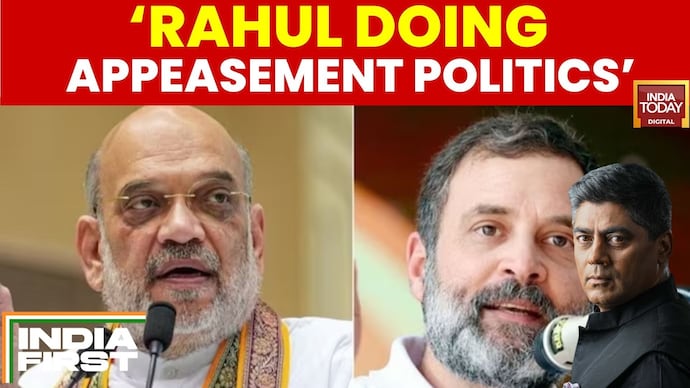
The Congress party, through General Secretary KC Venugopal, announced it will abide by its 1937 Congress Working Committee resolution to sing only the first two stanzas of the national song Vande Mataram at official party functions and programs. The party stated that these initial stanzas hold national significance, whereas subsequent stanzas contain religious references that could conflict with the beliefs of other religious groups. Congress leaders invoked historical figures including Mahatma Gandhi, Jawaharlal Nehru, Rabindranath Tagore, Netaji Subhash Chandra Bose, and Vallabhbhai Patel to defend the decision. Union Home Minister Amit Shah strongly criticized the decision, accusing the Congress under Rahul Gandhi of engaging in Muslim appeasement politics and maintaining an anti-national mindset. Shah argued that splitting the national song in 1937 laid the foundation for the partition of India and the creation of Pakistan. Prime Minister Narendra Modi has also previously criticized the 1937 resolution for removing important verses.

PM Modi in Singur Calls for ‘Real Change’, Attacks TMC Over Jungle Raj and Blocked Schemes

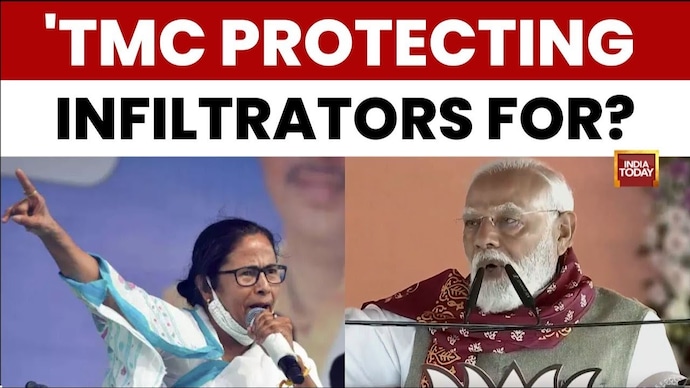
Prime Minister Narendra Modi addressed a massive rally in Singur, West Bengal, where he called for a 'real change' to end what he described as the 15-year-old 'jungle raj' or 'mega forest rule' of the TMC. Highlighting the cultural contributions of the region, Mr Modi noted that the Bengali language received 'classical language' status and Durga Puja earned UNESCO heritage recognition under the BJP-led central government. He accused the TMC government of blocking central schemes like Ayushman Bharat and the PM Matsya Sampada Yojana, thereby depriving farmers, fishermen, and the youth of benefits. The Prime Minister emphasized that the TMC prioritizes 'infiltrators' as a vote bank over the security of the state and the safety of women. He urged the people to vote for a 'double engine government' to ensure development, law and order, and the elimination of 'syndicate tax' and 'mafia raj' in Bengal.

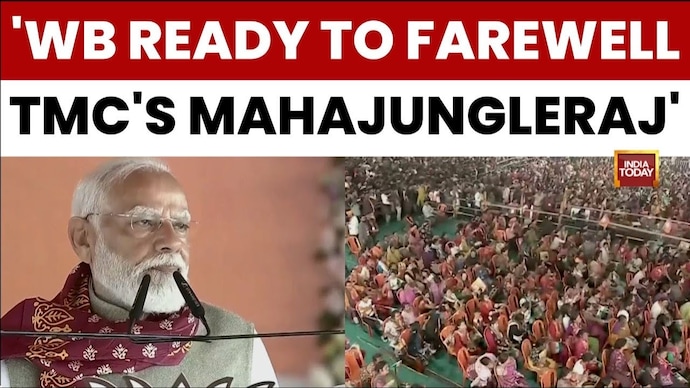
Speaker: 'West Bengal Is Also Ready Farewell TMC's Mahajungleraj' In Singur Rally

In a public address in Singur, the speaker stated that West Bengal is ready to bid farewell to the Trinamool Congress (TMC) government, describing its tenure as fifteen years of "mahajungleraj". The speaker highlighted that the enthusiasm of the crowd, including farmers, youth, and women, indicates a desire for transformation similar to the change seen in Bihar. The address emphasized the central government's efforts to honour Bengali heritage, noting the installation of Netaji Subhash Chandra Bose's statue at India Gate and the renaming of islands in Andaman and Nicobar. The speaker also mentioned that the Bengali language received classical status and Shanti Niketan was recognized as a world heritage site under the current administration. Furthermore, the speaker criticized the previous government for failing to achieve these milestones despite being in power with the UPA, asserting that these developments occurred due to the current government's dedication to West Bengal's culture and progress.

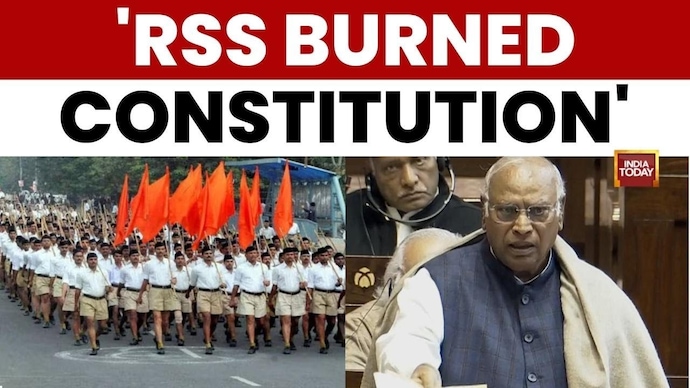
Kharge Hits Back at PM: 'RSS Burned Constitution, Never Participated in Freedom Struggle'

In a fiery rebuttal to Prime Minister Narendra Modi, Congress President Mallikarjun Kharge defended the party's 1937 stance on 'Vande Mataram'. Speaking in Parliament, Kharge cited the Congress Working Committee's resolution and Rabindranath Tagore's advice to limit the song to the first two stanzas for national unity. He launched a scathing attack on the RSS and Hindu Mahasabha, stating, 'I would like to remind you that the Hindu Mahasabha and the RSS did not participate in the independence struggle.' Kharge further alleged that these organisations 'burned the foundations of the constitution' and insulted national icons like Nehru and Ambedkar.