Vietnamese crab exporter

Topic

Advertisement
TOPIC

Tariffs

A tariff is a tax imposed by a government on imported or exported goods. It serves multiple purposes, including generating revenue, protecting domestic industries from foreign competition, and regulating trade. Tariffs can be ad valorem (a percentage of the good's value) or specific (a fixed amount per unit).

Governments use tariffs as a trade policy tool to make imported goods more expensive, encouraging consumers to buy locally produced alternatives. However, high tariffs can lead to trade wars, higher prices for consumers, and inefficiencies in domestic industries.

Free trade agreements and organizations like the World Trade Organization (WTO) aim to reduce tariff barriers to promote global trade. However, countries still use tariffs strategically, especially in sectors like agriculture, steel, and technology, to safeguard national interests.

  • ALL
  • STORIES
  • VIDEOS

STORIES

Why China left US soybeans out of its latest tariff cut list

China's commerce ministry issued a list of products that will get tariff cuts on Monday. It includes corn, wheat, sorghum, vegetable oils and meals, meat, dairy products and other agricultural goods. US soybeans, however, are not on the list.

Load More

VIDEOS

India-EU Trade Pact, US Tariffs Pressure, and Multilateral Shifts Discussed

A comprehensive panel discussion examined the evolving framework of global commerce, focusing on the proposed India-European Union free trade agreement and strategic bilateral relations. The dialogue addressed market access terms covering over two billion people and a quarter of global gross domestic product, with India offering ninety-two point five per cent of tariff lines and the European Union opening ninety-seven per cent, encompassing more than ninety per cent of bilateral trade value. Participants reviewed challenges regarding weaponised tariffs, supply chain disruptions, trade imbalances with China, stalled negotiations with the United States, and the shift from multilateral institutions such as the World Trade Organization toward bilateral agreements. The session also evaluated India's bilateral investment treaty framework, clean energy transitions, small modular nuclear reactors, and the implications of the Carbon Border Adjustment Mechanism. Crucial attention centred on maritime security risks across the Strait of Hormuz and Bab-el-Mandeb, shipping insurance costs, fertilizer import expenses, agricultural safeguards, economic autonomy, and regulated migration and student mobility.

India-EU Trade Pact, Strategic Autonomy & Employment Generation in Focus

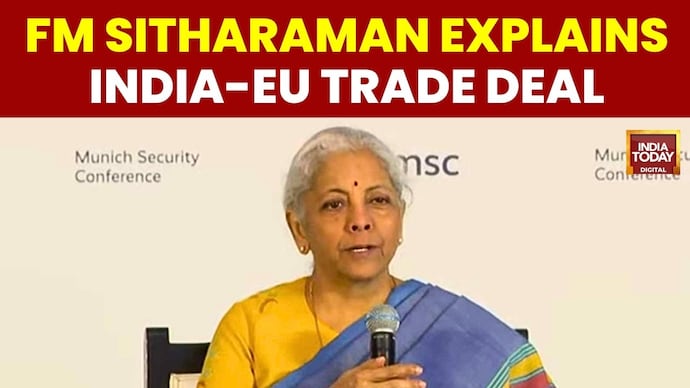
A panel discussion addressed the strategic and economic significance of the European Union-India Free Trade Agreement amid global geopolitical shifts and trade weaponisation. Panellists noted that the trade pact aims to cut four billion euros in tariffs, offer the potential to double bilateral trade, and promote economic diversification and cooperation. The discussion examined transatlantic relations, United States trade pressures, subsidies from China, and the growing imperative for Europe to pursue strategic autonomy alongside increased defence spending. The conversation also highlighted the Indo-French strategic partnership between Prime Minister Narendra Modi and President Emmanuel Macron. Addressing negotiations, Indian Finance Minister Nirmala Sitharaman observed that India's procurement of Russian oil did not derail trade talks, noting the absence of legislative hurdles comparable to the US Lindsey Graham bill. She highlighted that the agreement will directly benefit India's labour-intensive export sectors—including textiles, footwear, toys, and small and medium enterprises—thereby boosting employment and expanding market access for women and Indian workers.

India Open to Trade Deals, 'Tariff Has Become Weaponised': Nirmala Sitharaman

Speaking on trade negotiations and agreements, Union Minister Nirmala Sitharaman highlighted India's strategic approach to bilateral trade pacts while navigating global trade pressures. Addressing discussions surrounding the proposed India-EU trade pact, termed the mother of all deals, Sitharaman noted that the agreement covers two billion people and a quarter of global GDP, with both sides opening more than 90% of tariff lines and value while safeguarding sensitive agricultural sectors. Remarking on broader global tensions, she stated that 'tariff has become weaponised' instead of serving merely as an instrument of negotiation within established frameworks. Regarding ongoing talks with the United States, Sitharaman pointed out that negotiations remain rigorous, with both sides navigating an existing trade balance that is in India's favour. She also highlighted the exponentially growing trade imbalance with China since 2014, emphasising that despite severe discrepancies, resolving trade imbalances ultimately requires structured negotiation and mutual give-and-take rather than unilateral weaponisation of tariffs.

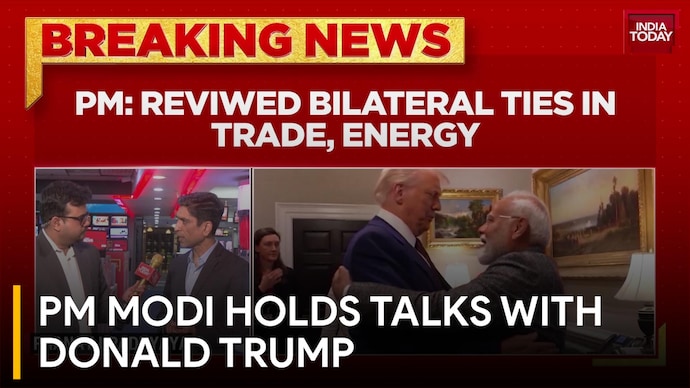
PM Modi Speaks To US President Donald Trump; Reviews Bilateral Trade, Energy & Global Peace

Prime Minister Narendra Modi held a telephone conversation with United States President Donald Trump, marking their first direct contact since meeting on the sidelines of the G7 summit in June 2026. The two leaders reviewed bilateral cooperation across key sectors including trade, defense, energy, and critical technologies, while also discussing regional and global developments, particularly the ongoing situation in West Asia and international peace efforts. The exchange comes ahead of scheduled multilateral interactions, including the ASEAN and East Asia Summit in Manila, followed by the G20 summit in Florida, United States. Discussions also focused on bilateral trade relations, tariff negotiations, and pharma exports, with sources indicating that significant progress has been achieved towards a bilateral agreement.

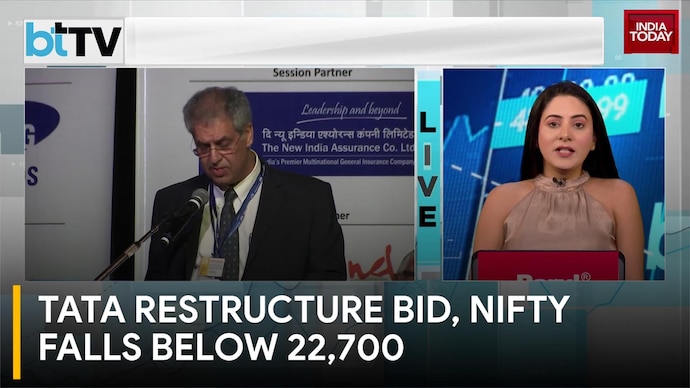
Noel Tata's Restructure Bid, Nifty Slips On Expiry, Pharma Tariffs Exempted

On the Business Today Show, host Sakshi Batra covers key corporate, financial, and market developments. Tata Trusts Chairman Noel Tata submitted a strategic restructuring proposal to merge Tata Electronics, System Solutions, and Tata Consulting Engineers into Tata Sons to retain its unlisted status and avoid NBFC classification. On Dalal Street, the Nifty slipped below 22,700 during the expiry session amid rising Brent crude oil prices and a weakening rupee past 96 against the US dollar. Expert Chakri Lokapriya, Managing Partner at RSB LLP, highlights slowing growth, rising yields, and imported inflation as primary challenges, advising caution while noting stability in power and select pharma counters. The US exempted Indian pharma exporters from proposed 100 percent tariffs across key speciality drugs, driving resilience in stocks like Sun Pharma and Dr. Reddy's. Additionally, Essar Group announced an 18-billion-dollar steel plant in Iowa, while OpenAI halted training on its GPT-6.1 Astra model over AI security and rogue behavior concerns.

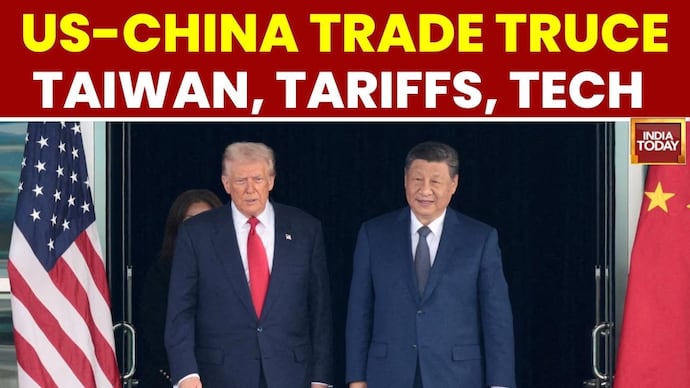
Trump-Xi Bilateral Talks, Tariff Truce Extension And New AI Dialogue

United States President Donald Trump and Chinese President Xi Jinping held a crucial bilateral meeting lasting around one and a half hours at the White House. The two leaders emphasised mutual respect, cooperation, and the historical ties between their nations, while acknowledging the need to build a balanced trade relationship. During the visit, the two countries agreed to extend their tariff truce until 10 January, granting negotiators additional time to pursue a broader economic agreement. An artificial intelligence dialogue was also announced, with both sides noting the necessity for artificial intelligence to develop under human control. Despite positive optics, no joint press conference or joint statement was issued following the talks. Key issues including tariffs, rare earth supplies, agricultural purchases, market access, technology, and geopolitical tensions surrounding Taiwan and sanctions remain critical sticking points between Washington and Beijing.

Trump And Xi Jinping Hold Bilateral Talks At White House On Trade, Wars

US President Donald Trump hosted Chinese President Xi Jinping at the White House for a bilateral meeting in the Oval Office during a two-day state visit. The meeting commenced following a ceremonial military review held in the Rose Garden. Discussions between the two leaders covered a wide range of critical topics, including bilateral trade, the economy, supply chains, rare earth elements, artificial intelligence competition, and energy security. Regional and international security concerns were also on the agenda, specifically Taiwan, the Indo-Pacific, and ongoing conflicts involving Russia, Ukraine, and Iran. Following the one-and-a-half-hour discussion, President Trump gave President Xi a brief tour of the newly constructed helipad and ballroom before seeing him off. While no joint press conference took place, separate readouts and statements are expected from Washington and Beijing detailing the discussions, ahead of an official state dinner scheduled for the evening.

India-US UNGA Talks, Russia Sanctions Bill And Oil Trade Concerns

External Affairs Minister S. Jaishankar met US Secretary of State Marco Rubio on the margins of the 81st session of the United Nations General Assembly. The two leaders discussed developments in the Middle East and addressed proposed sanctions targeting nations that engage in economic trade with Russia or Iran. The US State Department affirmed Washington's readiness to assist regional partners with energy security challenges. Crucial concerns surround the Russia and Iran Sanctions Act, which seeks to target Russian oil and gas revenues while authorising tariffs of up to 100% on major buyers, potentially impacting countries like India and China. India has stressed that such measures could strain bilateral relations, especially given its significant energy dependence. In August, Russian oil accounted for 45% of India's oil imports at 2.1 million barrels per day, following a record 2.82 million barrels per day in July. High-level engagements between both nations are set to continue in the coming months.

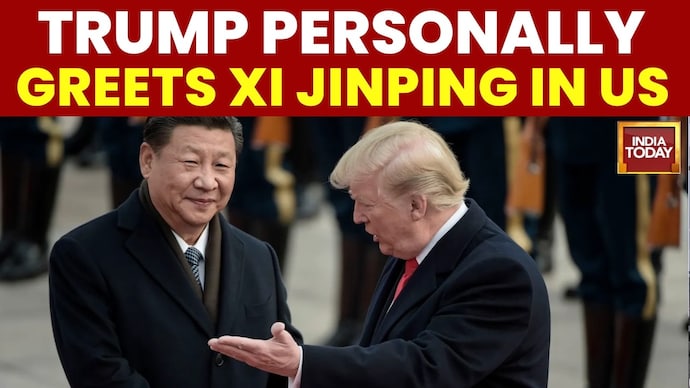
Trump Welcomes Xi Jinping in US: Historic State Visit, Trade Ties & Key Bilateral Talks

Chinese President Xi Jinping has arrived in the United States for a high-profile state visit, marking a notable bilateral engagement with US President Donald Trump. In a rare diplomatic gesture not seen in over six decades, President Trump personally welcomed the Chinese leader upon arrival at the air base outside Washington. The visit sets the stage for extensive bilateral meetings at the White House and delegation-level discussions focusing on trade, artificial intelligence, critical minerals, and supply chain frictions. While contentious issues regarding technology, tariffs, and geopolitical disputes remain prominent, both nations aim to maintain strategic stability and prevent escalation into open confrontation. Pre-summit discussions between economic officials have also addressed trade truces and upcoming state dinner engagements featuring leading technology industry leaders.

India-US Tariff Row Over Russian Oil, New Sanctions Bill and Xi Jinping's Visit

External Affairs Minister S. Jaishankar raised serious concerns with US Secretary of State Marco Rubio regarding a US Senate sanctions bill aimed at Russia and Iran. The proposed legislation empowers US President Donald Trump to impose tariffs of up to 100 percent on the top buyers of Russian oil and gas, directly impacting India and China. While Indian refiners imported roughly 45 percent of their crude from Russia in August, Indian officials highlight that these imports stabilise global energy markets. The tariff tensions unfold alongside preparations for Chinese President Xi Jinping's official visit to the United States.

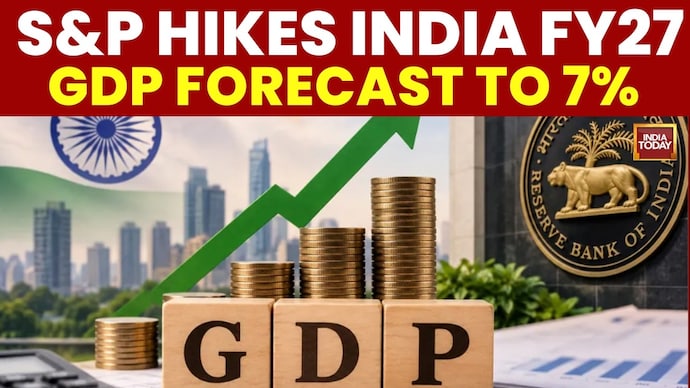
S&P Hikes India's FY27 GDP Forecast To 7%, Predicts RBI Rate Hike Amid Strong Growth

S&P Global Ratings has raised India's GDP growth forecast for financial year 2026-27 by 40 basis points to 7.0 per cent, revising its previous projection of 6.6 per cent upward. The rating agency cited robust industrial activity, healthy domestic consumption, strong goods exports, and accelerating government investment during the first quarter as primary drivers for the revision. Economists at S&P Global also project the Reserve Bank of India's rate-setting panel to hike the repo rate by 25 basis points to 5.50 per cent. The revised projection exceeds the Reserve Bank of India's estimate of 6.7 per cent and matches forecasts from agencies like Moody's. Analysts noted that India continues to maintain economic resilience despite external headwinds, including geopolitical conflicts in West Asia, the Russia-Ukraine war, global trade tariffs, and elevated crude oil prices.

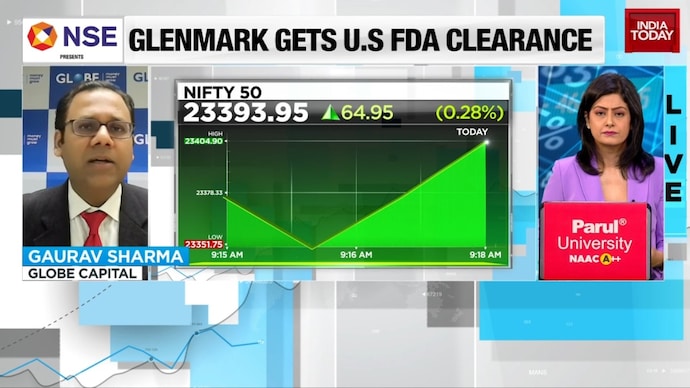
Markets Open Flat, S&P Ups GDP Target & SC Flags Medicine Pricing

Indian equity markets opened on a steady note above 23,400 levels, supported by gains in financial and banking stocks alongside broad-based sector participation. S&P raised India's FY27 GDP growth forecast by 40 basis points to 7 per cent, citing robust industrial activity, strong exports, and government spending, while projecting a repo rate hike by the Reserve Bank of India. Meanwhile, the Supreme Court raised serious concerns over the significant gap between the price to retailer (PTR) and the maximum retail price (MRP) of essential and life-saving medicines, questioning why more drugs are not covered under the drug price control order. Pharma companies, represented in court, cited research and development alongside marketing expenses for the variance in pricing. Additionally, global geopolitical developments remained in focus as Donald Trump highlighted sweeping tariff authorities and expressed support for the India-Middle East-Europe Economic Corridor.

UNGA Address: Warning on Iran Nuclear Deal, Russian Oil Tariffs & Global Security

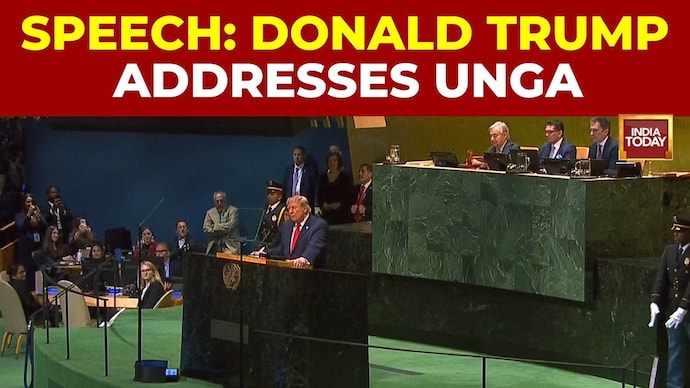
A speech delivered at the United Nations General Assembly addressed major international foreign policy challenges, focusing primarily on the Islamic Republic of Iran, the Russia-Ukraine conflict, and broader geopolitical developments. The address called for the complete economic isolation of Iran until it abandons its nuclear ambitions and ceases regional hostility, while leaving open the possibility of a negotiated agreement following the United States midterm elections. The speech also outlined potential enforcement actions concerning Russian energy exports, specifically mentioning the possible use of the Lindsey Graham sanctions bill to impose significant tariffs on countries importing oil from Russia, including India and China. Additionally, the address covered global security concerns, categorising Western hemisphere cartels alongside terror outfits, highlighting strategic interests in Greenland, and noting upcoming bilateral meetings at the White House.

Trump at UNGA on Iran Deal, Global Diesel Crunch & India Energy Impact

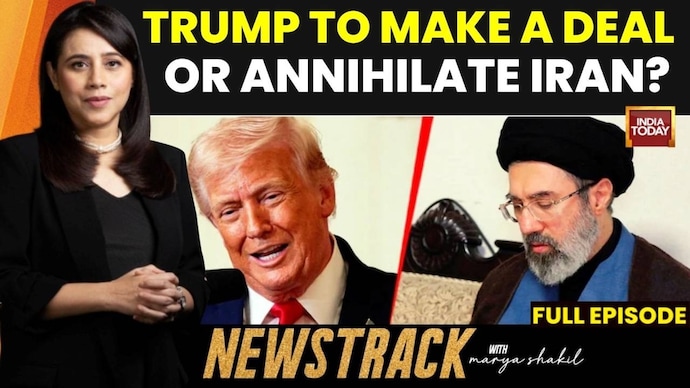
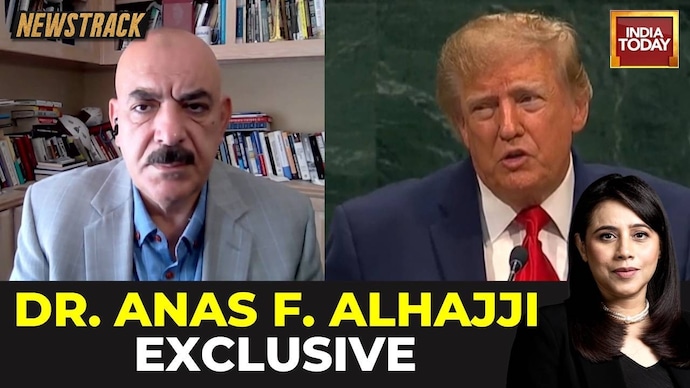
During an address at the United Nations General Assembly, US President Donald Trump issued sharp warnings against Iran, calling it the primary sponsor of terror and presenting a choice between a post-midterm deal or complete annihilation. Trump also called for global economic isolation of Tehran and advocated renaming artificial intelligence to super intelligence in official records. Evaluating the global fallout on News Track, energy expert Dr Anas Alhaj explained that crude supplies remain sufficient while refinery bottlenecks have triggered a severe international diesel and petroleum product crunch. He noted that India has managed its crude reserves effectively through discounted Russian supplies despite tariff threats. Former Indian Ambassador to the United States Meera Shankar highlighted that Trump's remarks targeted domestic US audiences, noting that India must navigate complex regional dynamics by balancing ties with Iran, Gulf nations, Israel, and the United States while accelerating its transition towards non-fossil fuel energy.

Dr. Anas Alhajji: 'The crisis is in diesel. That's where the crisis is'

In an exclusive interview with India Today, energy markets expert Dr. Anas Alhajji analyzed the global energy landscape, Hormuz Strait tensions, and the impact of geopolitical developments on India. Dr. Alhajji clarified that current market disruptions stem from refined products rather than crude oil, stating, 'The crisis is in diesel. That's where the crisis is.' He dismissed rhetoric surrounding US President Donald Trump's remarks at the United Nations, asserting that market fundamentals remain detached from political speeches. Evaluating India's strategic response, Dr. Alhajji highlighted how New Delhi successfully replenished its inventories by importing discounted Russian crude, in contrast to Japan's slower recovery under G7 restrictions. He noted that while Indian refiners face high margins because global refineries are maxed out, India faces unique challenges in liquefied petroleum gas supplies due to shifts in Saudi Arabian production. Additionally, he emphasized that US tariff legislation with a 180-day grace period would not severely disrupt Indian refinery operations.

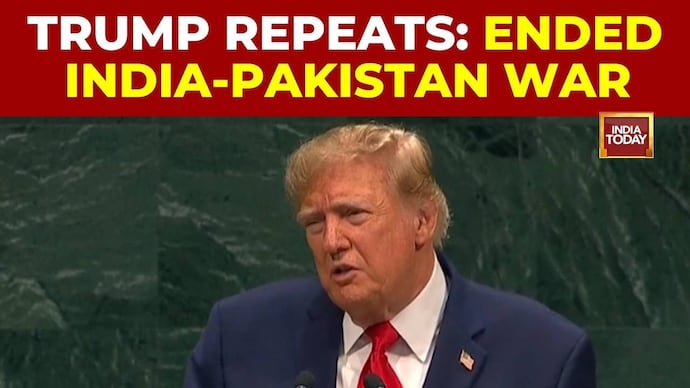
'It Has Been My Great Honor to Settle Eight Wars': Donald Trump

Addressing the United Nations General Assembly and marking the 250th anniversary of American independence, United States President Donald Trump detailed his administration's domestic and international policy agenda. Domestically, Trump highlighted United States economic metrics, poverty reduction, and border security enforcement. In foreign affairs, Trump reiterated that Iran will not be permitted to obtain a nuclear weapon, referencing military strikes on Iranian nuclear sites, the destruction of Iranian naval vessels, and United States naval escorts in the Strait of Hormuz. Trump reviewed the cessation of hostilities in Gaza, the release of hostages, and the formation of a multilateral Board of Peace backed by the United Nations Security Council. He outlined diplomatic mediation across international disputes, including India and Pakistan, Cambodia and Thailand, Kosovo and Serbia, the Democratic Republic of the Congo and Rwanda, Armenia and Azerbaijan, as well as ongoing negotiations between Russia and Ukraine. Additionally, Trump detailed United States military operations in Venezuela, the apprehension of Nicolás Maduro, and an agreement involving 65 billion barrels of oil. He announced an accord with Denmark regarding Greenland to construct two military bases for Arctic defense. On technological policy, Trump stated that the United States government will prioritize super intelligence over traditional artificial intelligence terminology. The address concluded with calls for United Nations structural reforms, spending reductions, opposition to international carbon taxation, and the rejection of International Criminal Court jurisdiction.

Donald Trump on Deal or War: 'Do I Annihilate the Islamic Republic'

Speaking on global conflicts and foreign policy, Donald Trump outlined the United States' stance on Iran, maritime security, and peace initiatives across the Middle East and beyond. Trump noted that US naval escorts in the Strait of Hormuz have kept oil shipments flowing despite violations by Tehran. Weighing diplomatic engagement against military confrontation, Trump asked, 'Will a deal be made with Iran that lets them rebuild and create a far greater country than it ever was before? Maybe one of the greatest in the Middle East or even the world, or do I annihilate the Islamic Republic and do it quickly, never giving them a chance to kill and destroy people and countries again?' He called for total economic isolation until Iran ends its nuclear ambitions and attacks on commercial shipping. Trump also highlighted the United Nations Security Council's endorsement of the 20-point Gaza Peace Plan, the establishment of the Board of Peace, and his role in mediating numerous protracted international conflicts.

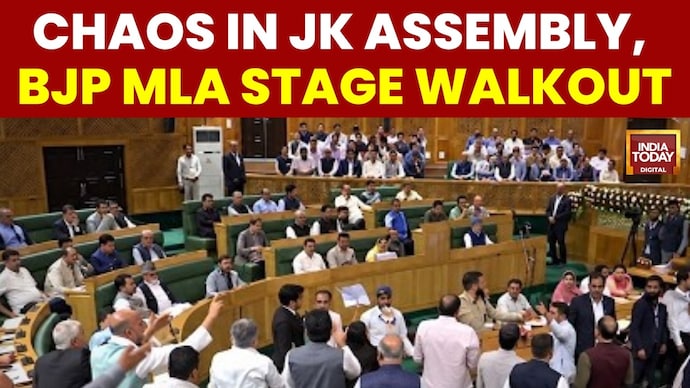
J&K Assembly Chaos: BJP MLAs Stage Walkout Over Corruption Debate, Target Omar Abdullah Government

Commotion continued in the Jammu and Kashmir Assembly for the second consecutive day as Bharatiya Janata Party MLAs staged a walkout after the Speaker disallowed their request for a debate on corruption and unfulfilled commitments of the Omar Abdullah administration. Heated exchanges broke out between BJP and Congress legislators inside the House, prompting the deployment of assembly marshals. The opposition demanded discussions regarding issues concerning daily wagers, contractual workers, reservation, and power tariffs. In addition, disagreements emerged over the restoration of the official holiday commemorating Sheikh Abdullah's birth anniversary, which was opposed by the BJP as proceedings remained disrupted.

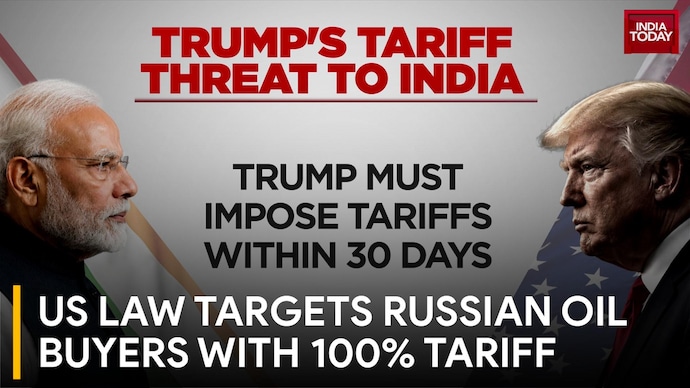
US Russia Sanctions Law: Up To 100% Tariffs May Hit Top Oil Buyers India, China

A newly signed United States sanctions law grants the administration authority to impose tariffs of up to 100% on imports from the five largest buyers of Russian crude oil and natural gas within 30 days. Although India and China are major purchasers, the legislation does not name specific nations or define how top importers will be calculated. In response, India has maintained that national interest and energy security for its 1.4 billion citizens remain paramount through diversified energy sourcing. New Delhi highlighted the potential impact on bilateral ties and global energy markets, reiterating its commitment to taking all necessary measures to protect domestic economic interests.

US Law on Russian Oil Tariffs, 100% Import Levies Risk, Impact on India-US Trade Talks

United States President Donald Trump has signed a new Russia sanctions bill into law, granting the administration authority to impose tariffs of up to 100% on goods imported from the top five buyers of Russian crude oil and natural gas within 30 days. The legislation covers major importers such as India and China, as well as countries aiding sanctions evasion. While the law grants significant executive discretion regarding implementation, the White House must notify Congress prior to removing any tariffs. The move comes ahead of high-level diplomatic engagements, including planned talks with Chinese President Xi Jinping and Ukrainian President Volodymyr Zelenskyy, aiming to exert pressure regarding the Russia-Ukraine war. For India, a leading purchaser of Russian crude, the law introduces new variables amid ongoing bilateral trade negotiations, where officials indicate substantial progress on an agreement ahead of scheduled ministerial discussions.