
Netanyahu blinks? Israeli PM ready to offer top spot to rival in rotational govt

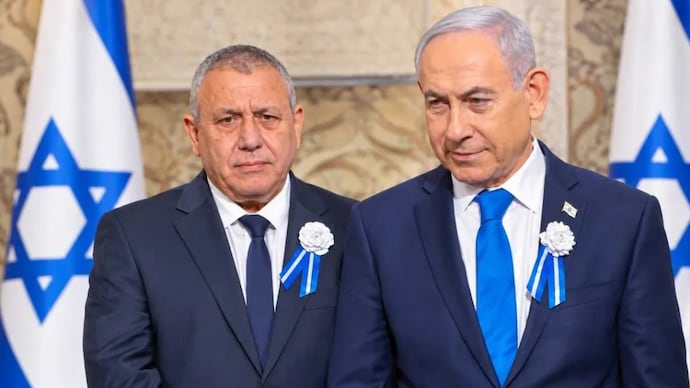
In a significant concession, Netanyahu has offered rival Gadi Eisenkot the prime minister's post in a rotational government. Netanyahu is willing to serve as the second prime minister. This comes as efforts to form a new government hit a dead end, a month since the election.
 Last UpdatedNov 28, 2026 10:39 IST
 Published byWritten ByAbhishek De
With limited options available, Benjamin Netanyahu is considering offering his rival Gadi Eisenkot the Israeli prime minister's post in a rotational formula as the impasse to form the next government dragged on. According to a report in The Times of Israel, Netanyahu himself is willing to serve as the second prime minister.
The proposal, if finalised, will mark a significant concession by Netanyahu, who faces the prospect of being pushed out of power after his Likud-led right-wing bloc failed to secure a majority. The rotational arrangement offered by Netanyahu, a master of political manipulation, is being seen as a last-ditch attempt to hold on to power.
However, not all in Netanyahu's own circle is convinced of the move. According to Channel 13, the offer to Yashar chief Eisenkot has been conveyed through unofficial channels.
WHAT HAPPENED IN ISRAEL ELECTIONS?
The October 27 Israeli election, the first since the Hamas attack and the Iran conflict, failed to throw up a clear winner.
The Netanyahu-led bloc won 53 seats, eight short of the 61 needed to govern in the 120-seat Knesset. Eisenkot's bloc got 48, while the Arab-led parties Ra'am and the Joint List secured a record 19 seats - making them the potential kingmaker.
However, both Netanyahu and Eisenkot have previously ruled out any tie-ups with the Arab parties.
Earlier this month, Israeli President Isaac Herzog tasked Eisenkot to cobble together a government. He has time till December 6 to stitch together a majority. If Eisenkot fails to form a government, Herzog will approach Netanyahu to see if he can form a coalition government.
If neither manages to form a government, fresh elections will be called. Neither Netanyahu nor Eisenkot will want such a situation. Against this backdrop, the rotational government offer from Netanyahu is key.
THE DILEMMA FOR EISENKOT
Eisenkot remains highly sceptical of Netanyahu's offer.
The former IDF chief has pledged to his coalition partners, Yair Golan and Yisrael Beytenu chief Avigdor Liberman, that he would not form a unity government with Netanyahu without their nod.
On the other hand, another partner, B'Yachad chief Naftali Bennett, has publicly pushed for a unity government with Netanyahu's Likud.
That Netanyahu would make such an offer was predicted by Liberman earlier this week. Liberman warned that the offer could be a ploy by Netanyahu to derail the formation of a new government.
Liberman believes Netanyahu, who faces a string of corruption charges, could drag out negotiations until the last moment, only to abandon them and push Israel towards another election.
Even if a unity government is formed, Liberman stressed that Netanyahu would try to trigger a crisis within months and go for fresh polls. "All the players in the political arena need to internalise this," he tweeted.
For now, the ball is in Eisenkot's court. It remains to be seen if he accepts Netanyahu's rotational premiership offer or if there is another twist in Israeli politics.

Senior Assistant Editor at India Today, covering foreign affairs, geopolitics, defence and politics. Enjoy breaking down complex global developments, from strategic conflicts and military doctrine to diplomatic shifts, into sharp, accessible reporting. Also track South Asia's evolving security landscape.
READ MORE