Tata Sierra.ev review, first drive: Is this the best SUV from Tata?
We got behind the wheel of Tata's newest SUV in its electric avatar to see how it stacks up in the mid-size EV segment.
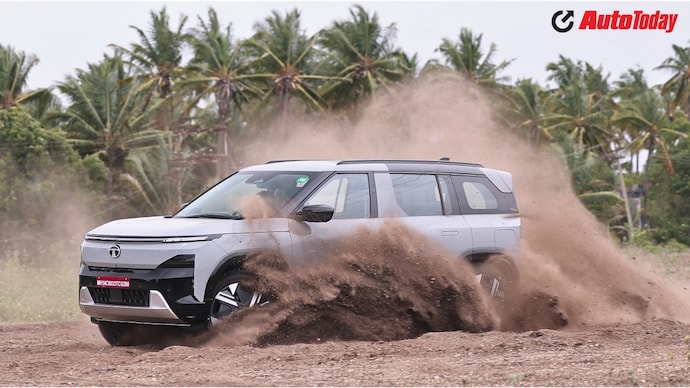
The latest hit from Tata is the Sierra, that has ridden the reincarnation wave and has comfortably settled into being the Indian automaker’s third volume driver behind the Punch and the Nexon that continue to dominate sales charts. The SUV has been the best product to come from Tata in recent times, and excels in many departments, and it is often that the electric versions of Tata cars are a step above their ICE offerings and that is precisely the benchmark that the Sierra.ev as it is called, aims for.
Exterior design
The Sierra.ev carries the same proportions as the ICE, that means it has the same upright stance – brilliant move on Tata’s part of not diluting the Sierra DNA for a more aerodynamic shape and this looks great. It measures the same too, except for the height, that is 1,750mm, about 45mm more than the ICE, and this is because Tata had to maintain the 205mm ground clearance between the two cars and the EV has a battery stuck below it. While it has the same body, there are minor changes, such as the nose, that unlike the black grille element that makes up the contrasting bit on the ICE, the Sierra.ev gets a body coloured panel, while the lower air dam is black. But this change doesn’t hit, the Sierra with a contrasting black element in the middle looks much better.
The EV also gets a different air intake grille and a faux bash plate. In addition, it features a different colour for the alloy wheels, while retaining the design from the ICE. It also gets a Tata.ev badge on the door, a QWD badge on the rear quarter window and fresh detailing for the rear badges. From the rear, the Sierra.ev looks the same as the ICE, and this is also the SUV’s best angle – the upright stance is really cool, the hidden wiper adds to the charm and the near flawless flushness of the glass, taillamps and the tailgate is unique every time one notices it.
And one cannot talk about the Sierra and not mention the blacked out section combining the roof, and glass area at the rear sides. In place of the fuel filler, you get a charger – with an illumination marker to specify state of charging but the charging flap itself felt pretty loose and it wouldn’t take much effort to fully dislodge it.
The Sierra.ev is definitely a looker, and while the Pure Grey colour I drove isn’t very attractive, the Tata has introduced a deep purple colour called Nainital Nocturne that is really cool in person. The SUV gathers all the points for its looks, great road presence and the fact that Tata knew that style will attract customers, and didn’t alter much compared to the ICE Sierra, but personally, the ICE looks a bit better.
Interior design
The cabin space is the same, with the triple-display setup, that looks and feels like it belongs in a very expensive car. The seamless displays give it the tech vibe, while the layered dashboard is stylish and really well executed design wise. The row of buttons on the right side of the dash have been placed neatly, including the rotary dial for the terrain selection. The central console is clean, with the drive selector slotted in a glossy black panel. The front seats are powered, and ventilated, but had slightly odd back/shoulder comfort for my frame, although the wide headrest is really good.
In the rear, the story continues as before, with one minor difference – the floor height which is slightly raised owing to the battery in the floor. And this results in a slightly knees up seating but considering the ample legroom, and headroom, this isn’t much of a problem, but a longer squab could’ve made things much better. The small window, with the speaker mounted on its side and the quarter window panel still feels a bit odd, and intrudes on the glass area, but the integrated blinds are appreciated. And adding to the feeling of space is the almost full-length panoramic sunroof, that makes the cabin feel really airy, and the rear seats being raised compared to the front row, gives occupants here a really good view too. There’s an armrest with cupholders and two Type-C ports too (one is 65W).
Tata has done a much better job of the ICE-EV cabin conversion with the Sierra.ev than they did with Harrier.ev, despite both cars being based on the same platform, and this can be attributed to prismatic cells and cleverer cell to pack packaging of the battery, or just the overall size of the car itself. Whatever the case, the cabin space or comforts are absolutely at par with the Sierra ICE. But for every good looking design piece, there are rough edges, or ill-fitting plastic panels, and for a car that is pretty expensive, this feels just lazy. In addition, the electric powertrain should have let Tata design intuitive storage spaces, especially in the central console, which they haven’t.
The boot is powered as before, but takes its own time to open up, and stops not very high, and individuals above 5’10 will definitely need a ‘mind your head’ sticker on the underside of the tailgate. The space in the boot is impressive, and same as the ICE at 622-litres (floor to roof), but being an EV, this doesn’t have a spare under the boot floor – only a puncture repair kit. There is storage under the bonnet too, with a small but useful frunk, but the plastic cover for this felt flimsy.
Tech and features
Tata is a brand that has expanded its tech focus, and the Sierra.ev is the shining beacon. From the triple hi-res displays, one can gauge just how good the SUV is packed. It gets JBL Audio with soundbar, and Dolby ATMOS, sounds incredible, theres an AR HUD, that is surprisingly useful, even for me, who doesn’t like HUDs and it doesn’t feel distracting. It gets many cameras, even those that can stitch an image of the underbody of the car while on the move, and park itself. While it is a bit gimmicky, the Sierra.ev can park itself, and I did use the summon mode to extract the car out of a parking spot, and then made it do a parallel parking, but I’d be surprised if anyone who buys this car would use this feature more than twice. Also one has to keep pressing the really tough to press buttons on the cookie-shaped key-fob, and sore their fingers up. The auto park can be done while sitting in the car as well.
One can pair a controller to the third display and play games on the go, or while their car is plugged in, it also gets integrated maps that allows one to plan journeys better. And while not a major bit, the sun blind has an extender, and can be adjusted for reach also, often overlooked by most automakers but Tata didn’t. It gets an ADAS suite with all the features and for the most part it works well. There is regen modes too, but for a car pushing the price bracket, three levels - 0 to 3 don’t cut it – rivals get smart regen (one pedal driving modes), and intelligent regen that detects the road ahead with radars and cameras, and lets the car coast or apply regen when it needs to reduce speed, definitely a miss here.
Driving
The spec sheet of the Sierra.ev is a bit interesting. It has two battery packs and total of three different powertrain combinations. The base powertrain comes with a 63kWh battery pack, and a single rear-mounted motor that makes 238bhp and 315Nm of torque. And if you choose the larger 75kWh battery pack, you get a single rear-mounted motor that makes the same torque but less power at 209bhp. And even if they weighed similar (unlikely), the reason behind the heavier car getting a less powerful motor is a mystery, but considering the same torque rating – both will accelerate the same – with the only difference likely to creep in the higher end of its speed limit. But for this review we got behind the wheel of the top-spec QWD variant – 75kWh battery – two motors, the front one being a high performance induction motor rated at 140bhp aiding the 209bhp Permanent Magnet Synchronous Motor at the rear, giving it AWD capability.
504Nm, yes, the Sierra.ev gets a torque figure that bests certain performance cars. Engage Boost mode, and the Sierra.ev has intense acceleration and Tata claims a 5.8 second run to 100kmph. But this is the case with almost all electric cars, and the charm of the instant acceleration doesn’t last that long, but it makes for very good overtakes in whatever situation, what it does lack is progression during acceleration, it is absolutely linear. I drove the Sierra.ev in Eco mode, mostly to keep myself in check, and even in this, the SUV can easily perform all driving tasks. B To add to that, the Sierra.ev feels extremely stable, and planted, it isn’t light and that works in its favour. Now the pedal feel is what makes the experience not so great, the accelerator is mostly soulless, and it doesn’t respond sharply to very quick jabs either, with a deadness for some bit of the pedal travel. The steering could do with more feedback, and while it is much better than a lot of Tata cars, it doesn’t match up to the sharpness and confidence that other EVs are able to deliver.
Now with AWD, the Sierra.ev can venture off the road and Tata let us drive it on a dedicated off-road course. And the way the Sierra.ev nailed every obstacle, some of them not very easy was genuinely impressive, aided of course by the several off-road driving modes that manage the delivery of power to the wheels and maintain traction. What dulled this experience however was the deadness of the steering and the accelerator, every obstacle was overcome mostly by a constant push on the pedal and the Sierra.ev just climbing or crossing it, it makes the job very easy, but it hinders the joy of off-roading a bit.
The Sierra.ev is the most dynamic Tata out there, but this is not a very high bar. It feels heavy, there is body roll, but pushing it isn’t alarming, and the SUV feels stable, and can lean on corners and feel stable through twisties, but the steering again spoils this a bit. But this has been common with models from Tata, and the Sierra.ev does outshine all of them when it comes to handling, but not against its rivals.
What the Sierra.ev does set the benchmark at is ride. The frequency-dependent damping, is magic at work. And despite me deliberately trying to throw up dirt in a not at all flat field, the Sierra.ev coped brilliantly. On smooth roads, the Sierra.ev doesn’t break a sweat, albeit with a bit of stiffness, but even at this nothing sharp filters in. Speed breakers and potholes are eaten for breakfast, and bad roads are where Sierra.ev enjoys its time, but it does feel stiff, and lacks a bit of softness that other midsize EVs offer. And while it doesn’t ride like its elder siblings that feel like an armoured vehicle, the Sierra.ev isn’t far behind, and amongst its rivals, the Tata feels best to to take on India’s roads.
Verdict
The Sierra.ev is effectively the best car that wears a Tata badge. It looks great, comes with every single piece of tech on offer, is quick, can go off-road, can be enjoyable even. And it doesn’t miss out on practicality, the space is great, it is comfortable for every scenario, and most of all, very safe. What it does feel is expensive, with the top-spec touching Rs 26 lakh, the Sierra.ev isn’t really hiding its price tag, and yes it does justify it against its segment rivals, but it is still a big cheque for a car that still could do with better quality control, and refinement of the minor driving experiences. But I wouldn’t be surprised if the Sierra.ev sales start encroaching on those of the ‘safe’ and established rivals.
Subscribe to Auto Today Magazine
The latest hit from Tata is the Sierra, that has ridden the reincarnation wave and has comfortably settled into being the Indian automaker’s third volume driver behind the Punch and the Nexon that continue to dominate sales charts. The SUV has been the best product to come from Tata in recent times, and excels in many departments, and it is often that the electric versions of Tata cars are a step above their ICE offerings and that is precisely the benchmark that the Sierra.ev as it is called, aims for.
Exterior design
The Sierra.ev carries the same proportions as the ICE, that means it has the same upright stance – brilliant move on Tata’s part of not diluting the Sierra DNA for a more aerodynamic shape and this looks great. It measures the same too, except for the height, that is 1,750mm, about 45mm more than the ICE, and this is because Tata had to maintain the 205mm ground clearance between the two cars and the EV has a battery stuck below it. While it has the same body, there are minor changes, such as the nose, that unlike the black grille element that makes up the contrasting bit on the ICE, the Sierra.ev gets a body coloured panel, while the lower air dam is black. But this change doesn’t hit, the Sierra with a contrasting black element in the middle looks much better.
The EV also gets a different air intake grille and a faux bash plate. In addition, it features a different colour for the alloy wheels, while retaining the design from the ICE. It also gets a Tata.ev badge on the door, a QWD badge on the rear quarter window and fresh detailing for the rear badges. From the rear, the Sierra.ev looks the same as the ICE, and this is also the SUV’s best angle – the upright stance is really cool, the hidden wiper adds to the charm and the near flawless flushness of the glass, taillamps and the tailgate is unique every time one notices it.
And one cannot talk about the Sierra and not mention the blacked out section combining the roof, and glass area at the rear sides. In place of the fuel filler, you get a charger – with an illumination marker to specify state of charging but the charging flap itself felt pretty loose and it wouldn’t take much effort to fully dislodge it.
The Sierra.ev is definitely a looker, and while the Pure Grey colour I drove isn’t very attractive, the Tata has introduced a deep purple colour called Nainital Nocturne that is really cool in person. The SUV gathers all the points for its looks, great road presence and the fact that Tata knew that style will attract customers, and didn’t alter much compared to the ICE Sierra, but personally, the ICE looks a bit better.
Interior design
The cabin space is the same, with the triple-display setup, that looks and feels like it belongs in a very expensive car. The seamless displays give it the tech vibe, while the layered dashboard is stylish and really well executed design wise. The row of buttons on the right side of the dash have been placed neatly, including the rotary dial for the terrain selection. The central console is clean, with the drive selector slotted in a glossy black panel. The front seats are powered, and ventilated, but had slightly odd back/shoulder comfort for my frame, although the wide headrest is really good.
In the rear, the story continues as before, with one minor difference – the floor height which is slightly raised owing to the battery in the floor. And this results in a slightly knees up seating but considering the ample legroom, and headroom, this isn’t much of a problem, but a longer squab could’ve made things much better. The small window, with the speaker mounted on its side and the quarter window panel still feels a bit odd, and intrudes on the glass area, but the integrated blinds are appreciated. And adding to the feeling of space is the almost full-length panoramic sunroof, that makes the cabin feel really airy, and the rear seats being raised compared to the front row, gives occupants here a really good view too. There’s an armrest with cupholders and two Type-C ports too (one is 65W).
Tata has done a much better job of the ICE-EV cabin conversion with the Sierra.ev than they did with Harrier.ev, despite both cars being based on the same platform, and this can be attributed to prismatic cells and cleverer cell to pack packaging of the battery, or just the overall size of the car itself. Whatever the case, the cabin space or comforts are absolutely at par with the Sierra ICE. But for every good looking design piece, there are rough edges, or ill-fitting plastic panels, and for a car that is pretty expensive, this feels just lazy. In addition, the electric powertrain should have let Tata design intuitive storage spaces, especially in the central console, which they haven’t.
The boot is powered as before, but takes its own time to open up, and stops not very high, and individuals above 5’10 will definitely need a ‘mind your head’ sticker on the underside of the tailgate. The space in the boot is impressive, and same as the ICE at 622-litres (floor to roof), but being an EV, this doesn’t have a spare under the boot floor – only a puncture repair kit. There is storage under the bonnet too, with a small but useful frunk, but the plastic cover for this felt flimsy.
Tech and features
Tata is a brand that has expanded its tech focus, and the Sierra.ev is the shining beacon. From the triple hi-res displays, one can gauge just how good the SUV is packed. It gets JBL Audio with soundbar, and Dolby ATMOS, sounds incredible, theres an AR HUD, that is surprisingly useful, even for me, who doesn’t like HUDs and it doesn’t feel distracting. It gets many cameras, even those that can stitch an image of the underbody of the car while on the move, and park itself. While it is a bit gimmicky, the Sierra.ev can park itself, and I did use the summon mode to extract the car out of a parking spot, and then made it do a parallel parking, but I’d be surprised if anyone who buys this car would use this feature more than twice. Also one has to keep pressing the really tough to press buttons on the cookie-shaped key-fob, and sore their fingers up. The auto park can be done while sitting in the car as well.
One can pair a controller to the third display and play games on the go, or while their car is plugged in, it also gets integrated maps that allows one to plan journeys better. And while not a major bit, the sun blind has an extender, and can be adjusted for reach also, often overlooked by most automakers but Tata didn’t. It gets an ADAS suite with all the features and for the most part it works well. There is regen modes too, but for a car pushing the price bracket, three levels - 0 to 3 don’t cut it – rivals get smart regen (one pedal driving modes), and intelligent regen that detects the road ahead with radars and cameras, and lets the car coast or apply regen when it needs to reduce speed, definitely a miss here.
Driving
The spec sheet of the Sierra.ev is a bit interesting. It has two battery packs and total of three different powertrain combinations. The base powertrain comes with a 63kWh battery pack, and a single rear-mounted motor that makes 238bhp and 315Nm of torque. And if you choose the larger 75kWh battery pack, you get a single rear-mounted motor that makes the same torque but less power at 209bhp. And even if they weighed similar (unlikely), the reason behind the heavier car getting a less powerful motor is a mystery, but considering the same torque rating – both will accelerate the same – with the only difference likely to creep in the higher end of its speed limit. But for this review we got behind the wheel of the top-spec QWD variant – 75kWh battery – two motors, the front one being a high performance induction motor rated at 140bhp aiding the 209bhp Permanent Magnet Synchronous Motor at the rear, giving it AWD capability.
504Nm, yes, the Sierra.ev gets a torque figure that bests certain performance cars. Engage Boost mode, and the Sierra.ev has intense acceleration and Tata claims a 5.8 second run to 100kmph. But this is the case with almost all electric cars, and the charm of the instant acceleration doesn’t last that long, but it makes for very good overtakes in whatever situation, what it does lack is progression during acceleration, it is absolutely linear. I drove the Sierra.ev in Eco mode, mostly to keep myself in check, and even in this, the SUV can easily perform all driving tasks. B To add to that, the Sierra.ev feels extremely stable, and planted, it isn’t light and that works in its favour. Now the pedal feel is what makes the experience not so great, the accelerator is mostly soulless, and it doesn’t respond sharply to very quick jabs either, with a deadness for some bit of the pedal travel. The steering could do with more feedback, and while it is much better than a lot of Tata cars, it doesn’t match up to the sharpness and confidence that other EVs are able to deliver.
Now with AWD, the Sierra.ev can venture off the road and Tata let us drive it on a dedicated off-road course. And the way the Sierra.ev nailed every obstacle, some of them not very easy was genuinely impressive, aided of course by the several off-road driving modes that manage the delivery of power to the wheels and maintain traction. What dulled this experience however was the deadness of the steering and the accelerator, every obstacle was overcome mostly by a constant push on the pedal and the Sierra.ev just climbing or crossing it, it makes the job very easy, but it hinders the joy of off-roading a bit.
The Sierra.ev is the most dynamic Tata out there, but this is not a very high bar. It feels heavy, there is body roll, but pushing it isn’t alarming, and the SUV feels stable, and can lean on corners and feel stable through twisties, but the steering again spoils this a bit. But this has been common with models from Tata, and the Sierra.ev does outshine all of them when it comes to handling, but not against its rivals.
What the Sierra.ev does set the benchmark at is ride. The frequency-dependent damping, is magic at work. And despite me deliberately trying to throw up dirt in a not at all flat field, the Sierra.ev coped brilliantly. On smooth roads, the Sierra.ev doesn’t break a sweat, albeit with a bit of stiffness, but even at this nothing sharp filters in. Speed breakers and potholes are eaten for breakfast, and bad roads are where Sierra.ev enjoys its time, but it does feel stiff, and lacks a bit of softness that other midsize EVs offer. And while it doesn’t ride like its elder siblings that feel like an armoured vehicle, the Sierra.ev isn’t far behind, and amongst its rivals, the Tata feels best to to take on India’s roads.
Verdict
The Sierra.ev is effectively the best car that wears a Tata badge. It looks great, comes with every single piece of tech on offer, is quick, can go off-road, can be enjoyable even. And it doesn’t miss out on practicality, the space is great, it is comfortable for every scenario, and most of all, very safe. What it does feel is expensive, with the top-spec touching Rs 26 lakh, the Sierra.ev isn’t really hiding its price tag, and yes it does justify it against its segment rivals, but it is still a big cheque for a car that still could do with better quality control, and refinement of the minor driving experiences. But I wouldn’t be surprised if the Sierra.ev sales start encroaching on those of the ‘safe’ and established rivals.
Subscribe to Auto Today Magazine

