Beyond NEET, where can PCB students go? India's entrance exam gap
Students who choose PCM or PCB after Class 10 can find later career switches severely restricted by India's entrance rules. Experts and students say the system offers too few second chances beyond JEE and NEET.
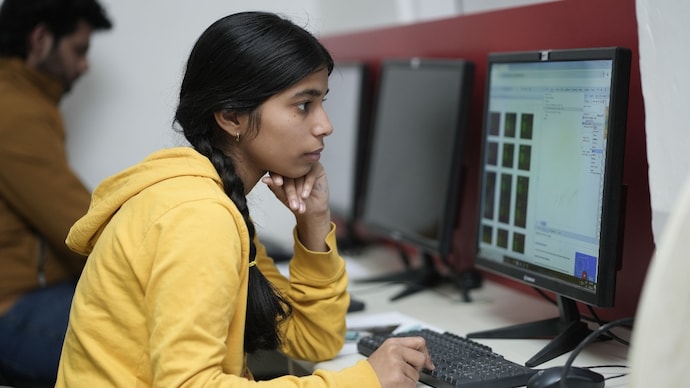
After PCM or PCB, the doors begin to quietly close... India's entrance ecosystem leaves too little room for second chances.
This is the big statement emerging out of the Jantar Mantar protests today.
Students choosing Physics, Chemistry and Biology (PCB) or Physics, Chemistry and Mathematics (PCM) after Class 10 are often told they are deciding between medicine and engineering. But education experts argue they are also making a choice that determines eligibility for several competitive exams and career pathways years later.
India's entrance ecosystem remains heavily dependent on rigid subject prerequisites. Students without Mathematics cannot apply to most engineering programmes through JEE Main or state entrance exams, while those without Biology are ineligible for NEET UG. Similar eligibility conditions exist across several professional courses, limiting mobility once students complete Class 12.
Educationists say this becomes a challenge for those who realise after two years of preparation that they want to pursue a different field. Unlike many countries that offer foundation or bridge programmes, India's admission system provides few opportunities to switch streams.
I chose PCB because becoming a doctor was the only career I knew then, a student now doing a BBA tells us.
“But by Class 12, I realised medicine wasn't for me. That's when I discovered almost every other door was closed. I couldn't appear for engineering entrances because I didn't have Mathematics, and there were hardly any government examinations where my knowledge of Physics, Chemistry and Biology could be put to use. I felt trapped. For months, I slipped into depression because I didn't know what options were left. It wasn't that I hadn't studied hard – I just didn't have a platform to prove what I had learnt,” he added.
A FLEXIBLE EDUCATION POLICY, BUT RIGID ELIGIBILITY
The issue also raises questions about the implementation of the National Education Policy (NEP) 2020, which promotes multidisciplinary learning and flexibility. Experts say while universities are introducing interdisciplinary programmes, admission rules continue to rely on fixed Class 11–12 subject combinations.
Educationists argue that India's examination ecosystem has become too dependent on a handful of high-stakes tests. Students who spend two years studying PCB or PCM but do not qualify for JEE or NEET often have few government-recognised examinations where their knowledge of Physics, Chemistry, Mathematics or Biology can be meaningfully assessed.
India needs more government examinations that require only a Class 12 pass certificate and those which test in core science aptitude like Physics, Chemistry, Biology, Mathematics etc. Such exams could open pathways into applied sciences, research support, technical services and other allied fields, ensuring students are not judged solely by JEE or NEET.
The larger question is whether India's examination system is ready to treat Class 12 as a foundation rather than a final filter. A broader, more flexible examination framework could give science students more than one opportunity to build a career without compromising academic standards.
After PCM or PCB, the doors begin to quietly close... India's entrance ecosystem leaves too little room for second chances.
This is the big statement emerging out of the Jantar Mantar protests today.
Students choosing Physics, Chemistry and Biology (PCB) or Physics, Chemistry and Mathematics (PCM) after Class 10 are often told they are deciding between medicine and engineering. But education experts argue they are also making a choice that determines eligibility for several competitive exams and career pathways years later.
India's entrance ecosystem remains heavily dependent on rigid subject prerequisites. Students without Mathematics cannot apply to most engineering programmes through JEE Main or state entrance exams, while those without Biology are ineligible for NEET UG. Similar eligibility conditions exist across several professional courses, limiting mobility once students complete Class 12.
Educationists say this becomes a challenge for those who realise after two years of preparation that they want to pursue a different field. Unlike many countries that offer foundation or bridge programmes, India's admission system provides few opportunities to switch streams.
I chose PCB because becoming a doctor was the only career I knew then, a student now doing a BBA tells us.
“But by Class 12, I realised medicine wasn't for me. That's when I discovered almost every other door was closed. I couldn't appear for engineering entrances because I didn't have Mathematics, and there were hardly any government examinations where my knowledge of Physics, Chemistry and Biology could be put to use. I felt trapped. For months, I slipped into depression because I didn't know what options were left. It wasn't that I hadn't studied hard – I just didn't have a platform to prove what I had learnt,” he added.
A FLEXIBLE EDUCATION POLICY, BUT RIGID ELIGIBILITY
The issue also raises questions about the implementation of the National Education Policy (NEP) 2020, which promotes multidisciplinary learning and flexibility. Experts say while universities are introducing interdisciplinary programmes, admission rules continue to rely on fixed Class 11–12 subject combinations.
Educationists argue that India's examination ecosystem has become too dependent on a handful of high-stakes tests. Students who spend two years studying PCB or PCM but do not qualify for JEE or NEET often have few government-recognised examinations where their knowledge of Physics, Chemistry, Mathematics or Biology can be meaningfully assessed.
India needs more government examinations that require only a Class 12 pass certificate and those which test in core science aptitude like Physics, Chemistry, Biology, Mathematics etc. Such exams could open pathways into applied sciences, research support, technical services and other allied fields, ensuring students are not judged solely by JEE or NEET.
The larger question is whether India's examination system is ready to treat Class 12 as a foundation rather than a final filter. A broader, more flexible examination framework could give science students more than one opportunity to build a career without compromising academic standards.
After PCM or PCB, the doors begin to quietly close... India's entrance ecosystem leaves too little room for second chances.
This is the big statement emerging out of the Jantar Mantar protests today.
Students choosing Physics, Chemistry and Biology (PCB) or Physics, Chemistry and Mathematics (PCM) after Class 10 are often told they are deciding between medicine and engineering. But education experts argue they are also making a choice that determines eligibility for several competitive exams and career pathways years later.
India's entrance ecosystem remains heavily dependent on rigid subject prerequisites. Students without Mathematics cannot apply to most engineering programmes through JEE Main or state entrance exams, while those without Biology are ineligible for NEET UG. Similar eligibility conditions exist across several professional courses, limiting mobility once students complete Class 12.
Educationists say this becomes a challenge for those who realise after two years of preparation that they want to pursue a different field. Unlike many countries that offer foundation or bridge programmes, India's admission system provides few opportunities to switch streams.
I chose PCB because becoming a doctor was the only career I knew then, a student now doing a BBA tells us.
“But by Class 12, I realised medicine wasn't for me. That's when I discovered almost every other door was closed. I couldn't appear for engineering entrances because I didn't have Mathematics, and there were hardly any government examinations where my knowledge of Physics, Chemistry and Biology could be put to use. I felt trapped. For months, I slipped into depression because I didn't know what options were left. It wasn't that I hadn't studied hard – I just didn't have a platform to prove what I had learnt,” he added.
A FLEXIBLE EDUCATION POLICY, BUT RIGID ELIGIBILITY
The issue also raises questions about the implementation of the National Education Policy (NEP) 2020, which promotes multidisciplinary learning and flexibility. Experts say while universities are introducing interdisciplinary programmes, admission rules continue to rely on fixed Class 11–12 subject combinations.
Educationists argue that India's examination ecosystem has become too dependent on a handful of high-stakes tests. Students who spend two years studying PCB or PCM but do not qualify for JEE or NEET often have few government-recognised examinations where their knowledge of Physics, Chemistry, Mathematics or Biology can be meaningfully assessed.
India needs more government examinations that require only a Class 12 pass certificate and those which test in core science aptitude like Physics, Chemistry, Biology, Mathematics etc. Such exams could open pathways into applied sciences, research support, technical services and other allied fields, ensuring students are not judged solely by JEE or NEET.
The larger question is whether India's examination system is ready to treat Class 12 as a foundation rather than a final filter. A broader, more flexible examination framework could give science students more than one opportunity to build a career without compromising academic standards.

