New Education Secretary, same old challenges: What changes for NEET, CUET, and NTA
Naresh Pal Gangwar has taken charge as Higher Education Secretary. From NEET and CUET to NTA, the new education secretary inherits an unfinished reform agenda.
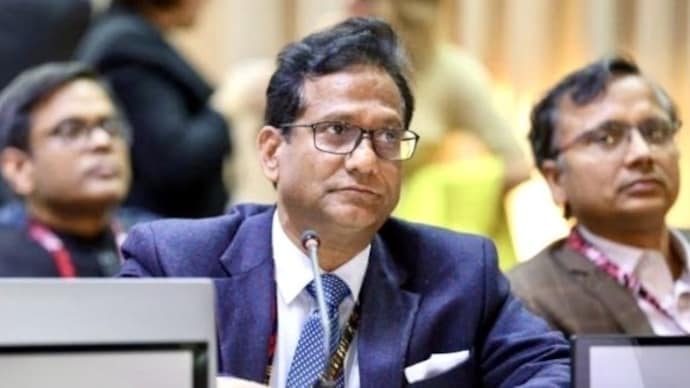
With a new bureaucratic leadership at the Department of Higher Education, several long-pending reforms under the National Education Policy (NEP) 2020 remain unfinished, ranging from the overhaul of the regulatory framework to the creation of a unified credit system. The Centre's latest bureaucratic reshuffle has brought a new face to the Department of Higher Education, with senior IAS officer Naresh Pal Gangwar taking over as Higher Education Secretary, replacing Vineet Joshi.
The change comes at a time when the ministry is under scrutiny over examination reforms and implementation of the National Education Policy (NEP) 2020.
While the change in leadership may provide fresh momentum, the new secretary inherits a long list of pending reforms that have either moved slowly or remain stuck in the legislative process.
Here are five key higher education reforms still awaiting implementation:
1. A single higher education regulator
One of the biggest promises of NEP 2020 was replacing multiple regulatory bodies with a single overarching institution. The proposed Viksit Bharat Shiksha Adhishthan (VBSA) Bill seeks to subsume existing regulatory functions under one umbrella body, reducing overlaps between agencies.
The legislation, however, remains under the scrutiny of a Joint Parliamentary Committee amid concerns over centralisation, university autonomy and funding mechanisms.
2. Four verticals of higher education governance
The NEP envisaged separating regulation, accreditation, funding and academic standard-setting into four independent verticals. While discussions and consultations have continued, the transition from the existing regulatory architecture has yet to be completed.
Delayed implementation has left universities operating under overlapping rules and multiple compliance requirements.
3. Academic Bank of Credits and seamless student mobility
Although the Academic Bank of Credits (ABC) has been rolled out and millions of student IDs have been created, seamless credit transfer across universities remains uneven.
Several institutions are yet to fully operationalise multiple entry and exit provisions, credit portability and interdisciplinary mobility envisioned under the NEP. Students continue to face difficulties when attempting to transfer credits across institutions and states.
4. Foreign universities in India
The University Grants Commission (UGC) introduced regulations allowing top-ranked foreign universities to establish campuses in India. While a few institutions have announced plans, the larger vision of attracting globally reputed universities is still in its early stages.
Questions over regulatory clarity, land availability, academic autonomy and financial viability continue to slow wider participation.
5. Digital and examination reforms
The past two years have exposed vulnerabilities in India's examination ecosystem, with controversies over paper leaks and irregularities bringing assessment reforms to the forefront. With the government planning structural changes in the NTA and revamping the conduct of entrance exams, including NEET UG and CUET, the new secretary will be tasked with restoring confidence in India's high-stakes exam system.
Beyond entrance examinations, the higher education system is yet to fully adopt technology-driven, secure and interoperable examination and evaluation systems across universities. The challenge extends to strengthening governance, transparency and institutional accountability alongside digital infrastructure.
Gangwar assumes charge at a crucial juncture as the ministry balances immediate concerns over examination integrity with the long-term implementation of NEP reforms. While several initiatives have been launched over the past five years, many structural changes envisioned in the policy are still works in progress.
For universities and students alike, the expectation is that the change in administrative leadership will accelerate reforms that have remained pending despite repeated policy announcements.
With a new bureaucratic leadership at the Department of Higher Education, several long-pending reforms under the National Education Policy (NEP) 2020 remain unfinished, ranging from the overhaul of the regulatory framework to the creation of a unified credit system. The Centre's latest bureaucratic reshuffle has brought a new face to the Department of Higher Education, with senior IAS officer Naresh Pal Gangwar taking over as Higher Education Secretary, replacing Vineet Joshi.
The change comes at a time when the ministry is under scrutiny over examination reforms and implementation of the National Education Policy (NEP) 2020.
While the change in leadership may provide fresh momentum, the new secretary inherits a long list of pending reforms that have either moved slowly or remain stuck in the legislative process.
Here are five key higher education reforms still awaiting implementation:
1. A single higher education regulator
One of the biggest promises of NEP 2020 was replacing multiple regulatory bodies with a single overarching institution. The proposed Viksit Bharat Shiksha Adhishthan (VBSA) Bill seeks to subsume existing regulatory functions under one umbrella body, reducing overlaps between agencies.
The legislation, however, remains under the scrutiny of a Joint Parliamentary Committee amid concerns over centralisation, university autonomy and funding mechanisms.
2. Four verticals of higher education governance
The NEP envisaged separating regulation, accreditation, funding and academic standard-setting into four independent verticals. While discussions and consultations have continued, the transition from the existing regulatory architecture has yet to be completed.
Delayed implementation has left universities operating under overlapping rules and multiple compliance requirements.
3. Academic Bank of Credits and seamless student mobility
Although the Academic Bank of Credits (ABC) has been rolled out and millions of student IDs have been created, seamless credit transfer across universities remains uneven.
Several institutions are yet to fully operationalise multiple entry and exit provisions, credit portability and interdisciplinary mobility envisioned under the NEP. Students continue to face difficulties when attempting to transfer credits across institutions and states.
4. Foreign universities in India
The University Grants Commission (UGC) introduced regulations allowing top-ranked foreign universities to establish campuses in India. While a few institutions have announced plans, the larger vision of attracting globally reputed universities is still in its early stages.
Questions over regulatory clarity, land availability, academic autonomy and financial viability continue to slow wider participation.
5. Digital and examination reforms
The past two years have exposed vulnerabilities in India's examination ecosystem, with controversies over paper leaks and irregularities bringing assessment reforms to the forefront. With the government planning structural changes in the NTA and revamping the conduct of entrance exams, including NEET UG and CUET, the new secretary will be tasked with restoring confidence in India's high-stakes exam system.
Beyond entrance examinations, the higher education system is yet to fully adopt technology-driven, secure and interoperable examination and evaluation systems across universities. The challenge extends to strengthening governance, transparency and institutional accountability alongside digital infrastructure.
Gangwar assumes charge at a crucial juncture as the ministry balances immediate concerns over examination integrity with the long-term implementation of NEP reforms. While several initiatives have been launched over the past five years, many structural changes envisioned in the policy are still works in progress.
For universities and students alike, the expectation is that the change in administrative leadership will accelerate reforms that have remained pending despite repeated policy announcements.
With a new bureaucratic leadership at the Department of Higher Education, several long-pending reforms under the National Education Policy (NEP) 2020 remain unfinished, ranging from the overhaul of the regulatory framework to the creation of a unified credit system. The Centre's latest bureaucratic reshuffle has brought a new face to the Department of Higher Education, with senior IAS officer Naresh Pal Gangwar taking over as Higher Education Secretary, replacing Vineet Joshi.
The change comes at a time when the ministry is under scrutiny over examination reforms and implementation of the National Education Policy (NEP) 2020.
While the change in leadership may provide fresh momentum, the new secretary inherits a long list of pending reforms that have either moved slowly or remain stuck in the legislative process.
Here are five key higher education reforms still awaiting implementation:
1. A single higher education regulator
One of the biggest promises of NEP 2020 was replacing multiple regulatory bodies with a single overarching institution. The proposed Viksit Bharat Shiksha Adhishthan (VBSA) Bill seeks to subsume existing regulatory functions under one umbrella body, reducing overlaps between agencies.
The legislation, however, remains under the scrutiny of a Joint Parliamentary Committee amid concerns over centralisation, university autonomy and funding mechanisms.
2. Four verticals of higher education governance
The NEP envisaged separating regulation, accreditation, funding and academic standard-setting into four independent verticals. While discussions and consultations have continued, the transition from the existing regulatory architecture has yet to be completed.
Delayed implementation has left universities operating under overlapping rules and multiple compliance requirements.
3. Academic Bank of Credits and seamless student mobility
Although the Academic Bank of Credits (ABC) has been rolled out and millions of student IDs have been created, seamless credit transfer across universities remains uneven.
Several institutions are yet to fully operationalise multiple entry and exit provisions, credit portability and interdisciplinary mobility envisioned under the NEP. Students continue to face difficulties when attempting to transfer credits across institutions and states.
4. Foreign universities in India
The University Grants Commission (UGC) introduced regulations allowing top-ranked foreign universities to establish campuses in India. While a few institutions have announced plans, the larger vision of attracting globally reputed universities is still in its early stages.
Questions over regulatory clarity, land availability, academic autonomy and financial viability continue to slow wider participation.
5. Digital and examination reforms
The past two years have exposed vulnerabilities in India's examination ecosystem, with controversies over paper leaks and irregularities bringing assessment reforms to the forefront. With the government planning structural changes in the NTA and revamping the conduct of entrance exams, including NEET UG and CUET, the new secretary will be tasked with restoring confidence in India's high-stakes exam system.
Beyond entrance examinations, the higher education system is yet to fully adopt technology-driven, secure and interoperable examination and evaluation systems across universities. The challenge extends to strengthening governance, transparency and institutional accountability alongside digital infrastructure.
Gangwar assumes charge at a crucial juncture as the ministry balances immediate concerns over examination integrity with the long-term implementation of NEP reforms. While several initiatives have been launched over the past five years, many structural changes envisioned in the policy are still works in progress.
For universities and students alike, the expectation is that the change in administrative leadership will accelerate reforms that have remained pending despite repeated policy announcements.

