US to replace 'duration of status' with fixed stay, Indian students face new uncertainty
A DHS proposal would replace duration-of-status rules with a fixed stay period for international students in the US. The change could complicate planning for Indian students, especially those on longer academic tracks.
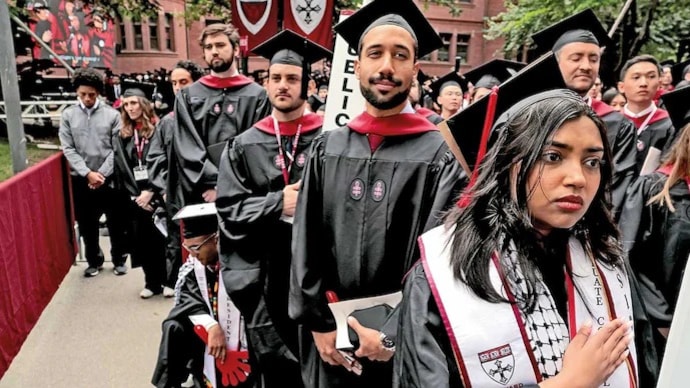
Study abroad aspirants are steering a rising and an uncertain policy environment. The United States, the leading destination for Indian students, is once again at the centre of an immigration policy change that could affect future enrolments.
The US Department of Homeland Security (DHS) has introduced replacing the existing "Duration of Status" (D/S) system with a fixed period of authorised stay for international students.
At present, students on F, J and I visas are allowed to remain in the US for the duration of their academic programme, provided they maintain their visa status.
Under the new rule, students would instead receive a fixed period of stay and would have to apply for extensions if their programme extends beyond that period.
The introductory step is part of a broader tightening of immigration policies under the Trump administration, which has argued that stricter visa oversight is necessary for immigration enforcement and national security.
“For decades, foreign students have been admitted into the US indefinitely, allowing thousands to abuse our immigration system by perpetually enrolling in courses to avoid having to leave the US,” DHS Secretary Markwayne Mullin said in a statement.
The department said that a 1978 policy permitted foreign students to stay enrolled for an indefinite period, allowing thousands to remain in the country by repeatedly enrolling in courses instead of departing.
"Moving from Duration of Status to a fixed-term model adds another layer of uncertainty to an already complex journey," says Dhruv Krishnaraj, Co-Founder, Student Circus.
WHO COULD BE AFFECTED?
Most international students in the United States study on F-1 student visas, which currently allow them to stay in the country for the duration of their academic programme under the "Duration of Status" (D/S) system, as long as they maintain their student status.
Most bachelor's degrees are completed in four years, while master's programmes generally take one to two years. Doctoral (PhD) programmes, however, usually take five to seven years, and in some cases even longer because of research and dissertation work.
Laboratory work or assistantships are also part of the stay for longer periods.
STEM courses are the favourite for Indian students in the US.
The change is likely to affect students enrolled in doctoral programmes, research-based courses and other long-duration academic programmes the most.
According to the Open Doors 2024–25 report, nearly 64 per cent of Indian students in the US are enroled in graduate programmes out of the 3.7 lakh, while about 27 per cent are pursuing undergraduate studies.
The number affected is expected to be over 1 lakh.
Under the proposed system, students whose programmes extend beyond their approved period of stay would have to apply for a visa extension.
Laxhmi Iyer, Education Management Professional at StudyIn, said, "STEM students are likely to be affected by the recent developments. They are already sceptical because of policy uncertainty. This could also benefit destinations such as Europe, where a larger share of Indian students may choose to apply."
The new rule requires visa holders seeking extra time to finish their studies to apply directly to the US Citizenship and Immigration Services (USCIS) for an Extension of Stay.
INDIA REMAINS THE LARGEST SOURCE OF STUDENTS
Despite policy changes, demand for US education remains strong. The number stands at 3.7 lakh and impacts the whole country. Every year this intake of Indian students in the US is highly crucial.
Not only are international students critical to the US economy, but the survival of many higher education institutions also depends, to a large extent, on international enrolments.
As a result, universities run programmes designed to attract students from different regions of the world.
"The bigger question is what message this sends to global talent. American universities invest enormously in attracting and educating some of the world’s best students," says Dhruv Krishnaraj.
Recent months have seen stricter visa scrutiny, expanded background checks, increased compliance monitoring of universities and continued debate around work authorisation programmes such as Optional Practical Training (OPT).
While the US administration maintains that these measures are intended to strengthen immigration controls, education experts say policy predictability is increasingly influencing students' destination choices.
Germany is emerging as one of the biggest beneficiaries of the US government's decision. The number of student enquiries for studying in Germany has skyrocketed.
For Indian families, the financial stakes remain highly important.
Depending on the university and programme, the cost of studying in the US can range from Rs 35 lakh to more than Rs 1 crore, making visa certainty an important consideration alongside academic quality.
EXPERTS CALL FOR EARLY PLANNING
Saurabh Arora, Founder and CEO of University Living, said the proposed rule would require students to begin visa planning much earlier than before.
"The finalisation of the DHS rule is an important development, particularly for students planning to pursue longer-duration programmes in the US. While the US continues to be one of the most preferred destinations for Indian students, the move from 'duration of status' to a fixed admission period introduces an additional consideration for students whose programmes extend beyond their initial period of admission."
He said students pursuing research-intensive programmes would need to understand extension timelines well before beginning their courses.
Arora also noted that India continues to dominate international enrolments in the US, with over 363,000 Indian students currently studying there.
However, he said students and parents are increasingly evaluating destinations based not only on university rankings but also on visa regulations, post-study work opportunities and long-term immigration pathways.
The proposed DHS rule does not alter admission policies at American universities, nor does it change the demand for US education in the immediate term.
However, it introduces an additional compliance requirement for students whose programmes extend beyond the initially approved period of stay.
The lack of certainty will affect students the most, not the lack of opportunity.
Study abroad aspirants are steering a rising and an uncertain policy environment. The United States, the leading destination for Indian students, is once again at the centre of an immigration policy change that could affect future enrolments.
The US Department of Homeland Security (DHS) has introduced replacing the existing "Duration of Status" (D/S) system with a fixed period of authorised stay for international students.
At present, students on F, J and I visas are allowed to remain in the US for the duration of their academic programme, provided they maintain their visa status.
Under the new rule, students would instead receive a fixed period of stay and would have to apply for extensions if their programme extends beyond that period.
The introductory step is part of a broader tightening of immigration policies under the Trump administration, which has argued that stricter visa oversight is necessary for immigration enforcement and national security.
“For decades, foreign students have been admitted into the US indefinitely, allowing thousands to abuse our immigration system by perpetually enrolling in courses to avoid having to leave the US,” DHS Secretary Markwayne Mullin said in a statement.
The department said that a 1978 policy permitted foreign students to stay enrolled for an indefinite period, allowing thousands to remain in the country by repeatedly enrolling in courses instead of departing.
"Moving from Duration of Status to a fixed-term model adds another layer of uncertainty to an already complex journey," says Dhruv Krishnaraj, Co-Founder, Student Circus.
WHO COULD BE AFFECTED?
Most international students in the United States study on F-1 student visas, which currently allow them to stay in the country for the duration of their academic programme under the "Duration of Status" (D/S) system, as long as they maintain their student status.
Most bachelor's degrees are completed in four years, while master's programmes generally take one to two years. Doctoral (PhD) programmes, however, usually take five to seven years, and in some cases even longer because of research and dissertation work.
Laboratory work or assistantships are also part of the stay for longer periods.
STEM courses are the favourite for Indian students in the US.
The change is likely to affect students enrolled in doctoral programmes, research-based courses and other long-duration academic programmes the most.
According to the Open Doors 2024–25 report, nearly 64 per cent of Indian students in the US are enroled in graduate programmes out of the 3.7 lakh, while about 27 per cent are pursuing undergraduate studies.
The number affected is expected to be over 1 lakh.
Under the proposed system, students whose programmes extend beyond their approved period of stay would have to apply for a visa extension.
Laxhmi Iyer, Education Management Professional at StudyIn, said, "STEM students are likely to be affected by the recent developments. They are already sceptical because of policy uncertainty. This could also benefit destinations such as Europe, where a larger share of Indian students may choose to apply."
The new rule requires visa holders seeking extra time to finish their studies to apply directly to the US Citizenship and Immigration Services (USCIS) for an Extension of Stay.
INDIA REMAINS THE LARGEST SOURCE OF STUDENTS
Despite policy changes, demand for US education remains strong. The number stands at 3.7 lakh and impacts the whole country. Every year this intake of Indian students in the US is highly crucial.
Not only are international students critical to the US economy, but the survival of many higher education institutions also depends, to a large extent, on international enrolments.
As a result, universities run programmes designed to attract students from different regions of the world.
"The bigger question is what message this sends to global talent. American universities invest enormously in attracting and educating some of the world’s best students," says Dhruv Krishnaraj.
Recent months have seen stricter visa scrutiny, expanded background checks, increased compliance monitoring of universities and continued debate around work authorisation programmes such as Optional Practical Training (OPT).
While the US administration maintains that these measures are intended to strengthen immigration controls, education experts say policy predictability is increasingly influencing students' destination choices.
Germany is emerging as one of the biggest beneficiaries of the US government's decision. The number of student enquiries for studying in Germany has skyrocketed.
For Indian families, the financial stakes remain highly important.
Depending on the university and programme, the cost of studying in the US can range from Rs 35 lakh to more than Rs 1 crore, making visa certainty an important consideration alongside academic quality.
EXPERTS CALL FOR EARLY PLANNING
Saurabh Arora, Founder and CEO of University Living, said the proposed rule would require students to begin visa planning much earlier than before.
"The finalisation of the DHS rule is an important development, particularly for students planning to pursue longer-duration programmes in the US. While the US continues to be one of the most preferred destinations for Indian students, the move from 'duration of status' to a fixed admission period introduces an additional consideration for students whose programmes extend beyond their initial period of admission."
He said students pursuing research-intensive programmes would need to understand extension timelines well before beginning their courses.
Arora also noted that India continues to dominate international enrolments in the US, with over 363,000 Indian students currently studying there.
However, he said students and parents are increasingly evaluating destinations based not only on university rankings but also on visa regulations, post-study work opportunities and long-term immigration pathways.
The proposed DHS rule does not alter admission policies at American universities, nor does it change the demand for US education in the immediate term.
However, it introduces an additional compliance requirement for students whose programmes extend beyond the initially approved period of stay.
The lack of certainty will affect students the most, not the lack of opportunity.
Study abroad aspirants are steering a rising and an uncertain policy environment. The United States, the leading destination for Indian students, is once again at the centre of an immigration policy change that could affect future enrolments.
The US Department of Homeland Security (DHS) has introduced replacing the existing "Duration of Status" (D/S) system with a fixed period of authorised stay for international students.
At present, students on F, J and I visas are allowed to remain in the US for the duration of their academic programme, provided they maintain their visa status.
Under the new rule, students would instead receive a fixed period of stay and would have to apply for extensions if their programme extends beyond that period.
The introductory step is part of a broader tightening of immigration policies under the Trump administration, which has argued that stricter visa oversight is necessary for immigration enforcement and national security.
“For decades, foreign students have been admitted into the US indefinitely, allowing thousands to abuse our immigration system by perpetually enrolling in courses to avoid having to leave the US,” DHS Secretary Markwayne Mullin said in a statement.
The department said that a 1978 policy permitted foreign students to stay enrolled for an indefinite period, allowing thousands to remain in the country by repeatedly enrolling in courses instead of departing.
"Moving from Duration of Status to a fixed-term model adds another layer of uncertainty to an already complex journey," says Dhruv Krishnaraj, Co-Founder, Student Circus.
WHO COULD BE AFFECTED?
Most international students in the United States study on F-1 student visas, which currently allow them to stay in the country for the duration of their academic programme under the "Duration of Status" (D/S) system, as long as they maintain their student status.
Most bachelor's degrees are completed in four years, while master's programmes generally take one to two years. Doctoral (PhD) programmes, however, usually take five to seven years, and in some cases even longer because of research and dissertation work.
Laboratory work or assistantships are also part of the stay for longer periods.
STEM courses are the favourite for Indian students in the US.
The change is likely to affect students enrolled in doctoral programmes, research-based courses and other long-duration academic programmes the most.
According to the Open Doors 2024–25 report, nearly 64 per cent of Indian students in the US are enroled in graduate programmes out of the 3.7 lakh, while about 27 per cent are pursuing undergraduate studies.
The number affected is expected to be over 1 lakh.
Under the proposed system, students whose programmes extend beyond their approved period of stay would have to apply for a visa extension.
Laxhmi Iyer, Education Management Professional at StudyIn, said, "STEM students are likely to be affected by the recent developments. They are already sceptical because of policy uncertainty. This could also benefit destinations such as Europe, where a larger share of Indian students may choose to apply."
The new rule requires visa holders seeking extra time to finish their studies to apply directly to the US Citizenship and Immigration Services (USCIS) for an Extension of Stay.
INDIA REMAINS THE LARGEST SOURCE OF STUDENTS
Despite policy changes, demand for US education remains strong. The number stands at 3.7 lakh and impacts the whole country. Every year this intake of Indian students in the US is highly crucial.
Not only are international students critical to the US economy, but the survival of many higher education institutions also depends, to a large extent, on international enrolments.
As a result, universities run programmes designed to attract students from different regions of the world.
"The bigger question is what message this sends to global talent. American universities invest enormously in attracting and educating some of the world’s best students," says Dhruv Krishnaraj.
Recent months have seen stricter visa scrutiny, expanded background checks, increased compliance monitoring of universities and continued debate around work authorisation programmes such as Optional Practical Training (OPT).
While the US administration maintains that these measures are intended to strengthen immigration controls, education experts say policy predictability is increasingly influencing students' destination choices.
Germany is emerging as one of the biggest beneficiaries of the US government's decision. The number of student enquiries for studying in Germany has skyrocketed.
For Indian families, the financial stakes remain highly important.
Depending on the university and programme, the cost of studying in the US can range from Rs 35 lakh to more than Rs 1 crore, making visa certainty an important consideration alongside academic quality.
EXPERTS CALL FOR EARLY PLANNING
Saurabh Arora, Founder and CEO of University Living, said the proposed rule would require students to begin visa planning much earlier than before.
"The finalisation of the DHS rule is an important development, particularly for students planning to pursue longer-duration programmes in the US. While the US continues to be one of the most preferred destinations for Indian students, the move from 'duration of status' to a fixed admission period introduces an additional consideration for students whose programmes extend beyond their initial period of admission."
He said students pursuing research-intensive programmes would need to understand extension timelines well before beginning their courses.
Arora also noted that India continues to dominate international enrolments in the US, with over 363,000 Indian students currently studying there.
However, he said students and parents are increasingly evaluating destinations based not only on university rankings but also on visa regulations, post-study work opportunities and long-term immigration pathways.
The proposed DHS rule does not alter admission policies at American universities, nor does it change the demand for US education in the immediate term.
However, it introduces an additional compliance requirement for students whose programmes extend beyond the initially approved period of stay.
The lack of certainty will affect students the most, not the lack of opportunity.

