Renuka Shahane says Indian screens must move beyond dated family tropes
Renuka Shahane spoke about how Aga Aai Aaho Aai challenged old family stereotypes and presented a fresh take on mothers, mothers-in-law and daughters-in-law. The actor also opened up about motherhood and finding validation beyond work and social media.
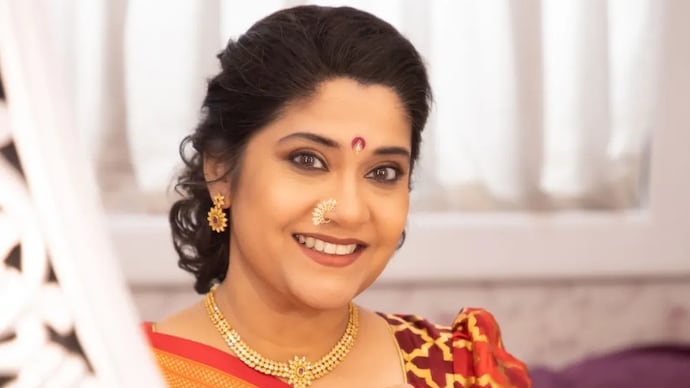
Actor Renuka Shahane says Indian screens need to move beyond dated stereotypes about family life, and that is one of the reasons she was drawn to her latest series, Aga Aai Aaho Aai. Speaking to India Today, Shahane said the show presents a different take on relationships within a family, especially between mothers, mothers-in-law and daughters-in-law.
Shahane also spoke about the lessons she learnt from her mother, what motherhood taught her, her experience with her in-laws, and how age changed her confidence. She said she no longer feels the need to prove her relevance or validity to anybody, adding that she does not seek validation through work or social media.
Shahane said the biggest strength of the series was the way it challenged long-held ideas about family relationships. She said, “What really attracted me was this whole relationship twist. Usually, one sees the mother of the girl being the most loving and understanding, while the poor mother-in-law is shown in a very bad light. Even most of the things we see in the news today give the same impression. A lot of women are therefore very worried about getting married and going into a new house. It’s a difficult thing to do.”
She said women today enter marriage with their own identity, ideas and expectations. According to her, if a woman is educated and financially independent, she already has her own personality and way of living. She said that can make marriage feel frightening because “you can’t take orders and completely reduce your personality to zero when you get married and go into a new family”.
At the same time, Shahane said reality is often more positive than what is shown on screen. She said such relationships can also be “extremely supportive and understanding”, but that is rarely shown. Referring to her own married family, she said the new daughters-in-law who came into the family were not treated with the traditional “she’s an outsider” attitude. “Things have changed, and the positive aspects of a healthy married life should also be shown somewhere,” she said.
That, she said, is what she liked about Aga Aai Aaho Aai. Shahane said she was drawn to the idea of a strict mother and a “very understanding and cool” mother-in-law. “The series celebrates mothers in many ways, and that’s the best part about it,” she said.
How family equations are changing
Shahane clarified that she is not a mother-in-law herself, but said she has observed a clear shift in her extended family. “I’m not a direct mother-in-law. I don’t have a daughter-in-law in my house. But we have a very large family, and many of my elder sisters-in-law are now mothers-in-law to their daughters-in-law. Whenever we meet, I can see a sea change between our lives as daughters-in-law and theirs,” she said.
She said women now have a choice in deciding how to shape these relationships. In her view, a mother-in-law can either repeat the same rules and hardships she once faced, or recognise that those ways belonged to a different time and mindset. “Things have changed so incredibly, and we need to change ourselves, our level of acceptance and the way we treat our daughters-in-law,” she said.
Calling the show’s treatment of family relationships “very progressive”, Shahane said that was what attracted her to the concept and the writing. She added that the men in the series are also shown in a positive light. “They have their own personalities, but they’re understanding. They want a healthy atmosphere at home. All in all, it’s a beautifully written script, and it’s coming at the right time, when everything around us is showing a different picture,” she said.
What her mother taught her
Shahane said self-respect has remained non-negotiable in her life because of what her mother taught her. “My mother taught me that there should be no compromise on self-respect. But while there are small battles and big battles that you have to fight, the manner in which you fight them is very important. She also taught me that you don’t have to be rude to get your point across. You can do it politely and with a lot of grace,” she said.
She added that tone matters. “Very often, the tone becomes abrasive. Even if you’re saying the right thing, if the tone is abrasive, then it isn’t taken in the right manner. That’s something that has also been dealt with in this series,” she said.
Shahane said younger generations now have much greater access to information than previous generations did. She said children today learn not just from parents and teachers, but also from phones and social media. “Their questioning has also increased because they carry that knowledge with them. But they don’t have to be rude while having a discussion or putting their point across. That is also very important,” she said.
Motherhood and her own family life
Asked what she understands about her mother now that she did not when she was younger, Shahane said motherhood changed her perspective. She said she never understood her mother’s constant worry until she became a parent herself. “She worried all the time. But yes, I do that with my children even now. And she still worries about me even though she’s well into her eighties. I don’t think that will ever change,” she said.
She said worry can often show up as strictness. Referring to her character in the series, Shahane said, “Sometimes your way of expressing that worry is by being extremely strict, which is what my character is also like. ‘Nobody should say anything to my daughter. I’ll say it first.’ That kind of thing.” She added that she also sees that tendency in herself and said she can sometimes become over-disciplined or over-strict because she wants to protect her children from outside negativity.
Speaking about her married life, Shahane said she never got the chance to meet her mother-in-law. “I have never met my mother-in-law. She passed away when Ashutosh was very young. It’s unfortunate because from whatever I gather, she was a lovely person and I wish I could have met her,” she said.
Her father-in-law, however, left a strong impression on her. Shahane said he remained a strong influence even after her marriage. She described him as someone who came from a very traditional patriarchal system, while she had a more modern way of thinking. She said the key question in such relationships is whether people want to make the effort to understand one another.
For Shahane, openness is central to every family relationship. She said whether it is in-laws, a daughter-in-law or a son-in-law, the issue is whether people are willing to keep an open mind and listen to another point of view. If they have already made up their mind, she said, “there’s no way to move ahead. Then there’s only imposition and following rules”.
Despite their different world-views, Shahane said she and her father-in-law shared a warm bond. “I could be so comfortable with him, and he was so comfortable chatting with me. We had two completely different world-views, but it was beautiful,” she said. She added that such exchanges open up the mind, make people more mature and accepting, and teach them to live with differences without seeing the other person as an enemy.
Confidence, work and social media
Shahane said she was less confident in her thirties and forties, especially when she had her children. She said first-time mothers go through a lot and often keep second-guessing themselves. She added that even professionally, when she returned after a hiatus, she wondered if she was still good enough.
She said confidence returns with age. According to Shahane, young people often carry a natural confidence, and a similar feeling comes back later in life after a person has seen more of it. She said that as a post-menopausal woman, pleasing others is no longer a priority, and that confidence comes back at a certain age.
“I don’t need to prove my relevance or my validity to anybody,” Shahane said. “I’m still getting work, which means I’m relevant. I keep trying to upgrade myself.”
She also spoke about her approach to social media and said she does not measure her worth by online engagement. “The validity of likes — I’m beyond that. Not in an egoistic way, but with the understanding that the algorithm might not suit my personality. I don’t feel the need to post everything every day, even though that’s what social media encourages,” she said.
Shahane said she is not a prolific social media user and prefers to post only when something genuinely matters to her. She said whatever following she has consists of “very real followers”, though that may not necessarily help her get more work or improve networking. She added that her outlook is shaped by the fact that she grew up without social media.
She said she no longer feels pressured to chase digital relevance. “Sometimes you feel social media is necessary for your profession. But is it really important to share everything or constantly post what you’re wearing? That’s not relevant to me as a human being. I use social media when I feel strongly about something happening in life, when I want to share a significant personal moment or something related to my profession. There are people who use it very effectively because it suits their personality, and that’s wonderful. But I don’t feel pressured by it anymore. I’m very happy and content,” she said.
Aga Aai Aaho Aai started streaming on July 24.
Actor Renuka Shahane says Indian screens need to move beyond dated stereotypes about family life, and that is one of the reasons she was drawn to her latest series, Aga Aai Aaho Aai. Speaking to India Today, Shahane said the show presents a different take on relationships within a family, especially between mothers, mothers-in-law and daughters-in-law.
Shahane also spoke about the lessons she learnt from her mother, what motherhood taught her, her experience with her in-laws, and how age changed her confidence. She said she no longer feels the need to prove her relevance or validity to anybody, adding that she does not seek validation through work or social media.
Shahane said the biggest strength of the series was the way it challenged long-held ideas about family relationships. She said, “What really attracted me was this whole relationship twist. Usually, one sees the mother of the girl being the most loving and understanding, while the poor mother-in-law is shown in a very bad light. Even most of the things we see in the news today give the same impression. A lot of women are therefore very worried about getting married and going into a new house. It’s a difficult thing to do.”
She said women today enter marriage with their own identity, ideas and expectations. According to her, if a woman is educated and financially independent, she already has her own personality and way of living. She said that can make marriage feel frightening because “you can’t take orders and completely reduce your personality to zero when you get married and go into a new family”.
At the same time, Shahane said reality is often more positive than what is shown on screen. She said such relationships can also be “extremely supportive and understanding”, but that is rarely shown. Referring to her own married family, she said the new daughters-in-law who came into the family were not treated with the traditional “she’s an outsider” attitude. “Things have changed, and the positive aspects of a healthy married life should also be shown somewhere,” she said.
That, she said, is what she liked about Aga Aai Aaho Aai. Shahane said she was drawn to the idea of a strict mother and a “very understanding and cool” mother-in-law. “The series celebrates mothers in many ways, and that’s the best part about it,” she said.
How family equations are changing
Shahane clarified that she is not a mother-in-law herself, but said she has observed a clear shift in her extended family. “I’m not a direct mother-in-law. I don’t have a daughter-in-law in my house. But we have a very large family, and many of my elder sisters-in-law are now mothers-in-law to their daughters-in-law. Whenever we meet, I can see a sea change between our lives as daughters-in-law and theirs,” she said.
She said women now have a choice in deciding how to shape these relationships. In her view, a mother-in-law can either repeat the same rules and hardships she once faced, or recognise that those ways belonged to a different time and mindset. “Things have changed so incredibly, and we need to change ourselves, our level of acceptance and the way we treat our daughters-in-law,” she said.
Calling the show’s treatment of family relationships “very progressive”, Shahane said that was what attracted her to the concept and the writing. She added that the men in the series are also shown in a positive light. “They have their own personalities, but they’re understanding. They want a healthy atmosphere at home. All in all, it’s a beautifully written script, and it’s coming at the right time, when everything around us is showing a different picture,” she said.
What her mother taught her
Shahane said self-respect has remained non-negotiable in her life because of what her mother taught her. “My mother taught me that there should be no compromise on self-respect. But while there are small battles and big battles that you have to fight, the manner in which you fight them is very important. She also taught me that you don’t have to be rude to get your point across. You can do it politely and with a lot of grace,” she said.
She added that tone matters. “Very often, the tone becomes abrasive. Even if you’re saying the right thing, if the tone is abrasive, then it isn’t taken in the right manner. That’s something that has also been dealt with in this series,” she said.
Shahane said younger generations now have much greater access to information than previous generations did. She said children today learn not just from parents and teachers, but also from phones and social media. “Their questioning has also increased because they carry that knowledge with them. But they don’t have to be rude while having a discussion or putting their point across. That is also very important,” she said.
Motherhood and her own family life
Asked what she understands about her mother now that she did not when she was younger, Shahane said motherhood changed her perspective. She said she never understood her mother’s constant worry until she became a parent herself. “She worried all the time. But yes, I do that with my children even now. And she still worries about me even though she’s well into her eighties. I don’t think that will ever change,” she said.
She said worry can often show up as strictness. Referring to her character in the series, Shahane said, “Sometimes your way of expressing that worry is by being extremely strict, which is what my character is also like. ‘Nobody should say anything to my daughter. I’ll say it first.’ That kind of thing.” She added that she also sees that tendency in herself and said she can sometimes become over-disciplined or over-strict because she wants to protect her children from outside negativity.
Speaking about her married life, Shahane said she never got the chance to meet her mother-in-law. “I have never met my mother-in-law. She passed away when Ashutosh was very young. It’s unfortunate because from whatever I gather, she was a lovely person and I wish I could have met her,” she said.
Her father-in-law, however, left a strong impression on her. Shahane said he remained a strong influence even after her marriage. She described him as someone who came from a very traditional patriarchal system, while she had a more modern way of thinking. She said the key question in such relationships is whether people want to make the effort to understand one another.
For Shahane, openness is central to every family relationship. She said whether it is in-laws, a daughter-in-law or a son-in-law, the issue is whether people are willing to keep an open mind and listen to another point of view. If they have already made up their mind, she said, “there’s no way to move ahead. Then there’s only imposition and following rules”.
Despite their different world-views, Shahane said she and her father-in-law shared a warm bond. “I could be so comfortable with him, and he was so comfortable chatting with me. We had two completely different world-views, but it was beautiful,” she said. She added that such exchanges open up the mind, make people more mature and accepting, and teach them to live with differences without seeing the other person as an enemy.
Confidence, work and social media
Shahane said she was less confident in her thirties and forties, especially when she had her children. She said first-time mothers go through a lot and often keep second-guessing themselves. She added that even professionally, when she returned after a hiatus, she wondered if she was still good enough.
She said confidence returns with age. According to Shahane, young people often carry a natural confidence, and a similar feeling comes back later in life after a person has seen more of it. She said that as a post-menopausal woman, pleasing others is no longer a priority, and that confidence comes back at a certain age.
“I don’t need to prove my relevance or my validity to anybody,” Shahane said. “I’m still getting work, which means I’m relevant. I keep trying to upgrade myself.”
She also spoke about her approach to social media and said she does not measure her worth by online engagement. “The validity of likes — I’m beyond that. Not in an egoistic way, but with the understanding that the algorithm might not suit my personality. I don’t feel the need to post everything every day, even though that’s what social media encourages,” she said.
Shahane said she is not a prolific social media user and prefers to post only when something genuinely matters to her. She said whatever following she has consists of “very real followers”, though that may not necessarily help her get more work or improve networking. She added that her outlook is shaped by the fact that she grew up without social media.
She said she no longer feels pressured to chase digital relevance. “Sometimes you feel social media is necessary for your profession. But is it really important to share everything or constantly post what you’re wearing? That’s not relevant to me as a human being. I use social media when I feel strongly about something happening in life, when I want to share a significant personal moment or something related to my profession. There are people who use it very effectively because it suits their personality, and that’s wonderful. But I don’t feel pressured by it anymore. I’m very happy and content,” she said.
Aga Aai Aaho Aai started streaming on July 24.
Actor Renuka Shahane says Indian screens need to move beyond dated stereotypes about family life, and that is one of the reasons she was drawn to her latest series, Aga Aai Aaho Aai. Speaking to India Today, Shahane said the show presents a different take on relationships within a family, especially between mothers, mothers-in-law and daughters-in-law.
Shahane also spoke about the lessons she learnt from her mother, what motherhood taught her, her experience with her in-laws, and how age changed her confidence. She said she no longer feels the need to prove her relevance or validity to anybody, adding that she does not seek validation through work or social media.
Shahane said the biggest strength of the series was the way it challenged long-held ideas about family relationships. She said, “What really attracted me was this whole relationship twist. Usually, one sees the mother of the girl being the most loving and understanding, while the poor mother-in-law is shown in a very bad light. Even most of the things we see in the news today give the same impression. A lot of women are therefore very worried about getting married and going into a new house. It’s a difficult thing to do.”
She said women today enter marriage with their own identity, ideas and expectations. According to her, if a woman is educated and financially independent, she already has her own personality and way of living. She said that can make marriage feel frightening because “you can’t take orders and completely reduce your personality to zero when you get married and go into a new family”.
At the same time, Shahane said reality is often more positive than what is shown on screen. She said such relationships can also be “extremely supportive and understanding”, but that is rarely shown. Referring to her own married family, she said the new daughters-in-law who came into the family were not treated with the traditional “she’s an outsider” attitude. “Things have changed, and the positive aspects of a healthy married life should also be shown somewhere,” she said.
That, she said, is what she liked about Aga Aai Aaho Aai. Shahane said she was drawn to the idea of a strict mother and a “very understanding and cool” mother-in-law. “The series celebrates mothers in many ways, and that’s the best part about it,” she said.
How family equations are changing
Shahane clarified that she is not a mother-in-law herself, but said she has observed a clear shift in her extended family. “I’m not a direct mother-in-law. I don’t have a daughter-in-law in my house. But we have a very large family, and many of my elder sisters-in-law are now mothers-in-law to their daughters-in-law. Whenever we meet, I can see a sea change between our lives as daughters-in-law and theirs,” she said.
She said women now have a choice in deciding how to shape these relationships. In her view, a mother-in-law can either repeat the same rules and hardships she once faced, or recognise that those ways belonged to a different time and mindset. “Things have changed so incredibly, and we need to change ourselves, our level of acceptance and the way we treat our daughters-in-law,” she said.
Calling the show’s treatment of family relationships “very progressive”, Shahane said that was what attracted her to the concept and the writing. She added that the men in the series are also shown in a positive light. “They have their own personalities, but they’re understanding. They want a healthy atmosphere at home. All in all, it’s a beautifully written script, and it’s coming at the right time, when everything around us is showing a different picture,” she said.
What her mother taught her
Shahane said self-respect has remained non-negotiable in her life because of what her mother taught her. “My mother taught me that there should be no compromise on self-respect. But while there are small battles and big battles that you have to fight, the manner in which you fight them is very important. She also taught me that you don’t have to be rude to get your point across. You can do it politely and with a lot of grace,” she said.
She added that tone matters. “Very often, the tone becomes abrasive. Even if you’re saying the right thing, if the tone is abrasive, then it isn’t taken in the right manner. That’s something that has also been dealt with in this series,” she said.
Shahane said younger generations now have much greater access to information than previous generations did. She said children today learn not just from parents and teachers, but also from phones and social media. “Their questioning has also increased because they carry that knowledge with them. But they don’t have to be rude while having a discussion or putting their point across. That is also very important,” she said.
Motherhood and her own family life
Asked what she understands about her mother now that she did not when she was younger, Shahane said motherhood changed her perspective. She said she never understood her mother’s constant worry until she became a parent herself. “She worried all the time. But yes, I do that with my children even now. And she still worries about me even though she’s well into her eighties. I don’t think that will ever change,” she said.
She said worry can often show up as strictness. Referring to her character in the series, Shahane said, “Sometimes your way of expressing that worry is by being extremely strict, which is what my character is also like. ‘Nobody should say anything to my daughter. I’ll say it first.’ That kind of thing.” She added that she also sees that tendency in herself and said she can sometimes become over-disciplined or over-strict because she wants to protect her children from outside negativity.
Speaking about her married life, Shahane said she never got the chance to meet her mother-in-law. “I have never met my mother-in-law. She passed away when Ashutosh was very young. It’s unfortunate because from whatever I gather, she was a lovely person and I wish I could have met her,” she said.
Her father-in-law, however, left a strong impression on her. Shahane said he remained a strong influence even after her marriage. She described him as someone who came from a very traditional patriarchal system, while she had a more modern way of thinking. She said the key question in such relationships is whether people want to make the effort to understand one another.
For Shahane, openness is central to every family relationship. She said whether it is in-laws, a daughter-in-law or a son-in-law, the issue is whether people are willing to keep an open mind and listen to another point of view. If they have already made up their mind, she said, “there’s no way to move ahead. Then there’s only imposition and following rules”.
Despite their different world-views, Shahane said she and her father-in-law shared a warm bond. “I could be so comfortable with him, and he was so comfortable chatting with me. We had two completely different world-views, but it was beautiful,” she said. She added that such exchanges open up the mind, make people more mature and accepting, and teach them to live with differences without seeing the other person as an enemy.
Confidence, work and social media
Shahane said she was less confident in her thirties and forties, especially when she had her children. She said first-time mothers go through a lot and often keep second-guessing themselves. She added that even professionally, when she returned after a hiatus, she wondered if she was still good enough.
She said confidence returns with age. According to Shahane, young people often carry a natural confidence, and a similar feeling comes back later in life after a person has seen more of it. She said that as a post-menopausal woman, pleasing others is no longer a priority, and that confidence comes back at a certain age.
“I don’t need to prove my relevance or my validity to anybody,” Shahane said. “I’m still getting work, which means I’m relevant. I keep trying to upgrade myself.”
She also spoke about her approach to social media and said she does not measure her worth by online engagement. “The validity of likes — I’m beyond that. Not in an egoistic way, but with the understanding that the algorithm might not suit my personality. I don’t feel the need to post everything every day, even though that’s what social media encourages,” she said.
Shahane said she is not a prolific social media user and prefers to post only when something genuinely matters to her. She said whatever following she has consists of “very real followers”, though that may not necessarily help her get more work or improve networking. She added that her outlook is shaped by the fact that she grew up without social media.
She said she no longer feels pressured to chase digital relevance. “Sometimes you feel social media is necessary for your profession. But is it really important to share everything or constantly post what you’re wearing? That’s not relevant to me as a human being. I use social media when I feel strongly about something happening in life, when I want to share a significant personal moment or something related to my profession. There are people who use it very effectively because it suits their personality, and that’s wonderful. But I don’t feel pressured by it anymore. I’m very happy and content,” she said.
Aga Aai Aaho Aai started streaming on July 24.

