US military to begin annual testosterone screening for troops over 30
The Pentagon plans annual testosterone screening for service members aged 30 and above. Doctors say the move should be read as a bid to detect genuine deficiency, not a shortcut to better performance.
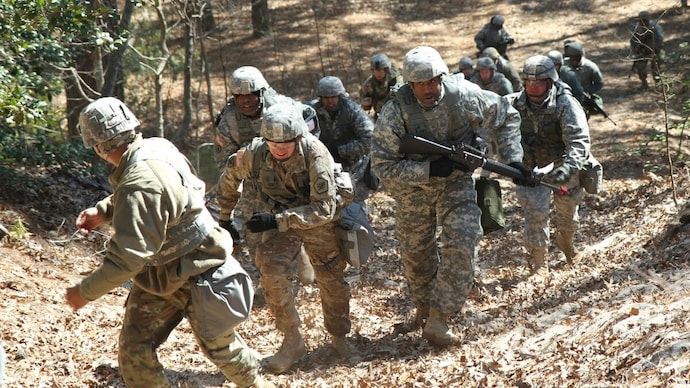
The policy, announced by US Defence Secretary Pete Hegseth, will make testosterone testing part of routine annual health assessments for personnel over 30. Those under 30 will also be able to request testing. Service members found to have low testosterone can choose whether to undergo testosterone replacement therapy.
The Pentagon says the move is aimed at identifying hormone deficiency early, improving long-term health and ensuring troops remain physically and mentally fit for service.
Hegseth has maintained that the initiative is not about enhancing performance but about restoring hormone levels in those who are medically deficient.
The announcement has sparked discussion because testosterone is closely associated with strength, endurance and athletic performance. But endocrinologists say the hormone's role is far more complex – and that more testosterone does not automatically mean better performance.
BEYOND STRENGTH
"Testosterone is often associated with strength and athletic performance, but its role is far more nuanced," explained Dr Satish Chander Wasoori, senior endocrinologist with Paras Health, Gurugram.
Testosterone is an essential hormone in both men and women. It supports muscle mass, bone health, energy levels, mood, libido and metabolism. While men produce much higher amounts than women, the hormone plays an important role in maintaining overall health in both sexes.
According to Dr Jatin Kumar Majhi, endocrinologist with Manipal Hospital in Bhubaneswar, testosterone helps support muscle growth, strength, endurance and recovery after exercise, but physical performance depends on far more than hormone levels.
"Athletic performance is influenced by several factors, including genetics, training, nutrition and overall health, not testosterone alone," he pointed out.
That is why endocrinologists caution against assuming that raising testosterone levels in healthy individuals will improve physical or cognitive performance.
Dr Wasoori underlined "having higher-than-normal testosterone levels does not automatically translate into better physical or cognitive performance."
Instead, the greatest benefit is seen in people with genuine testosterone deficiency whose hormone levels are restored to the normal physiological range through appropriate medical treatment.
The military's proposal is intended to identify such deficiencies. However, doctors have questioned whether routine screening of all personnel above a certain age is necessary, pointing out that testosterone levels naturally decline with age and that diagnosing deficiency requires a careful clinical evaluation rather than relying on a single blood test.
NOT A SHORTCUT
Both specialists stress that testosterone replacement therapy should only be prescribed when there is clear medical evidence of hormone deficiency.
"Testosterone therapy should never be viewed as a performance-enhancing shortcut or an anti-ageing solution," said Dr Wasoori. He added that treatment should be offered only after comprehensive medical evaluation and should always be closely monitored.
Dr Majhi agrees, saying testosterone replacement therapy "is not intended as a performance-enhancing treatment for healthy individuals". It should be prescribed only when medically indicated and with regular monitoring of hormone levels and overall health.
Doctors also warn against self-medication or unnecessary testosterone use because of the potential health risks.
According to Dr Wasoori, misuse can suppress the body's natural hormone production and increase the risk of acne, infertility, elevated red blood cell counts, sleep apnoea, prostate-related concerns in men and cardiovascular complications in susceptible individuals.
In women, inappropriate testosterone use can cause acne, excessive facial or body hair, deepening of the voice, menstrual irregularities and other signs of masculinisation, "some of which may be irreversible," he says.
Dr Majhi lists similar concerns, adding that men may also experience enlargement of the breasts and worsening sleep apnoea. "Self-medication or misuse of testosterone can do more harm than good," he says.
The experts say the Pentagon's proposal should not be seen as an endorsement of testosterone therapy for healthy people. Instead, they say it highlights the importance of identifying genuine hormone deficiency and treating it appropriately.
The policy, announced by US Defence Secretary Pete Hegseth, will make testosterone testing part of routine annual health assessments for personnel over 30. Those under 30 will also be able to request testing. Service members found to have low testosterone can choose whether to undergo testosterone replacement therapy.
The Pentagon says the move is aimed at identifying hormone deficiency early, improving long-term health and ensuring troops remain physically and mentally fit for service.
Hegseth has maintained that the initiative is not about enhancing performance but about restoring hormone levels in those who are medically deficient.
The announcement has sparked discussion because testosterone is closely associated with strength, endurance and athletic performance. But endocrinologists say the hormone's role is far more complex – and that more testosterone does not automatically mean better performance.
BEYOND STRENGTH
"Testosterone is often associated with strength and athletic performance, but its role is far more nuanced," explained Dr Satish Chander Wasoori, senior endocrinologist with Paras Health, Gurugram.
Testosterone is an essential hormone in both men and women. It supports muscle mass, bone health, energy levels, mood, libido and metabolism. While men produce much higher amounts than women, the hormone plays an important role in maintaining overall health in both sexes.
According to Dr Jatin Kumar Majhi, endocrinologist with Manipal Hospital in Bhubaneswar, testosterone helps support muscle growth, strength, endurance and recovery after exercise, but physical performance depends on far more than hormone levels.
"Athletic performance is influenced by several factors, including genetics, training, nutrition and overall health, not testosterone alone," he pointed out.
That is why endocrinologists caution against assuming that raising testosterone levels in healthy individuals will improve physical or cognitive performance.
Dr Wasoori underlined "having higher-than-normal testosterone levels does not automatically translate into better physical or cognitive performance."
Instead, the greatest benefit is seen in people with genuine testosterone deficiency whose hormone levels are restored to the normal physiological range through appropriate medical treatment.
The military's proposal is intended to identify such deficiencies. However, doctors have questioned whether routine screening of all personnel above a certain age is necessary, pointing out that testosterone levels naturally decline with age and that diagnosing deficiency requires a careful clinical evaluation rather than relying on a single blood test.
NOT A SHORTCUT
Both specialists stress that testosterone replacement therapy should only be prescribed when there is clear medical evidence of hormone deficiency.
"Testosterone therapy should never be viewed as a performance-enhancing shortcut or an anti-ageing solution," said Dr Wasoori. He added that treatment should be offered only after comprehensive medical evaluation and should always be closely monitored.
Dr Majhi agrees, saying testosterone replacement therapy "is not intended as a performance-enhancing treatment for healthy individuals". It should be prescribed only when medically indicated and with regular monitoring of hormone levels and overall health.
Doctors also warn against self-medication or unnecessary testosterone use because of the potential health risks.
According to Dr Wasoori, misuse can suppress the body's natural hormone production and increase the risk of acne, infertility, elevated red blood cell counts, sleep apnoea, prostate-related concerns in men and cardiovascular complications in susceptible individuals.
In women, inappropriate testosterone use can cause acne, excessive facial or body hair, deepening of the voice, menstrual irregularities and other signs of masculinisation, "some of which may be irreversible," he says.
Dr Majhi lists similar concerns, adding that men may also experience enlargement of the breasts and worsening sleep apnoea. "Self-medication or misuse of testosterone can do more harm than good," he says.
The experts say the Pentagon's proposal should not be seen as an endorsement of testosterone therapy for healthy people. Instead, they say it highlights the importance of identifying genuine hormone deficiency and treating it appropriately.
The policy, announced by US Defence Secretary Pete Hegseth, will make testosterone testing part of routine annual health assessments for personnel over 30. Those under 30 will also be able to request testing. Service members found to have low testosterone can choose whether to undergo testosterone replacement therapy.
The Pentagon says the move is aimed at identifying hormone deficiency early, improving long-term health and ensuring troops remain physically and mentally fit for service.
Hegseth has maintained that the initiative is not about enhancing performance but about restoring hormone levels in those who are medically deficient.
The announcement has sparked discussion because testosterone is closely associated with strength, endurance and athletic performance. But endocrinologists say the hormone's role is far more complex – and that more testosterone does not automatically mean better performance.
BEYOND STRENGTH
"Testosterone is often associated with strength and athletic performance, but its role is far more nuanced," explained Dr Satish Chander Wasoori, senior endocrinologist with Paras Health, Gurugram.
Testosterone is an essential hormone in both men and women. It supports muscle mass, bone health, energy levels, mood, libido and metabolism. While men produce much higher amounts than women, the hormone plays an important role in maintaining overall health in both sexes.
According to Dr Jatin Kumar Majhi, endocrinologist with Manipal Hospital in Bhubaneswar, testosterone helps support muscle growth, strength, endurance and recovery after exercise, but physical performance depends on far more than hormone levels.
"Athletic performance is influenced by several factors, including genetics, training, nutrition and overall health, not testosterone alone," he pointed out.
That is why endocrinologists caution against assuming that raising testosterone levels in healthy individuals will improve physical or cognitive performance.
Dr Wasoori underlined "having higher-than-normal testosterone levels does not automatically translate into better physical or cognitive performance."
Instead, the greatest benefit is seen in people with genuine testosterone deficiency whose hormone levels are restored to the normal physiological range through appropriate medical treatment.
The military's proposal is intended to identify such deficiencies. However, doctors have questioned whether routine screening of all personnel above a certain age is necessary, pointing out that testosterone levels naturally decline with age and that diagnosing deficiency requires a careful clinical evaluation rather than relying on a single blood test.
NOT A SHORTCUT
Both specialists stress that testosterone replacement therapy should only be prescribed when there is clear medical evidence of hormone deficiency.
"Testosterone therapy should never be viewed as a performance-enhancing shortcut or an anti-ageing solution," said Dr Wasoori. He added that treatment should be offered only after comprehensive medical evaluation and should always be closely monitored.
Dr Majhi agrees, saying testosterone replacement therapy "is not intended as a performance-enhancing treatment for healthy individuals". It should be prescribed only when medically indicated and with regular monitoring of hormone levels and overall health.
Doctors also warn against self-medication or unnecessary testosterone use because of the potential health risks.
According to Dr Wasoori, misuse can suppress the body's natural hormone production and increase the risk of acne, infertility, elevated red blood cell counts, sleep apnoea, prostate-related concerns in men and cardiovascular complications in susceptible individuals.
In women, inappropriate testosterone use can cause acne, excessive facial or body hair, deepening of the voice, menstrual irregularities and other signs of masculinisation, "some of which may be irreversible," he says.
Dr Majhi lists similar concerns, adding that men may also experience enlargement of the breasts and worsening sleep apnoea. "Self-medication or misuse of testosterone can do more harm than good," he says.
The experts say the Pentagon's proposal should not be seen as an endorsement of testosterone therapy for healthy people. Instead, they say it highlights the importance of identifying genuine hormone deficiency and treating it appropriately.

