Gen Z outreach, organisational revamp, early SP seat deal: Congress's UP poll plan
The Congress is shaping a three-part strategy in Uttar Pradesh centred on Gen Z outreach, organisational changes and an early alliance arrangement with the Samajwadi Party. The plan reflects the party's efforts to rebuild its state base before the 2027 Assembly polls.
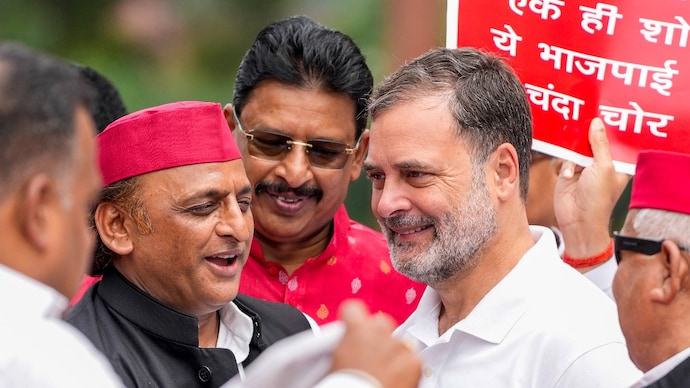
With the 2027 Uttar Pradesh Assembly polls approaching, the Congress is working on a three-pronged strategy to rebuild its political footprint in the state – expand its appeal among young voters, strengthen its own organisation and finalise its alliance with the Samajwadi Party (SP).
The strategy is being shaped at a time when the Congress sees Uttar Pradesh as crucial not just for the state polls but also for its larger revival in north India ahead of the 2029 Lok Sabha polls.
WHY PRAYAGRAJ AND YOUTH MATTER TO CONGRESS
Leader of Opposition in Lok Sabha Rahul Gandhi recently addressed the party's 'Chhatron Ki Goonj' programme in Prayagraj, a city with a strong historical connection to the Gandhi family.
The choice of Prayagraj is significant for the Congress. Anand Bhawan, the former residence of Jawaharlal Nehru and a major part of the family's association with the freedom movement, is located in the city. It later became a Congress office before being donated to the government by Indira Gandhi in 1970.
Congress leaders believe Rahul Gandhi's increasingly visible interventions on student issues, both inside Parliament and on the streets, could help the party connect with a younger generation ahead of the 2027 polls.
Party feedback from recent student protests has also indicated that a sizeable number of young people from Uttar Pradesh participated in the 49-day Jantar Mantar protest in Delhi.
Congress leaders see this as an opportunity to build a constituency among Gen Z and young voters in a state where the party has struggled to maintain a strong independent base.
The strategy, however, is not limited to Rahul Gandhi's student outreach. The party is looking to convert this visibility into a more sustained organisational presence on the ground.
CONGRESS WANTS SP ALLIANCE LOCKED IN EARLY
The second major priority is to prevent uncertainty over the Congress-SP alliance from spilling into the election campaign.
At a meeting of Uttar Pradesh Congress MPs chaired by Rahul Gandhi and Priyanka Gandhi at 10, Janpath on Tuesday, party leaders pushed for an early start to seat-sharing discussions with the SP.
The meeting was attended by all six Congress Lok Sabha MPs from Uttar Pradesh, along with Rajya Sabha MPs Imran Pratapgarhi, Pramod Tiwari and Rajiv Shukla.
One of the MPs who attended the meeting told India Today TV that the coordination mechanism between the two parties should be announced soon after Parliament's monsoon session ends on August 13.
"By August 20, a coordination committee should be announced between SP and Congress so that seat-sharing talks can conclude in time," the MP said.
The urgency stems from growing concern within Congress that prolonged negotiations could create confusion and bitterness between the allies.
While Rahul Gandhi and SP chief Akhilesh Yadav have maintained a working relationship, leaders from the second rung of both parties have occasionally traded barbs in public over the alliance and seat-sharing formula.
Congress leaders believe an early agreement would allow both parties to focus on building the alliance on the ground instead of spending months negotiating seats.
REBUILDING CONGRESS'S OWN ORGANISATION
The third pillar of the strategy is organisation. Despite its alliance with the SP, Congress leaders believe the party cannot depend entirely on its ally if it wants to regain relevance in Uttar Pradesh.
The party has therefore begun restructuring its state organisation and looking for ways to build an independent voter base.
In a recent move, the Congress appointed former Delhi minister and prominent Ambedkarite leader Rajinder Pal Gautam as the party's Uttar Pradesh in-charge.
According to party sources, Gautam, a former AAP leader, has been tasked with strengthening the Congress's connections with Dalit voters in the state, particularly as the Bahujan Samaj Party's electoral influence has weakened over successive elections.
The Congress has also replaced a number of AICC secretaries handling Uttar Pradesh.
The earlier team, which included Pradeep Narwal, Dheeraj Gurjar and Tauqir Alam, has been replaced by Abhishek Dutt, Kunal Chaudhary, Jagdish Chandra Jangid, Sanjeev Arya, Varun Chaudhary and Abdul Hannan.
A section of Congress leaders believes the organisational overhaul had been pending for some time and could inject fresh energy into the party's state unit.
2027 TEST BEFORE 2029 LOK SABHA POLLS
For the Congress, Uttar Pradesh is now being viewed as a crucial test of whether the party can revive its own organisation while continuing to work with regional allies.
The party's performance in the 2024 Lok Sabha polls gave its Uttar Pradesh unit renewed confidence, but Congress leaders are aware that Assembly elections require a much deeper organisational network.
The 2027 election, therefore, is being seen as an opportunity to consolidate the gains made in 2024 and rebuild the party's independent base.
The calculation extends beyond Lucknow. A stronger Congress in Uttar Pradesh would give the party greater leverage in north India and potentially strengthen its position going into the 2029 Lok Sabha polls.
For now, the party's three priorities are clear: reach out to young voters, rebuild its organisation and settle its partnership with the SP before election-year seat negotiations become a source of friction.
With the 2027 Uttar Pradesh Assembly polls approaching, the Congress is working on a three-pronged strategy to rebuild its political footprint in the state – expand its appeal among young voters, strengthen its own organisation and finalise its alliance with the Samajwadi Party (SP).
The strategy is being shaped at a time when the Congress sees Uttar Pradesh as crucial not just for the state polls but also for its larger revival in north India ahead of the 2029 Lok Sabha polls.
WHY PRAYAGRAJ AND YOUTH MATTER TO CONGRESS
Leader of Opposition in Lok Sabha Rahul Gandhi recently addressed the party's 'Chhatron Ki Goonj' programme in Prayagraj, a city with a strong historical connection to the Gandhi family.
The choice of Prayagraj is significant for the Congress. Anand Bhawan, the former residence of Jawaharlal Nehru and a major part of the family's association with the freedom movement, is located in the city. It later became a Congress office before being donated to the government by Indira Gandhi in 1970.
Congress leaders believe Rahul Gandhi's increasingly visible interventions on student issues, both inside Parliament and on the streets, could help the party connect with a younger generation ahead of the 2027 polls.
Party feedback from recent student protests has also indicated that a sizeable number of young people from Uttar Pradesh participated in the 49-day Jantar Mantar protest in Delhi.
Congress leaders see this as an opportunity to build a constituency among Gen Z and young voters in a state where the party has struggled to maintain a strong independent base.
The strategy, however, is not limited to Rahul Gandhi's student outreach. The party is looking to convert this visibility into a more sustained organisational presence on the ground.
CONGRESS WANTS SP ALLIANCE LOCKED IN EARLY
The second major priority is to prevent uncertainty over the Congress-SP alliance from spilling into the election campaign.
At a meeting of Uttar Pradesh Congress MPs chaired by Rahul Gandhi and Priyanka Gandhi at 10, Janpath on Tuesday, party leaders pushed for an early start to seat-sharing discussions with the SP.
The meeting was attended by all six Congress Lok Sabha MPs from Uttar Pradesh, along with Rajya Sabha MPs Imran Pratapgarhi, Pramod Tiwari and Rajiv Shukla.
One of the MPs who attended the meeting told India Today TV that the coordination mechanism between the two parties should be announced soon after Parliament's monsoon session ends on August 13.
"By August 20, a coordination committee should be announced between SP and Congress so that seat-sharing talks can conclude in time," the MP said.
The urgency stems from growing concern within Congress that prolonged negotiations could create confusion and bitterness between the allies.
While Rahul Gandhi and SP chief Akhilesh Yadav have maintained a working relationship, leaders from the second rung of both parties have occasionally traded barbs in public over the alliance and seat-sharing formula.
Congress leaders believe an early agreement would allow both parties to focus on building the alliance on the ground instead of spending months negotiating seats.
REBUILDING CONGRESS'S OWN ORGANISATION
The third pillar of the strategy is organisation. Despite its alliance with the SP, Congress leaders believe the party cannot depend entirely on its ally if it wants to regain relevance in Uttar Pradesh.
The party has therefore begun restructuring its state organisation and looking for ways to build an independent voter base.
In a recent move, the Congress appointed former Delhi minister and prominent Ambedkarite leader Rajinder Pal Gautam as the party's Uttar Pradesh in-charge.
According to party sources, Gautam, a former AAP leader, has been tasked with strengthening the Congress's connections with Dalit voters in the state, particularly as the Bahujan Samaj Party's electoral influence has weakened over successive elections.
The Congress has also replaced a number of AICC secretaries handling Uttar Pradesh.
The earlier team, which included Pradeep Narwal, Dheeraj Gurjar and Tauqir Alam, has been replaced by Abhishek Dutt, Kunal Chaudhary, Jagdish Chandra Jangid, Sanjeev Arya, Varun Chaudhary and Abdul Hannan.
A section of Congress leaders believes the organisational overhaul had been pending for some time and could inject fresh energy into the party's state unit.
2027 TEST BEFORE 2029 LOK SABHA POLLS
For the Congress, Uttar Pradesh is now being viewed as a crucial test of whether the party can revive its own organisation while continuing to work with regional allies.
The party's performance in the 2024 Lok Sabha polls gave its Uttar Pradesh unit renewed confidence, but Congress leaders are aware that Assembly elections require a much deeper organisational network.
The 2027 election, therefore, is being seen as an opportunity to consolidate the gains made in 2024 and rebuild the party's independent base.
The calculation extends beyond Lucknow. A stronger Congress in Uttar Pradesh would give the party greater leverage in north India and potentially strengthen its position going into the 2029 Lok Sabha polls.
For now, the party's three priorities are clear: reach out to young voters, rebuild its organisation and settle its partnership with the SP before election-year seat negotiations become a source of friction.
With the 2027 Uttar Pradesh Assembly polls approaching, the Congress is working on a three-pronged strategy to rebuild its political footprint in the state – expand its appeal among young voters, strengthen its own organisation and finalise its alliance with the Samajwadi Party (SP).
The strategy is being shaped at a time when the Congress sees Uttar Pradesh as crucial not just for the state polls but also for its larger revival in north India ahead of the 2029 Lok Sabha polls.
WHY PRAYAGRAJ AND YOUTH MATTER TO CONGRESS
Leader of Opposition in Lok Sabha Rahul Gandhi recently addressed the party's 'Chhatron Ki Goonj' programme in Prayagraj, a city with a strong historical connection to the Gandhi family.
The choice of Prayagraj is significant for the Congress. Anand Bhawan, the former residence of Jawaharlal Nehru and a major part of the family's association with the freedom movement, is located in the city. It later became a Congress office before being donated to the government by Indira Gandhi in 1970.
Congress leaders believe Rahul Gandhi's increasingly visible interventions on student issues, both inside Parliament and on the streets, could help the party connect with a younger generation ahead of the 2027 polls.
Party feedback from recent student protests has also indicated that a sizeable number of young people from Uttar Pradesh participated in the 49-day Jantar Mantar protest in Delhi.
Congress leaders see this as an opportunity to build a constituency among Gen Z and young voters in a state where the party has struggled to maintain a strong independent base.
The strategy, however, is not limited to Rahul Gandhi's student outreach. The party is looking to convert this visibility into a more sustained organisational presence on the ground.
CONGRESS WANTS SP ALLIANCE LOCKED IN EARLY
The second major priority is to prevent uncertainty over the Congress-SP alliance from spilling into the election campaign.
At a meeting of Uttar Pradesh Congress MPs chaired by Rahul Gandhi and Priyanka Gandhi at 10, Janpath on Tuesday, party leaders pushed for an early start to seat-sharing discussions with the SP.
The meeting was attended by all six Congress Lok Sabha MPs from Uttar Pradesh, along with Rajya Sabha MPs Imran Pratapgarhi, Pramod Tiwari and Rajiv Shukla.
One of the MPs who attended the meeting told India Today TV that the coordination mechanism between the two parties should be announced soon after Parliament's monsoon session ends on August 13.
"By August 20, a coordination committee should be announced between SP and Congress so that seat-sharing talks can conclude in time," the MP said.
The urgency stems from growing concern within Congress that prolonged negotiations could create confusion and bitterness between the allies.
While Rahul Gandhi and SP chief Akhilesh Yadav have maintained a working relationship, leaders from the second rung of both parties have occasionally traded barbs in public over the alliance and seat-sharing formula.
Congress leaders believe an early agreement would allow both parties to focus on building the alliance on the ground instead of spending months negotiating seats.
REBUILDING CONGRESS'S OWN ORGANISATION
The third pillar of the strategy is organisation. Despite its alliance with the SP, Congress leaders believe the party cannot depend entirely on its ally if it wants to regain relevance in Uttar Pradesh.
The party has therefore begun restructuring its state organisation and looking for ways to build an independent voter base.
In a recent move, the Congress appointed former Delhi minister and prominent Ambedkarite leader Rajinder Pal Gautam as the party's Uttar Pradesh in-charge.
According to party sources, Gautam, a former AAP leader, has been tasked with strengthening the Congress's connections with Dalit voters in the state, particularly as the Bahujan Samaj Party's electoral influence has weakened over successive elections.
The Congress has also replaced a number of AICC secretaries handling Uttar Pradesh.
The earlier team, which included Pradeep Narwal, Dheeraj Gurjar and Tauqir Alam, has been replaced by Abhishek Dutt, Kunal Chaudhary, Jagdish Chandra Jangid, Sanjeev Arya, Varun Chaudhary and Abdul Hannan.
A section of Congress leaders believes the organisational overhaul had been pending for some time and could inject fresh energy into the party's state unit.
2027 TEST BEFORE 2029 LOK SABHA POLLS
For the Congress, Uttar Pradesh is now being viewed as a crucial test of whether the party can revive its own organisation while continuing to work with regional allies.
The party's performance in the 2024 Lok Sabha polls gave its Uttar Pradesh unit renewed confidence, but Congress leaders are aware that Assembly elections require a much deeper organisational network.
The 2027 election, therefore, is being seen as an opportunity to consolidate the gains made in 2024 and rebuild the party's independent base.
The calculation extends beyond Lucknow. A stronger Congress in Uttar Pradesh would give the party greater leverage in north India and potentially strengthen its position going into the 2029 Lok Sabha polls.
For now, the party's three priorities are clear: reach out to young voters, rebuild its organisation and settle its partnership with the SP before election-year seat negotiations become a source of friction.

