Don't stop ethanol: Punjab farmers warn E20 rollback could hurt crop prices, incomes
Punjab farmers have voiced concern that opposition to the Centre's E20 rollout could hit demand for maize and sugarcane. They say the ethanol blending programme has improved incomes, supported diversification and should not be weakened.
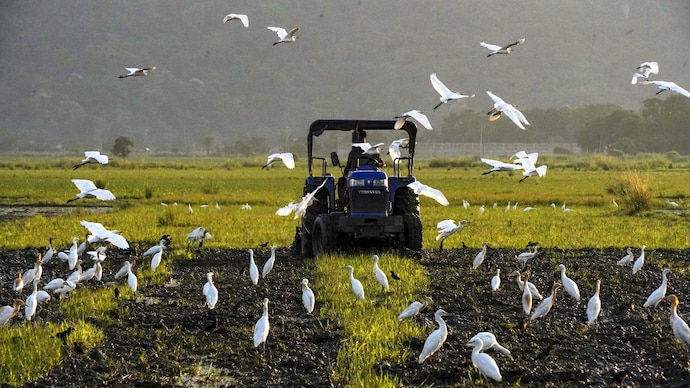
The political debate over E20 fuel has spilled into Punjab's agricultural sector, with farmer representatives expressing concern that growing opposition to the Centre's ethanol blending programme could hurt maize and sugarcane growers who have increasingly benefited from the policy.
The concerns come after Aam Aadmi Party (AAP) national convenor and former Delhi Chief Minister Arvind Kejriwal raised questions over the rollout of E20 petrol during a "National Townhall" on August 1. Kejriwal questioned the fuel's impact on older vehicles, fuel efficiency and consumer awareness, triggering a wider debate over the Centre's ethanol blending programme.
While the discussion was largely focused on motorists and consumers, farmer groups in Punjab say any uncertainty surrounding the policy could directly affect crop prices and farm incomes.
FARMERS LINK ETHANOL POLICY WITH BETTER CROP PRICES
Punjab is among India's major sugarcane-producing states and has also encouraged maize cultivation in recent years as part of efforts to reduce dependence on water-intensive paddy cultivation. The Centre's ethanol blending programme has created additional demand for both crops, giving farmers an alternative market and supporting crop diversification.
Narinder Bhel, president of the Majha Zone Arthia Association, said farmers were worried that weakening the ethanol policy would directly affect the demand for maize and sugarcane.
Bhel said political parties frequently speak about improving farmers' welfare, but opposing a policy that creates additional demand for agricultural produce sends a contradictory message. Identifying himself as both a farmer and someone associated with agricultural trade, he said he was unable to understand how rolling back the programme would benefit Punjab's farming community.
He also expressed concern over campaigns claiming that E20 petrol damages vehicles or reduces mileage, saying such claims were creating uncertainty among farmers who had shifted towards maize cultivation because of rising ethanol demand.
According to Bhel, many farmers invested in maize cultivation after the ethanol programme offered better returns. Any slowdown or reversal of the policy, he warned, could leave growers facing financial losses and falling crop prices.
SMALL FARMERS SEEK POLICY CONTINUITY
Farmers echoed similar concerns, saying the ethanol programme had significantly improved their earnings.
Jagroop Singh, a farmer from Bhurli village, said maize prices had remained low until ethanol plants created fresh demand for the crop.
"I'm a small farmer and earlier we received poor prices for maize. Since ethanol mills started purchasing the crop, we have been getting better returns and are able to survive. The government should continue promoting ethanol so that more farmers benefit," he said.
Another farmer, Jagjit Singh, who cultivates maize on four to five acres of land, said the improved prices had helped reduce financial stress.
"We are finally getting good prices for maize and slowly coming out of debt. We request Arvind Kejriwal not to oppose the programme because it has brought relief to farmers like us," he said.
EXPERTS CITE DIVERSIFICATION BENEFITS
Agricultural experts say the ethanol blending programme has helped diversify Punjab's cropping pattern by creating stable demand for maize and sugarcane, reducing dependence on traditional procurement systems. They caution that uncertainty over the policy could affect investment decisions by both farmers and ethanol manufacturers.
Meanwhile, Kejriwal has maintained that adequate information has not been made public regarding E20 fuel's long-term impact on older vehicles, mileage and possible technical issues. These concerns formed the central focus of the National Townhall in Delhi.
The Centre, however, has defended the programme, describing ethanol blending as a key component of India's energy security strategy aimed at reducing crude oil imports, lowering emissions and improving farmers' incomes through higher demand for agricultural produce.
The government has also said E20 fuel was introduced in phases following scientific testing. According to the Centre, nearly 20 crore two-wheelers and around 3 crore four-wheelers have been using E20 petrol over the past two-and-a-half years. It argues that if the fuel caused widespread vehicle damage, such issues would already have emerged on a large scale.
As the debate intensifies, Punjab's farmers are urging both the Centre and political parties to ensure that the discussion over E20 does not undermine a policy they believe has strengthened rural incomes and encouraged crop diversification.
The political debate over E20 fuel has spilled into Punjab's agricultural sector, with farmer representatives expressing concern that growing opposition to the Centre's ethanol blending programme could hurt maize and sugarcane growers who have increasingly benefited from the policy.
The concerns come after Aam Aadmi Party (AAP) national convenor and former Delhi Chief Minister Arvind Kejriwal raised questions over the rollout of E20 petrol during a "National Townhall" on August 1. Kejriwal questioned the fuel's impact on older vehicles, fuel efficiency and consumer awareness, triggering a wider debate over the Centre's ethanol blending programme.
While the discussion was largely focused on motorists and consumers, farmer groups in Punjab say any uncertainty surrounding the policy could directly affect crop prices and farm incomes.
FARMERS LINK ETHANOL POLICY WITH BETTER CROP PRICES
Punjab is among India's major sugarcane-producing states and has also encouraged maize cultivation in recent years as part of efforts to reduce dependence on water-intensive paddy cultivation. The Centre's ethanol blending programme has created additional demand for both crops, giving farmers an alternative market and supporting crop diversification.
Narinder Bhel, president of the Majha Zone Arthia Association, said farmers were worried that weakening the ethanol policy would directly affect the demand for maize and sugarcane.
Bhel said political parties frequently speak about improving farmers' welfare, but opposing a policy that creates additional demand for agricultural produce sends a contradictory message. Identifying himself as both a farmer and someone associated with agricultural trade, he said he was unable to understand how rolling back the programme would benefit Punjab's farming community.
He also expressed concern over campaigns claiming that E20 petrol damages vehicles or reduces mileage, saying such claims were creating uncertainty among farmers who had shifted towards maize cultivation because of rising ethanol demand.
According to Bhel, many farmers invested in maize cultivation after the ethanol programme offered better returns. Any slowdown or reversal of the policy, he warned, could leave growers facing financial losses and falling crop prices.
SMALL FARMERS SEEK POLICY CONTINUITY
Farmers echoed similar concerns, saying the ethanol programme had significantly improved their earnings.
Jagroop Singh, a farmer from Bhurli village, said maize prices had remained low until ethanol plants created fresh demand for the crop.
"I'm a small farmer and earlier we received poor prices for maize. Since ethanol mills started purchasing the crop, we have been getting better returns and are able to survive. The government should continue promoting ethanol so that more farmers benefit," he said.
Another farmer, Jagjit Singh, who cultivates maize on four to five acres of land, said the improved prices had helped reduce financial stress.
"We are finally getting good prices for maize and slowly coming out of debt. We request Arvind Kejriwal not to oppose the programme because it has brought relief to farmers like us," he said.
EXPERTS CITE DIVERSIFICATION BENEFITS
Agricultural experts say the ethanol blending programme has helped diversify Punjab's cropping pattern by creating stable demand for maize and sugarcane, reducing dependence on traditional procurement systems. They caution that uncertainty over the policy could affect investment decisions by both farmers and ethanol manufacturers.
Meanwhile, Kejriwal has maintained that adequate information has not been made public regarding E20 fuel's long-term impact on older vehicles, mileage and possible technical issues. These concerns formed the central focus of the National Townhall in Delhi.
The Centre, however, has defended the programme, describing ethanol blending as a key component of India's energy security strategy aimed at reducing crude oil imports, lowering emissions and improving farmers' incomes through higher demand for agricultural produce.
The government has also said E20 fuel was introduced in phases following scientific testing. According to the Centre, nearly 20 crore two-wheelers and around 3 crore four-wheelers have been using E20 petrol over the past two-and-a-half years. It argues that if the fuel caused widespread vehicle damage, such issues would already have emerged on a large scale.
As the debate intensifies, Punjab's farmers are urging both the Centre and political parties to ensure that the discussion over E20 does not undermine a policy they believe has strengthened rural incomes and encouraged crop diversification.
The political debate over E20 fuel has spilled into Punjab's agricultural sector, with farmer representatives expressing concern that growing opposition to the Centre's ethanol blending programme could hurt maize and sugarcane growers who have increasingly benefited from the policy.
The concerns come after Aam Aadmi Party (AAP) national convenor and former Delhi Chief Minister Arvind Kejriwal raised questions over the rollout of E20 petrol during a "National Townhall" on August 1. Kejriwal questioned the fuel's impact on older vehicles, fuel efficiency and consumer awareness, triggering a wider debate over the Centre's ethanol blending programme.
While the discussion was largely focused on motorists and consumers, farmer groups in Punjab say any uncertainty surrounding the policy could directly affect crop prices and farm incomes.
FARMERS LINK ETHANOL POLICY WITH BETTER CROP PRICES
Punjab is among India's major sugarcane-producing states and has also encouraged maize cultivation in recent years as part of efforts to reduce dependence on water-intensive paddy cultivation. The Centre's ethanol blending programme has created additional demand for both crops, giving farmers an alternative market and supporting crop diversification.
Narinder Bhel, president of the Majha Zone Arthia Association, said farmers were worried that weakening the ethanol policy would directly affect the demand for maize and sugarcane.
Bhel said political parties frequently speak about improving farmers' welfare, but opposing a policy that creates additional demand for agricultural produce sends a contradictory message. Identifying himself as both a farmer and someone associated with agricultural trade, he said he was unable to understand how rolling back the programme would benefit Punjab's farming community.
He also expressed concern over campaigns claiming that E20 petrol damages vehicles or reduces mileage, saying such claims were creating uncertainty among farmers who had shifted towards maize cultivation because of rising ethanol demand.
According to Bhel, many farmers invested in maize cultivation after the ethanol programme offered better returns. Any slowdown or reversal of the policy, he warned, could leave growers facing financial losses and falling crop prices.
SMALL FARMERS SEEK POLICY CONTINUITY
Farmers echoed similar concerns, saying the ethanol programme had significantly improved their earnings.
Jagroop Singh, a farmer from Bhurli village, said maize prices had remained low until ethanol plants created fresh demand for the crop.
"I'm a small farmer and earlier we received poor prices for maize. Since ethanol mills started purchasing the crop, we have been getting better returns and are able to survive. The government should continue promoting ethanol so that more farmers benefit," he said.
Another farmer, Jagjit Singh, who cultivates maize on four to five acres of land, said the improved prices had helped reduce financial stress.
"We are finally getting good prices for maize and slowly coming out of debt. We request Arvind Kejriwal not to oppose the programme because it has brought relief to farmers like us," he said.
EXPERTS CITE DIVERSIFICATION BENEFITS
Agricultural experts say the ethanol blending programme has helped diversify Punjab's cropping pattern by creating stable demand for maize and sugarcane, reducing dependence on traditional procurement systems. They caution that uncertainty over the policy could affect investment decisions by both farmers and ethanol manufacturers.
Meanwhile, Kejriwal has maintained that adequate information has not been made public regarding E20 fuel's long-term impact on older vehicles, mileage and possible technical issues. These concerns formed the central focus of the National Townhall in Delhi.
The Centre, however, has defended the programme, describing ethanol blending as a key component of India's energy security strategy aimed at reducing crude oil imports, lowering emissions and improving farmers' incomes through higher demand for agricultural produce.
The government has also said E20 fuel was introduced in phases following scientific testing. According to the Centre, nearly 20 crore two-wheelers and around 3 crore four-wheelers have been using E20 petrol over the past two-and-a-half years. It argues that if the fuel caused widespread vehicle damage, such issues would already have emerged on a large scale.
As the debate intensifies, Punjab's farmers are urging both the Centre and political parties to ensure that the discussion over E20 does not undermine a policy they believe has strengthened rural incomes and encouraged crop diversification.

