PM Modi puts education, equal opportunities for youth in focus at Mysuru event
While the Prime Minister did not directly refer to the protests in his Mysuru address, his repeated emphasis on education, equal opportunities and giving young people the "right direction" came against the backdrop of sustained pressure on the government from students over the examination system.
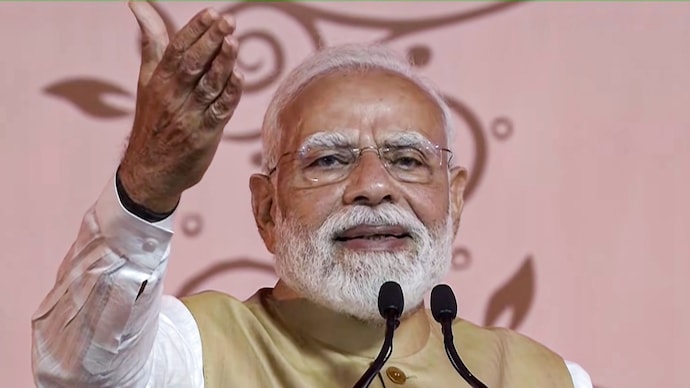
With Gen Z in the spotlight after the recent CJP protests, Prime Minister Narendra Modi on Saturday put youth and education at the heart of his address in Mysuru, hardselling the government's education reforms and pitching greater access to opportunities, irrespective of gender or language, as key to India's growth.
Speaking at the inauguration of the Viveka Smaraka at Sri Ramakrishna Ashrama, PM Modi highlighted the expansion of medical and higher education, while invoking Swami Vivekananda to stress that education must go hand in hand with equality of opportunity.
"Ensuring there is no discrimination in education or opportunities has now become the nation's vision," the Prime Minister said.
PM Modi pointed to girls entering institutions such as the National Defence Academy and students being able to pursue medical and engineering courses in their mother tongues as examples of how opportunities were being widened.
"Facilities are now available to pursue studies in fields like medicine and engineering in one's mother tongue. This is helping to curb discrimination in opportunities based on language," he said.
The focus on education and equal opportunity formed part of a wider youth-centric message, with PM Modi also putting the spotlight on the role of youngsters in India's growth story.
"Today, India is the world's fastest-growing major economy. Who has made this possible? The capability of India's youth. Youth of India are giving impetus to the development of the world," the Prime Minister said.
PM's Mysuru address comes at a politically significant moment. In recent weeks, a series of PM Modi's selfie-style videos directly addressing young Indians on Instagram have gone viral, even as the government faced the Gen Z-led CJP agitation over the NEET paper leak.
The protests put education and examination reforms at the centre of the political debate and culminated in Dharmendra Pradhan's resignation as Union Education Minister.
While the Prime Minister did not directly refer to the protests in Mysuru, his repeated emphasis on education, equal opportunities and giving young people the "right direction" came against the backdrop of sustained pressure on the government from students over the examination system.
EDUCATION REFORMS TAKE CENTRE STAGE
Listing the expansion of India's education infrastructure over the past 12 years, the Prime Minister said more than 650 universities, nearly 14,000 colleges, over 4,000 ITIs, nine IIMs, seven IITs and 13 AIIMS had been established.
He placed particular emphasis on medical education, saying the country now had around 1.4 lakh MBBS seats and 823 medical colleges.
"Our educational institutions play a pivotal role in this regard. I am pleased that the number of educational institutions in India is steadily rising. Today, the country has around 1,40,000 MBBS seats. The number of medical colleges has risen to 823," the Prime Minister said.
PM Modi also pitched the National Education Policy as central to the government's efforts to prepare young Indians for a changing economy.
"The National Education Policy is becoming a vehicle to prepare India's youth for the 21st century," he said.
Invoking Vivekananda's emphasis on equality, the Prime Minister said expanding education alone was not enough and stressed the need to ensure equal access to opportunities.
"Swami Vivekananda considered equality to be just as crucial as education for the upliftment of the nation," he said.
FROM ATAL TINKERING LABS TO SPACE SECTOR
Innovation was another major theme of the Prime Minister's address, as he linked educational opportunities with India's growing capabilities in new and emerging technologies.
PM Modi highlighted more than 10,000 Atal Tinkering Labs and over 14,000 PM SHRI Schools, saying such initiatives were helping promote scientific thinking and innovation among students.
He also credited young Indians with powering the country's growth in sectors ranging from startups and artificial intelligence to semiconductors, deep technology and space.
The Prime Minister pointed to India's emergence as the world's third-largest startup ecosystem and second-largest mobile phone manufacturer as examples of the country's changing economic and technological landscape.
He also cited Skyroot Aerospace, whose young team came to symbolise India's growing youth power in the space sector after the historic launch of Vikram-1, the country's first privately developed orbital rocket, in July 2026.
PM Modi had subsequently met Skyroot founders Pawan Chandana and Naga Bharath Daka in New Delhi and highlighted the youthfulness of the team, whose average age was 28.
VIVEKANANDA AT HEART OF PM'S YOUTH MESSAGE
Swami Vivekananda remained a recurring reference throughout the Prime Minister's address at the newly built cultural centre named after the spiritual leader.
PM Modi said Vivekananda had envisioned young people taking the lead in shaping India's future.
"Vivekananda wanted the youth to lead India," he said.
"Fulfilling the vision of India that Swami Vivekananda dreamed of is the responsibility of today's generation. I am confident that Viveka Smaraka will serve as a powerful source of inspiration and energy for that mission," he added.
The Prime Minister urged young Indians to put the country above personal interests and stressed that their potential could be transformed into national strength only when they received the right opportunities and guidance.
"In any country, the potential of young people transforms into national strength only when they receive the right opportunities and direction, and the confidence to dream big and realise those dreams on their own soil," he said.
He also invoked the principle of "Shiva Jnane Jiva Seva", or serving humanity as service to God, while calling on young people to work for the poor and put the country first.
PM WIDENS MESSAGE TO SPORTS, SOCIAL CAUSES
The Prime Minister broadened his focus beyond education and technology, highlighting sports as another area where young Indians were making their mark.
He cited initiatives including Khelo India, the Youth Games, University Games, Para Games and Winter Games, arguing that expanding sports infrastructure was helping identify talent from villages and smaller towns.
PM Modi also urged young people to take up causes such as cleanliness and water conservation, support local artisans and deepen their engagement with Kannada literature and Karnataka's cultural heritage.
With Gen Z in the spotlight after the recent CJP protests, Prime Minister Narendra Modi on Saturday put youth and education at the heart of his address in Mysuru, hardselling the government's education reforms and pitching greater access to opportunities, irrespective of gender or language, as key to India's growth.
Speaking at the inauguration of the Viveka Smaraka at Sri Ramakrishna Ashrama, PM Modi highlighted the expansion of medical and higher education, while invoking Swami Vivekananda to stress that education must go hand in hand with equality of opportunity.
"Ensuring there is no discrimination in education or opportunities has now become the nation's vision," the Prime Minister said.
PM Modi pointed to girls entering institutions such as the National Defence Academy and students being able to pursue medical and engineering courses in their mother tongues as examples of how opportunities were being widened.
"Facilities are now available to pursue studies in fields like medicine and engineering in one's mother tongue. This is helping to curb discrimination in opportunities based on language," he said.
The focus on education and equal opportunity formed part of a wider youth-centric message, with PM Modi also putting the spotlight on the role of youngsters in India's growth story.
"Today, India is the world's fastest-growing major economy. Who has made this possible? The capability of India's youth. Youth of India are giving impetus to the development of the world," the Prime Minister said.
PM's Mysuru address comes at a politically significant moment. In recent weeks, a series of PM Modi's selfie-style videos directly addressing young Indians on Instagram have gone viral, even as the government faced the Gen Z-led CJP agitation over the NEET paper leak.
The protests put education and examination reforms at the centre of the political debate and culminated in Dharmendra Pradhan's resignation as Union Education Minister.
While the Prime Minister did not directly refer to the protests in Mysuru, his repeated emphasis on education, equal opportunities and giving young people the "right direction" came against the backdrop of sustained pressure on the government from students over the examination system.
EDUCATION REFORMS TAKE CENTRE STAGE
Listing the expansion of India's education infrastructure over the past 12 years, the Prime Minister said more than 650 universities, nearly 14,000 colleges, over 4,000 ITIs, nine IIMs, seven IITs and 13 AIIMS had been established.
He placed particular emphasis on medical education, saying the country now had around 1.4 lakh MBBS seats and 823 medical colleges.
"Our educational institutions play a pivotal role in this regard. I am pleased that the number of educational institutions in India is steadily rising. Today, the country has around 1,40,000 MBBS seats. The number of medical colleges has risen to 823," the Prime Minister said.
PM Modi also pitched the National Education Policy as central to the government's efforts to prepare young Indians for a changing economy.
"The National Education Policy is becoming a vehicle to prepare India's youth for the 21st century," he said.
Invoking Vivekananda's emphasis on equality, the Prime Minister said expanding education alone was not enough and stressed the need to ensure equal access to opportunities.
"Swami Vivekananda considered equality to be just as crucial as education for the upliftment of the nation," he said.
FROM ATAL TINKERING LABS TO SPACE SECTOR
Innovation was another major theme of the Prime Minister's address, as he linked educational opportunities with India's growing capabilities in new and emerging technologies.
PM Modi highlighted more than 10,000 Atal Tinkering Labs and over 14,000 PM SHRI Schools, saying such initiatives were helping promote scientific thinking and innovation among students.
He also credited young Indians with powering the country's growth in sectors ranging from startups and artificial intelligence to semiconductors, deep technology and space.
The Prime Minister pointed to India's emergence as the world's third-largest startup ecosystem and second-largest mobile phone manufacturer as examples of the country's changing economic and technological landscape.
He also cited Skyroot Aerospace, whose young team came to symbolise India's growing youth power in the space sector after the historic launch of Vikram-1, the country's first privately developed orbital rocket, in July 2026.
PM Modi had subsequently met Skyroot founders Pawan Chandana and Naga Bharath Daka in New Delhi and highlighted the youthfulness of the team, whose average age was 28.
VIVEKANANDA AT HEART OF PM'S YOUTH MESSAGE
Swami Vivekananda remained a recurring reference throughout the Prime Minister's address at the newly built cultural centre named after the spiritual leader.
PM Modi said Vivekananda had envisioned young people taking the lead in shaping India's future.
"Vivekananda wanted the youth to lead India," he said.
"Fulfilling the vision of India that Swami Vivekananda dreamed of is the responsibility of today's generation. I am confident that Viveka Smaraka will serve as a powerful source of inspiration and energy for that mission," he added.
The Prime Minister urged young Indians to put the country above personal interests and stressed that their potential could be transformed into national strength only when they received the right opportunities and guidance.
"In any country, the potential of young people transforms into national strength only when they receive the right opportunities and direction, and the confidence to dream big and realise those dreams on their own soil," he said.
He also invoked the principle of "Shiva Jnane Jiva Seva", or serving humanity as service to God, while calling on young people to work for the poor and put the country first.
PM WIDENS MESSAGE TO SPORTS, SOCIAL CAUSES
The Prime Minister broadened his focus beyond education and technology, highlighting sports as another area where young Indians were making their mark.
He cited initiatives including Khelo India, the Youth Games, University Games, Para Games and Winter Games, arguing that expanding sports infrastructure was helping identify talent from villages and smaller towns.
PM Modi also urged young people to take up causes such as cleanliness and water conservation, support local artisans and deepen their engagement with Kannada literature and Karnataka's cultural heritage.
With Gen Z in the spotlight after the recent CJP protests, Prime Minister Narendra Modi on Saturday put youth and education at the heart of his address in Mysuru, hardselling the government's education reforms and pitching greater access to opportunities, irrespective of gender or language, as key to India's growth.
Speaking at the inauguration of the Viveka Smaraka at Sri Ramakrishna Ashrama, PM Modi highlighted the expansion of medical and higher education, while invoking Swami Vivekananda to stress that education must go hand in hand with equality of opportunity.
"Ensuring there is no discrimination in education or opportunities has now become the nation's vision," the Prime Minister said.
PM Modi pointed to girls entering institutions such as the National Defence Academy and students being able to pursue medical and engineering courses in their mother tongues as examples of how opportunities were being widened.
"Facilities are now available to pursue studies in fields like medicine and engineering in one's mother tongue. This is helping to curb discrimination in opportunities based on language," he said.
The focus on education and equal opportunity formed part of a wider youth-centric message, with PM Modi also putting the spotlight on the role of youngsters in India's growth story.
"Today, India is the world's fastest-growing major economy. Who has made this possible? The capability of India's youth. Youth of India are giving impetus to the development of the world," the Prime Minister said.
PM's Mysuru address comes at a politically significant moment. In recent weeks, a series of PM Modi's selfie-style videos directly addressing young Indians on Instagram have gone viral, even as the government faced the Gen Z-led CJP agitation over the NEET paper leak.
The protests put education and examination reforms at the centre of the political debate and culminated in Dharmendra Pradhan's resignation as Union Education Minister.
While the Prime Minister did not directly refer to the protests in Mysuru, his repeated emphasis on education, equal opportunities and giving young people the "right direction" came against the backdrop of sustained pressure on the government from students over the examination system.
EDUCATION REFORMS TAKE CENTRE STAGE
Listing the expansion of India's education infrastructure over the past 12 years, the Prime Minister said more than 650 universities, nearly 14,000 colleges, over 4,000 ITIs, nine IIMs, seven IITs and 13 AIIMS had been established.
He placed particular emphasis on medical education, saying the country now had around 1.4 lakh MBBS seats and 823 medical colleges.
"Our educational institutions play a pivotal role in this regard. I am pleased that the number of educational institutions in India is steadily rising. Today, the country has around 1,40,000 MBBS seats. The number of medical colleges has risen to 823," the Prime Minister said.
PM Modi also pitched the National Education Policy as central to the government's efforts to prepare young Indians for a changing economy.
"The National Education Policy is becoming a vehicle to prepare India's youth for the 21st century," he said.
Invoking Vivekananda's emphasis on equality, the Prime Minister said expanding education alone was not enough and stressed the need to ensure equal access to opportunities.
"Swami Vivekananda considered equality to be just as crucial as education for the upliftment of the nation," he said.
FROM ATAL TINKERING LABS TO SPACE SECTOR
Innovation was another major theme of the Prime Minister's address, as he linked educational opportunities with India's growing capabilities in new and emerging technologies.
PM Modi highlighted more than 10,000 Atal Tinkering Labs and over 14,000 PM SHRI Schools, saying such initiatives were helping promote scientific thinking and innovation among students.
He also credited young Indians with powering the country's growth in sectors ranging from startups and artificial intelligence to semiconductors, deep technology and space.
The Prime Minister pointed to India's emergence as the world's third-largest startup ecosystem and second-largest mobile phone manufacturer as examples of the country's changing economic and technological landscape.
He also cited Skyroot Aerospace, whose young team came to symbolise India's growing youth power in the space sector after the historic launch of Vikram-1, the country's first privately developed orbital rocket, in July 2026.
PM Modi had subsequently met Skyroot founders Pawan Chandana and Naga Bharath Daka in New Delhi and highlighted the youthfulness of the team, whose average age was 28.
VIVEKANANDA AT HEART OF PM'S YOUTH MESSAGE
Swami Vivekananda remained a recurring reference throughout the Prime Minister's address at the newly built cultural centre named after the spiritual leader.
PM Modi said Vivekananda had envisioned young people taking the lead in shaping India's future.
"Vivekananda wanted the youth to lead India," he said.
"Fulfilling the vision of India that Swami Vivekananda dreamed of is the responsibility of today's generation. I am confident that Viveka Smaraka will serve as a powerful source of inspiration and energy for that mission," he added.
The Prime Minister urged young Indians to put the country above personal interests and stressed that their potential could be transformed into national strength only when they received the right opportunities and guidance.
"In any country, the potential of young people transforms into national strength only when they receive the right opportunities and direction, and the confidence to dream big and realise those dreams on their own soil," he said.
He also invoked the principle of "Shiva Jnane Jiva Seva", or serving humanity as service to God, while calling on young people to work for the poor and put the country first.
PM WIDENS MESSAGE TO SPORTS, SOCIAL CAUSES
The Prime Minister broadened his focus beyond education and technology, highlighting sports as another area where young Indians were making their mark.
He cited initiatives including Khelo India, the Youth Games, University Games, Para Games and Winter Games, arguing that expanding sports infrastructure was helping identify talent from villages and smaller towns.
PM Modi also urged young people to take up causes such as cleanliness and water conservation, support local artisans and deepen their engagement with Kannada literature and Karnataka's cultural heritage.

