Avoid deploying Indian seafarers in Hormuz: Government's big advisory to shipowners
The country's top maritime authority, the Directorate General of Maritime Administration (DGMA), has issued a circular in this regard.
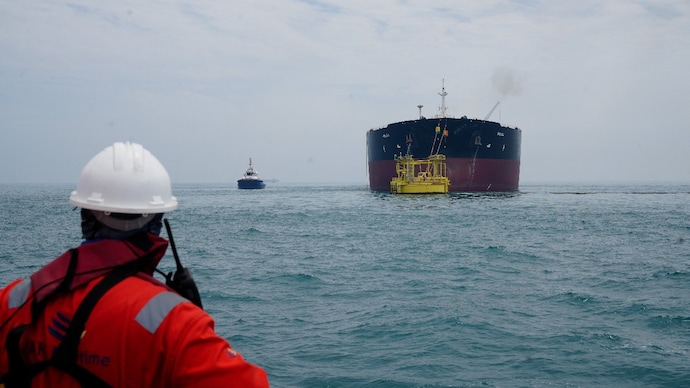
India has asked shipping companies, including owners, operators and staffing firms, to temporarily refrain from deploying Indian seafarers on merchant vessels undertaking voyages through the conflict-hit Strait of Hormuz. The country's top maritime authority, the Directorate General of Maritime Administration (DGMA), has issued an advisory in this regard.
"In view of the heightened security situation in the Gulf region, the Directorate General of Maritime Administration (DGMA), through DGMA Circular No. 36 of 2026, has directed Ship Owners, Ship Managers and RPSL (Recruitment and Placement of Seafarers License) Companies to avoid deploying Indian seafarers on vessels undertaking voyages through the Strait of Hormuz until further orders," it said.
The DGMA also listed a few other precautionary measures meant to ensure the safety of Indian sailors:
- Heightened security vigilance in the Persian Gulf, Strait of Hormuz and adjoining waters.
- Continuous monitoring of navigational warnings and security advisories, with strict implementation of the ISPS (International Ship and Port Facility Security) Code.
- Immediate reporting and assistance through the IFC-IOR (Information Fusion Centre - Indian Ocean Region) and DG Communication Centre (Mercantile Marine Domain Awareness Centre) in cases of emergency.
The DGMA said it was closely monitoring the evolving security situation in the Middle East, adding that it remains committed to safeguarding the safety, security and welfare of Indian seafarers.
This comes as commercial ships and their crews continue to be caught in the crossfire of the ongoing conflict in the Middle East. Indians reportedly account for a significant share, if not the majority, of civilian sailor casualties due to the Iran war.
Since the armed conflict began on February 28 this year, at least 10 Indian sailors have been killed in and around the Strait of Hormuz in strikes linked to both Iran and the US.
Earlier this week, an Indian national was killed, and 10 others were injured, including two seriously, in Iranian attacks on two oil tankers in the strategic waterway, prompting New Delhi to summon the Iranian deputy envoy to lodge a strong protest and demand an immediate halt to such strikes.
Prior to that, an Indian crew member went missing after an attack on a Cyprus-flagged merchant vessel near the coast of Oman. He was later confirmed dead. The vessel was hit by a so-called warning shot fired by Iranian forces.
India has asked shipping companies, including owners, operators and staffing firms, to temporarily refrain from deploying Indian seafarers on merchant vessels undertaking voyages through the conflict-hit Strait of Hormuz. The country's top maritime authority, the Directorate General of Maritime Administration (DGMA), has issued an advisory in this regard.
"In view of the heightened security situation in the Gulf region, the Directorate General of Maritime Administration (DGMA), through DGMA Circular No. 36 of 2026, has directed Ship Owners, Ship Managers and RPSL (Recruitment and Placement of Seafarers License) Companies to avoid deploying Indian seafarers on vessels undertaking voyages through the Strait of Hormuz until further orders," it said.
The DGMA also listed a few other precautionary measures meant to ensure the safety of Indian sailors:
- Heightened security vigilance in the Persian Gulf, Strait of Hormuz and adjoining waters.
- Continuous monitoring of navigational warnings and security advisories, with strict implementation of the ISPS (International Ship and Port Facility Security) Code.
- Immediate reporting and assistance through the IFC-IOR (Information Fusion Centre - Indian Ocean Region) and DG Communication Centre (Mercantile Marine Domain Awareness Centre) in cases of emergency.
The DGMA said it was closely monitoring the evolving security situation in the Middle East, adding that it remains committed to safeguarding the safety, security and welfare of Indian seafarers.
This comes as commercial ships and their crews continue to be caught in the crossfire of the ongoing conflict in the Middle East. Indians reportedly account for a significant share, if not the majority, of civilian sailor casualties due to the Iran war.
Since the armed conflict began on February 28 this year, at least 10 Indian sailors have been killed in and around the Strait of Hormuz in strikes linked to both Iran and the US.
Earlier this week, an Indian national was killed, and 10 others were injured, including two seriously, in Iranian attacks on two oil tankers in the strategic waterway, prompting New Delhi to summon the Iranian deputy envoy to lodge a strong protest and demand an immediate halt to such strikes.
Prior to that, an Indian crew member went missing after an attack on a Cyprus-flagged merchant vessel near the coast of Oman. He was later confirmed dead. The vessel was hit by a so-called warning shot fired by Iranian forces.
India has asked shipping companies, including owners, operators and staffing firms, to temporarily refrain from deploying Indian seafarers on merchant vessels undertaking voyages through the conflict-hit Strait of Hormuz. The country's top maritime authority, the Directorate General of Maritime Administration (DGMA), has issued an advisory in this regard.
"In view of the heightened security situation in the Gulf region, the Directorate General of Maritime Administration (DGMA), through DGMA Circular No. 36 of 2026, has directed Ship Owners, Ship Managers and RPSL (Recruitment and Placement of Seafarers License) Companies to avoid deploying Indian seafarers on vessels undertaking voyages through the Strait of Hormuz until further orders," it said.
The DGMA also listed a few other precautionary measures meant to ensure the safety of Indian sailors:
- Heightened security vigilance in the Persian Gulf, Strait of Hormuz and adjoining waters.
- Continuous monitoring of navigational warnings and security advisories, with strict implementation of the ISPS (International Ship and Port Facility Security) Code.
- Immediate reporting and assistance through the IFC-IOR (Information Fusion Centre - Indian Ocean Region) and DG Communication Centre (Mercantile Marine Domain Awareness Centre) in cases of emergency.
The DGMA said it was closely monitoring the evolving security situation in the Middle East, adding that it remains committed to safeguarding the safety, security and welfare of Indian seafarers.
This comes as commercial ships and their crews continue to be caught in the crossfire of the ongoing conflict in the Middle East. Indians reportedly account for a significant share, if not the majority, of civilian sailor casualties due to the Iran war.
Since the armed conflict began on February 28 this year, at least 10 Indian sailors have been killed in and around the Strait of Hormuz in strikes linked to both Iran and the US.
Earlier this week, an Indian national was killed, and 10 others were injured, including two seriously, in Iranian attacks on two oil tankers in the strategic waterway, prompting New Delhi to summon the Iranian deputy envoy to lodge a strong protest and demand an immediate halt to such strikes.
Prior to that, an Indian crew member went missing after an attack on a Cyprus-flagged merchant vessel near the coast of Oman. He was later confirmed dead. The vessel was hit by a so-called warning shot fired by Iranian forces.

