Don't release stray dogs near schools, hospitals, Maharashtra directs civic bodies
Maharashtra has ordered civic bodies to keep sterilised stray dogs away from sensitive public places. The move sharpens public safety measures while enforcing Supreme Court directions on dog control.
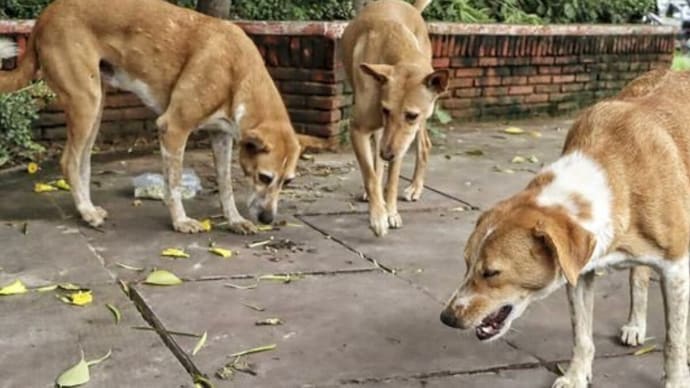
Maharashtra has told urban local bodies not to release sterilised and vaccinated stray dogs near schools, hospitals and airports, and to set up designated feeding zones and helplines for complaints, according to a recent Government Resolution (GR). The order also said rabid, terminally ill or extremely aggressive dogs may be "euthanised after consultation with veterinary experts" and in line with the law.
The Urban Development Department issued the order in compliance with directions passed by the Supreme Court from time to time in its suo motu proceedings on the stray dog issue. It said all municipal corporations, municipal councils and nagar panchayats must strictly implement the court's directions without any relaxation.
Under the order, civic bodies have been asked to capture stray dogs for sterilisation, vaccination and deworming, create shelters for them, and identify specific places where they can be fed. The state government has also directed every urban local body to set up a helpline for complaints related to stray dogs and to carry out large-scale public awareness campaigns on treatment and preventive steps after dog bites.
The order said that under the Animal Birth Control Rules, 2023, sterilised and vaccinated stray dogs must not be released in protected and access-controlled places such as schools, hospitals and airports. It also asked civic bodies to assess local conditions and public safety and apply similar measures at other crowded public places, including educational institutions, sports complexes, bus stands and depots, interstate bus terminals and railway station premises.
According to the order, stray dogs found in such locations should be immediately captured, sterilised and vaccinated before being shifted to established shelters, and they should not be released back at the same places. Officials have also been directed to earmark designated feeding zones.
To improve the implementation of the Animal Birth Control programme, the government has asked civic bodies to strengthen existing sterilisation and vaccination centres, create additional infrastructure where required, and expand capacity. Local bodies have also been told to increase the number of sterilisation centres based on stray dog population, density and geographical spread, while ensuring adequate veterinary infrastructure, surgical facilities, trained personnel and other support arrangements.
The government said that in areas where stray dog numbers have reached alarming levels, or where repeated bite incidents and aggressive attacks have posed a threat to public safety, rabid, terminally ill or extremely aggressive dogs may be euthanised after consultation with veterinary experts. It said such action must strictly comply with the Prevention of Cruelty to Animals Act, 1960, and the Animal Birth Control Rules, 2023.
The order also told civic bodies to ensure adequate stocks of anti-rabies vaccines and immunoglobulin at all public health centres and hospitals so that dog bite cases can be dealt with effectively. It further asked authorities to coordinate with the National Highways Authority of India to address the issue of stray animals on national highways in line with court directions.
The Supreme Court had passed an order last year on the relocation and sterilisation of stray dogs, saying that the right to live with dignity includes the right to move freely without fear of dog attacks. The order drew strong reactions from a section of animal lovers, and in May this year, the court dismissed petitions seeking its recall.
The government said officials implementing the court's directions in good faith would get legal protection, and no FIR or criminal proceedings would be initiated against them for such action. However, this protection will not apply if there is prima facie evidence of mala fide action, misuse of official powers or violation of court orders. The resolution also warned that officials who repeatedly fail to comply with the Supreme Court's directions could face legal action, including contempt of court proceedings.
In effect, the order brings together the state's directions on stray dog control, public safety, feeding arrangements, medical preparedness and legal accountability, while requiring urban local bodies across Maharashtra to follow the Supreme Court's orders strictly.
Maharashtra has told urban local bodies not to release sterilised and vaccinated stray dogs near schools, hospitals and airports, and to set up designated feeding zones and helplines for complaints, according to a recent Government Resolution (GR). The order also said rabid, terminally ill or extremely aggressive dogs may be "euthanised after consultation with veterinary experts" and in line with the law.
The Urban Development Department issued the order in compliance with directions passed by the Supreme Court from time to time in its suo motu proceedings on the stray dog issue. It said all municipal corporations, municipal councils and nagar panchayats must strictly implement the court's directions without any relaxation.
Under the order, civic bodies have been asked to capture stray dogs for sterilisation, vaccination and deworming, create shelters for them, and identify specific places where they can be fed. The state government has also directed every urban local body to set up a helpline for complaints related to stray dogs and to carry out large-scale public awareness campaigns on treatment and preventive steps after dog bites.
The order said that under the Animal Birth Control Rules, 2023, sterilised and vaccinated stray dogs must not be released in protected and access-controlled places such as schools, hospitals and airports. It also asked civic bodies to assess local conditions and public safety and apply similar measures at other crowded public places, including educational institutions, sports complexes, bus stands and depots, interstate bus terminals and railway station premises.
According to the order, stray dogs found in such locations should be immediately captured, sterilised and vaccinated before being shifted to established shelters, and they should not be released back at the same places. Officials have also been directed to earmark designated feeding zones.
To improve the implementation of the Animal Birth Control programme, the government has asked civic bodies to strengthen existing sterilisation and vaccination centres, create additional infrastructure where required, and expand capacity. Local bodies have also been told to increase the number of sterilisation centres based on stray dog population, density and geographical spread, while ensuring adequate veterinary infrastructure, surgical facilities, trained personnel and other support arrangements.
The government said that in areas where stray dog numbers have reached alarming levels, or where repeated bite incidents and aggressive attacks have posed a threat to public safety, rabid, terminally ill or extremely aggressive dogs may be euthanised after consultation with veterinary experts. It said such action must strictly comply with the Prevention of Cruelty to Animals Act, 1960, and the Animal Birth Control Rules, 2023.
The order also told civic bodies to ensure adequate stocks of anti-rabies vaccines and immunoglobulin at all public health centres and hospitals so that dog bite cases can be dealt with effectively. It further asked authorities to coordinate with the National Highways Authority of India to address the issue of stray animals on national highways in line with court directions.
The Supreme Court had passed an order last year on the relocation and sterilisation of stray dogs, saying that the right to live with dignity includes the right to move freely without fear of dog attacks. The order drew strong reactions from a section of animal lovers, and in May this year, the court dismissed petitions seeking its recall.
The government said officials implementing the court's directions in good faith would get legal protection, and no FIR or criminal proceedings would be initiated against them for such action. However, this protection will not apply if there is prima facie evidence of mala fide action, misuse of official powers or violation of court orders. The resolution also warned that officials who repeatedly fail to comply with the Supreme Court's directions could face legal action, including contempt of court proceedings.
In effect, the order brings together the state's directions on stray dog control, public safety, feeding arrangements, medical preparedness and legal accountability, while requiring urban local bodies across Maharashtra to follow the Supreme Court's orders strictly.
Maharashtra has told urban local bodies not to release sterilised and vaccinated stray dogs near schools, hospitals and airports, and to set up designated feeding zones and helplines for complaints, according to a recent Government Resolution (GR). The order also said rabid, terminally ill or extremely aggressive dogs may be "euthanised after consultation with veterinary experts" and in line with the law.
The Urban Development Department issued the order in compliance with directions passed by the Supreme Court from time to time in its suo motu proceedings on the stray dog issue. It said all municipal corporations, municipal councils and nagar panchayats must strictly implement the court's directions without any relaxation.
Under the order, civic bodies have been asked to capture stray dogs for sterilisation, vaccination and deworming, create shelters for them, and identify specific places where they can be fed. The state government has also directed every urban local body to set up a helpline for complaints related to stray dogs and to carry out large-scale public awareness campaigns on treatment and preventive steps after dog bites.
The order said that under the Animal Birth Control Rules, 2023, sterilised and vaccinated stray dogs must not be released in protected and access-controlled places such as schools, hospitals and airports. It also asked civic bodies to assess local conditions and public safety and apply similar measures at other crowded public places, including educational institutions, sports complexes, bus stands and depots, interstate bus terminals and railway station premises.
According to the order, stray dogs found in such locations should be immediately captured, sterilised and vaccinated before being shifted to established shelters, and they should not be released back at the same places. Officials have also been directed to earmark designated feeding zones.
To improve the implementation of the Animal Birth Control programme, the government has asked civic bodies to strengthen existing sterilisation and vaccination centres, create additional infrastructure where required, and expand capacity. Local bodies have also been told to increase the number of sterilisation centres based on stray dog population, density and geographical spread, while ensuring adequate veterinary infrastructure, surgical facilities, trained personnel and other support arrangements.
The government said that in areas where stray dog numbers have reached alarming levels, or where repeated bite incidents and aggressive attacks have posed a threat to public safety, rabid, terminally ill or extremely aggressive dogs may be euthanised after consultation with veterinary experts. It said such action must strictly comply with the Prevention of Cruelty to Animals Act, 1960, and the Animal Birth Control Rules, 2023.
The order also told civic bodies to ensure adequate stocks of anti-rabies vaccines and immunoglobulin at all public health centres and hospitals so that dog bite cases can be dealt with effectively. It further asked authorities to coordinate with the National Highways Authority of India to address the issue of stray animals on national highways in line with court directions.
The Supreme Court had passed an order last year on the relocation and sterilisation of stray dogs, saying that the right to live with dignity includes the right to move freely without fear of dog attacks. The order drew strong reactions from a section of animal lovers, and in May this year, the court dismissed petitions seeking its recall.
The government said officials implementing the court's directions in good faith would get legal protection, and no FIR or criminal proceedings would be initiated against them for such action. However, this protection will not apply if there is prima facie evidence of mala fide action, misuse of official powers or violation of court orders. The resolution also warned that officials who repeatedly fail to comply with the Supreme Court's directions could face legal action, including contempt of court proceedings.
In effect, the order brings together the state's directions on stray dog control, public safety, feeding arrangements, medical preparedness and legal accountability, while requiring urban local bodies across Maharashtra to follow the Supreme Court's orders strictly.

