Will India finally act on deadly weed-killer paraquat, banned in 74 countries?
The Centre is reportedly expected to decide soon whether paraquat, one of the world's most controversial weed killers, should be banned in India. The expected decision comes amid mounting concerns over its health risks, state-level curbs, and it being banned in 74 countries.
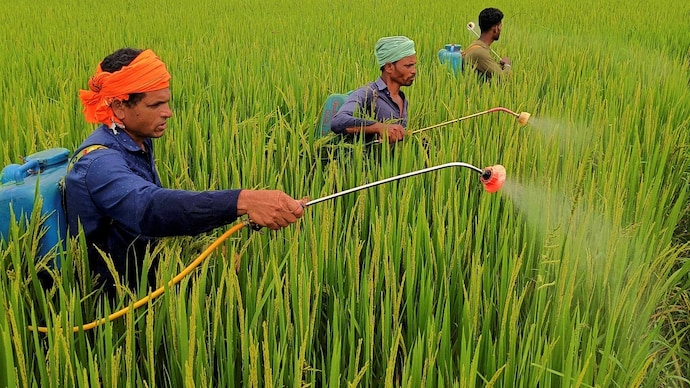
The Centre is expected to take a decision this week on whether to ban paraquat dichloride, one of the world's most controversial herbicides. Sources told Kisan Tak Editor Om Prakash, that the file proposing a nationwide ban on paraquat has been submitted to the Agriculture Ministry and could be cleared this week.
The move comes amid growing concerns over the herbicide's health risks, its continued use in Indian agriculture despite being banned in 74 countries, and increasing pressure from several states that have sought restrictions on its sale.
Paraquat is among the most toxic herbicides used globally. Even a small amount can prove fatal if ingested, and there is no known antidote for poisoning. Medical experts have long warned that exposure can cause severe damage to the lungs, kidneys, liver and other organs.
India currently permits the use of paraquat on nine crops, including tea, potato, cotton, rubber, coffee, paddy, and wheat — after approval by the Central Insecticides Board and Registration Committee (CIBRC).
Click here to read the story on paraquet in Hindi on Kisan Tak.
One of the key concerns is its alleged off-label use to dry the standing crop before they're harvested, a practice that is not permitted. Such use has raised questions about the possibility of residues entering the food chain.
The debate over paraquat is not new.
In 2020, the Centre proposed banning 27 pesticides, including paraquat, after a review of chemicals that had been prohibited in other countries. However, when the final notification was issued in 2023, only three pesticides were banned, while paraquat and several others remained approved for use.
Now, with a fresh expert panel having reviewed scientific literature, medical evidence and international practices, the issue is back before the government. In fact, some Indian states have banned its use.
SEVERAL INDIAN STATES HAVE CURBED THE USE OF PARAQUAT
Three Indian states have also attempted to curb the herbicide's use.
Telangana recently imposed a temporary ban on the sale of paraquat, while Andhra Pradesh has taken similar action. Odisha has also restricted the use of the chemical in the past. Kerala had earlier imposed a ban citing public health concerns, but the decision was later set aside by a court on technical grounds.
Under the Insecticides Act, 1968, state governments can temporarily prohibit the sale or distribution of a pesticide for a limited period. A permanent nationwide ban can only be imposed by the Centre.
Globally, paraquat has been rejected by much of the world.
According to reports, 74 countries have banned the herbicide, including Switzerland, Austria, the United Kingdom and members of the European Union. China, which now owns Syngenta — the company historically associated with paraquat — has also prohibited its domestic agricultural use, although manufacturing has continued for export.
Syngenta has also announced that it will stop global production of paraquat by the end of June 2026, though other manufacturers are expected to continue making the herbicide.
PARAQUAT IS COMMERCIALISED AS A WEED KILLER
The chemical has a long history. It was first synthesised in 1882 and was commercialised as a weed killer in the early 1960s because of its ability to rapidly destroy unwanted vegetation. Over the decades, however, growing evidence about its toxicity led many countries to prohibit its use.
The herbicide has also figured in several poisoning cases. Doctors say treatment remains extremely difficult because there is no specific antidote. In severe cases, patients can suffer irreversible damage to multiple organs, and survival rates are low.
Supporters of paraquat argue that it remains an effective and economical weed-control option for farmers, particularly where labour shortages make manual weeding expensive. Critics, however, contend that the health risks outweigh its benefits and point out that many countries have successfully shifted to safer alternatives.
The chemical has also been at the centre of India's pesticide regulation debate. In 2013, the Union Agriculture Ministry constituted the Anupam Verma Committee to review pesticides that had already been banned abroad but continued to be used in India. In 2015, the committee recommended continued use of paraquat subject to safeguards such as stricter packaging, warning labels and safe handling measures, rather than an outright ban.
Those recommendations have since been cited while retaining approval for the herbicide. However, concerns over implementation of safety measures, accidental exposure and alleged misuse have continued to fuel demands for stricter regulation.
The government's upcoming decision is therefore likely to have significant implications for farmers, agrochemical companies and public health policy. If paraquat is banned, India would join the list of countries that have phased out one of the world's most toxic herbicides.
The Centre is expected to take a decision this week on whether to ban paraquat dichloride, one of the world's most controversial herbicides. Sources told Kisan Tak Editor Om Prakash, that the file proposing a nationwide ban on paraquat has been submitted to the Agriculture Ministry and could be cleared this week.
The move comes amid growing concerns over the herbicide's health risks, its continued use in Indian agriculture despite being banned in 74 countries, and increasing pressure from several states that have sought restrictions on its sale.
Paraquat is among the most toxic herbicides used globally. Even a small amount can prove fatal if ingested, and there is no known antidote for poisoning. Medical experts have long warned that exposure can cause severe damage to the lungs, kidneys, liver and other organs.
India currently permits the use of paraquat on nine crops, including tea, potato, cotton, rubber, coffee, paddy, and wheat — after approval by the Central Insecticides Board and Registration Committee (CIBRC).
Click here to read the story on paraquet in Hindi on Kisan Tak.
One of the key concerns is its alleged off-label use to dry the standing crop before they're harvested, a practice that is not permitted. Such use has raised questions about the possibility of residues entering the food chain.
The debate over paraquat is not new.
In 2020, the Centre proposed banning 27 pesticides, including paraquat, after a review of chemicals that had been prohibited in other countries. However, when the final notification was issued in 2023, only three pesticides were banned, while paraquat and several others remained approved for use.
Now, with a fresh expert panel having reviewed scientific literature, medical evidence and international practices, the issue is back before the government. In fact, some Indian states have banned its use.
SEVERAL INDIAN STATES HAVE CURBED THE USE OF PARAQUAT
Three Indian states have also attempted to curb the herbicide's use.
Telangana recently imposed a temporary ban on the sale of paraquat, while Andhra Pradesh has taken similar action. Odisha has also restricted the use of the chemical in the past. Kerala had earlier imposed a ban citing public health concerns, but the decision was later set aside by a court on technical grounds.
Under the Insecticides Act, 1968, state governments can temporarily prohibit the sale or distribution of a pesticide for a limited period. A permanent nationwide ban can only be imposed by the Centre.
Globally, paraquat has been rejected by much of the world.
According to reports, 74 countries have banned the herbicide, including Switzerland, Austria, the United Kingdom and members of the European Union. China, which now owns Syngenta — the company historically associated with paraquat — has also prohibited its domestic agricultural use, although manufacturing has continued for export.
Syngenta has also announced that it will stop global production of paraquat by the end of June 2026, though other manufacturers are expected to continue making the herbicide.
PARAQUAT IS COMMERCIALISED AS A WEED KILLER
The chemical has a long history. It was first synthesised in 1882 and was commercialised as a weed killer in the early 1960s because of its ability to rapidly destroy unwanted vegetation. Over the decades, however, growing evidence about its toxicity led many countries to prohibit its use.
The herbicide has also figured in several poisoning cases. Doctors say treatment remains extremely difficult because there is no specific antidote. In severe cases, patients can suffer irreversible damage to multiple organs, and survival rates are low.
Supporters of paraquat argue that it remains an effective and economical weed-control option for farmers, particularly where labour shortages make manual weeding expensive. Critics, however, contend that the health risks outweigh its benefits and point out that many countries have successfully shifted to safer alternatives.
The chemical has also been at the centre of India's pesticide regulation debate. In 2013, the Union Agriculture Ministry constituted the Anupam Verma Committee to review pesticides that had already been banned abroad but continued to be used in India. In 2015, the committee recommended continued use of paraquat subject to safeguards such as stricter packaging, warning labels and safe handling measures, rather than an outright ban.
Those recommendations have since been cited while retaining approval for the herbicide. However, concerns over implementation of safety measures, accidental exposure and alleged misuse have continued to fuel demands for stricter regulation.
The government's upcoming decision is therefore likely to have significant implications for farmers, agrochemical companies and public health policy. If paraquat is banned, India would join the list of countries that have phased out one of the world's most toxic herbicides.

