Comprehensive sex education may soon be introduced in schools, Centre tells SC
India may soon introduce comprehensive sex education in schools and colleges after the Centre informed the Supreme Court that it has accepted an expert panel's recommendations. The curriculum will be rolled out after the court grants its approval.
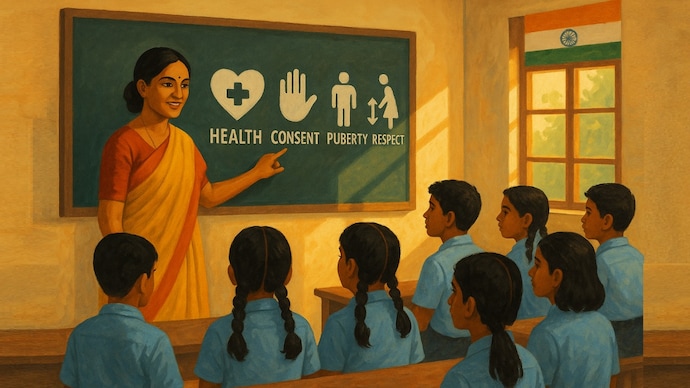
As India moves towards a major change in school education, the Central government has informed the Supreme Court that it has accepted an expert committee's recommendations to introduce comprehensive sex education in schools and colleges.
According to a report by The Times of India (TOI), the Centre told the apex court that the curriculum would be implemented nationwide after receiving the court's approval.
The submission was made before a Bench of Justices B V Nagarathna and R Mahadevan. Appearing for the Centre, Additional Solicitor General Aishwarya Bhati informed the court that the government had accepted the expert committee's report and was ready to implement its recommendations across the country.
The report was prepared following directions from the Supreme Court, which had asked the Centre to examine ways to prevent increasing cases of minor pregnancies and consensual adolescent relationships from being criminalised under the Protection of Children from Sexual Offences (POCSO) Act.
WHAT THE EXPERT PANEL HAS RECOMMENDED
The 26-member national expert committee, headed by an Additional Secretary in the Ministry of Women and Child Development, included representatives from the Tata Institute of Social Sciences (TISS), clinical psychologists, officials from central ministries, state governments, the National Commission for Protection of Child Rights (NCPCR) and the National Legal Services Authority (NALSA), among others.
Among its key recommendations are:
Introduce comprehensive sex education as part of the core curriculum.
Include child sexual abuse awareness in school education.
Teach concepts such as body safety, hygiene, body parts, and safe and unsafe touch from the foundational stage.
Ask NCERT to prepare the curriculum and learning materials.
LINKED WITH THE NATIONAL EDUCATION POLICY
The committee recommended that adolescent education programmes should be aligned with the National Education Policy (NEP) 2020. It suggested reviewing existing adolescent education initiatives and strengthening them to promote holistic development, critical thinking and life skills among students.
The report also proposed appointing dedicated expert teachers to conduct mandatory sessions on these topics for 15 to 20 minutes twice every week from the primary school level onwards.
PARENTS TO BE INCLUDED TOO
The committee stressed that awareness should not be limited to classrooms. It recommended organising regular meetings for parents, guardians and teachers to help them understand children's developmental milestones and the importance of age-appropriate sex education.
Senior advocates Madhavi Divan and Liz Mathew, assisting the Supreme Court as amicus curiae, welcomed the report and urged the court to clearly define the scope of "comprehensive sex education". The Bench indicated that it would examine the recommendations before passing an appropriate order.
WHAT IS COMPREHENSIVE SEXUALITY EDUCATION AND WHY DOES IT MATTER?
Comprehensive Sexuality Education goes beyond teaching the biological aspects of reproduction. It is an age-appropriate, scientifically accurate and rights-based programme that helps children and adolescents understand their bodies, personal safety, relationships, consent, puberty, gender, reproductive health and online safety.
The expert committee has recommended introducing concepts in stages, beginning with body awareness, hygiene and safe and unsafe touch during the foundational years, before gradually covering adolescent health, consent and responsible decision-making in higher classes.
Experts say such education can help children recognise abuse, report unsafe situations, reduce misinformation, promote healthy relationships and improve awareness about sexual and reproductive health.
According to experts, the focus is on equipping young people with knowledge and life skills rather than encouraging sexual activity.
As India moves towards a major change in school education, the Central government has informed the Supreme Court that it has accepted an expert committee's recommendations to introduce comprehensive sex education in schools and colleges.
According to a report by The Times of India (TOI), the Centre told the apex court that the curriculum would be implemented nationwide after receiving the court's approval.
The submission was made before a Bench of Justices B V Nagarathna and R Mahadevan. Appearing for the Centre, Additional Solicitor General Aishwarya Bhati informed the court that the government had accepted the expert committee's report and was ready to implement its recommendations across the country.
The report was prepared following directions from the Supreme Court, which had asked the Centre to examine ways to prevent increasing cases of minor pregnancies and consensual adolescent relationships from being criminalised under the Protection of Children from Sexual Offences (POCSO) Act.
WHAT THE EXPERT PANEL HAS RECOMMENDED
The 26-member national expert committee, headed by an Additional Secretary in the Ministry of Women and Child Development, included representatives from the Tata Institute of Social Sciences (TISS), clinical psychologists, officials from central ministries, state governments, the National Commission for Protection of Child Rights (NCPCR) and the National Legal Services Authority (NALSA), among others.
Among its key recommendations are:
Introduce comprehensive sex education as part of the core curriculum.
Include child sexual abuse awareness in school education.
Teach concepts such as body safety, hygiene, body parts, and safe and unsafe touch from the foundational stage.
Ask NCERT to prepare the curriculum and learning materials.
LINKED WITH THE NATIONAL EDUCATION POLICY
The committee recommended that adolescent education programmes should be aligned with the National Education Policy (NEP) 2020. It suggested reviewing existing adolescent education initiatives and strengthening them to promote holistic development, critical thinking and life skills among students.
The report also proposed appointing dedicated expert teachers to conduct mandatory sessions on these topics for 15 to 20 minutes twice every week from the primary school level onwards.
PARENTS TO BE INCLUDED TOO
The committee stressed that awareness should not be limited to classrooms. It recommended organising regular meetings for parents, guardians and teachers to help them understand children's developmental milestones and the importance of age-appropriate sex education.
Senior advocates Madhavi Divan and Liz Mathew, assisting the Supreme Court as amicus curiae, welcomed the report and urged the court to clearly define the scope of "comprehensive sex education". The Bench indicated that it would examine the recommendations before passing an appropriate order.
WHAT IS COMPREHENSIVE SEXUALITY EDUCATION AND WHY DOES IT MATTER?
Comprehensive Sexuality Education goes beyond teaching the biological aspects of reproduction. It is an age-appropriate, scientifically accurate and rights-based programme that helps children and adolescents understand their bodies, personal safety, relationships, consent, puberty, gender, reproductive health and online safety.
The expert committee has recommended introducing concepts in stages, beginning with body awareness, hygiene and safe and unsafe touch during the foundational years, before gradually covering adolescent health, consent and responsible decision-making in higher classes.
Experts say such education can help children recognise abuse, report unsafe situations, reduce misinformation, promote healthy relationships and improve awareness about sexual and reproductive health.
According to experts, the focus is on equipping young people with knowledge and life skills rather than encouraging sexual activity.

