Prove 25,000 cremations claim: Union Minister challenges Sutluj makers
The Union minister questioned the historical accuracy of the Satluj's portrayal, as protests over its removal from ZEE5 intensified and Sikh bodies demanded that the ban be revoked.
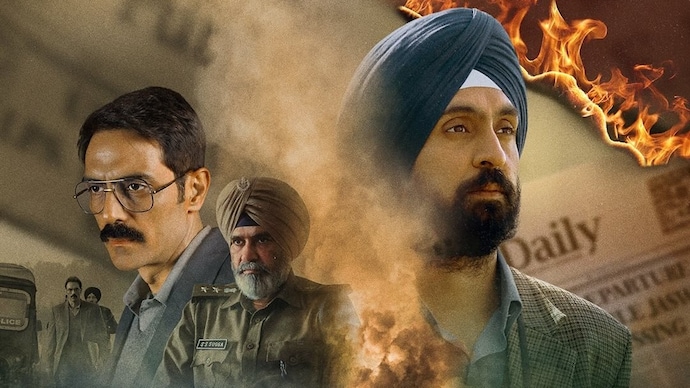
Union Minister Ravneet Singh Bittu on Sunday challenged the makers of Diljit Dosanjh-starrer Satluj to substantiate what he described as "disputed claims" in the film, saying they cannot invoke "creative freedom" to present contested allegations as established historical fact.
His remarks came amid an escalating controversy over the film, which was removed from ZEE5 in India just two days after its July 3 release after the Ministry of Information and Broadcasting cited security concerns.
Directed by Honey Trehan and earlier titled Punjab '95, the film is based on the life of human rights activist Jaswant Singh Khalra, who investigated the alleged illegal cremation of thousands of unidentified bodies in Punjab between 1984 and 1994. The film's removal has triggered protests in Punjab, with Sikh bodies and political parties demanding that it be restored.
In a statement, Bittu said Punjab's traumatic past "is not a script that can be edited selectively to suit a narrative".
"I challenge the producer and director of Satluj to place before the people of Punjab the complete documentary evidence, official records, judicial findings and authenticated data that conclusively establish the figure of 25,000 missing or illegally cremated bodies as portrayed in the film," he said.
The Union minister questioned whether the figure was based on estimates or allegations rather than judicially established facts.
"If the figure is based merely on an estimate or allegation, why has it been projected as an established historical fact? Why were viewers not informed that this number was not conclusively established by any final judicial determination?" he asked.
Bittu called on the filmmakers to publicly disclose the documentary basis for the figure within a reasonable timeframe. If they failed to produce "credible and verifiable evidence", he said, they owed the people of Punjab a clarification that the number was not part of any officially verified count.
"We will examine all appropriate legal and constitutional remedies to ensure that historical facts are not misrepresented before the nation. Punjab's history cannot be rewritten through selective storytelling. Truth must prevail over propaganda, facts over fiction, and evidence over emotion," he added.
QUESTIONS OVER PORTRAYAL OF PUNJAB PAST
Bittu, the grandson of former Punjab Chief Minister Beant Singh, who was assassinated in a terror attack in Chandigarh in 1995, also questioned what he described as selective omissions in the film's portrayal of Punjab's insurgency years.
He asked why the killings of innocent Hindus, bus passengers, shopkeepers, government employees, labourers and other civilians by terrorists were not depicted with the same intensity. He also questioned why the sacrifices of Punjab Police personnel, security forces and civilians who fought militancy had been underplayed.
"Why was one side of history amplified while the sufferings of thousands of others marginalised? Why were controversial claims presented without clearly distinguishing between allegations, estimates and officially established facts?" he asked.
Bittu said no responsible filmmaker had the right to "distort history by presenting contested figures as unquestionable truth", adding that every innocent victim of the violence in Punjab deserved justice and remembrance, regardless of religion or ideology.
FILM BASED ON JASWANT SINGH KHALRA
Satluj centres on Jaswant Singh Khalra, who investigated alleged illegal cremations during Punjab's militancy years. Khalra was abducted from outside his home in Amritsar in September 1995 and was later found to have been murdered, although his body was never recovered.
In 2005, a CBI court sentenced former DSP Jaspal Singh and ASI Amarjit Singh to life imprisonment for Khalra's abduction and murder, while four other policemen received seven-year jail terms. In 2007, the Punjab and Haryana High Court acquitted Amarjit Singh but enhanced the sentences of the remaining four accused to life imprisonment, a verdict upheld by the Supreme Court in 2011.
ROW OVER FILM INTENSIFIES
Bittu's remarks come days after several Sikh organisations and political parties, including the Shiromani Gurdwara Parbandhak Committee (SGPC) and the Shiromani Akali Dal (SAD), criticised the film's removal from ZEE5.
The groups argued that the film compels India to confront one of Punjab's darkest chapters and said "history must be confronted with honesty, not buried through censorship".
The controversy has since widened, with the SGPC demanding that the ban be lifted and the SAD announcing community screenings of the film across Punjab. At several places, Sikh organisations have also organised public screenings in village grounds as the debate over the film's portrayal of Punjab's past continues.
Union Minister Ravneet Singh Bittu on Sunday challenged the makers of Diljit Dosanjh-starrer Satluj to substantiate what he described as "disputed claims" in the film, saying they cannot invoke "creative freedom" to present contested allegations as established historical fact.
His remarks came amid an escalating controversy over the film, which was removed from ZEE5 in India just two days after its July 3 release after the Ministry of Information and Broadcasting cited security concerns.
Directed by Honey Trehan and earlier titled Punjab '95, the film is based on the life of human rights activist Jaswant Singh Khalra, who investigated the alleged illegal cremation of thousands of unidentified bodies in Punjab between 1984 and 1994. The film's removal has triggered protests in Punjab, with Sikh bodies and political parties demanding that it be restored.
In a statement, Bittu said Punjab's traumatic past "is not a script that can be edited selectively to suit a narrative".
"I challenge the producer and director of Satluj to place before the people of Punjab the complete documentary evidence, official records, judicial findings and authenticated data that conclusively establish the figure of 25,000 missing or illegally cremated bodies as portrayed in the film," he said.
The Union minister questioned whether the figure was based on estimates or allegations rather than judicially established facts.
"If the figure is based merely on an estimate or allegation, why has it been projected as an established historical fact? Why were viewers not informed that this number was not conclusively established by any final judicial determination?" he asked.
Bittu called on the filmmakers to publicly disclose the documentary basis for the figure within a reasonable timeframe. If they failed to produce "credible and verifiable evidence", he said, they owed the people of Punjab a clarification that the number was not part of any officially verified count.
"We will examine all appropriate legal and constitutional remedies to ensure that historical facts are not misrepresented before the nation. Punjab's history cannot be rewritten through selective storytelling. Truth must prevail over propaganda, facts over fiction, and evidence over emotion," he added.
QUESTIONS OVER PORTRAYAL OF PUNJAB PAST
Bittu, the grandson of former Punjab Chief Minister Beant Singh, who was assassinated in a terror attack in Chandigarh in 1995, also questioned what he described as selective omissions in the film's portrayal of Punjab's insurgency years.
He asked why the killings of innocent Hindus, bus passengers, shopkeepers, government employees, labourers and other civilians by terrorists were not depicted with the same intensity. He also questioned why the sacrifices of Punjab Police personnel, security forces and civilians who fought militancy had been underplayed.
"Why was one side of history amplified while the sufferings of thousands of others marginalised? Why were controversial claims presented without clearly distinguishing between allegations, estimates and officially established facts?" he asked.
Bittu said no responsible filmmaker had the right to "distort history by presenting contested figures as unquestionable truth", adding that every innocent victim of the violence in Punjab deserved justice and remembrance, regardless of religion or ideology.
FILM BASED ON JASWANT SINGH KHALRA
Satluj centres on Jaswant Singh Khalra, who investigated alleged illegal cremations during Punjab's militancy years. Khalra was abducted from outside his home in Amritsar in September 1995 and was later found to have been murdered, although his body was never recovered.
In 2005, a CBI court sentenced former DSP Jaspal Singh and ASI Amarjit Singh to life imprisonment for Khalra's abduction and murder, while four other policemen received seven-year jail terms. In 2007, the Punjab and Haryana High Court acquitted Amarjit Singh but enhanced the sentences of the remaining four accused to life imprisonment, a verdict upheld by the Supreme Court in 2011.
ROW OVER FILM INTENSIFIES
Bittu's remarks come days after several Sikh organisations and political parties, including the Shiromani Gurdwara Parbandhak Committee (SGPC) and the Shiromani Akali Dal (SAD), criticised the film's removal from ZEE5.
The groups argued that the film compels India to confront one of Punjab's darkest chapters and said "history must be confronted with honesty, not buried through censorship".
The controversy has since widened, with the SGPC demanding that the ban be lifted and the SAD announcing community screenings of the film across Punjab. At several places, Sikh organisations have also organised public screenings in village grounds as the debate over the film's portrayal of Punjab's past continues.

