From badges to honorary titles: Companies giving office pets the VIP treatment
From employee-style ID cards to honorary job titles, some companies are taking pet-friendly workplaces a step further. Here's how office pets are becoming part of company culture around the world.
Bringing pets to work is no longer unusual, but some companies have taken the idea much further. Instead of simply allowing dogs or cats into the office, a handful of organisations have given them employee-style ID cards, office badges or honorary titles. While these animals are not employees in the legal or HR sense, they have become a memorable part of workplace culture and even company branding.
Here's a look at companies where office pets enjoy a little extra recognition.
AIRBNB'S DOGS GET OFFICE BADGES
US-based accommodation platform Airbnb is well known for its dog-friendly offices. Reports say dogs visiting the workplace receive their own office badges, allowing them to be scanned into the building much like employees.
The initiative is designed to make pets a seamless part of daily office life while maintaining workplace security.
OLA ELECTRIC'S 'BIJLEE'
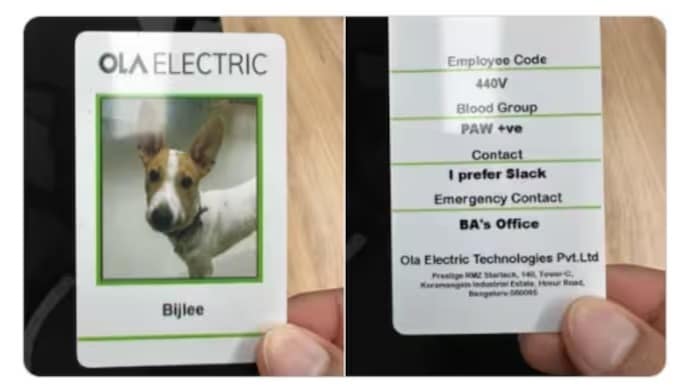
In India, Ola Electric introduced a dog named Bijlee, complete with an employee-style ID card and a playful designation.
The announcement quickly gained attention on social media and became an example of how companies are using pets to build a more relaxed and engaging workplace culture.
JAPAN'S OFFICE CATS
Japanese companies have long embraced office cats as a way to reduce stress and improve employee wellbeing.
Ferray Corporation, a Tokyo-based IT company, is known for having cats freely roam its office. Another Japanese firm, Qnote Inc., has been reported to assign its office cats formal-sounding internal roles, although these are honorary and part of the company's culture rather than official jobs.
PET-FRIENDLY WORKPLACES
Some of the world's biggest companies welcome pets without giving them formal employee-style recognition.
Google has long been known for its dog-friendly offices, with employees encouraged to bring well-behaved dogs to work.
Ice cream maker Ben & Jerry's is also regularly listed among pet-friendly employers, with dogs welcomed into the workplace and affectionately referred to as "K9-5ers" in company culture.
NOT ALL PET-FRIENDLY OFFICES ARE THE SAME
Experts caution against treating all pet-friendly companies as the same. While many organisations allow employees to bring pets to work, only a smaller group has publicly issued badges, ID cards or honorary titles to office animals.
Similarly, viral social media posts about workplace pets should not be taken as evidence of an official company policy unless backed by reliable reporting.
Office pets are becoming more common as companies look for ways to create friendlier workplaces and improve employee wellbeing. Whether it's an ID badge, an honorary title or simply a warm welcome, these animals are proving that sometimes the best colleague has four legs instead of two.
Bringing pets to work is no longer unusual, but some companies have taken the idea much further. Instead of simply allowing dogs or cats into the office, a handful of organisations have given them employee-style ID cards, office badges or honorary titles. While these animals are not employees in the legal or HR sense, they have become a memorable part of workplace culture and even company branding.
Here's a look at companies where office pets enjoy a little extra recognition.
AIRBNB'S DOGS GET OFFICE BADGES
US-based accommodation platform Airbnb is well known for its dog-friendly offices. Reports say dogs visiting the workplace receive their own office badges, allowing them to be scanned into the building much like employees.
The initiative is designed to make pets a seamless part of daily office life while maintaining workplace security.
OLA ELECTRIC'S 'BIJLEE'
In India, Ola Electric introduced a dog named Bijlee, complete with an employee-style ID card and a playful designation.
The announcement quickly gained attention on social media and became an example of how companies are using pets to build a more relaxed and engaging workplace culture.
JAPAN'S OFFICE CATS
Japanese companies have long embraced office cats as a way to reduce stress and improve employee wellbeing.
Ferray Corporation, a Tokyo-based IT company, is known for having cats freely roam its office. Another Japanese firm, Qnote Inc., has been reported to assign its office cats formal-sounding internal roles, although these are honorary and part of the company's culture rather than official jobs.
PET-FRIENDLY WORKPLACES
Some of the world's biggest companies welcome pets without giving them formal employee-style recognition.
Google has long been known for its dog-friendly offices, with employees encouraged to bring well-behaved dogs to work.
Ice cream maker Ben & Jerry's is also regularly listed among pet-friendly employers, with dogs welcomed into the workplace and affectionately referred to as "K9-5ers" in company culture.
NOT ALL PET-FRIENDLY OFFICES ARE THE SAME
Experts caution against treating all pet-friendly companies as the same. While many organisations allow employees to bring pets to work, only a smaller group has publicly issued badges, ID cards or honorary titles to office animals.
Similarly, viral social media posts about workplace pets should not be taken as evidence of an official company policy unless backed by reliable reporting.
Office pets are becoming more common as companies look for ways to create friendlier workplaces and improve employee wellbeing. Whether it's an ID badge, an honorary title or simply a warm welcome, these animals are proving that sometimes the best colleague has four legs instead of two.
Bringing pets to work is no longer unusual, but some companies have taken the idea much further. Instead of simply allowing dogs or cats into the office, a handful of organisations have given them employee-style ID cards, office badges or honorary titles. While these animals are not employees in the legal or HR sense, they have become a memorable part of workplace culture and even company branding.
Here's a look at companies where office pets enjoy a little extra recognition.
AIRBNB'S DOGS GET OFFICE BADGES
US-based accommodation platform Airbnb is well known for its dog-friendly offices. Reports say dogs visiting the workplace receive their own office badges, allowing them to be scanned into the building much like employees.
The initiative is designed to make pets a seamless part of daily office life while maintaining workplace security.
OLA ELECTRIC'S 'BIJLEE'
In India, Ola Electric introduced a dog named Bijlee, complete with an employee-style ID card and a playful designation.
The announcement quickly gained attention on social media and became an example of how companies are using pets to build a more relaxed and engaging workplace culture.
JAPAN'S OFFICE CATS
Japanese companies have long embraced office cats as a way to reduce stress and improve employee wellbeing.
Ferray Corporation, a Tokyo-based IT company, is known for having cats freely roam its office. Another Japanese firm, Qnote Inc., has been reported to assign its office cats formal-sounding internal roles, although these are honorary and part of the company's culture rather than official jobs.
PET-FRIENDLY WORKPLACES
Some of the world's biggest companies welcome pets without giving them formal employee-style recognition.
Google has long been known for its dog-friendly offices, with employees encouraged to bring well-behaved dogs to work.
Ice cream maker Ben & Jerry's is also regularly listed among pet-friendly employers, with dogs welcomed into the workplace and affectionately referred to as "K9-5ers" in company culture.
NOT ALL PET-FRIENDLY OFFICES ARE THE SAME
Experts caution against treating all pet-friendly companies as the same. While many organisations allow employees to bring pets to work, only a smaller group has publicly issued badges, ID cards or honorary titles to office animals.
Similarly, viral social media posts about workplace pets should not be taken as evidence of an official company policy unless backed by reliable reporting.
Office pets are becoming more common as companies look for ways to create friendlier workplaces and improve employee wellbeing. Whether it's an ID badge, an honorary title or simply a warm welcome, these animals are proving that sometimes the best colleague has four legs instead of two.

