Exclusive: Ramayana costume debate - Rimple-Harpreet, duo behind the designs, speak out amid criticism
Sita's blouse, Surpanakha's bandeau and the internet's hot takes—Ramayana's costume designers explain the thought behind every stitch, silhouette and styling choice.
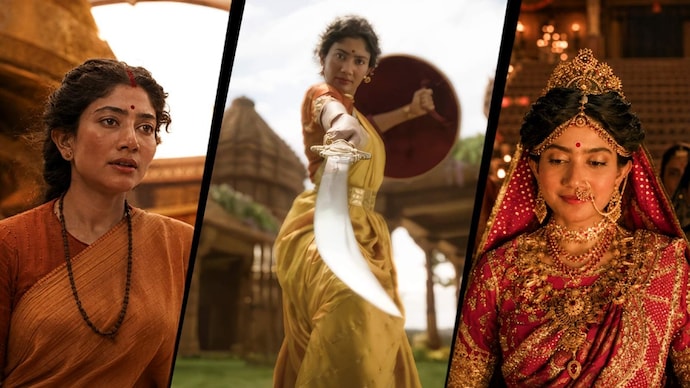
If we were to ask you what you think was the best part about Nitesh Tiwari's Ramayana trailer, what would be your response? Umm, is it taking a while to recall? Cool, that's fine. But now if we ask you about what you didn't like about the trailer, we are sure there will be more than a couple of things, the outfits in particular being one of them.
There are a lot of perspectives and thoughts around Sai Pallavi's Sita's garments, especially her blouse, and the sheer presence or absence of it in itself is a big debatable point on social media. To put all of that to rest, we reached out to Rimple & Harpreet, the designer house behind the outfits of Ramayana, and they have, at best tried to clear the air around all the backlash.
"People have grown up with this story. Of course, they have opinions"
The duo is not blindsided by the backlash. If anything, they seem to have expected it. "Ramayana is not just a story; it is something people have grown up with. Everyone has an image of Ram, Sita, Lakshman, Ravana and the women of Lanka in their minds, so naturally people are going to have strong opinions," they say, adding that as designers, they respect where that reaction is coming from.
But respecting the criticism doesn't mean agreeing that there was ever a single "correct" way to dress the characters of the epic in the first place. "There isn't one single visual reference to how everyone in the Ramayana period dressed. India has always had many cultures, regions, textiles and ways of draping and wearing clothes," they point out. For Rimple & Harpreet, the brief was never to reproduce a textbook illustration frame by frame, but to interpret. "We wanted the costumes to feel rooted in India and in our understanding of the epic, but also work for the actors, the movement, the camera and the scale of a film like this."
The blouse, explained
Let's address the elephant, or rather, the blouse, in the room. Was dressing Sita in a stitched blouse a deliberate move to "modernise" her? According to the designers, absolutely not. "The blouse was never introduced because we wanted to make Sita or the other women look modern. That was never the intention," they clarify.
Instead, the decision came from a more character-first approach to the design process. "When we design, we look at the entire character — not just whether a garment existed in a particular form. We look at her personality, her body language, her movement, her environment and what we want you to feel when you see her," they explain. For Sita specifically, the brief to themselves was simple: grace over grandeur. "Our intention was always to keep her very graceful, pure and understated. The silhouette had to have dignity and softness."
There's also a very practical, on-set reality that often gets lost in the online discourse around "accuracy." Costumes for a film of this scale aren't static museum pieces, they have to survive the actual business of filmmaking.
"Cinema is also a very physical medium. These costumes have to move, they have to work with the actors, they have to survive action, long schedules and different camera angles," the designers say. "So sometimes you make a design decision that is about the character and the storytelling rather than making a literal historical reconstruction."
Their closing word on the subject is fairly blunt: "We don't see the blouse as saying, 'This is a modern woman.' We see it as one element of our interpretation of her."
Sita vs Surpanakha
While Sita is seen wearing a well-stitched, fitted blouse in several scenes, and in some even an embroidered saree and blouse, Surpanakha's costume appears to have no such restraint. In the trailer, she is seen wearing a bandeau blouse, which some people have also called historically inaccurate, arguing that during the Treta Yuga, garments were draped rather than stitched. Secondly, some believe the stark difference in their clothing has been deliberately used to signify morality.
To this criticism, the designers said, "Surpanakha was a completely different story. We didn't want to dress her like Sita, because emotionally, and visually they are worlds apart," the designers say.
The character's visual identity, they explain, had to match her personality — bold, unpredictable, and entirely her own. "Surpanakha has a very strong sensuality and a certain wildness to her. She is confident, provocative, powerful and unpredictable. We wanted her costume to have that energy."
That's where the much-discussed bare shoulder and bandeau-like element came from, a choice rooted in character, not trend. "It was about creating a strong silhouette and expressing the character, not about putting a contemporary fashion garment into a mythological film."
Even so, the designers are quick to note that nothing about Surpanakha's look exists in isolation from the rest of the film's world. "We worked very carefully with the jewellery, textiles, textures and overall styling so that she still belonged to the world we had created for Ramayana."
Building a world, not just a wardrobe
Zoom out from individual characters, and what Rimple & Harpreet describe is closer to world-building than styling. "For us, the biggest thing was world-building. We wanted you to be able to look at a character and understand something about them before they even speak," they say. "Ram should have a different visual language from Ravana. Sita should feel completely different from Surpanakha. Ayodhya should feel different from Lanka."
That world, they add, was built on months of research into India's own vast archive of visual history, but never a straight copy-paste job. "We spent a lot of time looking at Indian textiles, craft traditions, jewellery, sculpture, paintings, architecture and the incredible visual vocabulary that India already has. But we didn't want to copy any one reference. We wanted to take those influences and build something that felt cinematic and new."
And underlying all of it is a philosophy that puts character before costume, every single time. "The costume should never become bigger than the character," they say. "When you see Sita, we don't want you to think first about the blouse or the jewellery or the fabric. We want you to feel Sita. When you see Ram, we want you to feel his calmness, his strength and his dignity. That, for us, is what costume design is about."
They are candid about the fact that a film this size, telling a story this central to Indian identity, was never going to escape scrutiny — and they say they're at peace with that.
"We weren't trying to make a museum reconstruction. We were trying to create a living, breathing world for Ramayana — one that feels Indian, beautiful, emotional and believable to today's audience. And as designers, we know that when you create something this culturally important, there will be debate. That's okay. Art should create conversation. We just hope that people also see the amount of thought, research, craft and love that has gone into every single costume. It may not be the Ramayana you remember, but it is our attempt to make an ancient epic speak visually to a new generation."
Taking Sita to the world
Beyond the character work, there's a bigger ambition at play here — one aimed squarely at how Indian cinema, and Indian womanhood, gets read outside India. "The global presentation of Ramayana was always very important. We are not only telling an Indian story to Indians; we are taking one of the most beautiful stories of our civilisation to audiences across the world," the designers say.
That global lens came with its own tightrope to walk — dignity without caricature. "When we approached the women, we wanted them to represent Indian women and Indian cinema with a certain dignity and beauty. We didn't want the costumes to become a caricature of what the world thinks an Indian woman looks like. We wanted them to feel authentic, but also contemporary in the way they communicate."
For them, India's textile and craft heritage was never something to be diluted for an international audience — it was the whole point. "India has such an extraordinary visual language, our textiles, our jewellery, our drapes, our craftsmanship, our colours. I wanted to take all of that and present it with the sophistication and scale that a global audience can appreciate."
Sita, in this reading, becomes something bigger than a single character on screen. "Sita is not just a mythological character. She represents an Indian woman — her grace, her strength, her resilience, her dignity and her emotional depth. And the same applies to the other women in the story. They each have a different identity, and I wanted that identity to come through the costume."
There's also a quiet resistance in their approach to how India gets packaged for the West. "If we are taking Indian cinema to the world, we shouldn't try to make India look like something the West already understands. We should make them discover something that is uniquely ours. That was the exciting part for me — to take our heritage, our textiles and our idea of Indian femininity and give it a cinematic language that can stand confidently on a global platform."
Their hope, ultimately, is curiosity over comparison. "I want someone sitting in New York, London, Paris or Los Angeles, who may know very little about Indian costume, to look at these women and feel, 'This is something I have never seen before, but I want to know more about it.' For me, that is the real power of costume — not just to recreate the past, but to make our culture visually irresistible to the world."
It's all in the fabric
One last thing the designers wanted to set the record straight on: authenticity, for them, was never about looking rough or unfinished — it was about the fabric doing the emotional heavy lifting. "We wanted the costumes to look lived in, not dressed in. For us, authenticity was never about making everything look rough or primitive. It was about understanding the material, respecting where it comes from, and allowing the fabric itself to tell part of the story."
And it's this detail, more than the debate over necklines and blouses, that Rimple & Harpreet seem to want people to sit with. "I think that is what makes the costumes feel Indian. It is not only the silhouette or the jewellery. It is the texture, the hand of the fabric, the natural colour, the way it moves and, most importantly, the way it lives with the character."
Whether the internet agrees or not, one thing is clear — every stitch in Ramayana's costumes came with a reason behind it. It might not be your perspective, but when has art been objective?
If we were to ask you what you think was the best part about Nitesh Tiwari's Ramayana trailer, what would be your response? Umm, is it taking a while to recall? Cool, that's fine. But now if we ask you about what you didn't like about the trailer, we are sure there will be more than a couple of things, the outfits in particular being one of them.
There are a lot of perspectives and thoughts around Sai Pallavi's Sita's garments, especially her blouse, and the sheer presence or absence of it in itself is a big debatable point on social media. To put all of that to rest, we reached out to Rimple & Harpreet, the designer house behind the outfits of Ramayana, and they have, at best tried to clear the air around all the backlash.
"People have grown up with this story. Of course, they have opinions"
The duo is not blindsided by the backlash. If anything, they seem to have expected it. "Ramayana is not just a story; it is something people have grown up with. Everyone has an image of Ram, Sita, Lakshman, Ravana and the women of Lanka in their minds, so naturally people are going to have strong opinions," they say, adding that as designers, they respect where that reaction is coming from.
But respecting the criticism doesn't mean agreeing that there was ever a single "correct" way to dress the characters of the epic in the first place. "There isn't one single visual reference to how everyone in the Ramayana period dressed. India has always had many cultures, regions, textiles and ways of draping and wearing clothes," they point out. For Rimple & Harpreet, the brief was never to reproduce a textbook illustration frame by frame, but to interpret. "We wanted the costumes to feel rooted in India and in our understanding of the epic, but also work for the actors, the movement, the camera and the scale of a film like this."
The blouse, explained
Let's address the elephant, or rather, the blouse, in the room. Was dressing Sita in a stitched blouse a deliberate move to "modernise" her? According to the designers, absolutely not. "The blouse was never introduced because we wanted to make Sita or the other women look modern. That was never the intention," they clarify.
Instead, the decision came from a more character-first approach to the design process. "When we design, we look at the entire character — not just whether a garment existed in a particular form. We look at her personality, her body language, her movement, her environment and what we want you to feel when you see her," they explain. For Sita specifically, the brief to themselves was simple: grace over grandeur. "Our intention was always to keep her very graceful, pure and understated. The silhouette had to have dignity and softness."
There's also a very practical, on-set reality that often gets lost in the online discourse around "accuracy." Costumes for a film of this scale aren't static museum pieces, they have to survive the actual business of filmmaking.
"Cinema is also a very physical medium. These costumes have to move, they have to work with the actors, they have to survive action, long schedules and different camera angles," the designers say. "So sometimes you make a design decision that is about the character and the storytelling rather than making a literal historical reconstruction."
Their closing word on the subject is fairly blunt: "We don't see the blouse as saying, 'This is a modern woman.' We see it as one element of our interpretation of her."
Sita vs Surpanakha
While Sita is seen wearing a well-stitched, fitted blouse in several scenes, and in some even an embroidered saree and blouse, Surpanakha's costume appears to have no such restraint. In the trailer, she is seen wearing a bandeau blouse, which some people have also called historically inaccurate, arguing that during the Treta Yuga, garments were draped rather than stitched. Secondly, some believe the stark difference in their clothing has been deliberately used to signify morality.
To this criticism, the designers said, "Surpanakha was a completely different story. We didn't want to dress her like Sita, because emotionally, and visually they are worlds apart," the designers say.
The character's visual identity, they explain, had to match her personality — bold, unpredictable, and entirely her own. "Surpanakha has a very strong sensuality and a certain wildness to her. She is confident, provocative, powerful and unpredictable. We wanted her costume to have that energy."
That's where the much-discussed bare shoulder and bandeau-like element came from, a choice rooted in character, not trend. "It was about creating a strong silhouette and expressing the character, not about putting a contemporary fashion garment into a mythological film."
Even so, the designers are quick to note that nothing about Surpanakha's look exists in isolation from the rest of the film's world. "We worked very carefully with the jewellery, textiles, textures and overall styling so that she still belonged to the world we had created for Ramayana."
Building a world, not just a wardrobe
Zoom out from individual characters, and what Rimple & Harpreet describe is closer to world-building than styling. "For us, the biggest thing was world-building. We wanted you to be able to look at a character and understand something about them before they even speak," they say. "Ram should have a different visual language from Ravana. Sita should feel completely different from Surpanakha. Ayodhya should feel different from Lanka."
That world, they add, was built on months of research into India's own vast archive of visual history, but never a straight copy-paste job. "We spent a lot of time looking at Indian textiles, craft traditions, jewellery, sculpture, paintings, architecture and the incredible visual vocabulary that India already has. But we didn't want to copy any one reference. We wanted to take those influences and build something that felt cinematic and new."
And underlying all of it is a philosophy that puts character before costume, every single time. "The costume should never become bigger than the character," they say. "When you see Sita, we don't want you to think first about the blouse or the jewellery or the fabric. We want you to feel Sita. When you see Ram, we want you to feel his calmness, his strength and his dignity. That, for us, is what costume design is about."
They are candid about the fact that a film this size, telling a story this central to Indian identity, was never going to escape scrutiny — and they say they're at peace with that.
"We weren't trying to make a museum reconstruction. We were trying to create a living, breathing world for Ramayana — one that feels Indian, beautiful, emotional and believable to today's audience. And as designers, we know that when you create something this culturally important, there will be debate. That's okay. Art should create conversation. We just hope that people also see the amount of thought, research, craft and love that has gone into every single costume. It may not be the Ramayana you remember, but it is our attempt to make an ancient epic speak visually to a new generation."
Taking Sita to the world
Beyond the character work, there's a bigger ambition at play here — one aimed squarely at how Indian cinema, and Indian womanhood, gets read outside India. "The global presentation of Ramayana was always very important. We are not only telling an Indian story to Indians; we are taking one of the most beautiful stories of our civilisation to audiences across the world," the designers say.
That global lens came with its own tightrope to walk — dignity without caricature. "When we approached the women, we wanted them to represent Indian women and Indian cinema with a certain dignity and beauty. We didn't want the costumes to become a caricature of what the world thinks an Indian woman looks like. We wanted them to feel authentic, but also contemporary in the way they communicate."
For them, India's textile and craft heritage was never something to be diluted for an international audience — it was the whole point. "India has such an extraordinary visual language, our textiles, our jewellery, our drapes, our craftsmanship, our colours. I wanted to take all of that and present it with the sophistication and scale that a global audience can appreciate."
Sita, in this reading, becomes something bigger than a single character on screen. "Sita is not just a mythological character. She represents an Indian woman — her grace, her strength, her resilience, her dignity and her emotional depth. And the same applies to the other women in the story. They each have a different identity, and I wanted that identity to come through the costume."
There's also a quiet resistance in their approach to how India gets packaged for the West. "If we are taking Indian cinema to the world, we shouldn't try to make India look like something the West already understands. We should make them discover something that is uniquely ours. That was the exciting part for me — to take our heritage, our textiles and our idea of Indian femininity and give it a cinematic language that can stand confidently on a global platform."
Their hope, ultimately, is curiosity over comparison. "I want someone sitting in New York, London, Paris or Los Angeles, who may know very little about Indian costume, to look at these women and feel, 'This is something I have never seen before, but I want to know more about it.' For me, that is the real power of costume — not just to recreate the past, but to make our culture visually irresistible to the world."
It's all in the fabric
One last thing the designers wanted to set the record straight on: authenticity, for them, was never about looking rough or unfinished — it was about the fabric doing the emotional heavy lifting. "We wanted the costumes to look lived in, not dressed in. For us, authenticity was never about making everything look rough or primitive. It was about understanding the material, respecting where it comes from, and allowing the fabric itself to tell part of the story."
And it's this detail, more than the debate over necklines and blouses, that Rimple & Harpreet seem to want people to sit with. "I think that is what makes the costumes feel Indian. It is not only the silhouette or the jewellery. It is the texture, the hand of the fabric, the natural colour, the way it moves and, most importantly, the way it lives with the character."
Whether the internet agrees or not, one thing is clear — every stitch in Ramayana's costumes came with a reason behind it. It might not be your perspective, but when has art been objective?
If we were to ask you what you think was the best part about Nitesh Tiwari's Ramayana trailer, what would be your response? Umm, is it taking a while to recall? Cool, that's fine. But now if we ask you about what you didn't like about the trailer, we are sure there will be more than a couple of things, the outfits in particular being one of them.
There are a lot of perspectives and thoughts around Sai Pallavi's Sita's garments, especially her blouse, and the sheer presence or absence of it in itself is a big debatable point on social media. To put all of that to rest, we reached out to Rimple & Harpreet, the designer house behind the outfits of Ramayana, and they have, at best tried to clear the air around all the backlash.
"People have grown up with this story. Of course, they have opinions"
The duo is not blindsided by the backlash. If anything, they seem to have expected it. "Ramayana is not just a story; it is something people have grown up with. Everyone has an image of Ram, Sita, Lakshman, Ravana and the women of Lanka in their minds, so naturally people are going to have strong opinions," they say, adding that as designers, they respect where that reaction is coming from.
But respecting the criticism doesn't mean agreeing that there was ever a single "correct" way to dress the characters of the epic in the first place. "There isn't one single visual reference to how everyone in the Ramayana period dressed. India has always had many cultures, regions, textiles and ways of draping and wearing clothes," they point out. For Rimple & Harpreet, the brief was never to reproduce a textbook illustration frame by frame, but to interpret. "We wanted the costumes to feel rooted in India and in our understanding of the epic, but also work for the actors, the movement, the camera and the scale of a film like this."
The blouse, explained
Let's address the elephant, or rather, the blouse, in the room. Was dressing Sita in a stitched blouse a deliberate move to "modernise" her? According to the designers, absolutely not. "The blouse was never introduced because we wanted to make Sita or the other women look modern. That was never the intention," they clarify.
Instead, the decision came from a more character-first approach to the design process. "When we design, we look at the entire character — not just whether a garment existed in a particular form. We look at her personality, her body language, her movement, her environment and what we want you to feel when you see her," they explain. For Sita specifically, the brief to themselves was simple: grace over grandeur. "Our intention was always to keep her very graceful, pure and understated. The silhouette had to have dignity and softness."
There's also a very practical, on-set reality that often gets lost in the online discourse around "accuracy." Costumes for a film of this scale aren't static museum pieces, they have to survive the actual business of filmmaking.
"Cinema is also a very physical medium. These costumes have to move, they have to work with the actors, they have to survive action, long schedules and different camera angles," the designers say. "So sometimes you make a design decision that is about the character and the storytelling rather than making a literal historical reconstruction."
Their closing word on the subject is fairly blunt: "We don't see the blouse as saying, 'This is a modern woman.' We see it as one element of our interpretation of her."
Sita vs Surpanakha
While Sita is seen wearing a well-stitched, fitted blouse in several scenes, and in some even an embroidered saree and blouse, Surpanakha's costume appears to have no such restraint. In the trailer, she is seen wearing a bandeau blouse, which some people have also called historically inaccurate, arguing that during the Treta Yuga, garments were draped rather than stitched. Secondly, some believe the stark difference in their clothing has been deliberately used to signify morality.
To this criticism, the designers said, "Surpanakha was a completely different story. We didn't want to dress her like Sita, because emotionally, and visually they are worlds apart," the designers say.
The character's visual identity, they explain, had to match her personality — bold, unpredictable, and entirely her own. "Surpanakha has a very strong sensuality and a certain wildness to her. She is confident, provocative, powerful and unpredictable. We wanted her costume to have that energy."
That's where the much-discussed bare shoulder and bandeau-like element came from, a choice rooted in character, not trend. "It was about creating a strong silhouette and expressing the character, not about putting a contemporary fashion garment into a mythological film."
Even so, the designers are quick to note that nothing about Surpanakha's look exists in isolation from the rest of the film's world. "We worked very carefully with the jewellery, textiles, textures and overall styling so that she still belonged to the world we had created for Ramayana."
Building a world, not just a wardrobe
Zoom out from individual characters, and what Rimple & Harpreet describe is closer to world-building than styling. "For us, the biggest thing was world-building. We wanted you to be able to look at a character and understand something about them before they even speak," they say. "Ram should have a different visual language from Ravana. Sita should feel completely different from Surpanakha. Ayodhya should feel different from Lanka."
That world, they add, was built on months of research into India's own vast archive of visual history, but never a straight copy-paste job. "We spent a lot of time looking at Indian textiles, craft traditions, jewellery, sculpture, paintings, architecture and the incredible visual vocabulary that India already has. But we didn't want to copy any one reference. We wanted to take those influences and build something that felt cinematic and new."
And underlying all of it is a philosophy that puts character before costume, every single time. "The costume should never become bigger than the character," they say. "When you see Sita, we don't want you to think first about the blouse or the jewellery or the fabric. We want you to feel Sita. When you see Ram, we want you to feel his calmness, his strength and his dignity. That, for us, is what costume design is about."
They are candid about the fact that a film this size, telling a story this central to Indian identity, was never going to escape scrutiny — and they say they're at peace with that.
"We weren't trying to make a museum reconstruction. We were trying to create a living, breathing world for Ramayana — one that feels Indian, beautiful, emotional and believable to today's audience. And as designers, we know that when you create something this culturally important, there will be debate. That's okay. Art should create conversation. We just hope that people also see the amount of thought, research, craft and love that has gone into every single costume. It may not be the Ramayana you remember, but it is our attempt to make an ancient epic speak visually to a new generation."
Taking Sita to the world
Beyond the character work, there's a bigger ambition at play here — one aimed squarely at how Indian cinema, and Indian womanhood, gets read outside India. "The global presentation of Ramayana was always very important. We are not only telling an Indian story to Indians; we are taking one of the most beautiful stories of our civilisation to audiences across the world," the designers say.
That global lens came with its own tightrope to walk — dignity without caricature. "When we approached the women, we wanted them to represent Indian women and Indian cinema with a certain dignity and beauty. We didn't want the costumes to become a caricature of what the world thinks an Indian woman looks like. We wanted them to feel authentic, but also contemporary in the way they communicate."
For them, India's textile and craft heritage was never something to be diluted for an international audience — it was the whole point. "India has such an extraordinary visual language, our textiles, our jewellery, our drapes, our craftsmanship, our colours. I wanted to take all of that and present it with the sophistication and scale that a global audience can appreciate."
Sita, in this reading, becomes something bigger than a single character on screen. "Sita is not just a mythological character. She represents an Indian woman — her grace, her strength, her resilience, her dignity and her emotional depth. And the same applies to the other women in the story. They each have a different identity, and I wanted that identity to come through the costume."
There's also a quiet resistance in their approach to how India gets packaged for the West. "If we are taking Indian cinema to the world, we shouldn't try to make India look like something the West already understands. We should make them discover something that is uniquely ours. That was the exciting part for me — to take our heritage, our textiles and our idea of Indian femininity and give it a cinematic language that can stand confidently on a global platform."
Their hope, ultimately, is curiosity over comparison. "I want someone sitting in New York, London, Paris or Los Angeles, who may know very little about Indian costume, to look at these women and feel, 'This is something I have never seen before, but I want to know more about it.' For me, that is the real power of costume — not just to recreate the past, but to make our culture visually irresistible to the world."
It's all in the fabric
One last thing the designers wanted to set the record straight on: authenticity, for them, was never about looking rough or unfinished — it was about the fabric doing the emotional heavy lifting. "We wanted the costumes to look lived in, not dressed in. For us, authenticity was never about making everything look rough or primitive. It was about understanding the material, respecting where it comes from, and allowing the fabric itself to tell part of the story."
And it's this detail, more than the debate over necklines and blouses, that Rimple & Harpreet seem to want people to sit with. "I think that is what makes the costumes feel Indian. It is not only the silhouette or the jewellery. It is the texture, the hand of the fabric, the natural colour, the way it moves and, most importantly, the way it lives with the character."
Whether the internet agrees or not, one thing is clear — every stitch in Ramayana's costumes came with a reason behind it. It might not be your perspective, but when has art been objective?

