Sanjeev Kapoor wants to rewrite MasterChef India: 'I have my own way of looking at food'
In an exclusive conversation with India Today Digital, Sanjeev Kapoor talked about his MasterChef Australia experience, the evolution of food reality shows, and why his journey with MasterChef India took a different turn.
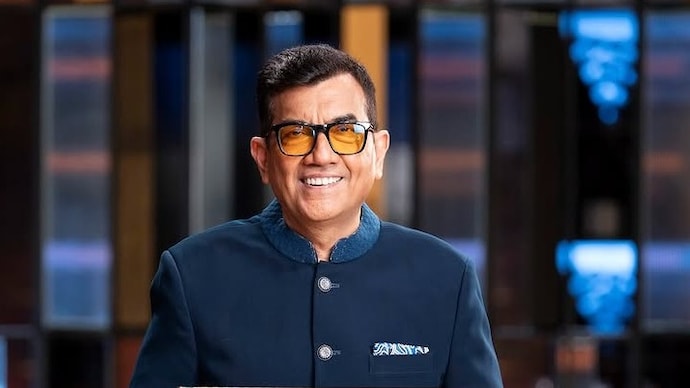
Lights, camera, food!
That's exactly how a food show rolls in celebrity Chef Sanjeev Kapoor's philosophy.
He's got the culinary skills, he's got the charm, and he's got his own idea of what a food show format should be. The Padma Shree awardee comes with decades of experience of serving food on television. How people learn skills by watching videos, it's safe to say that Kapoor's Khana Khazna was the OG in that aspect. He can be credited with inspiring generations to build a career in the field and has also helped Indian flavours travel beyond our borders.
And Kapoor's culinary legacy isn't limited to India. His arrival as a guest judge on MasterChef Australia – welcomed with genuine warmth and roaring applause – was proof that he is a global phenomenon and resonates far beyond home. In an exclusive conversation with India Today Digital, Kapoor shared about his experience, food (of course) and shows, and revealed his take on MasterChef India.
Rewriting MasterChef India
This isn't the first time Kapoor has spoken candidly about MasterChef India. In an earlier interview, he revealed that he had turned down the show's first season after asking for Re 1 more than Akshay Kumar, who eventually hosted it. Kapoor later joined as a judge for Seasons 2 and 3.
When asked why he eventually stepped away, he hinted at a wobbly start.
"'Woh bhi toh chef haina, unhone bhi toh restaurant mai kaam kiya hai.' Toh aap shuruat kisi cheez ki aise kar rahe ho toh kaise chalega. The seriousness of it, the foundation is very important. And they made a choice, I was not there..." (He was a chef too, he's worked in restaurants too. But if that's how you're starting, how will it work? The foundation matters.)
Calling it a "mutual choice," Kapoor added, "I have my own way of looking at food, and that's not going to change. For me, if I am putting effort into something, it has to produce the kind of results it is meant to produce. I've always preferred doing meaningful things."
While he still returns occasionally for the finale or special episodes, Kapoor says his recent experience on MasterChef Australia has only strengthened his beliefs about food shows. "After this, I can honestly say that if I were given the opportunity, I would want to rewrite the way MasterChef India has been done."
For Kapoor, MasterChef and such food shows have always been bigger than a television show. It's a platform that can change careers, inspire confidence and open doors that many aspiring chefs may never otherwise find. Having spent decades mentoring and teaching, he remains a firm believer in creating more such opportunities.
"Given a choice, I would still want to do it because opportunities like these don't come easily in people's lives. If the show shuts down, those opportunities become fewer too.
According to Kapoor, India may still be chasing world-class excellence in many fields, but food is one arena where the country has an edge. Which is precisely why, he says, a platform built around food should never slip into mockery or lose sight of its purpose.
"We cannot allow that to happen. As someone who feels responsible for the way Indian food is perceived, I do feel a sense of responsibility. I still believe there are ways to make it right, and I'd like to work on that. But first, we need to define the right parameters."
For Kapoor, the benchmark shouldn't be, "Laughter Chefs gets these ratings, so we should do the same." The product, he insists, has to be right first. If the content is honest and the craft is strong, the audience will follow.
"You don't start by saying, 'Let's only make what sells.' MasterChef Australia proves that good content can also succeed."
What MasterChef Australia gets right
No drama, just pure food.
Speaking with Kapoor, one thing became abundantly clear, he was highly impressed by the way MasterChef Australia runs. He has one simple philosophy for such shows - food should be the hero. And they absolutely, aromatically served that.
"They are simply outstanding. From the overall production to the contestants and the judges, they have truly mastered the art of delivering a consistently excellent show, year after year. But if I had to point out one difference, it would be this: when I was on MasterChef Australia, even though it was just for one episode, I felt it was, above everything else, a food show. Food should never play second fiddle," he shared.
When it's chef Sanjeev Kapoor, trust him to make it all about Indian food. And that's exactly what he did with mystery box challenge in the show. "We had lot of reiterations about the ingredients but one thing that I wanted to bring was the pickle that we launched. To be honest, we weren't even sure whether they would allow it. In India, there are often questions like, "Will this be permitted? Will they approve it?" But they were incredibly open about it."
In many ways, Kapoor still sounds like the teacher millions grew up watching on Khana Khazana. Curious about new ideas, respectful of old ones, and convinced that learning never really stops.
While he has created a respectable aura globally as a celebrated Indian chef, he believes that Indian food still has a long journey to make its mark. It needs to go beyond butter chicken, naan and biryani. For him, it's the tenderness of home-cooked meals like khichdi that can truly make a mark.
And maybe, we will have to sit down for another conversation with him for that.
Lights, camera, food!
That's exactly how a food show rolls in celebrity Chef Sanjeev Kapoor's philosophy.
He's got the culinary skills, he's got the charm, and he's got his own idea of what a food show format should be. The Padma Shree awardee comes with decades of experience of serving food on television. How people learn skills by watching videos, it's safe to say that Kapoor's Khana Khazna was the OG in that aspect. He can be credited with inspiring generations to build a career in the field and has also helped Indian flavours travel beyond our borders.
And Kapoor's culinary legacy isn't limited to India. His arrival as a guest judge on MasterChef Australia – welcomed with genuine warmth and roaring applause – was proof that he is a global phenomenon and resonates far beyond home. In an exclusive conversation with India Today Digital, Kapoor shared about his experience, food (of course) and shows, and revealed his take on MasterChef India.
Rewriting MasterChef India
This isn't the first time Kapoor has spoken candidly about MasterChef India. In an earlier interview, he revealed that he had turned down the show's first season after asking for Re 1 more than Akshay Kumar, who eventually hosted it. Kapoor later joined as a judge for Seasons 2 and 3.
When asked why he eventually stepped away, he hinted at a wobbly start.
"'Woh bhi toh chef haina, unhone bhi toh restaurant mai kaam kiya hai.' Toh aap shuruat kisi cheez ki aise kar rahe ho toh kaise chalega. The seriousness of it, the foundation is very important. And they made a choice, I was not there..." (He was a chef too, he's worked in restaurants too. But if that's how you're starting, how will it work? The foundation matters.)
Calling it a "mutual choice," Kapoor added, "I have my own way of looking at food, and that's not going to change. For me, if I am putting effort into something, it has to produce the kind of results it is meant to produce. I've always preferred doing meaningful things."
While he still returns occasionally for the finale or special episodes, Kapoor says his recent experience on MasterChef Australia has only strengthened his beliefs about food shows. "After this, I can honestly say that if I were given the opportunity, I would want to rewrite the way MasterChef India has been done."
For Kapoor, MasterChef and such food shows have always been bigger than a television show. It's a platform that can change careers, inspire confidence and open doors that many aspiring chefs may never otherwise find. Having spent decades mentoring and teaching, he remains a firm believer in creating more such opportunities.
"Given a choice, I would still want to do it because opportunities like these don't come easily in people's lives. If the show shuts down, those opportunities become fewer too.
According to Kapoor, India may still be chasing world-class excellence in many fields, but food is one arena where the country has an edge. Which is precisely why, he says, a platform built around food should never slip into mockery or lose sight of its purpose.
"We cannot allow that to happen. As someone who feels responsible for the way Indian food is perceived, I do feel a sense of responsibility. I still believe there are ways to make it right, and I'd like to work on that. But first, we need to define the right parameters."
For Kapoor, the benchmark shouldn't be, "Laughter Chefs gets these ratings, so we should do the same." The product, he insists, has to be right first. If the content is honest and the craft is strong, the audience will follow.
"You don't start by saying, 'Let's only make what sells.' MasterChef Australia proves that good content can also succeed."
What MasterChef Australia gets right
No drama, just pure food.
Speaking with Kapoor, one thing became abundantly clear, he was highly impressed by the way MasterChef Australia runs. He has one simple philosophy for such shows - food should be the hero. And they absolutely, aromatically served that.
"They are simply outstanding. From the overall production to the contestants and the judges, they have truly mastered the art of delivering a consistently excellent show, year after year. But if I had to point out one difference, it would be this: when I was on MasterChef Australia, even though it was just for one episode, I felt it was, above everything else, a food show. Food should never play second fiddle," he shared.
When it's chef Sanjeev Kapoor, trust him to make it all about Indian food. And that's exactly what he did with mystery box challenge in the show. "We had lot of reiterations about the ingredients but one thing that I wanted to bring was the pickle that we launched. To be honest, we weren't even sure whether they would allow it. In India, there are often questions like, "Will this be permitted? Will they approve it?" But they were incredibly open about it."
In many ways, Kapoor still sounds like the teacher millions grew up watching on Khana Khazana. Curious about new ideas, respectful of old ones, and convinced that learning never really stops.
While he has created a respectable aura globally as a celebrated Indian chef, he believes that Indian food still has a long journey to make its mark. It needs to go beyond butter chicken, naan and biryani. For him, it's the tenderness of home-cooked meals like khichdi that can truly make a mark.
And maybe, we will have to sit down for another conversation with him for that.

