Why marriage doesn't have to mean doing everything together
A couple that eats together, does everything together, stays together? Maybe. But happily, though? For too long, constant togetherness has been seen as the hallmark of a happy marriage. Maybe it's time to rethink that.
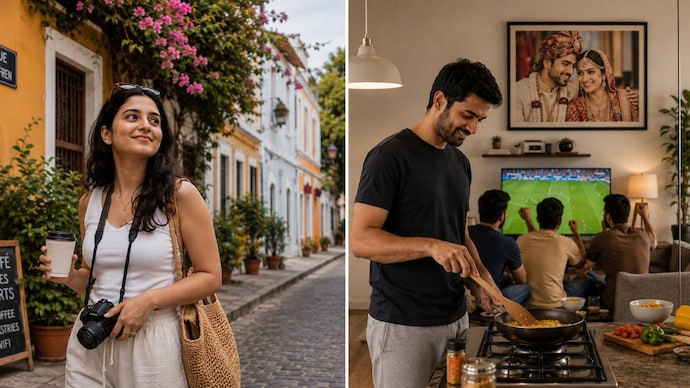
"Why are you travelling alone? Why isn't your husband coming along?" everyone keeps asking Samya Gupta, a 30-year-old, every time she decides to travel solo.
"We both have a life together, but we also have our own individual lives. We had one before marriage and have one now. I have my own set of friends. He has his own set of friends. He likes to do certain things. I like to do certain things. That's the kind of marriage we are in," Gupta says, emphasising how they mutually respect each other's decisions and are perfectly happy with it.
But society isn't quite. They have questions. And assumptions too.
Today, more couples are opening up about pursuing individual experiences after marriage. Be it a solo trip, an all-boys' vacation (not the one with the bad rep), or hobby classes without the better half.
It's not because there's turbulence in the relationship or because they feel lonely. It's simply because they enjoy their individuality while respecting each other's.
According to experts, doing everything together all the time can actually become the reason for loneliness and the loss of individual identity.
Loneliness is a silent epidemic, and marriage is no antidote to it. A recent study on loneliness among married Indian adults found that 46.4 per cent experienced moderately high loneliness, particularly those in the 31-40 age group. The researchers also found a strong association between loneliness and poorer marital quality.
So why is it so difficult to accept?
Nobody was lying when they said, "Bacche badhon se sikhte hain." (Children learn from their elders.)
We grow up watching our parents do everything together. From attending weddings and going out with friends to holidays, everything is done together. In fact, even grocery shopping becomes a compulsory activity for two.
"In India, marriage is sold to us as 'do jism ek jaan' — two bodies, one soul. Nobody tells us two whole people can still be one couple. We grow up watching our parents do everything together. So, independence starts to look like distance. The moment one partner says, 'I want to go on a solo trip,' it's read as, 'Something is wrong,'" Suvarna Varde, a relationship expert, tells India Today.
We've been conditioned to see marriage this way for generations, and over time, it became second nature because we've never known a world otherwise. As a result, non-conformity is seen as abnormal, and, more often than not, problematic.
Gupta's extended family, even her boss and several others question her decision. Many see it as a sign that "Kuch gadbad toh nahi hai?"
"I want to do this. But everyone is always so shocked about it. If I wasn't married, the same trips would have been celebrated far more than it was. Just because I'm married, suddenly people see it differently. I feel like my individuality, in their eyes, is hampered because I am married."
Marriage doesn't just change your relationship status. It changes who people think you're allowed to be. And women, unfortunately, land on the harsher, stricter side of it (All thanks to patriarchy).
Supposedly, even when people do accept individual experiences within marriage, it's not without gender bias.
If a man goes out with his friends for some time to himself, it is often seen as a well-earned break because he works around the clock for the family. But when a woman decides to socialise without her spouse, she's often asked about being a "responsible" wife, mother or daughter-in-law.
"It's the same 'good bahu' conditioning — her identity is expected to dissolve into the family," says Varde. Women are often labelled "selfish" the moment they prioritise themselves, while men, in most cases, get a free pass.
And when leaders like Anandiben Patel tell young women to become "expert mothers" above everything else, at a university no less, it feels like we're still having yesterday's conversation. Anyways.
Togetherness and connection are not the same
"When a relationship expects you to do everything together, you slowly lose touch with who you are outside of it. Ironically, that's when loneliness creeps in. You can be sitting right next to your partner and still feel emotionally isolated because you have been suppressing parts of yourself just to keep the peace," Namrata Jain, a Mumbai-based relationship expert, tells India Today.
According to Varde, constant togetherness creates enmeshment – a relationship dynamic where personal boundaries blur and individuality slowly fades - not intimacy.
Experts believe that boundaries are not a rejection; they are a relationship skill. Wanting space doesn't mean wanting distance. It means creating room to recharge so that you can return to the relationship with more presence rather than resentment.
You, me and us
Jain explains that the healthiest marriages have three identities — you, me and us.
"That's the difference between codependency and interdependence. Codependency is total fusion; interdependence is sharing a life while still having a distinct sense of self. Healthy independence looks like celebrating your partner's boys' trip or solo pottery class because you know they will come back more refreshed, fulfilled and emotionally available for the relationship."
Gupta's experience is a proof.
"I do think we have become more secure. If I'm going somewhere, living my own life and having new experiences, I'm growing as a person. And if I'm doing all of that and still coming back to share everything with him, and he feels secure instead of insecure, then our relationship becomes stronger."
Varde also highlights how mindsets around marriage are becoming increasingly polarised.
"While society has traditionally discouraged individuality in marriage, I'm also seeing the opposite in therapy now — couples are becoming so focused on their individual lives that the relationship itself takes a back seat." She says lasting relationships aren't built by losing yourself — or by living entirely separate lives — but by finding a balance where both partners can grow as individuals while growing together.
For Gen X or Boomers, 24x7 togetherness might still be a default. But things are changing slowly. So taking those trips or individual experiences is important for your own good. Not every event has to be a plus one affair.
"Why are you travelling alone? Why isn't your husband coming along?" everyone keeps asking Samya Gupta, a 30-year-old, every time she decides to travel solo.
"We both have a life together, but we also have our own individual lives. We had one before marriage and have one now. I have my own set of friends. He has his own set of friends. He likes to do certain things. I like to do certain things. That's the kind of marriage we are in," Gupta says, emphasising how they mutually respect each other's decisions and are perfectly happy with it.
But society isn't quite. They have questions. And assumptions too.
Today, more couples are opening up about pursuing individual experiences after marriage. Be it a solo trip, an all-boys' vacation (not the one with the bad rep), or hobby classes without the better half.
It's not because there's turbulence in the relationship or because they feel lonely. It's simply because they enjoy their individuality while respecting each other's.
According to experts, doing everything together all the time can actually become the reason for loneliness and the loss of individual identity.
Loneliness is a silent epidemic, and marriage is no antidote to it. A recent study on loneliness among married Indian adults found that 46.4 per cent experienced moderately high loneliness, particularly those in the 31-40 age group. The researchers also found a strong association between loneliness and poorer marital quality.
So why is it so difficult to accept?
Nobody was lying when they said, "Bacche badhon se sikhte hain." (Children learn from their elders.)
We grow up watching our parents do everything together. From attending weddings and going out with friends to holidays, everything is done together. In fact, even grocery shopping becomes a compulsory activity for two.
"In India, marriage is sold to us as 'do jism ek jaan' — two bodies, one soul. Nobody tells us two whole people can still be one couple. We grow up watching our parents do everything together. So, independence starts to look like distance. The moment one partner says, 'I want to go on a solo trip,' it's read as, 'Something is wrong,'" Suvarna Varde, a relationship expert, tells India Today.
We've been conditioned to see marriage this way for generations, and over time, it became second nature because we've never known a world otherwise. As a result, non-conformity is seen as abnormal, and, more often than not, problematic.
Gupta's extended family, even her boss and several others question her decision. Many see it as a sign that "Kuch gadbad toh nahi hai?"
"I want to do this. But everyone is always so shocked about it. If I wasn't married, the same trips would have been celebrated far more than it was. Just because I'm married, suddenly people see it differently. I feel like my individuality, in their eyes, is hampered because I am married."
Marriage doesn't just change your relationship status. It changes who people think you're allowed to be. And women, unfortunately, land on the harsher, stricter side of it (All thanks to patriarchy).
Supposedly, even when people do accept individual experiences within marriage, it's not without gender bias.
If a man goes out with his friends for some time to himself, it is often seen as a well-earned break because he works around the clock for the family. But when a woman decides to socialise without her spouse, she's often asked about being a "responsible" wife, mother or daughter-in-law.
"It's the same 'good bahu' conditioning — her identity is expected to dissolve into the family," says Varde. Women are often labelled "selfish" the moment they prioritise themselves, while men, in most cases, get a free pass.
And when leaders like Anandiben Patel tell young women to become "expert mothers" above everything else, at a university no less, it feels like we're still having yesterday's conversation. Anyways.
Togetherness and connection are not the same
"When a relationship expects you to do everything together, you slowly lose touch with who you are outside of it. Ironically, that's when loneliness creeps in. You can be sitting right next to your partner and still feel emotionally isolated because you have been suppressing parts of yourself just to keep the peace," Namrata Jain, a Mumbai-based relationship expert, tells India Today.
According to Varde, constant togetherness creates enmeshment – a relationship dynamic where personal boundaries blur and individuality slowly fades - not intimacy.
Experts believe that boundaries are not a rejection; they are a relationship skill. Wanting space doesn't mean wanting distance. It means creating room to recharge so that you can return to the relationship with more presence rather than resentment.
You, me and us
Jain explains that the healthiest marriages have three identities — you, me and us.
"That's the difference between codependency and interdependence. Codependency is total fusion; interdependence is sharing a life while still having a distinct sense of self. Healthy independence looks like celebrating your partner's boys' trip or solo pottery class because you know they will come back more refreshed, fulfilled and emotionally available for the relationship."
Gupta's experience is a proof.
"I do think we have become more secure. If I'm going somewhere, living my own life and having new experiences, I'm growing as a person. And if I'm doing all of that and still coming back to share everything with him, and he feels secure instead of insecure, then our relationship becomes stronger."
Varde also highlights how mindsets around marriage are becoming increasingly polarised.
"While society has traditionally discouraged individuality in marriage, I'm also seeing the opposite in therapy now — couples are becoming so focused on their individual lives that the relationship itself takes a back seat." She says lasting relationships aren't built by losing yourself — or by living entirely separate lives — but by finding a balance where both partners can grow as individuals while growing together.
For Gen X or Boomers, 24x7 togetherness might still be a default. But things are changing slowly. So taking those trips or individual experiences is important for your own good. Not every event has to be a plus one affair.

