The meme is mightier than the sword: Inside the art of CJP protest
At the CJP protest in Delhi's Janpath, memes, placards and painted banners have become central to the demonstration. The memes can be new, but art has always been an integral part of activism.
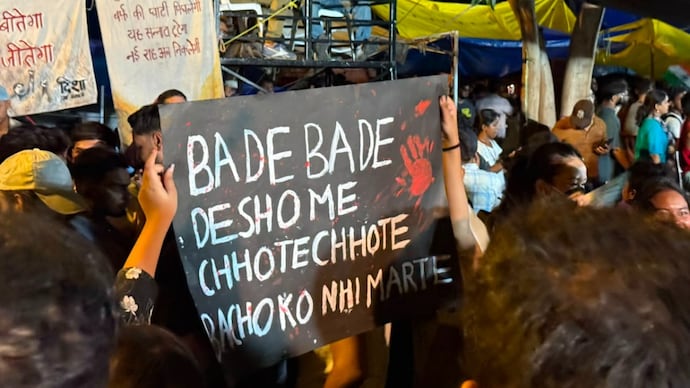
Not sure if the Cockroach Janta Party (CJP) protest will get its desired outcome, but one thing is certain: it isn't just the slogans and speeches winning the attention. It's the painted cardboards, the placards, the big banners laced with humour, wit and cheekiness that are stealing the show. And that only proves a point as old as resistance itself — whether it's the streets of Paris in 1789 or the pavements of Delhi's Janpath today, you can never quite separate creativity from dissent.
When people call this the "most creative protest India has seen", they're really talking about the dark humour tucked into a placard, the hard truth dressed up as a cartoon or a pop-culture punchline — the kind that makes someone scrolling from thousands of miles away smirk.
Art has always arrived where words are forbidden
In pre-revolutionary France, when direct criticism of the monarchy could get you imprisoned, caricaturists drew Marie Antoinette and Louis XVI as gluttonous, grotesque figures — pamphlets and prints that moved through Paris faster than any pamphleteer's speech could travel, sowing the ground for the French Revolution in 1789.
The Renaissance, too, understood the power of the image: allegory, symbolism, and visual storytelling became the way societies argued about power, faith, and corruption when plain speech was too dangerous or too illiterate a medium to reach the masses.
India's own freedom movement leaned just as hard on the image. Nationalist painters of the Bengal School turned away from colonial academic art to build a visual language of Swadeshi pride. Chittaprosad's stark sketches of the 1943 Bengal famine did more to indict British policy than any official report.
And during the Emergency, when censorship gagged the press, it was cartoonist Abu Abraham's ink that survived — sharper and more remembered today than most of the speeches of that era.
The pattern repeats itself in every generation: when direct speech is risky, censored, or simply not enough, societies reach for the image instead.
Why image travels further than the slogan
Debashish Chakrabarty, the Bangladeshi artist whose posters became visual anchors of the July Uprising 2024 — the 36-day movement that ended Sheikh Hasina's 15-year rule — puts it simply: art doesn't announce itself as a threat the way a direct political statement does. "State power can't prosecute or contain those arts or cultural products since they hide the message inside a form that looks familiar, even harmless," he says. A meme, a cartoon, a DIY placard borrows from a film dialogue or a social media buzzword, letting dissent move through a society's common sense rather than against it.
That's exactly the mechanism at work at the CJP protest. A placard mocking exam paper leaks by referencing a sanitary napkin ad line works, Chakrabarty explains, because it points to something already circulating in everyday consciousness, an advertising jingle remoulded and redirected at state failure.
The cockroach symbol followed the same arc: born from an insult, turned into a mascot. "You cannot plan these things," he says. "These are organic and spontaneous responses."
Curator Aakshat Sinha frames the durability question differently. Memes have famously short lifespans — a 15-second reel can feel too long in today's overload of content — and yet some still cut through. "Years from now when someone, somewhere will reuse or appropriate modern-day meme-driven visuals from this protest to speak out against some atrocity somewhere, that'll be testament to the longevity of these visuals," Sinha says.
He points to the Anna Hazare-led anti-corruption movement, whose placards and posters travelled far enough to pull members of the Indian diaspora back home, and to images like Irom Sharmila's force-feeding photograph or Che Guevara's beret portrait — visuals that outlived their original moment to become permanent protest motifs, reappearing on t-shirts and street walls decades later.
The artists on the ground
Not all of this art comes from professional artists or curators. Some of the most striking work at the CJP protest site comes from people simply showing up, day after day, brush in hand.
Yogesh, a 29-year-old painter and sculptor from Jharkhand, has been at the protest site for nine consecutive days, sketching and painting every one of the artwork you see below.
Behind the image is a broader argument he's building about education itself — a call for classrooms to prioritise science and practical learning over what he sees as an increasingly communal curriculum.
For Anish, a working professional who has been coming to the protest since July 19, the satire is deliberate strategy, not deflection. "This is a very huge tragedy, and in tragedy comedy comes out," he says of the humour running through the artwork around Janpath. The comedy, in his reading, is meant to shame — to hold up a mirror rather than simply shout. He cites the artwork emerging from the Bengaluru protests in the same breath, describing a shared, peaceful register of creative resistance spreading across cities.
A generation that refuses to separate the serious from the absurd
Ask Chakrabarty what this visual language says about the generation making it, and he resists a tidy verdict. It's messy. It lacks professional solemnity. But one thing, he says, is unmistakable: "This generation refuses to separate the serious from the absurd."
A placard as slight as a joke about introverts showing up, or one built entirely around a mobile game, isn't an escape from politics — it's anger smuggled through humour, precisely because humour is harder for a state to criminalise than direct confrontation. Portraits of Ambedkar and Che sit beside Bollywood references and cosplay because, for this generation, history, politics and pop culture were never separate registers to begin with. "That's fluency to me," he says.
The lineage holds
Does meme culture belong to the same tradition as the political cartoons and posters of earlier movements? The answer is a firm yes. Sinha calls it a continuity, “Memes may have a limited shelf life, but so did every pamphlet and poster before them; what matters is the handful that resonate beyond their moment.”
Chakrabarty adds, “Maybe, the speed and circulation are different from the earlier era. Memes move in an electric speed, first in social-media space and then on ground. Yes, the tools are different but the political function, mockery as resistance, is the same one that existed for a long time.”
Art produced under constraint, Chakrabarty notes, tends to outlive the political moment it responded to. The French Revolution's caricatures outlasted the monarchy they mocked. Chittaprosad's famine sketches outlasted colonial rule. The cockroach on a placard at CJP may well outlast the protest itself.
Not sure if the Cockroach Janta Party (CJP) protest will get its desired outcome, but one thing is certain: it isn't just the slogans and speeches winning the attention. It's the painted cardboards, the placards, the big banners laced with humour, wit and cheekiness that are stealing the show. And that only proves a point as old as resistance itself — whether it's the streets of Paris in 1789 or the pavements of Delhi's Janpath today, you can never quite separate creativity from dissent.
When people call this the "most creative protest India has seen", they're really talking about the dark humour tucked into a placard, the hard truth dressed up as a cartoon or a pop-culture punchline — the kind that makes someone scrolling from thousands of miles away smirk.
Art has always arrived where words are forbidden
In pre-revolutionary France, when direct criticism of the monarchy could get you imprisoned, caricaturists drew Marie Antoinette and Louis XVI as gluttonous, grotesque figures — pamphlets and prints that moved through Paris faster than any pamphleteer's speech could travel, sowing the ground for the French Revolution in 1789.
The Renaissance, too, understood the power of the image: allegory, symbolism, and visual storytelling became the way societies argued about power, faith, and corruption when plain speech was too dangerous or too illiterate a medium to reach the masses.
India's own freedom movement leaned just as hard on the image. Nationalist painters of the Bengal School turned away from colonial academic art to build a visual language of Swadeshi pride. Chittaprosad's stark sketches of the 1943 Bengal famine did more to indict British policy than any official report.
And during the Emergency, when censorship gagged the press, it was cartoonist Abu Abraham's ink that survived — sharper and more remembered today than most of the speeches of that era.
The pattern repeats itself in every generation: when direct speech is risky, censored, or simply not enough, societies reach for the image instead.
Why image travels further than the slogan
Debashish Chakrabarty, the Bangladeshi artist whose posters became visual anchors of the July Uprising 2024 — the 36-day movement that ended Sheikh Hasina's 15-year rule — puts it simply: art doesn't announce itself as a threat the way a direct political statement does. "State power can't prosecute or contain those arts or cultural products since they hide the message inside a form that looks familiar, even harmless," he says. A meme, a cartoon, a DIY placard borrows from a film dialogue or a social media buzzword, letting dissent move through a society's common sense rather than against it.
That's exactly the mechanism at work at the CJP protest. A placard mocking exam paper leaks by referencing a sanitary napkin ad line works, Chakrabarty explains, because it points to something already circulating in everyday consciousness, an advertising jingle remoulded and redirected at state failure.
The cockroach symbol followed the same arc: born from an insult, turned into a mascot. "You cannot plan these things," he says. "These are organic and spontaneous responses."
Curator Aakshat Sinha frames the durability question differently. Memes have famously short lifespans — a 15-second reel can feel too long in today's overload of content — and yet some still cut through. "Years from now when someone, somewhere will reuse or appropriate modern-day meme-driven visuals from this protest to speak out against some atrocity somewhere, that'll be testament to the longevity of these visuals," Sinha says.
He points to the Anna Hazare-led anti-corruption movement, whose placards and posters travelled far enough to pull members of the Indian diaspora back home, and to images like Irom Sharmila's force-feeding photograph or Che Guevara's beret portrait — visuals that outlived their original moment to become permanent protest motifs, reappearing on t-shirts and street walls decades later.
The artists on the ground
Not all of this art comes from professional artists or curators. Some of the most striking work at the CJP protest site comes from people simply showing up, day after day, brush in hand.
Yogesh, a 29-year-old painter and sculptor from Jharkhand, has been at the protest site for nine consecutive days, sketching and painting every one of the artwork you see below.
Behind the image is a broader argument he's building about education itself — a call for classrooms to prioritise science and practical learning over what he sees as an increasingly communal curriculum.
For Anish, a working professional who has been coming to the protest since July 19, the satire is deliberate strategy, not deflection. "This is a very huge tragedy, and in tragedy comedy comes out," he says of the humour running through the artwork around Janpath. The comedy, in his reading, is meant to shame — to hold up a mirror rather than simply shout. He cites the artwork emerging from the Bengaluru protests in the same breath, describing a shared, peaceful register of creative resistance spreading across cities.
A generation that refuses to separate the serious from the absurd
Ask Chakrabarty what this visual language says about the generation making it, and he resists a tidy verdict. It's messy. It lacks professional solemnity. But one thing, he says, is unmistakable: "This generation refuses to separate the serious from the absurd."
A placard as slight as a joke about introverts showing up, or one built entirely around a mobile game, isn't an escape from politics — it's anger smuggled through humour, precisely because humour is harder for a state to criminalise than direct confrontation. Portraits of Ambedkar and Che sit beside Bollywood references and cosplay because, for this generation, history, politics and pop culture were never separate registers to begin with. "That's fluency to me," he says.
The lineage holds
Does meme culture belong to the same tradition as the political cartoons and posters of earlier movements? The answer is a firm yes. Sinha calls it a continuity, “Memes may have a limited shelf life, but so did every pamphlet and poster before them; what matters is the handful that resonate beyond their moment.”
Chakrabarty adds, “Maybe, the speed and circulation are different from the earlier era. Memes move in an electric speed, first in social-media space and then on ground. Yes, the tools are different but the political function, mockery as resistance, is the same one that existed for a long time.”
Art produced under constraint, Chakrabarty notes, tends to outlive the political moment it responded to. The French Revolution's caricatures outlasted the monarchy they mocked. Chittaprosad's famine sketches outlasted colonial rule. The cockroach on a placard at CJP may well outlast the protest itself.
Not sure if the Cockroach Janta Party (CJP) protest will get its desired outcome, but one thing is certain: it isn't just the slogans and speeches winning the attention. It's the painted cardboards, the placards, the big banners laced with humour, wit and cheekiness that are stealing the show. And that only proves a point as old as resistance itself — whether it's the streets of Paris in 1789 or the pavements of Delhi's Janpath today, you can never quite separate creativity from dissent.
When people call this the "most creative protest India has seen", they're really talking about the dark humour tucked into a placard, the hard truth dressed up as a cartoon or a pop-culture punchline — the kind that makes someone scrolling from thousands of miles away smirk.
Art has always arrived where words are forbidden
In pre-revolutionary France, when direct criticism of the monarchy could get you imprisoned, caricaturists drew Marie Antoinette and Louis XVI as gluttonous, grotesque figures — pamphlets and prints that moved through Paris faster than any pamphleteer's speech could travel, sowing the ground for the French Revolution in 1789.
The Renaissance, too, understood the power of the image: allegory, symbolism, and visual storytelling became the way societies argued about power, faith, and corruption when plain speech was too dangerous or too illiterate a medium to reach the masses.
India's own freedom movement leaned just as hard on the image. Nationalist painters of the Bengal School turned away from colonial academic art to build a visual language of Swadeshi pride. Chittaprosad's stark sketches of the 1943 Bengal famine did more to indict British policy than any official report.
And during the Emergency, when censorship gagged the press, it was cartoonist Abu Abraham's ink that survived — sharper and more remembered today than most of the speeches of that era.
The pattern repeats itself in every generation: when direct speech is risky, censored, or simply not enough, societies reach for the image instead.
Why image travels further than the slogan
Debashish Chakrabarty, the Bangladeshi artist whose posters became visual anchors of the July Uprising 2024 — the 36-day movement that ended Sheikh Hasina's 15-year rule — puts it simply: art doesn't announce itself as a threat the way a direct political statement does. "State power can't prosecute or contain those arts or cultural products since they hide the message inside a form that looks familiar, even harmless," he says. A meme, a cartoon, a DIY placard borrows from a film dialogue or a social media buzzword, letting dissent move through a society's common sense rather than against it.
That's exactly the mechanism at work at the CJP protest. A placard mocking exam paper leaks by referencing a sanitary napkin ad line works, Chakrabarty explains, because it points to something already circulating in everyday consciousness, an advertising jingle remoulded and redirected at state failure.
The cockroach symbol followed the same arc: born from an insult, turned into a mascot. "You cannot plan these things," he says. "These are organic and spontaneous responses."
Curator Aakshat Sinha frames the durability question differently. Memes have famously short lifespans — a 15-second reel can feel too long in today's overload of content — and yet some still cut through. "Years from now when someone, somewhere will reuse or appropriate modern-day meme-driven visuals from this protest to speak out against some atrocity somewhere, that'll be testament to the longevity of these visuals," Sinha says.
He points to the Anna Hazare-led anti-corruption movement, whose placards and posters travelled far enough to pull members of the Indian diaspora back home, and to images like Irom Sharmila's force-feeding photograph or Che Guevara's beret portrait — visuals that outlived their original moment to become permanent protest motifs, reappearing on t-shirts and street walls decades later.
The artists on the ground
Not all of this art comes from professional artists or curators. Some of the most striking work at the CJP protest site comes from people simply showing up, day after day, brush in hand.
Yogesh, a 29-year-old painter and sculptor from Jharkhand, has been at the protest site for nine consecutive days, sketching and painting every one of the artwork you see below.
Behind the image is a broader argument he's building about education itself — a call for classrooms to prioritise science and practical learning over what he sees as an increasingly communal curriculum.
For Anish, a working professional who has been coming to the protest since July 19, the satire is deliberate strategy, not deflection. "This is a very huge tragedy, and in tragedy comedy comes out," he says of the humour running through the artwork around Janpath. The comedy, in his reading, is meant to shame — to hold up a mirror rather than simply shout. He cites the artwork emerging from the Bengaluru protests in the same breath, describing a shared, peaceful register of creative resistance spreading across cities.
A generation that refuses to separate the serious from the absurd
Ask Chakrabarty what this visual language says about the generation making it, and he resists a tidy verdict. It's messy. It lacks professional solemnity. But one thing, he says, is unmistakable: "This generation refuses to separate the serious from the absurd."
A placard as slight as a joke about introverts showing up, or one built entirely around a mobile game, isn't an escape from politics — it's anger smuggled through humour, precisely because humour is harder for a state to criminalise than direct confrontation. Portraits of Ambedkar and Che sit beside Bollywood references and cosplay because, for this generation, history, politics and pop culture were never separate registers to begin with. "That's fluency to me," he says.
The lineage holds
Does meme culture belong to the same tradition as the political cartoons and posters of earlier movements? The answer is a firm yes. Sinha calls it a continuity, “Memes may have a limited shelf life, but so did every pamphlet and poster before them; what matters is the handful that resonate beyond their moment.”
Chakrabarty adds, “Maybe, the speed and circulation are different from the earlier era. Memes move in an electric speed, first in social-media space and then on ground. Yes, the tools are different but the political function, mockery as resistance, is the same one that existed for a long time.”
Art produced under constraint, Chakrabarty notes, tends to outlive the political moment it responded to. The French Revolution's caricatures outlasted the monarchy they mocked. Chittaprosad's famine sketches outlasted colonial rule. The cockroach on a placard at CJP may well outlast the protest itself.

