What I faced as a woman reporter covering the CJP protest
Public protests are the lifeblood of democracy, but women's safety is just as fundamental. My experience at Jantar Mantar shows that while the cause deserves attention, so do better crowd management, trained volunteers and stronger safety measures.
The day after I attended the Cockroach Janta Party's (CJP) 'Chalo Sansad March' at Delhi's Jantar Mantar, I wasn't thinking about the slogans, speeches, or political debates. One question stayed with me more than anything else... How safe are women at large public protests?
This is not an article in support of or against any political party, organisation or even a movement. Nor is it an attempt to question the intentions of the students who came to raise their voices. This is my personal experience and opinion based on what I witnessed on July 21.
A PEACEFUL BEGINNING
When I reached Jantar Mantar, Delhi was witnessing a scorching afternoon. Despite the sweltering heat, hundreds of people had gathered for the march. As the day progressed, the crowd continued to grow. Then the rain arrived, but instead of dispersing, people stayed.
Students carrying placards discussed education, volunteers guided people, and there was a clear sense of purpose. One interaction I will never forget was with a 13-year-old boy who had travelled from Rajasthan with his aunt just to attend the meeting.
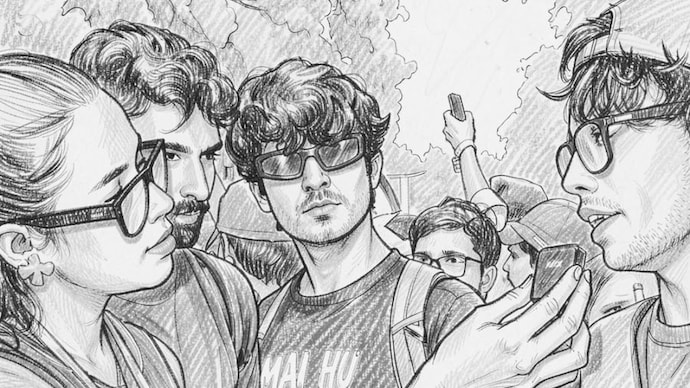
By evening, Jantar Mantar was packed. What struck me most was that the larger the crowd became, the harder it was to know who was actually part of the protest. Crowds have no face.
THE CROWD KEPT GROWING
As the hours passed, more and more people joined the gathering. From where I stood, it gradually became difficult to distinguish students from everyone else. I saw people of different age groups, different groups raising different slogans, and many faces I could not identify.
The larger the crowd became, the more difficult it was to understand who had originally come for the march and who had joined later. That is exactly why crowd management becomes so important.
THE MOMENT THAT CHANGED MY DAY
Somewhere in the middle of that crowd, I was groped. I cannot identify who the person was, nor do I know whether the individual was a student, a supporter, or someone who had simply entered the gathering. It would be irresponsible for me to make that claim. But the fact that I was touched inappropriately makes this experience harrowing for me.
Unfortunately, this feeling has stayed with me far longer than any slogan I heard that day.
I was not the only woman who left the protest site (Jantar Mantar) shaken that day. A colleague covering the same protest had her own disturbing encounter.
She told me that after a man touched her inappropriately in the crowd, she courageously confronted him on the spot. The exchange briefly drew attention, but the incident underscored the same concern I had walked away with. In a tightly packed protest, women are often left to fend for themselves.
No woman should experience harassment while attending a public gathering, regardless of whether she is participating, volunteering, reporting, or simply passing by.
The students I interacted with were respectful and focused on raising issues related to education. Many genuinely wanted to speak about their future. My experience should not be seen as an accusation against every student or every person who attended the protest.
But once a public gathering becomes large enough, it also attracts people whose intentions may have nothing to do with the original cause. That is why I believe organisers and authorities must work together to ensure that such gatherings remain safe for everyone.
WOMEN'S SAFETY AND CROWD MANAGEMENT
Peaceful protests are an essential part of democracy, but every public gathering must also prioritise safety. As crowds grow larger, proper crowd management becomes just as important as the cause itself.
Women should be able to participate, volunteer or simply be present without fear of harassment. Better planning, trained volunteers, clear movement routes and adequate security can help ensure that protests remain safe and inclusive for everyone.
The reported use of force against protesters deserves scrutiny. At the same time, conversations about harassment and crowd safety should not be overlooked.
Demanding women's safety does not weaken a movement; it only strengthens it. Peaceful protest and safe public spaces must go hand-in-hand.
I left Jantar Mantar with more than notes from a protest. My story does not define every protester or every organiser. It is simply my personal experience. But it leaves me with one question: How can we make public protests safer for women?
The day after I attended the Cockroach Janta Party's (CJP) 'Chalo Sansad March' at Delhi's Jantar Mantar, I wasn't thinking about the slogans, speeches, or political debates. One question stayed with me more than anything else... How safe are women at large public protests?
This is not an article in support of or against any political party, organisation or even a movement. Nor is it an attempt to question the intentions of the students who came to raise their voices. This is my personal experience and opinion based on what I witnessed on July 21.
A PEACEFUL BEGINNING
When I reached Jantar Mantar, Delhi was witnessing a scorching afternoon. Despite the sweltering heat, hundreds of people had gathered for the march. As the day progressed, the crowd continued to grow. Then the rain arrived, but instead of dispersing, people stayed.
Students carrying placards discussed education, volunteers guided people, and there was a clear sense of purpose. One interaction I will never forget was with a 13-year-old boy who had travelled from Rajasthan with his aunt just to attend the meeting.
By evening, Jantar Mantar was packed. What struck me most was that the larger the crowd became, the harder it was to know who was actually part of the protest. Crowds have no face.
THE CROWD KEPT GROWING
As the hours passed, more and more people joined the gathering. From where I stood, it gradually became difficult to distinguish students from everyone else. I saw people of different age groups, different groups raising different slogans, and many faces I could not identify.
The larger the crowd became, the more difficult it was to understand who had originally come for the march and who had joined later. That is exactly why crowd management becomes so important.
THE MOMENT THAT CHANGED MY DAY
Somewhere in the middle of that crowd, I was groped. I cannot identify who the person was, nor do I know whether the individual was a student, a supporter, or someone who had simply entered the gathering. It would be irresponsible for me to make that claim. But the fact that I was touched inappropriately makes this experience harrowing for me.
Unfortunately, this feeling has stayed with me far longer than any slogan I heard that day.
I was not the only woman who left the protest site (Jantar Mantar) shaken that day. A colleague covering the same protest had her own disturbing encounter.
She told me that after a man touched her inappropriately in the crowd, she courageously confronted him on the spot. The exchange briefly drew attention, but the incident underscored the same concern I had walked away with. In a tightly packed protest, women are often left to fend for themselves.
No woman should experience harassment while attending a public gathering, regardless of whether she is participating, volunteering, reporting, or simply passing by.
The students I interacted with were respectful and focused on raising issues related to education. Many genuinely wanted to speak about their future. My experience should not be seen as an accusation against every student or every person who attended the protest.
But once a public gathering becomes large enough, it also attracts people whose intentions may have nothing to do with the original cause. That is why I believe organisers and authorities must work together to ensure that such gatherings remain safe for everyone.
WOMEN'S SAFETY AND CROWD MANAGEMENT
Peaceful protests are an essential part of democracy, but every public gathering must also prioritise safety. As crowds grow larger, proper crowd management becomes just as important as the cause itself.
Women should be able to participate, volunteer or simply be present without fear of harassment. Better planning, trained volunteers, clear movement routes and adequate security can help ensure that protests remain safe and inclusive for everyone.
The reported use of force against protesters deserves scrutiny. At the same time, conversations about harassment and crowd safety should not be overlooked.
Demanding women's safety does not weaken a movement; it only strengthens it. Peaceful protest and safe public spaces must go hand-in-hand.
I left Jantar Mantar with more than notes from a protest. My story does not define every protester or every organiser. It is simply my personal experience. But it leaves me with one question: How can we make public protests safer for women?
The day after I attended the Cockroach Janta Party's (CJP) 'Chalo Sansad March' at Delhi's Jantar Mantar, I wasn't thinking about the slogans, speeches, or political debates. One question stayed with me more than anything else... How safe are women at large public protests?
This is not an article in support of or against any political party, organisation or even a movement. Nor is it an attempt to question the intentions of the students who came to raise their voices. This is my personal experience and opinion based on what I witnessed on July 21.
A PEACEFUL BEGINNING
When I reached Jantar Mantar, Delhi was witnessing a scorching afternoon. Despite the sweltering heat, hundreds of people had gathered for the march. As the day progressed, the crowd continued to grow. Then the rain arrived, but instead of dispersing, people stayed.
Students carrying placards discussed education, volunteers guided people, and there was a clear sense of purpose. One interaction I will never forget was with a 13-year-old boy who had travelled from Rajasthan with his aunt just to attend the meeting.
By evening, Jantar Mantar was packed. What struck me most was that the larger the crowd became, the harder it was to know who was actually part of the protest. Crowds have no face.
THE CROWD KEPT GROWING
As the hours passed, more and more people joined the gathering. From where I stood, it gradually became difficult to distinguish students from everyone else. I saw people of different age groups, different groups raising different slogans, and many faces I could not identify.
The larger the crowd became, the more difficult it was to understand who had originally come for the march and who had joined later. That is exactly why crowd management becomes so important.
THE MOMENT THAT CHANGED MY DAY
Somewhere in the middle of that crowd, I was groped. I cannot identify who the person was, nor do I know whether the individual was a student, a supporter, or someone who had simply entered the gathering. It would be irresponsible for me to make that claim. But the fact that I was touched inappropriately makes this experience harrowing for me.
Unfortunately, this feeling has stayed with me far longer than any slogan I heard that day.
I was not the only woman who left the protest site (Jantar Mantar) shaken that day. A colleague covering the same protest had her own disturbing encounter.
She told me that after a man touched her inappropriately in the crowd, she courageously confronted him on the spot. The exchange briefly drew attention, but the incident underscored the same concern I had walked away with. In a tightly packed protest, women are often left to fend for themselves.
No woman should experience harassment while attending a public gathering, regardless of whether she is participating, volunteering, reporting, or simply passing by.
The students I interacted with were respectful and focused on raising issues related to education. Many genuinely wanted to speak about their future. My experience should not be seen as an accusation against every student or every person who attended the protest.
But once a public gathering becomes large enough, it also attracts people whose intentions may have nothing to do with the original cause. That is why I believe organisers and authorities must work together to ensure that such gatherings remain safe for everyone.
WOMEN'S SAFETY AND CROWD MANAGEMENT
Peaceful protests are an essential part of democracy, but every public gathering must also prioritise safety. As crowds grow larger, proper crowd management becomes just as important as the cause itself.
Women should be able to participate, volunteer or simply be present without fear of harassment. Better planning, trained volunteers, clear movement routes and adequate security can help ensure that protests remain safe and inclusive for everyone.
The reported use of force against protesters deserves scrutiny. At the same time, conversations about harassment and crowd safety should not be overlooked.
Demanding women's safety does not weaken a movement; it only strengthens it. Peaceful protest and safe public spaces must go hand-in-hand.
I left Jantar Mantar with more than notes from a protest. My story does not define every protester or every organiser. It is simply my personal experience. But it leaves me with one question: How can we make public protests safer for women?

