From the Editor-in-Chief
PM Modi has formidable tasks arrayed on the electoral, legislative and governance fronts. The challenge he faces now is qualitatively different from anything that came before
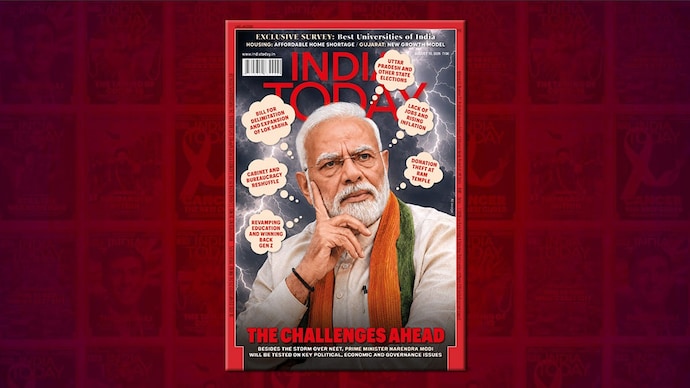
For the past 12 years, Prime Minister Narendra Modi has occupied a hallowed realm very few leaders in democratic politics ever reach. Crises have not pierced his aura or left any visible marks of damage. He seemed teflon-coated. A pandemic shock ended in nationwide vaccination. A loss of single-party majority in 2024 led to a string of assembly victories, each more worthy of awe than the preceding one. On the long arc, his political graph seemed immune to the law of gravity. But the spontaneous Gen Z upsurge of July 2026 is different in a way he has recognised. In fact, in the entire state response, it is Modi the politician who has read the mood most accurately. If one part of the state apparatus unleashed a harder edge on the protesters, it was the PM who decided to be soft, to reach out, to listen and be responsive. He gave in on the demand for a Union minister’s resignation. A stringent law against exam paper leaks was moved within the week. He has personally taken to Instagram and is directing all of government outreach to follow him onto the platform that Gen Z calls home. These are not the instincts of a leader who thinks this will blow over.
The political arithmetic explains the urgency. The entirety of that 371 million demographic, Indians presently aged between 15 and 29, will be of voting age in 2029. They have already arrived as political actors. Their influence is proven. If Jantar Mantar is any sample, they span the full socioeconomic spectrum, including large numbers from the urban middle class that has until now been among the BJP’s most reliable constituencies. The party’s traditional playbook of inducement, punishment and division will not work here. It will accelerate the alienation it is trying to reverse. What is required is persuasion, and persuasion of a kind that cannot be managed through perception management alone. It has to be driven by demonstrable outcomes. That is a considerably harder ask. The exam controversy that triggered the protests reveals one dysfunctional cog in a much larger broken wheel. Equally formidable tasks are arrayed on the electoral, legislative and governance fronts.
Prime Minister Modi has made a tactically astute beginning by appointing the Nandan Nilekani committee to fix question paper leaks. It has a respected face, accepted across the board, and we can expect it to deliver a genuinely workable model. But that will only treat a symptom, not the cause, which is the gross mismatch between education, skills and employment. That disconnect has been building for years, which no single committee can resolve. What is needed is a full system reboot, with all facets acting in concert to produce one result: remodelling India’s growth engine so that it can tug the entire train. The youth need to see India’s 7 per cent growth translating into jobs, opportunities and broad-based prosperity. The challenge is that headline growth figures hide a feeble core. Private investment has stayed weak for a decade. Net FDI has slumped from about $27-28 billion in FY23 to under $7 billion in FY26, as multinationals repatriate profits and Indian firms invest abroad instead of at home. Nothing is moving the needle on manufacturing, whose share of GDP seems permanently stuck at 16-17 per cent. The only substantial capex is state-led. That goes towards infrastructure, not new factory jobs. On this dismal baseline, the West Asia war has added an oil shock which is reverberating through the system, pushing inflation back over 4 per cent and slowing growth. The rupee at record lows is visible to everyone, even if its implications are interpreted in simplified ways. The balance of payments may mean nothing to an average Indian. The price of essentials means everything. Despite various efforts to reform, the heavy hand of bureaucracy still stifles the animal spirits.
The political calendar compounds the pressure. UP is voting within nine months. Six other assembly polls will keep 2027 hot, including high-stakes ones like Punjab, Manipur and Gujarat. Rebuilding public consent around saffron politics may not be so straightforward after the moral setback of the Ayodhya temple theft, especially since the restless youth seem less responsive to Hindutva as a mobilising force than previous generations. Within Parliament, women’s reservation commands support across the aisle, but the delimitation bill does not. Even if the BJP musters a coalition of the willing large enough to push it through, it won’t be exactly lessening the gap in consensus. Through 2027-28, the population census will also be in the headlines, with the caste question aggravating emotions. Nothing suggests a smooth, predictable path.
In our cover story this week, Senior Deputy Editor Anilesh S. Mahajan surveys this complex landscape of challenges that confronts PM Modi in his historic third term. Modi has demonstrated repeatedly, and against considerable odds, an ability to spring back from setbacks that would have finished lesser leaders. That capacity remains his greatest asset. He may choose to sharpen his armoury, and that perhaps entails a fresh cabinet with young faces and fresh ideas, as well as a bureaucratic reshuffle. But the challenge he faces now is qualitatively different from anything that came before. The youth are not the kind of dissenters who can be waited out or who make a political compromise. They have no fear like many others in India and have little to lose. They are a big chunk of the electorate of 2029. And they are waiting and watching.
For the past 12 years, Prime Minister Narendra Modi has occupied a hallowed realm very few leaders in democratic politics ever reach. Crises have not pierced his aura or left any visible marks of damage. He seemed teflon-coated. A pandemic shock ended in nationwide vaccination. A loss of single-party majority in 2024 led to a string of assembly victories, each more worthy of awe than the preceding one. On the long arc, his political graph seemed immune to the law of gravity. But the spontaneous Gen Z upsurge of July 2026 is different in a way he has recognised. In fact, in the entire state response, it is Modi the politician who has read the mood most accurately. If one part of the state apparatus unleashed a harder edge on the protesters, it was the PM who decided to be soft, to reach out, to listen and be responsive. He gave in on the demand for a Union minister’s resignation. A stringent law against exam paper leaks was moved within the week. He has personally taken to Instagram and is directing all of government outreach to follow him onto the platform that Gen Z calls home. These are not the instincts of a leader who thinks this will blow over.
The political arithmetic explains the urgency. The entirety of that 371 million demographic, Indians presently aged between 15 and 29, will be of voting age in 2029. They have already arrived as political actors. Their influence is proven. If Jantar Mantar is any sample, they span the full socioeconomic spectrum, including large numbers from the urban middle class that has until now been among the BJP’s most reliable constituencies. The party’s traditional playbook of inducement, punishment and division will not work here. It will accelerate the alienation it is trying to reverse. What is required is persuasion, and persuasion of a kind that cannot be managed through perception management alone. It has to be driven by demonstrable outcomes. That is a considerably harder ask. The exam controversy that triggered the protests reveals one dysfunctional cog in a much larger broken wheel. Equally formidable tasks are arrayed on the electoral, legislative and governance fronts.
Prime Minister Modi has made a tactically astute beginning by appointing the Nandan Nilekani committee to fix question paper leaks. It has a respected face, accepted across the board, and we can expect it to deliver a genuinely workable model. But that will only treat a symptom, not the cause, which is the gross mismatch between education, skills and employment. That disconnect has been building for years, which no single committee can resolve. What is needed is a full system reboot, with all facets acting in concert to produce one result: remodelling India’s growth engine so that it can tug the entire train. The youth need to see India’s 7 per cent growth translating into jobs, opportunities and broad-based prosperity. The challenge is that headline growth figures hide a feeble core. Private investment has stayed weak for a decade. Net FDI has slumped from about $27-28 billion in FY23 to under $7 billion in FY26, as multinationals repatriate profits and Indian firms invest abroad instead of at home. Nothing is moving the needle on manufacturing, whose share of GDP seems permanently stuck at 16-17 per cent. The only substantial capex is state-led. That goes towards infrastructure, not new factory jobs. On this dismal baseline, the West Asia war has added an oil shock which is reverberating through the system, pushing inflation back over 4 per cent and slowing growth. The rupee at record lows is visible to everyone, even if its implications are interpreted in simplified ways. The balance of payments may mean nothing to an average Indian. The price of essentials means everything. Despite various efforts to reform, the heavy hand of bureaucracy still stifles the animal spirits.
The political calendar compounds the pressure. UP is voting within nine months. Six other assembly polls will keep 2027 hot, including high-stakes ones like Punjab, Manipur and Gujarat. Rebuilding public consent around saffron politics may not be so straightforward after the moral setback of the Ayodhya temple theft, especially since the restless youth seem less responsive to Hindutva as a mobilising force than previous generations. Within Parliament, women’s reservation commands support across the aisle, but the delimitation bill does not. Even if the BJP musters a coalition of the willing large enough to push it through, it won’t be exactly lessening the gap in consensus. Through 2027-28, the population census will also be in the headlines, with the caste question aggravating emotions. Nothing suggests a smooth, predictable path.
In our cover story this week, Senior Deputy Editor Anilesh S. Mahajan surveys this complex landscape of challenges that confronts PM Modi in his historic third term. Modi has demonstrated repeatedly, and against considerable odds, an ability to spring back from setbacks that would have finished lesser leaders. That capacity remains his greatest asset. He may choose to sharpen his armoury, and that perhaps entails a fresh cabinet with young faces and fresh ideas, as well as a bureaucratic reshuffle. But the challenge he faces now is qualitatively different from anything that came before. The youth are not the kind of dissenters who can be waited out or who make a political compromise. They have no fear like many others in India and have little to lose. They are a big chunk of the electorate of 2029. And they are waiting and watching.
For the past 12 years, Prime Minister Narendra Modi has occupied a hallowed realm very few leaders in democratic politics ever reach. Crises have not pierced his aura or left any visible marks of damage. He seemed teflon-coated. A pandemic shock ended in nationwide vaccination. A loss of single-party majority in 2024 led to a string of assembly victories, each more worthy of awe than the preceding one. On the long arc, his political graph seemed immune to the law of gravity. But the spontaneous Gen Z upsurge of July 2026 is different in a way he has recognised. In fact, in the entire state response, it is Modi the politician who has read the mood most accurately. If one part of the state apparatus unleashed a harder edge on the protesters, it was the PM who decided to be soft, to reach out, to listen and be responsive. He gave in on the demand for a Union minister’s resignation. A stringent law against exam paper leaks was moved within the week. He has personally taken to Instagram and is directing all of government outreach to follow him onto the platform that Gen Z calls home. These are not the instincts of a leader who thinks this will blow over.
The political arithmetic explains the urgency. The entirety of that 371 million demographic, Indians presently aged between 15 and 29, will be of voting age in 2029. They have already arrived as political actors. Their influence is proven. If Jantar Mantar is any sample, they span the full socioeconomic spectrum, including large numbers from the urban middle class that has until now been among the BJP’s most reliable constituencies. The party’s traditional playbook of inducement, punishment and division will not work here. It will accelerate the alienation it is trying to reverse. What is required is persuasion, and persuasion of a kind that cannot be managed through perception management alone. It has to be driven by demonstrable outcomes. That is a considerably harder ask. The exam controversy that triggered the protests reveals one dysfunctional cog in a much larger broken wheel. Equally formidable tasks are arrayed on the electoral, legislative and governance fronts.
Prime Minister Modi has made a tactically astute beginning by appointing the Nandan Nilekani committee to fix question paper leaks. It has a respected face, accepted across the board, and we can expect it to deliver a genuinely workable model. But that will only treat a symptom, not the cause, which is the gross mismatch between education, skills and employment. That disconnect has been building for years, which no single committee can resolve. What is needed is a full system reboot, with all facets acting in concert to produce one result: remodelling India’s growth engine so that it can tug the entire train. The youth need to see India’s 7 per cent growth translating into jobs, opportunities and broad-based prosperity. The challenge is that headline growth figures hide a feeble core. Private investment has stayed weak for a decade. Net FDI has slumped from about $27-28 billion in FY23 to under $7 billion in FY26, as multinationals repatriate profits and Indian firms invest abroad instead of at home. Nothing is moving the needle on manufacturing, whose share of GDP seems permanently stuck at 16-17 per cent. The only substantial capex is state-led. That goes towards infrastructure, not new factory jobs. On this dismal baseline, the West Asia war has added an oil shock which is reverberating through the system, pushing inflation back over 4 per cent and slowing growth. The rupee at record lows is visible to everyone, even if its implications are interpreted in simplified ways. The balance of payments may mean nothing to an average Indian. The price of essentials means everything. Despite various efforts to reform, the heavy hand of bureaucracy still stifles the animal spirits.
The political calendar compounds the pressure. UP is voting within nine months. Six other assembly polls will keep 2027 hot, including high-stakes ones like Punjab, Manipur and Gujarat. Rebuilding public consent around saffron politics may not be so straightforward after the moral setback of the Ayodhya temple theft, especially since the restless youth seem less responsive to Hindutva as a mobilising force than previous generations. Within Parliament, women’s reservation commands support across the aisle, but the delimitation bill does not. Even if the BJP musters a coalition of the willing large enough to push it through, it won’t be exactly lessening the gap in consensus. Through 2027-28, the population census will also be in the headlines, with the caste question aggravating emotions. Nothing suggests a smooth, predictable path.
In our cover story this week, Senior Deputy Editor Anilesh S. Mahajan surveys this complex landscape of challenges that confronts PM Modi in his historic third term. Modi has demonstrated repeatedly, and against considerable odds, an ability to spring back from setbacks that would have finished lesser leaders. That capacity remains his greatest asset. He may choose to sharpen his armoury, and that perhaps entails a fresh cabinet with young faces and fresh ideas, as well as a bureaucratic reshuffle. But the challenge he faces now is qualitatively different from anything that came before. The youth are not the kind of dissenters who can be waited out or who make a political compromise. They have no fear like many others in India and have little to lose. They are a big chunk of the electorate of 2029. And they are waiting and watching.

