No food in Ceuta: Thousands of migrants return after storming Spain enclave
Spain said around half of the nearly 50,000 migrants who entered Ceuta had returned to Morocco. The deadly clashes have intensified scrutiny of border control, expulsions and humanitarian risks.
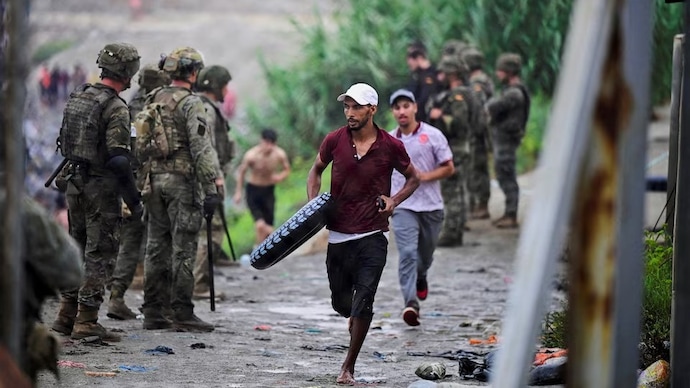
Spain on Friday said around half of the migrants who crossed into its North African enclave of Ceuta had voluntarily returned to Morocco, signalling that the border surge had begun to ease. A day after nearly 50,000 people crossed into Ceuta, Reuters reported that around 25,000 voluntarily made their way back to Morocco through border posts and holes in the fence.
Some of those who returned said they were unable to find food or shelter in Ceuta, which resembled a war zone as the migrants clashed with police. Several bodies were found floating in the sea, with Ceuta's government estimating the death toll at 57.
According to Spain's Interior Ministry, nearly 50,000 people crossed into Ceuta by land and sea since Thursday morning.
The unprecedented influx prompted a major security response along the border, where Moroccan security forces used batons and tear gas to disperse crowds attempting to force their way through the enclave's border gates. Several vehicles were also set on fire during clashes in the area.
"Honestly, I don't even know why I came, and now I am going back. I haven't eaten since lunch yesterday," Reuters quoted a Moroccan man as saying.
Another migrant said he reached Ceuta after swimming for five hours and was returning now. "There was no food inside Ceuta, and we were kicked out badly by the (Spanish) army," he said.
DEATH TOLL CONTINUES TO MOUNT
The humanitarian toll continued to mount. Spanish authorities said at least 19 bodies were recovered from the waters near Ceuta, while Juan Jesus Vivas, head of Ceuta's local government, claimed the death toll had reached 57. Officials have not yet reconciled the differing figures.
Spanish Prime Minister Pedro Snchez travelled to Ceuta following the crisis and described the mass crossings as a "violation of sovereignty." He announced that Spain would accelerate the expulsion of those who had entered the enclave irregularly as authorities sought to restore order.
The incident has also triggered political repercussions across Europe. Several European Union leaders expressed support for Spain while urging Madrid to ensure the situation remained under control.
RIGHT WINGERS BLAME SPAIN'S LIBERAL POLICIES
At the same time, right-wing political parties across the continent blamed the crisis on Spain's comparatively liberal migration policies, including this year's amnesty granted to hundreds of thousands of undocumented migrants.
Adding another dimension to the debate, a Spanish minister suggested the sudden surge may have been influenced by a recent court ruling that restricted the use of summary expulsions of migrants at the border.
Meanwhile, Italy warned it could suspend participation in the Schengen free-movement zone if irregular migration pressures continue to intensify.
Although Spanish authorities say the situation is stabilising as thousands return to Morocco, the scale of the crossings and the fatalities reported have renewed concerns over migration management, border security and humanitarian conditions along one of Europe's most sensitive external frontiers.
Spain on Friday said around half of the migrants who crossed into its North African enclave of Ceuta had voluntarily returned to Morocco, signalling that the border surge had begun to ease. A day after nearly 50,000 people crossed into Ceuta, Reuters reported that around 25,000 voluntarily made their way back to Morocco through border posts and holes in the fence.
Some of those who returned said they were unable to find food or shelter in Ceuta, which resembled a war zone as the migrants clashed with police. Several bodies were found floating in the sea, with Ceuta's government estimating the death toll at 57.
According to Spain's Interior Ministry, nearly 50,000 people crossed into Ceuta by land and sea since Thursday morning.
The unprecedented influx prompted a major security response along the border, where Moroccan security forces used batons and tear gas to disperse crowds attempting to force their way through the enclave's border gates. Several vehicles were also set on fire during clashes in the area.
"Honestly, I don't even know why I came, and now I am going back. I haven't eaten since lunch yesterday," Reuters quoted a Moroccan man as saying.
Another migrant said he reached Ceuta after swimming for five hours and was returning now. "There was no food inside Ceuta, and we were kicked out badly by the (Spanish) army," he said.
DEATH TOLL CONTINUES TO MOUNT
The humanitarian toll continued to mount. Spanish authorities said at least 19 bodies were recovered from the waters near Ceuta, while Juan Jesus Vivas, head of Ceuta's local government, claimed the death toll had reached 57. Officials have not yet reconciled the differing figures.
Spanish Prime Minister Pedro Snchez travelled to Ceuta following the crisis and described the mass crossings as a "violation of sovereignty." He announced that Spain would accelerate the expulsion of those who had entered the enclave irregularly as authorities sought to restore order.
The incident has also triggered political repercussions across Europe. Several European Union leaders expressed support for Spain while urging Madrid to ensure the situation remained under control.
RIGHT WINGERS BLAME SPAIN'S LIBERAL POLICIES
At the same time, right-wing political parties across the continent blamed the crisis on Spain's comparatively liberal migration policies, including this year's amnesty granted to hundreds of thousands of undocumented migrants.
Adding another dimension to the debate, a Spanish minister suggested the sudden surge may have been influenced by a recent court ruling that restricted the use of summary expulsions of migrants at the border.
Meanwhile, Italy warned it could suspend participation in the Schengen free-movement zone if irregular migration pressures continue to intensify.
Although Spanish authorities say the situation is stabilising as thousands return to Morocco, the scale of the crossings and the fatalities reported have renewed concerns over migration management, border security and humanitarian conditions along one of Europe's most sensitive external frontiers.
Spain on Friday said around half of the migrants who crossed into its North African enclave of Ceuta had voluntarily returned to Morocco, signalling that the border surge had begun to ease. A day after nearly 50,000 people crossed into Ceuta, Reuters reported that around 25,000 voluntarily made their way back to Morocco through border posts and holes in the fence.
Some of those who returned said they were unable to find food or shelter in Ceuta, which resembled a war zone as the migrants clashed with police. Several bodies were found floating in the sea, with Ceuta's government estimating the death toll at 57.
According to Spain's Interior Ministry, nearly 50,000 people crossed into Ceuta by land and sea since Thursday morning.
The unprecedented influx prompted a major security response along the border, where Moroccan security forces used batons and tear gas to disperse crowds attempting to force their way through the enclave's border gates. Several vehicles were also set on fire during clashes in the area.
"Honestly, I don't even know why I came, and now I am going back. I haven't eaten since lunch yesterday," Reuters quoted a Moroccan man as saying.
Another migrant said he reached Ceuta after swimming for five hours and was returning now. "There was no food inside Ceuta, and we were kicked out badly by the (Spanish) army," he said.
DEATH TOLL CONTINUES TO MOUNT
The humanitarian toll continued to mount. Spanish authorities said at least 19 bodies were recovered from the waters near Ceuta, while Juan Jesus Vivas, head of Ceuta's local government, claimed the death toll had reached 57. Officials have not yet reconciled the differing figures.
Spanish Prime Minister Pedro Snchez travelled to Ceuta following the crisis and described the mass crossings as a "violation of sovereignty." He announced that Spain would accelerate the expulsion of those who had entered the enclave irregularly as authorities sought to restore order.
The incident has also triggered political repercussions across Europe. Several European Union leaders expressed support for Spain while urging Madrid to ensure the situation remained under control.
RIGHT WINGERS BLAME SPAIN'S LIBERAL POLICIES
At the same time, right-wing political parties across the continent blamed the crisis on Spain's comparatively liberal migration policies, including this year's amnesty granted to hundreds of thousands of undocumented migrants.
Adding another dimension to the debate, a Spanish minister suggested the sudden surge may have been influenced by a recent court ruling that restricted the use of summary expulsions of migrants at the border.
Meanwhile, Italy warned it could suspend participation in the Schengen free-movement zone if irregular migration pressures continue to intensify.
Although Spanish authorities say the situation is stabilising as thousands return to Morocco, the scale of the crossings and the fatalities reported have renewed concerns over migration management, border security and humanitarian conditions along one of Europe's most sensitive external frontiers.

