The danger outdoors | Unsafe worlds: Public, professional and digital violations
How women's boundaries are violated across public spaces, workplaces and digital platforms, enabled by a toxic continuum of harassment, institutional power, privacy breaches and enforced silence
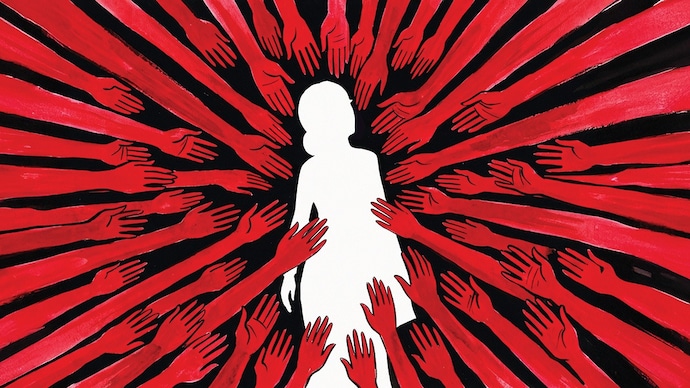
Once a woman steps out of her home, on to a bus, into an office, or on to a screen, her boundaries enter contested territory. This section maps three connected worlds of violation: public spaces, workplaces and digital platforms. The connecting thread is power—of the crowd, of the boss, of the anonymous sender—and the enforced silence that follows.
Once a woman steps out of her home, on to a bus, into an office, or on to a screen, her boundaries enter contested territory. This section maps three connected worlds of violation: public spaces, workplaces and digital platforms. The connecting thread is power—of the crowd, of the boss, of the anonymous sender—and the enforced silence that follows.
The street remains the most universal site of violation. Nearly half of all respondents report unwanted touching, groping or invasive closeness in buses, trains and markets. The response reveals how fear governs women’s choices. The last time they were harassed, only 13 per cent directly confronted the perpetrator and just 5 per cent went to the police. Far more froze, stayed silent or decided that reacting could make things worse. Only 37 per cent expect bystanders to step in. The most damning number measures anticipation, not incident: 70 per cent of women change their behaviour, dress, routes or timings at least sometimes to avoid harassment. Women reorganise their lives before anything happens.
The workplace converts hierarchy into pressure. Thirty-six per cent report uncomfortable attention or pressure from someone senior—a boss, teacher or mentor—and an identical 36 per cent say someone in authority has ignored their refusal and proceeded anyway. Only 44 per cent can comfortably refuse work requests that feel unsafe, 36 per cent can refuse but fear for their jobs and 12 per cent cannot refuse at all. Institutional protection is thin. Just 32 per cent say their workplace provides meaningful training or policies on consent and harassment, while 36 per cent call existing policies formalities.
The digital world is the newest frontline. Twenty-eight per cent have received unwanted explicit images or sexual messages online, 24 per cent have faced online stalking or harassment and a third have endured sexually suggestive comments or jokes that offended them. The preferred response is containment, not confrontation. Forty-two per cent block or unfriend; only 13 per cent tell the harasser to stop.
Across all three worlds, the pattern is identical. Violations are common, formal reporting is rare, and women absorb the cost through avoidance, silence and self-restriction. The unsafe worlds do not merely violate women’s boundaries. They teach women to shrink within them in advance.

