The new geography of luxury travel | Domestic edition
With a changing paradigm that values immersion over opulence, affluent Indians are redefining luxury through experiential journeys, propelling spiritual pilgrimages, wellness retreats, wildlife safaris, and the pristine Northeast to the forefront of high-end travel.


At the Ganga Aarti in Rishikesh, the air thickens with incense and anticipation. Temple bells echo across the valley. Priests lift towering brass lamps into the dusk, sending arcs of flame dancing against the darkening sky. Chants rise and fall with the river’s current. Hundreds gather at the ghats, yet the experience feels curiously intimate, as though the spectacle is unfolding for each visitor alone. And then, just as easily, one can leave it behind.
At the Ganga Aarti in Rishikesh, the air thickens with incense and anticipation. Temple bells echo across the valley. Priests lift towering brass lamps into the dusk, sending arcs of flame dancing against the darkening sky. Chants rise and fall with the river’s current. Hundreds gather at the ghats, yet the experience feels curiously intimate, as though the spectacle is unfolding for each visitor alone. And then, just as easily, one can leave it behind.
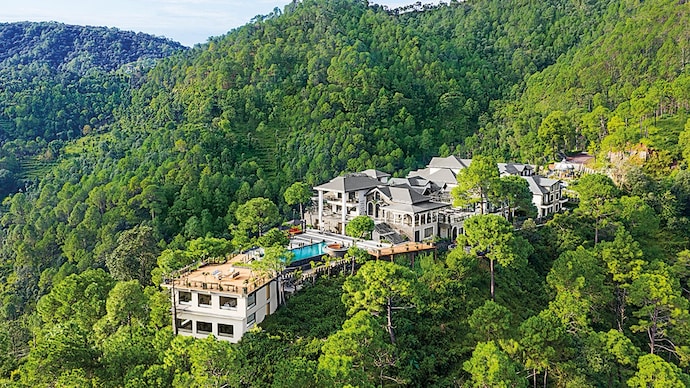
A winding drive into the Himalayan foothills delivers a different kind of sanctuary.
At The Westin Resort & Spa, Himalayas, the evening’s devotional chants are replaced by the gentle
Fizz of a Jacuzzi, a well-chosen wine and a meticulously assembled cheeseboard. The appeal lies in moving effortlessly between worlds. The trend reflects a broader shift in how luxury is being defined now, as upscale travellers focus increasingly on experiences, not destinations, whether in spiritual towns, wildlife sanctuaries and wellness retreats, or in remote, unexplored parts of the country’s Northeast.
Wildlife lodges craft personalised immersive journeys for eco-conscious guests, improved airports and roads in the Northeast have made once remote Buddhist monasteries more accessible, while wellness centres effortlessly blend ancient healing traditions with modern diagnostics.
According to Anil Chadha, Managing Director of ITC Hotels, today’s luxury travellers question not where they can go but rather what they can take back in terms of experiences. “That shift of immersing oneself in the local ethos, be it through cultural and traditional experiences of the region or culinary trails and rituals, is redefining travel in India.”
The timing too, is particularly favourable for domestic tourism. A volatile geopolitical environment, flight disruptions across key international corridors, increasingly lengthy visa processing times and a weakening rupee have all made overseas travel more complicated. For many affluent Indians, the calculation has subtly shifted. Why spend weeks planning a European itinerary when a vacation in India can deliver a similarly immersive escape? The result is a growing appetite for destinations that offer both discovery and convenience as travellers venture beyond traditional luxury circuits.
SACRED JOURNEYS
“Pilgrimage tourism is arguably one of India’s most powerful and fastest-transforming travel segments, evolving from a largely faith-driven segment into a broader tourism and infrastructure-led development story,” says Akash Datta, Managing Director (South Asia), HVS Anarock. “Spiritual tourism has moved into the mainstream and is now steady year-round, cutting across age groups,” points out Chadha of ITC Hotels.
According to MakeMyTrip’s Pilgrimage Travel Trends 2024-25 report, hotel bookings across 56 religious destinations rose 19% year-on-year, while premium accommodation bookings priced above 10,000 a night grew 23%, underscoring a willingness among travellers to spend more on comfort. “Millennials account for nearly 6 in 10 pilgrimage travellers in FY26, mirroring their share of overall leisure travel. Almost 1 in 6 pilgrims is now Gen Z. Boomers’ participation is over 50% higher than their share of general leisure travel. Together, these numbers paint a picture of a segment that is younger, broader, and more deeply rooted in Indian life,” says Rajesh Magow, Co-Founder and Group CEO, MakeMyTrip. What is driving the shift is not simply faith, but the convergence of spirituality with wellness, culture and leisure.
“It is one of the most significant shifts shaping domestic tourism in India today,’’ says Anuraag Bhatnagar, CEO, The Leela Palaces, Hotels and Resorts. ‘‘Many guests aren’t undertaking short, destination-specific pilgrimages any more. They are extending these journeys to include wellness and cultural exploration creating demand for a more holistic hospitality offering.” Leela will be opening a hotel in Ayodhya in 2028.
The trend is visible across the hospitality sector. IHCL, India’s largest hospitality company, says spiritual tourism has become a significant growth driver. “We continue to see strong demand from travellers seeking experiences deeply rooted in culture,” says Suma Venkatesh, Executive VP, Real Estate and Development. The company has expanded its presence across destinations including Ayodhya, Varanasi, Ajmer, Amritsar, Katra, Haridwar, Rishikesh and Tirupati.
Perhaps nowhere is the transformation more visible than in destinations such as Rishikesh, where spirituality and wellness increasingly overlap. Tarun Gulati, Director of Ganga Kinare Resorts and Hotels, says post-pandemic average room rates in spiritual destinations have doubled, and travellers are willing to pay a premium for experiences such as sound healing, meditation treks and yoga retreats. “Premium and differentiated experiences are experiencing way higher demand and occupancy than the budget segment,” he says. Rooms rents have increased 40% to 18,000 a night with growing demand.
At IHCL SeleqTions Anand Kashi by the Ganges, average room rents are 38,800, per night, going up to over 50,000 in season. “Spiritual tourism is expected to grow at 18–20% CAGR over the next five years,” says Samir MC, CEO of Tamara Leisure Experiences which has just launched Ra by Tamara, a brand focussed on spiritual tourism, with the first two hotels opening in the temple towns of Kumbakonam in Tamil Nadu and Guruyavur in Kerala, with properties in Palani, Tirupati, Tiruvannamalai, and Velankanni in the pipeline.
Kapil Chopra, Founder and CEO, The Postcard Hotel that is opening a hotel in Tirupati soon says the affluent Indian pilgrim no longer wants to rough it out. “Tirupati gets one lakh tourists a day,” he says. “It’s a rich temple, rich people come but there are only 300 branded rooms there,” he says pointing out the opportunity. “Luxury and darshan can go hand-in-hand like at the Vatican.”
REIMAGINING
WILDLIFE TOURISM
From a detox in the midst of nature with Ayurvedic and Tibetan treatments, to immersive experiences that foster a deeper understanding of the forest and local communities, and gourmet dining under star-studded skies, a journey into India’s wild is no longer just about animal encounters.
“Wildlife tourism is today attracting a growing base of affluent domestic and international travellers who are willing to spend more for authentic and exclusive experiences,” says Datta of HVS Anarock.
Among the luxury forest retreats reshaping the wildlife stay is Outpost 12 (40,000 per night) in Tilari village near Kanha National Park, which is led by two naturalists. Beyond the excitement of tiger-spotting, guests slow the pace to fathom the woodlands through expert eyes, spot birds at dusk and dawn, star gaze at night to map the sky and interact with local communities.
Experiences at The Oberoi Vindhyavilas Wildlife Resort in Bandhavgarh, which opened a year ago, lean into guided nature walks, birdwatching, locally-inspired culinary experiences and wellness programmes inspired by the forest. Room rates are upwards of 45,500 per night.
A new mantra of luxury wildlife escapes is upscale dining as buffet spreads make way for farm-to-table meals. A seven-course meal cooked by local women in the wilderness is among the highlights for visitors to the Tipeshwar Wildlife Sanctuary in Maharashtra. Chef Amninder Sandhu’s open-fire restaurant, Palaash, at Tipai Wildlife Luxuries (rooms from 25,000 per night) resort, near the park, is all about slow cooking in underground barbecue pits, or chulhas and sigris with most ingredients plucked from the garden. “My partner always said, people will come to Tipai for the food at Palaash and I would laugh. But that is happening now,” says Sandhu. Dishes like a six-hour slow cooked raan and Ambaadi chaat rate high among its many draws. At The Postcard Hotel in Gir (from 24,000 per night), the spread ranges from a typical Gujarati thali, Junagarh thali with a range of meats, and a seafood one that brings fresh catch from the Veraval coast.
Wellness experiences have also become an intrinsic part of luxury forest lodges. At Sariska Lodge (from 18,500 per night) on the edge of Sariska Tiger Reserve in Rajasthan, visitors rejuvenate with healing crystals and fragrant smoke as Ayurvedic treatments combine with Tibetan healing techniques in an open courtyard. At the edge of Jim Corbett National Park, the French brand L’Occitane spa has found a forest address at Aahana Resort & Spa.
The growing call of connecting with the wild through the prism of luxury is prompting a spate of new property openings. Among those expanding aggressively in this sector is The Postcard Hotel group. “I’m opening Chitwan in Nepal. I have openings in Jawai, Pench and Kanha. I’m signing in Bandhavgarh, Tadoba, Ranthambore and we have a hotel close to Kaziranga,” says Chopra.
JW Marriott recently opened a property at Ranthambore (from 33,500 per night) and The Leela hotel group is set to launch new ones in Bandhavgarh and Ranthambore. “These upcoming hotels reflect our confidence in the growing appeal of wildlife tourism and the increasing demand for nature-led luxury experiences in India,” according to Bhatnagar.
Beyond the traditional wildlife circuit, luxury hotel groups are also opening in under the radar destinations such as the Jawai Leopard Conservation Reserve. Home to free roaming leopards, it is the newest magnet for wildlife enthusiasts. ITC opened Storii at Jawai in March, while The Postcard Hotels is all set to launch a property this October.
NORTHEAST INDIA: A NEW
LUXURY TRAVEL FRONTIER
Travelling to experience the Living Roots bridge trek in Meghalaya, spotting the one-horned rhinoceros in Kaziranga’s forests and visiting Tawang’s stunning Buddhist monasteries in the northeastern states once only beckoned adventurous travellers who could endure long hours on rough roads and basic accommodation. Luxury travellers stayed away because of poor infrastructure and limited air connectivity. But times have changed; the ‘Seven sisters of India’ are singing a different tune, as a new dawn breaks across the North East.
The Northeast welcomed its first international five-star branded hotel, Radisson Blu in Guwahati only in 2014. Now deluxe accommodation, which includes high-end hospitality brands, is expected to more than double in just five years to cater to the growing footprint of affluent travellers. “It will rise from 3,674 keys as of March 2026 to nearly 9,266 keys by 2030, led by Assam, followed by Arunachal Pradesh, Meghalaya, Sikkim, Tripura and Nagaland,” says Datta of HVS Anarock.
Each destination has its own charm. Some prefer the slow rhythm of Assam’s emerald tea plantations and a river cruise on the Brahmaputra, others head for wildlife encounters at Kaziranga National Park or to Sikkim and Arunachal Pradesh for its stunning Buddhist monasteries. Younger travellers want to experience the region’s vibrant festival culture, whether it is the tribal spectacle of Nagaland’s Hornbill Festival, Meghalaya’s Cherry Blossom Festival or Arunachal Pradesh’s Ziro Music Festival. Hosting iconic international performers such as Bryan Adams in 2024 and Ed Sheeran in 2025, Shillong has emerged as one of India’s most sought-after concert destinations.
Polo Hotels and Resorts, a major local player in the region, plans to open more hotels in the near future. Deval Tibrewalla, Director and CEO of Hotel Polo Towers Group says high-end travellers want a taste of all things local, from cuisine to culture. “They want local experiences and something outdoors so we cater to that demand. We have a seven-course meal paired with seven Meghalayan wines, for instance.” The rooms at Polo Resort in Cherrapunji are priced at around 14,500 (plus taxes) per night.
It isn’t just local hotel groups that are turning the spotlight on the region. IHCL is among the biggest players with 21 hotels across the region, including 12 currently under development. The Leela Palaces, Hotels and Resorts plans to step in with the opening of The Leela Sikkim in 2028.
“Sikkim is particularly compelling because it brings together culture, heritage, Himalayan landscapes, mindfulness, biodiversity and a strong sense of place within a single journey,” says Bhatnagar. Chopra of The Postcard Hotel believes the Northeast offers some of the country’s most evocative luxury itineraries. “I chose Assam for my first property because of the magnificent tea gardens. Then I realised Kaziranga is just an hour away and the Brahmaputra only 45 minutes, creating a perfect four-day itinerary. My second property is coming up in Pasighat in Arunachal Pradesh.” The cost for a room at The Postcard in the Durrung Tea Estate, Assam starts from 25,000 per night.
As per MakeMyTrip’s data, Assam recorded the highest number of hotel bookings, followed by Sikkim and Meghalaya while searches for Mizoram have almost doubled in the past year.
“The region’s strength isn’t just a single destination, it’s the diversity. Each state has its own distinct character and we are seeing multiple micro-markets emerge,” says Magow of MakeMyTrip.
WELLNESS TOURISM:
MIND, BODY AND SOUL
On a 30-acre campus at Kozhikode, overlooking the Western Ghats, guests at Tulh Clinical Wellness can undergo an MRI scan in the morning, receive personalised an Ayurvedic treatment before lunch and end the day with meditation rooted in Vedantic philosophy.
The recently opened wellness retreat represents a new phase in India’s fast-growing wellness tourism sector, one that seeks to blend ancient healing traditions with modern diagnostics and longevity science. Backed by an estimated $100 million investment from Kerala-born billionaire industrialist Faizal Kottikollon, Tulh is positioning itself at the ultra-luxury end of the market, with rates starting at about $1,200 (1.13 lakh) a night (plus taxes), including treatments and meals.
Wellness tourism in India is undergoing a transformation with a new generation of travellers seeking measurable health outcomes rather than simple relaxation. Fairmont Mumbai has been quick to spot the trend. The hotel, which opened in April last year, describes itself as India’s first hotel-based longevity destination. At the centre of the property is Blu Xone, a wellness facility designed around science-led therapies and medically supervised recovery programmes.
It’s recent Blu Xone Detox & Longevity Staycations combine therapies such as Intermittent Hypoxic Training, IV therapy, cryotherapy, hyperbaric oxygen therapy and red-light therapy. Personalised, medically supervised wellness protocols with a three-to-seven-night staycation cost between 2.77 lakh and 5.38 lakh.
With wellness tourism growing, IHCL recently acquired a 51% stake in Sparsh Infratech Private Limited, the parent company of Atmantan, the luxury wellness destination near Pune. “The world is moving towards wellness,” said Puneet Chhatwal, Managing Director and CEO, IHCL, in a recent interview. “People are willing to pay more to look younger, lead healthier lives and for longevity. So, the timing is right to get into wellness.”
Chhatwal believes the opportunity could become a substantial business in its own right. “As a vertical, 10 years from now, I see it valued at 1,000 crore plus,” he said. The company plans to open another five Atmantan properties over the next five years, including in Hyderabad, expected to launch next year.
But long before wellness became a buzzword, it was Ananda In the Himalayas that helped define the category, is celebrating its 25th year. According to Mahesh Natarajan, Chief Operating Officer of IHHR Hospitality, which owns Ananda: “Thirty percent of Ananda’s growth is being driven by domestic travellers, a share that has grown steadily over the last five years,” says Natarajan. “This reflects both the rising affluence of Indian travellers and a deepening cultural engagement with structured, preventive wellness.” The Experience Ananda package which includes room, all meals and one spa therapy daily, starts at 63,000 per night (plus taxes) for an individual and 83,000 for a couple.
At Pune-based Swastik Wellbeing Sanctuary that started operations in 2024, demand has broadened well beyond the traditional spa-going audience. “Over the last few years, the demand for wellness retreats among Indian travellers has evolved significantly from being an occasional luxury to becoming a conscious lifestyle choice,” says Anushree Nyati, Director of Swastik Wellbeing Sanctuary.
Participation is rising among young professionals, entrepreneurs, families and multigenerational groups. Wellness packages starts at 42,000 (plus taxes) on single occupancy and for 60,000 (plus taxes) for double occupancy. Six Senses Fort Barwara recently launched a Lunar Healing Retreat, a monthly wellness experience inspired by the restorative energy of the moon and aligned with the natural rhythm of key lunar phases. Rates start at 45,500 per night.
Major luxury hotel operators are also responding to the trend by incorporating wellness into future developments. The Leela Palaces, Hotels and Resorts has opened The Leela Coorg Forest Sanctuary (45,000 a night), a 76-acre property in the Western Ghats that places wellbeing and nature at the centre of the guest experience.
“Wellness is increasingly shaping how people choose destinations, spend their time and define luxury,” says Bhatnagar. He points to a global wellness economy now valued at more than $6.8 trillion. “The affluent wellness traveller today is increasingly focussed on outcomes rather than indulgence,” says Bhatnagar. “Guests want to return home feeling better than when they arrived, and that expectation is reshaping luxury hospitality.”

