When not to adjust | Guest column by Deepa Narayan
After decades of women's empowerment, if we are still not safe from violence by men, something is very wrong. Our strategies must change, move from individualistic to communal, and also involve the men
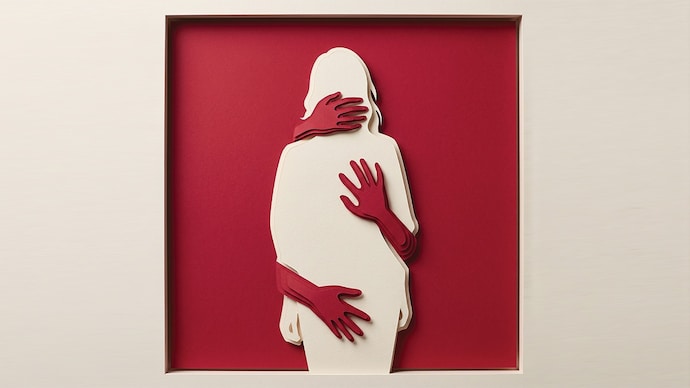
A decade ago, I explored the inner lives of 600 urban, middle- and high-income women through in-depth interviews, reported in the book Chup. A decade later, the india today survey on consent, as a measure of women’s power and independence, reads like a statistical companion to my earlier research. Following massive national campaigns on women’s safety and empowerment after the Nirbhaya rape case, both studies find attitudinal shifts, but a disturbing stagnation in the everyday shrinking behaviours women adopt to stay safe, to stay alive. This coping strategy is not a women’s problem but reflects the fears of men and society: fear of unafraid women. Fearful women are easier to destroy and control. After decades of empowerment, if women are still not safe from violence by men, something is very wrong. Our strategies for empowerment are broken.
Life and learning begin in the family home. It should be a sanctuary of safety and love for all members. Instead, for girls and women, it is often the most dangerous place. The india today survey finds that 66 per cent women believe rape can take place within marriage, but only 32 per cent say marital rape should be criminalised. The others were cautious, buying into the narrative of rampant misuse of the law, and so fighting against their own interest. Only a quarter of women feel totally at ease talking to family and friends when sexually harassed.
Rape is not the only horror. The National Family Health Survey (NFHS)-5 notes that a third of all men commit physical, sexual and emotional violence against their wives, of which the thappar (slap) is the common manifestation. Even among the top income groups, one in five men are violent with their wives. And one-third of women with higher education accept it as normal. Neither higher income nor formal education is a sufficient protector against violence.
Our diagnosis of the problem, and our solutions, may be fundamentally flawed. We misunderstood the nature of women’s empowerment as external, linear and simple. Instead, the process is deeply internal, non-linear, complex.
The disempowerment of women is a cultural process of training in moral habits that interlock tightly to keep women non-existent and men in power. The phrase that captures this diminishing, from my research, is “adjust kar lo (just adjust)”. It came up everywhere, in the metros, and in small towns. Whether at home or on public transport, women are still playing out their earliest childhood training to make themselves disappear: be good, physically shrink, stay silent, stay within ‘boundaries and limits’, avoid ‘No’, wait for permission, do not be called a drama queen and, above all, be liked, smile and keep safe. In other words, women’s inner cultural and emotional compass is ‘Do not disturb others’, especially the men and elders. Often, this is unconscious behaviour; these women are at the same time intellectually free and passionate about their rights.
Unwinding these behaviours is a deeply social and psychological process. Shifts in power are upsetting to power-holders, whether at the national level or at the very local family and kinship levels. Anger and insecurity are inevitable. We pretend this away. There is no preparation, no training in deep listening or in stress management, and no empathy for the men and older women and mothers-in-law who have to share power and change their behaviour towards younger women.
This upset can’t be standardised, but it can be predicted. It requires organising and resources at the local level, instead of empowerment sloganeering. Our current empowerment strategies are individualistic rather than communal, they pit already vulnerable women against the very people who hold power over them and on whom they depend—their own families. This makes no sense.
In effect, a vulnerable female individual is asked to pay the price twice: first when she is violated, and second when she speaks up alone against the very group to which she belongs. Our strategies cruelly put the burden of change on individual women, rather than the social groups that tolerate or encourage violence. The rural self-help poor women’s movement works with collectives of women rather than with individuals. Very few programmes bring together intact social groups—all the women or all the men in a family—yet collective change defuses conflict.
We have almost bypassed men. It is true men commit most of the violence against women and children, against other men, and against themselves through suicide. But we cannot ignore half of society and make no attempt to understand men in their full humanity, their aspirations, struggles and anxieties, all without bending on accountability. Yet, at the national level, women’s empowerment strategies are not resourced to engage men in conversations about what it means to be a man or a woman. Both women and men carry gender anxiety and stress. Teaching both groups of women and men within Parliament, workplaces, friends’ circles and homes, will expand spaces for all of us to grow and flourish in rather than mere slogans, or dead technocratic approaches or a focus on women alone.
—A renowned social scientist, Narayan is author of 'Chup: Breaking the Silence About India’s Women'
A decade ago, I explored the inner lives of 600 urban, middle- and high-income women through in-depth interviews, reported in the book Chup. A decade later, the india today survey on consent, as a measure of women’s power and independence, reads like a statistical companion to my earlier research. Following massive national campaigns on women’s safety and empowerment after the Nirbhaya rape case, both studies find attitudinal shifts, but a disturbing stagnation in the everyday shrinking behaviours women adopt to stay safe, to stay alive. This coping strategy is not a women’s problem but reflects the fears of men and society: fear of unafraid women. Fearful women are easier to destroy and control. After decades of empowerment, if women are still not safe from violence by men, something is very wrong. Our strategies for empowerment are broken.
Life and learning begin in the family home. It should be a sanctuary of safety and love for all members. Instead, for girls and women, it is often the most dangerous place. The india today survey finds that 66 per cent women believe rape can take place within marriage, but only 32 per cent say marital rape should be criminalised. The others were cautious, buying into the narrative of rampant misuse of the law, and so fighting against their own interest. Only a quarter of women feel totally at ease talking to family and friends when sexually harassed.
Rape is not the only horror. The National Family Health Survey (NFHS)-5 notes that a third of all men commit physical, sexual and emotional violence against their wives, of which the thappar (slap) is the common manifestation. Even among the top income groups, one in five men are violent with their wives. And one-third of women with higher education accept it as normal. Neither higher income nor formal education is a sufficient protector against violence.
Our diagnosis of the problem, and our solutions, may be fundamentally flawed. We misunderstood the nature of women’s empowerment as external, linear and simple. Instead, the process is deeply internal, non-linear, complex.
The disempowerment of women is a cultural process of training in moral habits that interlock tightly to keep women non-existent and men in power. The phrase that captures this diminishing, from my research, is “adjust kar lo (just adjust)”. It came up everywhere, in the metros, and in small towns. Whether at home or on public transport, women are still playing out their earliest childhood training to make themselves disappear: be good, physically shrink, stay silent, stay within ‘boundaries and limits’, avoid ‘No’, wait for permission, do not be called a drama queen and, above all, be liked, smile and keep safe. In other words, women’s inner cultural and emotional compass is ‘Do not disturb others’, especially the men and elders. Often, this is unconscious behaviour; these women are at the same time intellectually free and passionate about their rights.
Unwinding these behaviours is a deeply social and psychological process. Shifts in power are upsetting to power-holders, whether at the national level or at the very local family and kinship levels. Anger and insecurity are inevitable. We pretend this away. There is no preparation, no training in deep listening or in stress management, and no empathy for the men and older women and mothers-in-law who have to share power and change their behaviour towards younger women.
This upset can’t be standardised, but it can be predicted. It requires organising and resources at the local level, instead of empowerment sloganeering. Our current empowerment strategies are individualistic rather than communal, they pit already vulnerable women against the very people who hold power over them and on whom they depend—their own families. This makes no sense.
In effect, a vulnerable female individual is asked to pay the price twice: first when she is violated, and second when she speaks up alone against the very group to which she belongs. Our strategies cruelly put the burden of change on individual women, rather than the social groups that tolerate or encourage violence. The rural self-help poor women’s movement works with collectives of women rather than with individuals. Very few programmes bring together intact social groups—all the women or all the men in a family—yet collective change defuses conflict.
We have almost bypassed men. It is true men commit most of the violence against women and children, against other men, and against themselves through suicide. But we cannot ignore half of society and make no attempt to understand men in their full humanity, their aspirations, struggles and anxieties, all without bending on accountability. Yet, at the national level, women’s empowerment strategies are not resourced to engage men in conversations about what it means to be a man or a woman. Both women and men carry gender anxiety and stress. Teaching both groups of women and men within Parliament, workplaces, friends’ circles and homes, will expand spaces for all of us to grow and flourish in rather than mere slogans, or dead technocratic approaches or a focus on women alone.
—A renowned social scientist, Narayan is author of 'Chup: Breaking the Silence About India’s Women'

