Horror films | Return of the fear factory
Horror is seeing a revival in the Hindi film industry, with studios bolstered to greenlight audacious new voices and distributors seeing commercial viability in a genre that has been neglected in India for decades
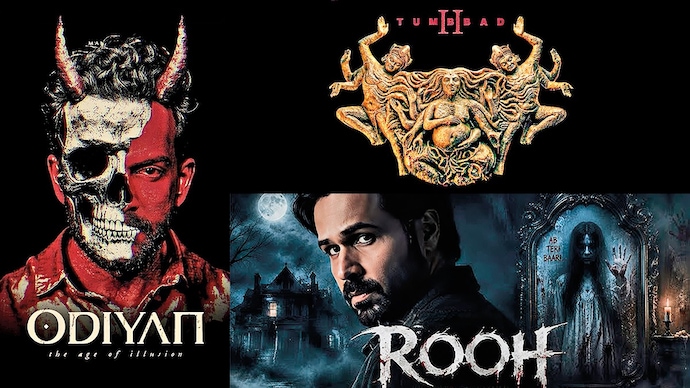
A curious phenomenon unfolded on the night of Thursday, May 28. Cinephiles in metros came in droves to watch Obsession, a Hollywood horror flick about a boy who uses a magic wish to get his friend to fall in love with him. There were nervous laughs, gasps and, eventually, goosebumps of thrill across the Hindi film industry. This film, directed by a 25-year-old and starring two unknown leads, had single-handedly faced down the notion that horror films don’t make any money in India. With Rs 100 crore in domestic collections in just one month, it had become India’s highest-grossing Hollywood film this year. Studios responded by announcing four horror films in June alone, including Rooh, a ‘musical horror’ with Emraan Hashmi, and Odiyan, Dharma Productions’ first Malayalam film, to be directed by Rahul Sadasivan (Bhoothakaalam, Brahmayugam), the most talented voice in the genre for many.
A curious phenomenon unfolded on the night of Thursday, May 28. Cinephiles in metros came in droves to watch Obsession, a Hollywood horror flick about a boy who uses a magic wish to get his friend to fall in love with him. There were nervous laughs, gasps and, eventually, goosebumps of thrill across the Hindi film industry. This film, directed by a 25-year-old and starring two unknown leads, had single-handedly faced down the notion that horror films don’t make any money in India. With Rs 100 crore in domestic collections in just one month, it had become India’s highest-grossing Hollywood film this year. Studios responded by announcing four horror films in June alone, including Rooh, a ‘musical horror’ with Emraan Hashmi, and Odiyan, Dharma Productions’ first Malayalam film, to be directed by Rahul Sadasivan (Bhoothakaalam, Brahmayugam), the most talented voice in the genre for many.
A curious phenomenon unfolded on the night of Thursday, May 28. Cinephiles in metros came in droves to watch Obsession, a Hollywood horror flick about a boy who uses a magic wish to get his friend to fall in love with him. There were nervous laughs, gasps and, eventually, goosebumps of thrill across the Hindi film industry. This film, directed by a 25-year-old and starring two unknown leads, had single-handedly faced down the notion that horror films don’t make any money in India. With Rs 100 crore in domestic collections in just one month, it had become India’s highest-grossing Hollywood film this year. Studios responded by announcing four horror films in June alone, including Rooh, a ‘musical horror’ with Emraan Hashmi, and Odiyan, Dharma Productions’ first Malayalam film, to be directed by Rahul Sadasivan (Bhoothakaalam, Brahmayugam), the most talented voice in the genre for many.
Obsession’s success in India raises an uncomfortable question: why is the most prolific film industry in the world severely short on ideas when it comes to delivering a Freaky Friday experience? Hollywood has horror subgenres like zombie, slasher, found footage, creature, body and gothic, just to name a few, but the Hindi film industry has, of late, largely stuck to the horror comedy, a subgenre popularised by Dinesh Vijan’s Maddock Films with Stree, Munjya and Bhediya. This has come at the cost of the unadulterated scary film, the sort that Ram Gopal Varma and Ramsay Brothers would make, with disturbed families and vengeful ghosts, haunted houses and crucifying curses. Last year, there was only one Hindi horror film worth talking about—the Aditya Dhar-produced Baramulla,an unsettling, sociopolitical thriller about a police officer investigating child abductions.
CLASSY OR TRASHY?
One major factor in the scarcity of horror in Hindi cinema is the genre’s lingering B movie reputation, a hangover, perhaps of the Ramsay oeuvre of the 1980s and early ’90s. For Smita Singh, writer of Indian OTT’s finest long-format horror outing in Khauf (2025, Amazon Prime Video), about a woman who moves into a haunted hostel room, their aesthetic may have been tacky, but they knew the source of “visceral horror”. It was evident in Saamri, the main attraction of the Ramsay film Purana Mandir: a hulking monster played by the 6-feet-5-inch-tall actor Aniruddh Agarwal, known for his deep voice and distorted facial features. Well-done horror, Singh says, has “to keep people on the edge of their seats. You have to let go of self-serious examination. By over-intellectualising horror, we lose its pulp nature”.
Another reason for the scarcity of horror films in India, according to Singh, is that producers presume audiences aren’t ready “to sit and deal with real anxiety, one that’s recognisable in their own world”. Actor-producer Sohum Shah agrees. “We don’t trust our audience. There’s not much experimentation happening in the genre,” he says. In Khauf, Singh taps into unnerving territory with an encounter between a malevolent ghost and a woman traumatised by a sexual assault. There are no gags in the series, no dance numbers or gimmicks. “With horror, one doesn’t need to chase stars, it thrives on good writing and craft,” she adds. Obsession, after all, saw two responses among the audience, young men identifying with the portrayal of a clingy, crazy girlfriend and women focusing on the film’s commentary on consent.
When writer Aamil Keeyan Khan pitched horror thrillers, he too faced reluctance. “People would make faces,” he says. “There’s, this herd mentality, where people don’t want to bet on stories,” he complains. Yet he has managed to show that horror sells, by writing Shaitaan (2024), a film about a family dealing with their daughter falling prey to black magic—and the last Hindi horror flick to cross Rs 100 crore in cinemas. While Khan agrees that Obsession’s success will see a surge in interest for horror scripts, he is convinced producers won’t “bet on the next big thing or new concept, but will want Obsession again”. Writer Mrunmayee Lagoo Waikul adds that the genre’s poor suitability for family viewing is another reason studios are averse to loosening the purse strings. “It is a tough territory to crack for mass-viewing,” she says.
At the same time, according to producer Anand Pandit, Obsession has proved that horror is evolving. “It leans towards psychological storytelling; it’s no longer about jump scares or visual effects,” he says. Pandit’s latest film, Haunted 3D: Echoes of the Past, surprised many by surpassing the first-week collections of Imtiaz Ali’s Main Vaapas Aaunga and the Kangana Ranaut-starrer Bharat Bhagya Vidhaata. Directed by Vikram Bhatt (of Raaz fame), the film feeds off Bhatt’s tried-and-tested formula of sexy damsels distressed or possessed by spirits. Pandit admits that horror lags behind comedies, action and romance because “finding original stories rooted in relatable fears, strong characters and fresh cultural settings” is a tall ask.
A GROWING AUDIENCE
But times are a-changing. There’s one target group that’s very invested in the genre: the young audience. Sanjeev Bijli, executive director of PVR Inox Ltd, observes that Obsession’s success can largely be attributed to this demographic. “They have evolved taste,” he says. “For them, old wine in a new bottle isn’t working. They want new concepts and unique stories.” Last year, young audiences turned up in huge numbers to see two eventual Oscar winners: Ryan Coogler’s Sinners, a jazz-and-blues-centric vampire flick, and Zach Cregger’s Weapons, about a town plagued with child disappearances. In the post-pandemic mediascape, PVR Pictures considers acquiring and distributing indie Hollywood horror titles a “safe bet”. They recently released Hokum (2026), a film about a traumatised writer staying in a haunted hotel.
“There is a certain joy in watching horror in a cinema. It is a contagious experience where you feed off each other’s reactions and fears,” he says. Even a niche psychological horror like Backrooms (2026), about a series of interconnected mazes in the basement of a furniture store, directed by a rookie 20-year-old in Kane Parsons, found its audience in India, collecting about Rs 9 crore. Bijli hopes that Bollywood takes a leaf out of Hollywood’s playbook and backs younger, fresh voices to make horror films, if on modest budgets. Singh is optimistic, too. “I have lost count on how many producers have knocked on my door asking for a horror. I think horror is the next Dhurandhar,” she says.
Shah, too, is betting big on young audiences to give his sequel to Tumbbad the same adulation they did when the original re-released in cinemas in 2024 and collected Rs 30 crore-plus, more than it did in its original run. An atmospheric horror spectacle rooted in Indian folklore, about a family worshipping a forbidden god and featuring top-notch craft from cinematography to background score, the original rightfully enjoys a cult status.
For Shah, the Hindi film industry has still not capitalised on the “unlimited scope” of the genre. He isn’t giving up, though, and has bought the rights of three Ramsay cult classics: Veerana, Purani Haweli and Purana Mandir. The hope is to revisit them for a new generation with a different style. Maybe if stars cannot put bums on seats, monsters like Saamri can do the needful.

