Lupita as Helen in The Odyssey: How Nolan quietly destroyed Hollywood's beauty myth
Christopher Nolan's decision to cast Lupita Nyong'o as Helen of Troy sparked accusations of "woke" casting long before The Odyssey released. But the film reveals a far more radical idea: Hollywood's definition of beauty may have been wrong all along.
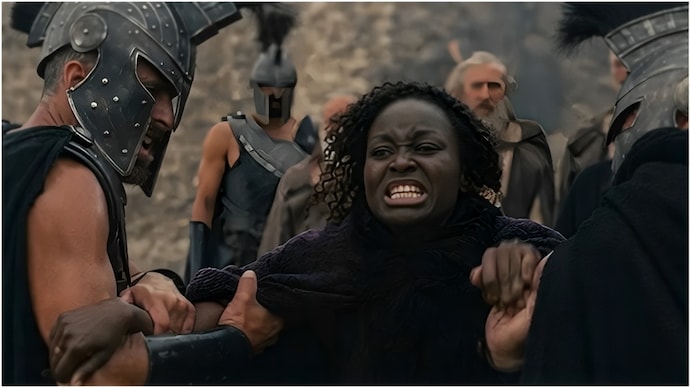
Christopher Nolan has built a career on making audiences rethink stories they thought they knew. From superheroes to scientists, his films rarely settle for familiar interpretations. So, it is perhaps fitting that when he turned to Homer's The Odyssey, he also challenged one of cinema's oldest assumptions: what the world's most beautiful woman is supposed to look like.
When it was announced that Oscar-winning actor Lupita Nyong'o would play Helen of Troy, the internet erupted. Even before audiences had seen a single frame, social media had split into two camps. While many welcomed the casting, others dismissed it as another example of Hollywood going "woke", objecting to a woman of colour being cast as the Greek queen whose beauty was said to have sparked one of mythology's greatest wars.
Yet, once The Odyssey reached theatres, it became increasingly clear that Nyong'o's casting was never about ticking a diversity-box. Whether Nolan intended it as a cultural statement or not, it became one. By placing a woman of colour at the centre of one of Western mythology's most enduring legends, he quietly expanded an idea Hollywood had kept remarkably narrow for decades.
For generations, Helen of Troy has been imagined through a distinctly Eurocentric lens. Rossana Podest in Helen of Troy (1956), Sienna Guillory in the 2003 television adaptation and Diane Kruger in Wolfgang Petersen's Troy (2004) all embodied the same image: fair-skinned, blonde and unmistakably European. Over time, Hollywood's version of Helen became so familiar that many audiences mistook it for historical fact.
But Homer's text tells a more complicated story.
Helen is described as "lovely-haired" and "white-armed", phrases often cited by those questioning Nyong'o's casting. Yet classical scholars have long argued that "white-armed" refers less to race than to status. It evokes a woman of royalty whose skin remained untouched by manual labour rather than making any definitive claim about her colour. Beauty, even in the ancient world, was never as straightforward as complexion.
That makes Nyong'o's casting feel less like a departure from mythology than from Hollywood itself.
If Helen is remembered as the woman whose beauty could launch a thousand ships, why should that beauty be confined to a single racial ideal? Why should the world's most desired woman always resemble the same image cinema has repeated for decades?
By casting a Black woman in a role that blockbuster films have historically reserved for white actors, Nolan quietly dismantles one of Hollywood's oldest beauty standards. The film never asks viewers to see Helen differently because she is Black. It simply presents her as Helen. In doing so, it suggests something surprisingly simple yet profoundly overdue: extraordinary beauty has never belonged to one race.
Few contemporary actors embody that idea better than Nyong'o.
Since her Oscar-winning performance in 12 Years a Slave, she has built a career defined by emotional intelligence, authority and extraordinary screen presence. Whether in Black Panther, Us or A Quiet Place: Day One, she commands attention without ever demanding it. The camera, too, does not just admire her; it gravitates towards her.
And perhaps that is precisely what Helen requires.
Christopher Nolan understands that beauty is not merely about symmetry or physical perfection. It is about magnetism. Helen's beauty had never mattered because she was simply attractive. It mattered because kingdoms were willing to destroy themselves over the idea of possessing her.
The film reinforces that interpretation through one of its boldest departures from mythology. Helen bears a conspicuous scar across her face, a wound whose origins are never explained. Suddenly, the woman history remembers as impossibly beautiful is visibly marked by violence.
The scar changes everything. It strips away the illusion that beauty exists untouched by suffering. Even the woman men crossed the seas to claim, could not escape the brutality unleashed in her name. Beauty, Nolan suggests, is not protection. Sometimes, it becomes its own burden.
Nyong'o also plays Clytemnestra, with Nolan reimagining the sisters as twins rather than half-siblings. The decision subtly shifts the mythology. If two women can share the same face, what exactly was the war about? Was it beauty alone, or male ambition, pride and possession disguised as love?
In The Odyssey, Nyong'o moves effortlessly between both women, allowing each to exist beyond the myths that have defined them for centuries. Helen becomes neither an untouchable goddess nor merely the woman blamed for a war. She is allowed complexity, vulnerability and agency in ways earlier adaptations rarely explored.
Perhaps that explains why the backlash now feels so revealing.
The outrage was never only about historical accuracy. It exposed how stubbornly Hollywood – and many audiences – continue to associate beauty with whiteness. For decades, cinema conditioned viewers to believe that the face which launched a thousand ships had to be white. With The Odyssey, Nolan boldly asks why.
Whether he set out to challenge that assumption is ultimately impossible to know. But his casting inevitably does. Without speeches, explanations and without turning Helen's race into his story, he places a Black woman at the heart of one of Western civilisation's oldest myths.
That, in itself, is a remarkable statement.
Because beauty was never meant to belong to one face, one race or one tradition. Like mythology itself, it evolves with every generation that chooses to tell the story again. And in choosing Lupita Nyong'o as Helen of Troy, Christopher Nolan has reminded Hollywood that the world's most beautiful woman never had to look only one way.
Christopher Nolan has built a career on making audiences rethink stories they thought they knew. From superheroes to scientists, his films rarely settle for familiar interpretations. So, it is perhaps fitting that when he turned to Homer's The Odyssey, he also challenged one of cinema's oldest assumptions: what the world's most beautiful woman is supposed to look like.
When it was announced that Oscar-winning actor Lupita Nyong'o would play Helen of Troy, the internet erupted. Even before audiences had seen a single frame, social media had split into two camps. While many welcomed the casting, others dismissed it as another example of Hollywood going "woke", objecting to a woman of colour being cast as the Greek queen whose beauty was said to have sparked one of mythology's greatest wars.
Yet, once The Odyssey reached theatres, it became increasingly clear that Nyong'o's casting was never about ticking a diversity-box. Whether Nolan intended it as a cultural statement or not, it became one. By placing a woman of colour at the centre of one of Western mythology's most enduring legends, he quietly expanded an idea Hollywood had kept remarkably narrow for decades.
For generations, Helen of Troy has been imagined through a distinctly Eurocentric lens. Rossana Podest in Helen of Troy (1956), Sienna Guillory in the 2003 television adaptation and Diane Kruger in Wolfgang Petersen's Troy (2004) all embodied the same image: fair-skinned, blonde and unmistakably European. Over time, Hollywood's version of Helen became so familiar that many audiences mistook it for historical fact.
But Homer's text tells a more complicated story.
Helen is described as "lovely-haired" and "white-armed", phrases often cited by those questioning Nyong'o's casting. Yet classical scholars have long argued that "white-armed" refers less to race than to status. It evokes a woman of royalty whose skin remained untouched by manual labour rather than making any definitive claim about her colour. Beauty, even in the ancient world, was never as straightforward as complexion.
That makes Nyong'o's casting feel less like a departure from mythology than from Hollywood itself.
If Helen is remembered as the woman whose beauty could launch a thousand ships, why should that beauty be confined to a single racial ideal? Why should the world's most desired woman always resemble the same image cinema has repeated for decades?
By casting a Black woman in a role that blockbuster films have historically reserved for white actors, Nolan quietly dismantles one of Hollywood's oldest beauty standards. The film never asks viewers to see Helen differently because she is Black. It simply presents her as Helen. In doing so, it suggests something surprisingly simple yet profoundly overdue: extraordinary beauty has never belonged to one race.
Few contemporary actors embody that idea better than Nyong'o.
Since her Oscar-winning performance in 12 Years a Slave, she has built a career defined by emotional intelligence, authority and extraordinary screen presence. Whether in Black Panther, Us or A Quiet Place: Day One, she commands attention without ever demanding it. The camera, too, does not just admire her; it gravitates towards her.
And perhaps that is precisely what Helen requires.
Christopher Nolan understands that beauty is not merely about symmetry or physical perfection. It is about magnetism. Helen's beauty had never mattered because she was simply attractive. It mattered because kingdoms were willing to destroy themselves over the idea of possessing her.
The film reinforces that interpretation through one of its boldest departures from mythology. Helen bears a conspicuous scar across her face, a wound whose origins are never explained. Suddenly, the woman history remembers as impossibly beautiful is visibly marked by violence.
The scar changes everything. It strips away the illusion that beauty exists untouched by suffering. Even the woman men crossed the seas to claim, could not escape the brutality unleashed in her name. Beauty, Nolan suggests, is not protection. Sometimes, it becomes its own burden.
Nyong'o also plays Clytemnestra, with Nolan reimagining the sisters as twins rather than half-siblings. The decision subtly shifts the mythology. If two women can share the same face, what exactly was the war about? Was it beauty alone, or male ambition, pride and possession disguised as love?
In The Odyssey, Nyong'o moves effortlessly between both women, allowing each to exist beyond the myths that have defined them for centuries. Helen becomes neither an untouchable goddess nor merely the woman blamed for a war. She is allowed complexity, vulnerability and agency in ways earlier adaptations rarely explored.
Perhaps that explains why the backlash now feels so revealing.
The outrage was never only about historical accuracy. It exposed how stubbornly Hollywood – and many audiences – continue to associate beauty with whiteness. For decades, cinema conditioned viewers to believe that the face which launched a thousand ships had to be white. With The Odyssey, Nolan boldly asks why.
Whether he set out to challenge that assumption is ultimately impossible to know. But his casting inevitably does. Without speeches, explanations and without turning Helen's race into his story, he places a Black woman at the heart of one of Western civilisation's oldest myths.
That, in itself, is a remarkable statement.
Because beauty was never meant to belong to one face, one race or one tradition. Like mythology itself, it evolves with every generation that chooses to tell the story again. And in choosing Lupita Nyong'o as Helen of Troy, Christopher Nolan has reminded Hollywood that the world's most beautiful woman never had to look only one way.
Christopher Nolan has built a career on making audiences rethink stories they thought they knew. From superheroes to scientists, his films rarely settle for familiar interpretations. So, it is perhaps fitting that when he turned to Homer's The Odyssey, he also challenged one of cinema's oldest assumptions: what the world's most beautiful woman is supposed to look like.
When it was announced that Oscar-winning actor Lupita Nyong'o would play Helen of Troy, the internet erupted. Even before audiences had seen a single frame, social media had split into two camps. While many welcomed the casting, others dismissed it as another example of Hollywood going "woke", objecting to a woman of colour being cast as the Greek queen whose beauty was said to have sparked one of mythology's greatest wars.
Yet, once The Odyssey reached theatres, it became increasingly clear that Nyong'o's casting was never about ticking a diversity-box. Whether Nolan intended it as a cultural statement or not, it became one. By placing a woman of colour at the centre of one of Western mythology's most enduring legends, he quietly expanded an idea Hollywood had kept remarkably narrow for decades.
For generations, Helen of Troy has been imagined through a distinctly Eurocentric lens. Rossana Podest in Helen of Troy (1956), Sienna Guillory in the 2003 television adaptation and Diane Kruger in Wolfgang Petersen's Troy (2004) all embodied the same image: fair-skinned, blonde and unmistakably European. Over time, Hollywood's version of Helen became so familiar that many audiences mistook it for historical fact.
But Homer's text tells a more complicated story.
Helen is described as "lovely-haired" and "white-armed", phrases often cited by those questioning Nyong'o's casting. Yet classical scholars have long argued that "white-armed" refers less to race than to status. It evokes a woman of royalty whose skin remained untouched by manual labour rather than making any definitive claim about her colour. Beauty, even in the ancient world, was never as straightforward as complexion.
That makes Nyong'o's casting feel less like a departure from mythology than from Hollywood itself.
If Helen is remembered as the woman whose beauty could launch a thousand ships, why should that beauty be confined to a single racial ideal? Why should the world's most desired woman always resemble the same image cinema has repeated for decades?
By casting a Black woman in a role that blockbuster films have historically reserved for white actors, Nolan quietly dismantles one of Hollywood's oldest beauty standards. The film never asks viewers to see Helen differently because she is Black. It simply presents her as Helen. In doing so, it suggests something surprisingly simple yet profoundly overdue: extraordinary beauty has never belonged to one race.
Few contemporary actors embody that idea better than Nyong'o.
Since her Oscar-winning performance in 12 Years a Slave, she has built a career defined by emotional intelligence, authority and extraordinary screen presence. Whether in Black Panther, Us or A Quiet Place: Day One, she commands attention without ever demanding it. The camera, too, does not just admire her; it gravitates towards her.
And perhaps that is precisely what Helen requires.
Christopher Nolan understands that beauty is not merely about symmetry or physical perfection. It is about magnetism. Helen's beauty had never mattered because she was simply attractive. It mattered because kingdoms were willing to destroy themselves over the idea of possessing her.
The film reinforces that interpretation through one of its boldest departures from mythology. Helen bears a conspicuous scar across her face, a wound whose origins are never explained. Suddenly, the woman history remembers as impossibly beautiful is visibly marked by violence.
The scar changes everything. It strips away the illusion that beauty exists untouched by suffering. Even the woman men crossed the seas to claim, could not escape the brutality unleashed in her name. Beauty, Nolan suggests, is not protection. Sometimes, it becomes its own burden.
Nyong'o also plays Clytemnestra, with Nolan reimagining the sisters as twins rather than half-siblings. The decision subtly shifts the mythology. If two women can share the same face, what exactly was the war about? Was it beauty alone, or male ambition, pride and possession disguised as love?
In The Odyssey, Nyong'o moves effortlessly between both women, allowing each to exist beyond the myths that have defined them for centuries. Helen becomes neither an untouchable goddess nor merely the woman blamed for a war. She is allowed complexity, vulnerability and agency in ways earlier adaptations rarely explored.
Perhaps that explains why the backlash now feels so revealing.
The outrage was never only about historical accuracy. It exposed how stubbornly Hollywood – and many audiences – continue to associate beauty with whiteness. For decades, cinema conditioned viewers to believe that the face which launched a thousand ships had to be white. With The Odyssey, Nolan boldly asks why.
Whether he set out to challenge that assumption is ultimately impossible to know. But his casting inevitably does. Without speeches, explanations and without turning Helen's race into his story, he places a Black woman at the heart of one of Western civilisation's oldest myths.
That, in itself, is a remarkable statement.
Because beauty was never meant to belong to one face, one race or one tradition. Like mythology itself, it evolves with every generation that chooses to tell the story again. And in choosing Lupita Nyong'o as Helen of Troy, Christopher Nolan has reminded Hollywood that the world's most beautiful woman never had to look only one way.

