BrahMos Blockade: How India's 'missile ring' in South China Sea Has Beijing On Edge
India's BrahMos and Astra missile deals with Indonesia have triggered sharp debate in China over the South China Sea. Chinese analysts say the expanding BrahMos footprint across ASEAN could complicate PLA Navy operations and sharpen regional calculations.
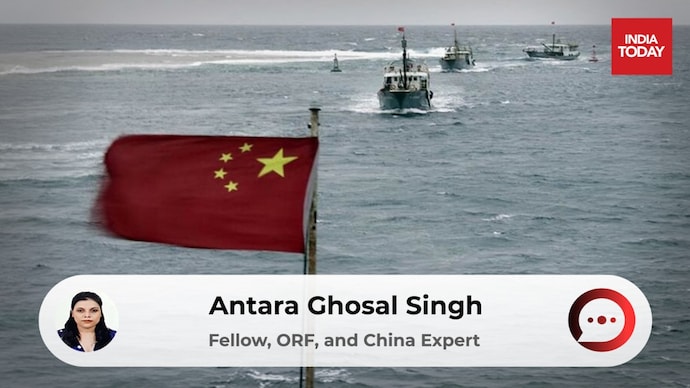
Prime Minister Narendra Modi has recently concluded a historic 3-nation Indo-Pacific tour. Among the key outcomes, India and Indonesia sealing the BrahMos and Astra Missile Deals has attracted much attention among China’s strategic community and spurred intense discussions on the Chinese internet about how the development might impact the PLA Navy’s choices in the highly contested South China Sea.
The Chinese side noted with concern that this cooperation makes Indonesia the third ASEAN country, after the Philippines and Vietnam, to acquire BrahMos missiles.
In 2022, the Philippines signed the procurement agreement and the first batch of BrahMos was officially delivered in April 2024 and reportedly deployed to the areas north of Luzon Island, facing the Taiwan Strait and Palawan Island facing the South China Sea.
There are reports that the Philippines may purchase improved versions with longer ranges from India in the future.
In May, during the Shangri-La Dialogue in Singapore, Defence Secretary RK Singh announced that India and Vietnam had reached a cooperation agreement to acquire BrahMos missiles.
Given the strategic significance of the South China Sea, connecting multiple important sea lanes for global trade and transportation, and serving as a key node in the Asia-Pacific military competition, the Chinese side is increasingly alarmed by the growing presence of India-made missiles in the region.
A THREE-WAY BLOCKADE?
Post the Indonesia deal, a growing discourse on the Chinese internet is that geographically, the BrahMos deployment sites in Vietnam, the Philippines, and Indonesia, when joined together, form a "ring-shaped blockade" around the key geopolitical chokepoints in the South China Sea. Indonesia is located at the southern end of the South China Sea.
The Philippines has deployed its missiles in northern Luzon and Palawan, with a range that directly covers the Bashi Channel, the crucial passage to and from the Western Pacific.
Meanwhile, Vietnam's long coastline, once equipped with BrahMos missiles, could project them eastward to the main international shipping lanes in the central South China Sea, directly opposite China's Hainan Island and Sanya naval base.
This essentially means that of the four traditional entrances and exits to the South China Sea, three are now guarded by this supersonic anti-ship missile, leaving the Taiwan Strait as the only free outlet for the PLA-N, several commentaries on the Chinese internet noted.
WHAT CHANGES FOR CHINA IN THE SCS?
Chinese analysts believe that the subsequent deployment of BrahMos by the three SCS nations will change the nature of the threat to PLA-N. In the past, the shore-to-ship missiles it encountered in the South China Sea were mostly subsonic, such as the YJ and Exocet, which gave radar ample time to respond.
But now with supersonic threats emerging from three directions simultaneously, the Chinese maritime defence system needs to be fully forward-positioned and focused on achieving source interception and forward-positioned countermeasures.
But the contradiction is that for source interception or stopping the launch vehicle on land before the missile leaves the launch pad, PLA-N will get tested for its willingness to strike first and bear the political cost of firing the first shot.
On the other hand, PLA-N has always operated with the principle of freedom of movement in the South China Sea, relying on absolute situational dominance. Once deployments are made in three directions, a single patrol, exercise, or close-in reconnaissance could be interpreted as a provocation by the other side, meaning the threshold for misjudgement will be lowered and the chances of conflict will increase, the Chinese side assessed.
OPPORTUNITY FOR INDIA?
Most Chinese observers believe that India has made a shrewd move – without sending a single soldier or ship, it has doubled the complexity of the South China Sea situation simply by selling weapons and leveraging Russian technology, Indian diplomacy, and the territorial claims of Southeast Asian countries.
This, they argued, essentially means that tensions along the China-India border is increasingly getting linked to the tensions in the South China Sea.
The BrahMos missile's success in the supersonic anti-ship missile market, they noted, is also due to the opportune timing. Europe and the United States have almost no competitive products in this field. France's ‘Flying Fish’ and the United States' ‘Harpoon’ are still at the subsonic level.
Russia's "Onyx" and "Zircon" production capacity is tight due to the war and sanctions. India is taking advantage of this supply gap to not only to build its export profile but to also get deeply involved in the South China Sea affairs.
RUSSIA’S ‘DUAL GAME’, VIETNAM’S ‘LIP SERVICE’ IRK CHINA
Given the BrahMos project is a joint venture between India and Russia, Russia's role in the export program, particularly to the SCS countries, came under the scanner.
Questions were raised -- why would Russia, despite its close strategic cooperation with China, export such highly sensitive military technology to India, which would later on be used to arm China’s neighbours?
The inference drawn in Beijing is that Russia might be engaging in a sophisticated ‘dual-track game’ – deepening Sino-Russian strategic cooperation to deal with the West on one hand, while on the other hand, simultaneously diversifying risks, balancing China and maintaining and expanding its share in the traditional arms market through India.
The Chinese side also criticised the Southeast Asian countries, particularly Vietnam, for paying lip service to "non-partisanship" and "great power balancing", while turning around and signing agreements for such “highly offensive area denial weapons”.
HOW MIGHT CHINA RESPOND?
While acknowledging the current challenges posed by the proliferation of BrahMos, Chinese observers asserted that China's dominance in the South China Sea is unlikely to be shaken by a few missiles.
Militarily, they argued, China is continuously strengthening its air defence and anti-missile systems in the Hainan and nearby areas, and the South China Sea Fleet's long-range training is also being intensified.
On the other hand, consultations on the Code of Conduct in the South China Sea between China and ASEAN nations are still progressing, and economic and trade ties are being deepened through formats like RCEP – factors that may restrain the actions of relevant countries. As part of its countermeasures against Russia, China might introduce subtle changes in its position towards the Russia-Ukraine conflict.
China's recent invitation to the Ukrainian Foreign Minister for a meeting in China might be an important step in that direction. For India, Chinese countermeasures could be two-fold: i) further deepening defence cooperation with Pakistan; ii) tightening the control of strategic resources such as lithium and cobalt, which are essential for military applications, and also discouraging Chinese capital and technology from investing in the country.
(Antara Ghosal Singh is Fellow, ORF, New Delhi. She is a graduate from Tsinghua University, China, and has been a Chinese language fellow at the National Central University, Taiwan.)
(Views expressed in this opinion piece are those of the author)
Prime Minister Narendra Modi has recently concluded a historic 3-nation Indo-Pacific tour. Among the key outcomes, India and Indonesia sealing the BrahMos and Astra Missile Deals has attracted much attention among China’s strategic community and spurred intense discussions on the Chinese internet about how the development might impact the PLA Navy’s choices in the highly contested South China Sea.
The Chinese side noted with concern that this cooperation makes Indonesia the third ASEAN country, after the Philippines and Vietnam, to acquire BrahMos missiles.
In 2022, the Philippines signed the procurement agreement and the first batch of BrahMos was officially delivered in April 2024 and reportedly deployed to the areas north of Luzon Island, facing the Taiwan Strait and Palawan Island facing the South China Sea.
There are reports that the Philippines may purchase improved versions with longer ranges from India in the future.
In May, during the Shangri-La Dialogue in Singapore, Defence Secretary RK Singh announced that India and Vietnam had reached a cooperation agreement to acquire BrahMos missiles.
Given the strategic significance of the South China Sea, connecting multiple important sea lanes for global trade and transportation, and serving as a key node in the Asia-Pacific military competition, the Chinese side is increasingly alarmed by the growing presence of India-made missiles in the region.
A THREE-WAY BLOCKADE?
Post the Indonesia deal, a growing discourse on the Chinese internet is that geographically, the BrahMos deployment sites in Vietnam, the Philippines, and Indonesia, when joined together, form a "ring-shaped blockade" around the key geopolitical chokepoints in the South China Sea. Indonesia is located at the southern end of the South China Sea.
The Philippines has deployed its missiles in northern Luzon and Palawan, with a range that directly covers the Bashi Channel, the crucial passage to and from the Western Pacific.
Meanwhile, Vietnam's long coastline, once equipped with BrahMos missiles, could project them eastward to the main international shipping lanes in the central South China Sea, directly opposite China's Hainan Island and Sanya naval base.
This essentially means that of the four traditional entrances and exits to the South China Sea, three are now guarded by this supersonic anti-ship missile, leaving the Taiwan Strait as the only free outlet for the PLA-N, several commentaries on the Chinese internet noted.
WHAT CHANGES FOR CHINA IN THE SCS?
Chinese analysts believe that the subsequent deployment of BrahMos by the three SCS nations will change the nature of the threat to PLA-N. In the past, the shore-to-ship missiles it encountered in the South China Sea were mostly subsonic, such as the YJ and Exocet, which gave radar ample time to respond.
But now with supersonic threats emerging from three directions simultaneously, the Chinese maritime defence system needs to be fully forward-positioned and focused on achieving source interception and forward-positioned countermeasures.
But the contradiction is that for source interception or stopping the launch vehicle on land before the missile leaves the launch pad, PLA-N will get tested for its willingness to strike first and bear the political cost of firing the first shot.
On the other hand, PLA-N has always operated with the principle of freedom of movement in the South China Sea, relying on absolute situational dominance. Once deployments are made in three directions, a single patrol, exercise, or close-in reconnaissance could be interpreted as a provocation by the other side, meaning the threshold for misjudgement will be lowered and the chances of conflict will increase, the Chinese side assessed.
OPPORTUNITY FOR INDIA?
Most Chinese observers believe that India has made a shrewd move – without sending a single soldier or ship, it has doubled the complexity of the South China Sea situation simply by selling weapons and leveraging Russian technology, Indian diplomacy, and the territorial claims of Southeast Asian countries.
This, they argued, essentially means that tensions along the China-India border is increasingly getting linked to the tensions in the South China Sea.
The BrahMos missile's success in the supersonic anti-ship missile market, they noted, is also due to the opportune timing. Europe and the United States have almost no competitive products in this field. France's ‘Flying Fish’ and the United States' ‘Harpoon’ are still at the subsonic level.
Russia's "Onyx" and "Zircon" production capacity is tight due to the war and sanctions. India is taking advantage of this supply gap to not only to build its export profile but to also get deeply involved in the South China Sea affairs.
RUSSIA’S ‘DUAL GAME’, VIETNAM’S ‘LIP SERVICE’ IRK CHINA
Given the BrahMos project is a joint venture between India and Russia, Russia's role in the export program, particularly to the SCS countries, came under the scanner.
Questions were raised -- why would Russia, despite its close strategic cooperation with China, export such highly sensitive military technology to India, which would later on be used to arm China’s neighbours?
The inference drawn in Beijing is that Russia might be engaging in a sophisticated ‘dual-track game’ – deepening Sino-Russian strategic cooperation to deal with the West on one hand, while on the other hand, simultaneously diversifying risks, balancing China and maintaining and expanding its share in the traditional arms market through India.
The Chinese side also criticised the Southeast Asian countries, particularly Vietnam, for paying lip service to "non-partisanship" and "great power balancing", while turning around and signing agreements for such “highly offensive area denial weapons”.
HOW MIGHT CHINA RESPOND?
While acknowledging the current challenges posed by the proliferation of BrahMos, Chinese observers asserted that China's dominance in the South China Sea is unlikely to be shaken by a few missiles.
Militarily, they argued, China is continuously strengthening its air defence and anti-missile systems in the Hainan and nearby areas, and the South China Sea Fleet's long-range training is also being intensified.
On the other hand, consultations on the Code of Conduct in the South China Sea between China and ASEAN nations are still progressing, and economic and trade ties are being deepened through formats like RCEP – factors that may restrain the actions of relevant countries. As part of its countermeasures against Russia, China might introduce subtle changes in its position towards the Russia-Ukraine conflict.
China's recent invitation to the Ukrainian Foreign Minister for a meeting in China might be an important step in that direction. For India, Chinese countermeasures could be two-fold: i) further deepening defence cooperation with Pakistan; ii) tightening the control of strategic resources such as lithium and cobalt, which are essential for military applications, and also discouraging Chinese capital and technology from investing in the country.
(Antara Ghosal Singh is Fellow, ORF, New Delhi. She is a graduate from Tsinghua University, China, and has been a Chinese language fellow at the National Central University, Taiwan.)
(Views expressed in this opinion piece are those of the author)
Prime Minister Narendra Modi has recently concluded a historic 3-nation Indo-Pacific tour. Among the key outcomes, India and Indonesia sealing the BrahMos and Astra Missile Deals has attracted much attention among China’s strategic community and spurred intense discussions on the Chinese internet about how the development might impact the PLA Navy’s choices in the highly contested South China Sea.
The Chinese side noted with concern that this cooperation makes Indonesia the third ASEAN country, after the Philippines and Vietnam, to acquire BrahMos missiles.
In 2022, the Philippines signed the procurement agreement and the first batch of BrahMos was officially delivered in April 2024 and reportedly deployed to the areas north of Luzon Island, facing the Taiwan Strait and Palawan Island facing the South China Sea.
There are reports that the Philippines may purchase improved versions with longer ranges from India in the future.
In May, during the Shangri-La Dialogue in Singapore, Defence Secretary RK Singh announced that India and Vietnam had reached a cooperation agreement to acquire BrahMos missiles.
Given the strategic significance of the South China Sea, connecting multiple important sea lanes for global trade and transportation, and serving as a key node in the Asia-Pacific military competition, the Chinese side is increasingly alarmed by the growing presence of India-made missiles in the region.
A THREE-WAY BLOCKADE?
Post the Indonesia deal, a growing discourse on the Chinese internet is that geographically, the BrahMos deployment sites in Vietnam, the Philippines, and Indonesia, when joined together, form a "ring-shaped blockade" around the key geopolitical chokepoints in the South China Sea. Indonesia is located at the southern end of the South China Sea.
The Philippines has deployed its missiles in northern Luzon and Palawan, with a range that directly covers the Bashi Channel, the crucial passage to and from the Western Pacific.
Meanwhile, Vietnam's long coastline, once equipped with BrahMos missiles, could project them eastward to the main international shipping lanes in the central South China Sea, directly opposite China's Hainan Island and Sanya naval base.
This essentially means that of the four traditional entrances and exits to the South China Sea, three are now guarded by this supersonic anti-ship missile, leaving the Taiwan Strait as the only free outlet for the PLA-N, several commentaries on the Chinese internet noted.
WHAT CHANGES FOR CHINA IN THE SCS?
Chinese analysts believe that the subsequent deployment of BrahMos by the three SCS nations will change the nature of the threat to PLA-N. In the past, the shore-to-ship missiles it encountered in the South China Sea were mostly subsonic, such as the YJ and Exocet, which gave radar ample time to respond.
But now with supersonic threats emerging from three directions simultaneously, the Chinese maritime defence system needs to be fully forward-positioned and focused on achieving source interception and forward-positioned countermeasures.
But the contradiction is that for source interception or stopping the launch vehicle on land before the missile leaves the launch pad, PLA-N will get tested for its willingness to strike first and bear the political cost of firing the first shot.
On the other hand, PLA-N has always operated with the principle of freedom of movement in the South China Sea, relying on absolute situational dominance. Once deployments are made in three directions, a single patrol, exercise, or close-in reconnaissance could be interpreted as a provocation by the other side, meaning the threshold for misjudgement will be lowered and the chances of conflict will increase, the Chinese side assessed.
OPPORTUNITY FOR INDIA?
Most Chinese observers believe that India has made a shrewd move – without sending a single soldier or ship, it has doubled the complexity of the South China Sea situation simply by selling weapons and leveraging Russian technology, Indian diplomacy, and the territorial claims of Southeast Asian countries.
This, they argued, essentially means that tensions along the China-India border is increasingly getting linked to the tensions in the South China Sea.
The BrahMos missile's success in the supersonic anti-ship missile market, they noted, is also due to the opportune timing. Europe and the United States have almost no competitive products in this field. France's ‘Flying Fish’ and the United States' ‘Harpoon’ are still at the subsonic level.
Russia's "Onyx" and "Zircon" production capacity is tight due to the war and sanctions. India is taking advantage of this supply gap to not only to build its export profile but to also get deeply involved in the South China Sea affairs.
RUSSIA’S ‘DUAL GAME’, VIETNAM’S ‘LIP SERVICE’ IRK CHINA
Given the BrahMos project is a joint venture between India and Russia, Russia's role in the export program, particularly to the SCS countries, came under the scanner.
Questions were raised -- why would Russia, despite its close strategic cooperation with China, export such highly sensitive military technology to India, which would later on be used to arm China’s neighbours?
The inference drawn in Beijing is that Russia might be engaging in a sophisticated ‘dual-track game’ – deepening Sino-Russian strategic cooperation to deal with the West on one hand, while on the other hand, simultaneously diversifying risks, balancing China and maintaining and expanding its share in the traditional arms market through India.
The Chinese side also criticised the Southeast Asian countries, particularly Vietnam, for paying lip service to "non-partisanship" and "great power balancing", while turning around and signing agreements for such “highly offensive area denial weapons”.
HOW MIGHT CHINA RESPOND?
While acknowledging the current challenges posed by the proliferation of BrahMos, Chinese observers asserted that China's dominance in the South China Sea is unlikely to be shaken by a few missiles.
Militarily, they argued, China is continuously strengthening its air defence and anti-missile systems in the Hainan and nearby areas, and the South China Sea Fleet's long-range training is also being intensified.
On the other hand, consultations on the Code of Conduct in the South China Sea between China and ASEAN nations are still progressing, and economic and trade ties are being deepened through formats like RCEP – factors that may restrain the actions of relevant countries. As part of its countermeasures against Russia, China might introduce subtle changes in its position towards the Russia-Ukraine conflict.
China's recent invitation to the Ukrainian Foreign Minister for a meeting in China might be an important step in that direction. For India, Chinese countermeasures could be two-fold: i) further deepening defence cooperation with Pakistan; ii) tightening the control of strategic resources such as lithium and cobalt, which are essential for military applications, and also discouraging Chinese capital and technology from investing in the country.
(Antara Ghosal Singh is Fellow, ORF, New Delhi. She is a graduate from Tsinghua University, China, and has been a Chinese language fellow at the National Central University, Taiwan.)
(Views expressed in this opinion piece are those of the author)

