The ethanol statistics that cannot stand up
The writer demolishes four claims of ethanol evangelists and explains why the sum of the scam is bigger than the parts.
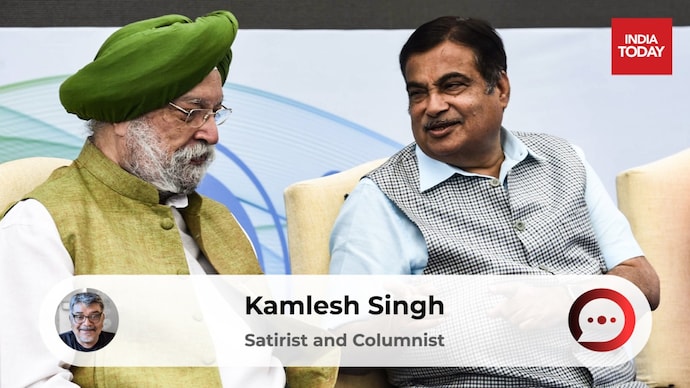
There are lies, damned lies, and ethanol statistics. Mark Twain never met the third kind because this third kind cannot stand up in court, in Parliament, or on its own two feet. Which is fitting. Ethanol is the ingredient in alcohol that makes you wobble and feel legless. Feed enough of it to a statistic and the statistic starts seeing double: double forex savings, double farmer's income, double the distance your bike never travels.
Let us breathalyse the numbers.
Claim 1: We are saving lakhs of crores in foreign exchange
The petroleum ministry says ethanol blending has saved us roughly Rs 1.4 lakh crore in forex since 2014 by cutting crude imports. Sounds sober. Now watch it wobble. To grow the maize and sugarcane that become ethanol, you need fertiliser. Urea and DAP come from natural gas and imported feedstock. Then there is energy needed to produce ethanol from the maize, rice or sugarcane. So we import hydrocarbons to grow crops to replace hydrocarbons. This is a dog chasing its tail and billing the master for mileage, not energy security.
It gets better. India bans the import of fuel ethanol to protect Indian distilleries. Very swadeshi. But India happily imports industrial ethanol, about a billion litres of it, and 90% of that comes from America. Why? Because, as the US government's own energy agency explains, imported American ethanol feeds our industries so that homegrown ethanol can be freed up for the petrol pump. We import American ethanol so that we can claim we don't import ethanol. This atmanirbharta blend is 20% imported humility and 80% national pride.
And now the coming trade deal reportedly opens the door to American maize, imported specifically to make ethanol. That will put some reliance in self-reliance.
Claim 2: Farmers are becoming urjadata
Urjadata is a lovely coinage. Here is what actually happened. The ethanol rush sent maize prices from Rs 14,500 a tonne to Rs 24,500 a tonne. Farmers cheered, briefly. Then the poultry industry, which feeds maize to your Sunday chicken, started bleeding. Egg math changed. Then farmers planted so much maize that prices crashed below the support price. Then, for the first time in years, India became a net importer of maize. A country of 140 crore people, with the world's largest cattle population and second-largest arable land, importing corn to burn in scooters. Somewhere in the afterlife, Verghese Kurien is asking for a stiff drink. Ethanol-free.
Meanwhile, the agriculture minister, whose one-point programme is doubling farmers' income, has maintained a distilled silence. Not one word on whether burning the farmer's grain doubles the farmer's income or merely doubles the distiller's.
Claim 3: We are saving the environment
The government says blending has cut 698 lakh tonnes of carbon dioxide. Impressive, until you ask what it costs to produce that saving and is carbon dioxide the problem in the first place. Sugarcane is the David Warner of crops: brilliant output, terrible economy. One litre of sugarcane ethanol drinks close to 3,000 litres of water by independent estimates. We are growing it in Marathwada, where villages queue behind tankers, so that a Fortuner in Thane can feel green at the signal. Rice, our second feedstock, is the other aquatic athlete. We are pumping Punjab's groundwater into petrol tanks. The environment ministry has examined this trade-off with the same energy it examines Delhi's November air. From a distance. With the windows up.
And the emission claim itself, while not false, is on stilts. Tailpipe emissions dip, yes. But count the diesel in the tractor, the gas in the urea, the coal in the boiler, the truck that carries ethanol because it cannot travel by pipeline, and the lifecycle ledger starts slurring its words. American researchers audited four decades of their own corn ethanol romance and found the climate math underwater. Gadkariji looked at their cautionary tale and said, hold my molasses.
Claim 4: E20 is completely safe, and anyone who says otherwise is a conspiracy
The petroleum minister sees a "coordinated controversy". The highways minister demands: name even one person whose vehicle was damaged. Wrong question, minister. Nobody's engine exploded. What exploded was the arithmetic. Ethanol carries about two-thirds the energy of petrol. Blend 20% of it, and the physics quietly picks your pocket: fewer kilometres per litre, especially in the 20 crore of older vehicles never built for E20, our new base blend. And here is the beauty of it. Ethanol was supposed to be cheaper than petrol. The consumer's fuel got diluted; the consumer's bill did not. You pay a premium price for economy fuel and burn more of it to go the same distance. This was called adulteration. Now, the roads minister calls it a roadmap.
The consumer was never asked. There is no E10 nozzle left at the pump, no discount, no alternative. Twenty per cent of your fuel tank was nationalised without a debate, and when you complained, you were told you were fearmongering. Have any one of you died? No? Then shut up and mumble Bharat Mata ki Jai.
And now, the confession
Why must blending gallop from E20 to E27 to E85 too, since one fine evening in Nagpur Mr Gadkari announced that he signed a file the previous evening at 8 pm. E100? Because we built the distilleries first and searched for reasons later. India erected roughly 17 billion litres of ethanol capacity on the promise that the mandate would only rise. Nearly half of it now sits idle, sulking. So the blend must go up, not because your Activa demands it, but because the distillery's banker does. The vehicle exists to consume the fuel that exists to rescue the investment that exists because a target existed. This is a bailout sold as energy security policy.
Look at the Cabinet, and you see the tell. The petroleum minister defends ethanol because it shrinks his import bill on paper. The highways minister champions it because alternative fuel is his 20-year-old love story, though he insists his sons' share is a saintly 0.07%. The agriculture minister, whose farmers grow the stuff, says nothing. The environment minister, whose portfolio is the alleged beneficiary, says less than nothing. When a policy's supposed winners go mute, and only its salesmen speak, you are not looking at a programme. You are looking at a pitch.
Every scam in history has had the same modus operandi: the numbers only work if you do not add them. Chit funds showed you returns, not the ledger. Ponzi showed you payouts, not the pipeline. Ethanol shows you forex saved, never forex spent; carbon cut, never carbon burnt; farmer's income raised, never clear about whether the farmer is Indian or American. Statistics with no feet, propped up at the podium, swaying gently, smelling faintly of molasses.
This whole hurried implementation of the ethanol roadmap is a cocktail: one part science, two parts subsidy, three parts silence, shaken not stirred, and served to you, the customer who never ordered it. So, say cheers, and remember, you are paying the bill.
(Kamlesh Singh, a columnist and satirist, is Tau of the popular Teen Taal podcast)
There are lies, damned lies, and ethanol statistics. Mark Twain never met the third kind because this third kind cannot stand up in court, in Parliament, or on its own two feet. Which is fitting. Ethanol is the ingredient in alcohol that makes you wobble and feel legless. Feed enough of it to a statistic and the statistic starts seeing double: double forex savings, double farmer's income, double the distance your bike never travels.
Let us breathalyse the numbers.
Claim 1: We are saving lakhs of crores in foreign exchange
The petroleum ministry says ethanol blending has saved us roughly Rs 1.4 lakh crore in forex since 2014 by cutting crude imports. Sounds sober. Now watch it wobble. To grow the maize and sugarcane that become ethanol, you need fertiliser. Urea and DAP come from natural gas and imported feedstock. Then there is energy needed to produce ethanol from the maize, rice or sugarcane. So we import hydrocarbons to grow crops to replace hydrocarbons. This is a dog chasing its tail and billing the master for mileage, not energy security.
It gets better. India bans the import of fuel ethanol to protect Indian distilleries. Very swadeshi. But India happily imports industrial ethanol, about a billion litres of it, and 90% of that comes from America. Why? Because, as the US government's own energy agency explains, imported American ethanol feeds our industries so that homegrown ethanol can be freed up for the petrol pump. We import American ethanol so that we can claim we don't import ethanol. This atmanirbharta blend is 20% imported humility and 80% national pride.
And now the coming trade deal reportedly opens the door to American maize, imported specifically to make ethanol. That will put some reliance in self-reliance.
Claim 2: Farmers are becoming urjadata
Urjadata is a lovely coinage. Here is what actually happened. The ethanol rush sent maize prices from Rs 14,500 a tonne to Rs 24,500 a tonne. Farmers cheered, briefly. Then the poultry industry, which feeds maize to your Sunday chicken, started bleeding. Egg math changed. Then farmers planted so much maize that prices crashed below the support price. Then, for the first time in years, India became a net importer of maize. A country of 140 crore people, with the world's largest cattle population and second-largest arable land, importing corn to burn in scooters. Somewhere in the afterlife, Verghese Kurien is asking for a stiff drink. Ethanol-free.
Meanwhile, the agriculture minister, whose one-point programme is doubling farmers' income, has maintained a distilled silence. Not one word on whether burning the farmer's grain doubles the farmer's income or merely doubles the distiller's.
Claim 3: We are saving the environment
The government says blending has cut 698 lakh tonnes of carbon dioxide. Impressive, until you ask what it costs to produce that saving and is carbon dioxide the problem in the first place. Sugarcane is the David Warner of crops: brilliant output, terrible economy. One litre of sugarcane ethanol drinks close to 3,000 litres of water by independent estimates. We are growing it in Marathwada, where villages queue behind tankers, so that a Fortuner in Thane can feel green at the signal. Rice, our second feedstock, is the other aquatic athlete. We are pumping Punjab's groundwater into petrol tanks. The environment ministry has examined this trade-off with the same energy it examines Delhi's November air. From a distance. With the windows up.
And the emission claim itself, while not false, is on stilts. Tailpipe emissions dip, yes. But count the diesel in the tractor, the gas in the urea, the coal in the boiler, the truck that carries ethanol because it cannot travel by pipeline, and the lifecycle ledger starts slurring its words. American researchers audited four decades of their own corn ethanol romance and found the climate math underwater. Gadkariji looked at their cautionary tale and said, hold my molasses.
Claim 4: E20 is completely safe, and anyone who says otherwise is a conspiracy
The petroleum minister sees a "coordinated controversy". The highways minister demands: name even one person whose vehicle was damaged. Wrong question, minister. Nobody's engine exploded. What exploded was the arithmetic. Ethanol carries about two-thirds the energy of petrol. Blend 20% of it, and the physics quietly picks your pocket: fewer kilometres per litre, especially in the 20 crore of older vehicles never built for E20, our new base blend. And here is the beauty of it. Ethanol was supposed to be cheaper than petrol. The consumer's fuel got diluted; the consumer's bill did not. You pay a premium price for economy fuel and burn more of it to go the same distance. This was called adulteration. Now, the roads minister calls it a roadmap.
The consumer was never asked. There is no E10 nozzle left at the pump, no discount, no alternative. Twenty per cent of your fuel tank was nationalised without a debate, and when you complained, you were told you were fearmongering. Have any one of you died? No? Then shut up and mumble Bharat Mata ki Jai.
And now, the confession
Why must blending gallop from E20 to E27 to E85 too, since one fine evening in Nagpur Mr Gadkari announced that he signed a file the previous evening at 8 pm. E100? Because we built the distilleries first and searched for reasons later. India erected roughly 17 billion litres of ethanol capacity on the promise that the mandate would only rise. Nearly half of it now sits idle, sulking. So the blend must go up, not because your Activa demands it, but because the distillery's banker does. The vehicle exists to consume the fuel that exists to rescue the investment that exists because a target existed. This is a bailout sold as energy security policy.
Look at the Cabinet, and you see the tell. The petroleum minister defends ethanol because it shrinks his import bill on paper. The highways minister champions it because alternative fuel is his 20-year-old love story, though he insists his sons' share is a saintly 0.07%. The agriculture minister, whose farmers grow the stuff, says nothing. The environment minister, whose portfolio is the alleged beneficiary, says less than nothing. When a policy's supposed winners go mute, and only its salesmen speak, you are not looking at a programme. You are looking at a pitch.
Every scam in history has had the same modus operandi: the numbers only work if you do not add them. Chit funds showed you returns, not the ledger. Ponzi showed you payouts, not the pipeline. Ethanol shows you forex saved, never forex spent; carbon cut, never carbon burnt; farmer's income raised, never clear about whether the farmer is Indian or American. Statistics with no feet, propped up at the podium, swaying gently, smelling faintly of molasses.
This whole hurried implementation of the ethanol roadmap is a cocktail: one part science, two parts subsidy, three parts silence, shaken not stirred, and served to you, the customer who never ordered it. So, say cheers, and remember, you are paying the bill.
(Kamlesh Singh, a columnist and satirist, is Tau of the popular Teen Taal podcast)

