France shut its nuclear reactors as rivers boiled. Is India next?
France switched off three nuclear reactors and cut output at several more this week, after rivers meant to cool them grew too warm to use safely. India's coastal and inland reactors face a different risk.
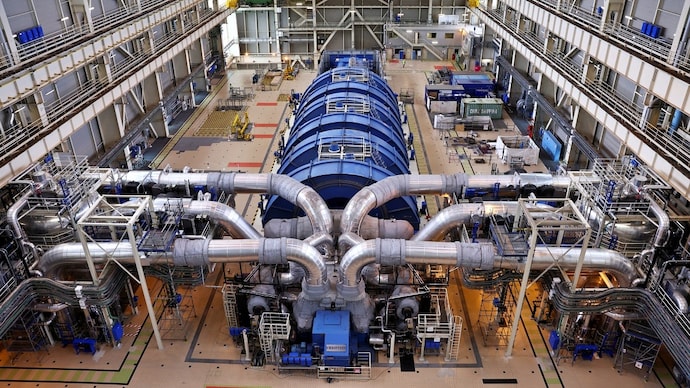
Somewhere on the banks of the Garonne, the Rhone and the Meuse, three French nuclear reactors have gone quiet this week. Nothing broke inside them and there was no safety scare.
They were switched off deliberately, because the rivers meant to cool them had grown too warm to touch.
State energy giant EDF shut down three nuclear power units at the Golfech, Bugey and Chooz plants, while trimming output at eight more, taking roughly 6.3 gigawatts of nuclear capacity offline or below normal. That is enough electricity to power several Indian cities.
The trigger was not the reactor core. It was the heatwave that's been scorching Western Europe for several days now, and an unwritten law of thermodynamics: a nuclear plant lives or dies by its cooling water.
WHY DO NUCLEAR REACTORS NEED SO MUCH COOLING WATER?
A nuclear reactor is, at its heart, a very elaborate kettle. Splitting uranium atoms inside the core, a process called nuclear fission, releases heat. That heat boils water into high-pressure steam, and the steam spins a turbine connected to a generator, producing electricity.
Once the steam has done its job, it must be turned back into water, so that the cycle can repeat. This happens inside a condenser, a giant heat exchanger where cool water absorbs the leftover warmth from the spent steam.
That cool water has to come from somewhere, and in most of the world, it comes from a nearby river, lake or sea.
Plants that draw water in, use it once to cool the condenser, and discharge it back into the source, warmer than before, are called once-through cooling systems. Others use cooling towers, where water is recirculated and the heat is released into the air through evaporation instead of being dumped back into a water body.
WHY DOES A HOT RIVER FORCE A REACTOR TO SLOW DOWN?
Heat transfer depends on the difference in temperature between two things, in this case, the steam and the incoming river water. When the river itself is already hot from weeks of blistering weather, that difference shrinks, and the condenser cannot shed heat as efficiently. Turbine performance drops, and so does the electricity the plant can produce.
But the bigger problem is what happens after. French law forbids discharging cooling water if doing so pushes the river beyond a strict temperature ceiling, generally around 28 degrees Celsius. Cross that line, and dissolved oxygen levels in the water plummet, fish die, and toxic algal blooms take hold.
So when a heatwave anway brings the Garonne or the Rhone near their limits, the EDF has one option left: turn the reactors down, or off, to protect the river rather than the grid.
The reactor was never the danger here. It is the river that needs protecting.
COULD INDIA'S NUCLEAR REACTORS FACE THE SAME FATE?
India has just lived through its own punishing heatwaves, with electricity demand crossing 270 gigawatts. It would be reasonable to assume Indian reactors are one bad summer away from a similar shutdown.
They are not, and the reason lies in where India chose to build them.
WHY ARE INDIA'S COASTAL REACTORS SAFER?
A large share of India's nuclear capacity, including the Kudankulam plant in Tamil Nadu, the Tarapur station in Maharashtra and the Kalpakkam facility, also in Tamil Nadu, draws its cooling water directly from the sea.
The ocean carries an enormous thermal mass compared to a river.
A heatwave that can push a shallow, slow-moving river several degrees warmer within days barely nudges the sea.
There is no equivalent of France's 28-degree discharge crisis waiting to happen along India's coastline, because the sea simply does not heat up or cool down that quickly.
DO INDIA'S INLAND REACTORS FACE ANY RISK?
India does have inland nuclear stations too, at Rawatbhata in Rajasthan, Narora in Uttar Pradesh and Kakrapar in Gujarat.
On paper, these look like the plants most similar to France's river-cooled reactors.
In practice, engineers accounted for India's tropical heat from the start. Instead of relying on once-through river cooling, these plants use large natural draft cooling towers, releasing waste heat into the atmosphere through evaporation rather than discharging hot water straight back into a riverbed.
Because almost nothing scalding goes back into the river, these plants are not bound by the same strict thermal-discharge rules that forced EDF's hand in France, and heatwaves alone are unlikely to trigger a comparable shutdown here.
WHAT IS INDIA'S REAL VULNERABILITY THEN?
Cooling towers are not free of risk, though. They still need a steady supply of makeup water to replace what evaporates. If a heatwave arrives alongside a severe drought, and the reservoir or river feeding the cooling towers runs critically low, output still has to be cut. The water hasn't turned dangerous. It has simply run out.
India has already seen this play out at coal and gas-fired thermal power stations during past droughts, when dried-up water bodies forced generation curtailments.
That is the more realistic climate threat facing India's inland nuclear fleet. France worries about a river too warm to touch. India should worry about a reservoir running dry.
France's crisis this week is a lesson in thermodynamics and environmental law colliding under climate stress.
India's engineering choices, seawater cooling on the coast and cooling towers inland, largely spare it from that particular dilemma.
But as heatwaves grow longer and monsoons grow less predictable, keeping India's reactors running may increasingly depend on something far simpler than nuclear physics: managing the country's freshwater wisely.
Somewhere on the banks of the Garonne, the Rhone and the Meuse, three French nuclear reactors have gone quiet this week. Nothing broke inside them and there was no safety scare.
They were switched off deliberately, because the rivers meant to cool them had grown too warm to touch.
State energy giant EDF shut down three nuclear power units at the Golfech, Bugey and Chooz plants, while trimming output at eight more, taking roughly 6.3 gigawatts of nuclear capacity offline or below normal. That is enough electricity to power several Indian cities.
The trigger was not the reactor core. It was the heatwave that's been scorching Western Europe for several days now, and an unwritten law of thermodynamics: a nuclear plant lives or dies by its cooling water.
WHY DO NUCLEAR REACTORS NEED SO MUCH COOLING WATER?
A nuclear reactor is, at its heart, a very elaborate kettle. Splitting uranium atoms inside the core, a process called nuclear fission, releases heat. That heat boils water into high-pressure steam, and the steam spins a turbine connected to a generator, producing electricity.
Once the steam has done its job, it must be turned back into water, so that the cycle can repeat. This happens inside a condenser, a giant heat exchanger where cool water absorbs the leftover warmth from the spent steam.
That cool water has to come from somewhere, and in most of the world, it comes from a nearby river, lake or sea.
Plants that draw water in, use it once to cool the condenser, and discharge it back into the source, warmer than before, are called once-through cooling systems. Others use cooling towers, where water is recirculated and the heat is released into the air through evaporation instead of being dumped back into a water body.
WHY DOES A HOT RIVER FORCE A REACTOR TO SLOW DOWN?
Heat transfer depends on the difference in temperature between two things, in this case, the steam and the incoming river water. When the river itself is already hot from weeks of blistering weather, that difference shrinks, and the condenser cannot shed heat as efficiently. Turbine performance drops, and so does the electricity the plant can produce.
But the bigger problem is what happens after. French law forbids discharging cooling water if doing so pushes the river beyond a strict temperature ceiling, generally around 28 degrees Celsius. Cross that line, and dissolved oxygen levels in the water plummet, fish die, and toxic algal blooms take hold.
So when a heatwave anway brings the Garonne or the Rhone near their limits, the EDF has one option left: turn the reactors down, or off, to protect the river rather than the grid.
The reactor was never the danger here. It is the river that needs protecting.
COULD INDIA'S NUCLEAR REACTORS FACE THE SAME FATE?
India has just lived through its own punishing heatwaves, with electricity demand crossing 270 gigawatts. It would be reasonable to assume Indian reactors are one bad summer away from a similar shutdown.
They are not, and the reason lies in where India chose to build them.
WHY ARE INDIA'S COASTAL REACTORS SAFER?
A large share of India's nuclear capacity, including the Kudankulam plant in Tamil Nadu, the Tarapur station in Maharashtra and the Kalpakkam facility, also in Tamil Nadu, draws its cooling water directly from the sea.
The ocean carries an enormous thermal mass compared to a river.
A heatwave that can push a shallow, slow-moving river several degrees warmer within days barely nudges the sea.
There is no equivalent of France's 28-degree discharge crisis waiting to happen along India's coastline, because the sea simply does not heat up or cool down that quickly.
DO INDIA'S INLAND REACTORS FACE ANY RISK?
India does have inland nuclear stations too, at Rawatbhata in Rajasthan, Narora in Uttar Pradesh and Kakrapar in Gujarat.
On paper, these look like the plants most similar to France's river-cooled reactors.
In practice, engineers accounted for India's tropical heat from the start. Instead of relying on once-through river cooling, these plants use large natural draft cooling towers, releasing waste heat into the atmosphere through evaporation rather than discharging hot water straight back into a riverbed.
Because almost nothing scalding goes back into the river, these plants are not bound by the same strict thermal-discharge rules that forced EDF's hand in France, and heatwaves alone are unlikely to trigger a comparable shutdown here.
WHAT IS INDIA'S REAL VULNERABILITY THEN?
Cooling towers are not free of risk, though. They still need a steady supply of makeup water to replace what evaporates. If a heatwave arrives alongside a severe drought, and the reservoir or river feeding the cooling towers runs critically low, output still has to be cut. The water hasn't turned dangerous. It has simply run out.
India has already seen this play out at coal and gas-fired thermal power stations during past droughts, when dried-up water bodies forced generation curtailments.
That is the more realistic climate threat facing India's inland nuclear fleet. France worries about a river too warm to touch. India should worry about a reservoir running dry.
France's crisis this week is a lesson in thermodynamics and environmental law colliding under climate stress.
India's engineering choices, seawater cooling on the coast and cooling towers inland, largely spare it from that particular dilemma.
But as heatwaves grow longer and monsoons grow less predictable, keeping India's reactors running may increasingly depend on something far simpler than nuclear physics: managing the country's freshwater wisely.

