Great Indian Bustard gets jump start, chick survives critical 40 days after birth
A Gujarat-born Great Indian Bustard chick has survived beyond 40 days, shining a light on a conservation technique that could help revive one of India's most endangered bird species. What is it?
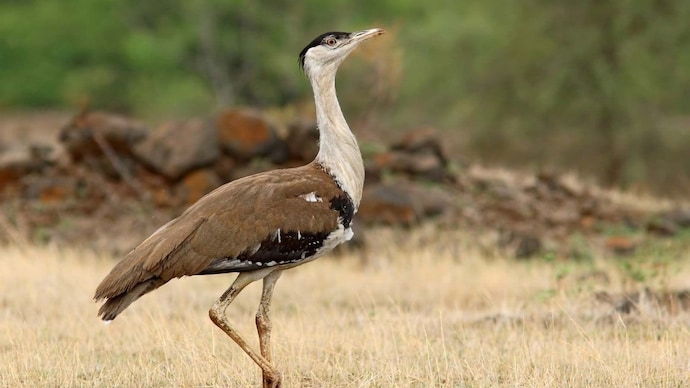
A second Great Indian Bustard chick born in Gujarat's Kutch district through the 'jumpstart' conservation technique has crossed the critical 40-day survival stage, Union Environment Minister Bhupender Yadav said on Thursday, describing it as a major boost to efforts to revive the critically endangered bird species.
The jumpstart technique is a conservation strategy where an infertile egg in a wild Great Indian Bustard's nest is replaced with a fertile, captive-bred egg.
This allows the wild mother to naturally incubate, hatch, and raise the chick, drastically improving the critically endangered species' chances of survival in its native habitat.
Yadav shared the update after reviewing the progress of Project Great Indian Bustard during the 91st meeting of the Standing Committee of the National Board for Wildlife in Coimbatore.
"It is heartening to know that the second 'jumpstart' attempt executed in Naliya (Kutch district), Gujarat has succeeded and the chick born on May 21, 2026 has passed the critical stage of around 40 days of survival," the minister said in a post on X.
The development comes nearly three months after the first Great Indian Bustard chick born in Gujarat through the same method went missing in April, with forest officials fearing that it had fallen prey to wild predators.
The first chick had hatched in the Naliya grasslands on March 26 after a fertilised egg was transported around 770 km by road from Rajasthan to Gujarat under the country's first interstate jumpstart initiative for the species.
The project was launched because only three female birds of the species are believed to survive in the grasslands of Kutch, leaving virtually no possibility of natural breeding in the wild.
According to Yadav, the captive breeding programme has also made progress in Rajasthan.
"Besides this, the total number of chicks born in captivity in Rajasthan at Sam and Ramdevra have reached 98," he added.
"The project will soon be entering the rewilding phase for which efforts are on. The team of the Wildlife Institute of India and state forest departments of Rajasthan and Gujarat are leaving no stone unturned to make the project successful."
The Great Indian Bustard is listed as critically endangered, and its remaining population is largely confined to Rajasthan, with only a handful of birds surviving in Gujarat's Kutch region.
The latest survival milestone in Gujarat, along with progress in captive breeding in Rajasthan, marks the next stage of Project Great Indian Bustard.
A second Great Indian Bustard chick born in Gujarat's Kutch district through the 'jumpstart' conservation technique has crossed the critical 40-day survival stage, Union Environment Minister Bhupender Yadav said on Thursday, describing it as a major boost to efforts to revive the critically endangered bird species.
The jumpstart technique is a conservation strategy where an infertile egg in a wild Great Indian Bustard's nest is replaced with a fertile, captive-bred egg.
This allows the wild mother to naturally incubate, hatch, and raise the chick, drastically improving the critically endangered species' chances of survival in its native habitat.
Yadav shared the update after reviewing the progress of Project Great Indian Bustard during the 91st meeting of the Standing Committee of the National Board for Wildlife in Coimbatore.
"It is heartening to know that the second 'jumpstart' attempt executed in Naliya (Kutch district), Gujarat has succeeded and the chick born on May 21, 2026 has passed the critical stage of around 40 days of survival," the minister said in a post on X.
The development comes nearly three months after the first Great Indian Bustard chick born in Gujarat through the same method went missing in April, with forest officials fearing that it had fallen prey to wild predators.
The first chick had hatched in the Naliya grasslands on March 26 after a fertilised egg was transported around 770 km by road from Rajasthan to Gujarat under the country's first interstate jumpstart initiative for the species.
The project was launched because only three female birds of the species are believed to survive in the grasslands of Kutch, leaving virtually no possibility of natural breeding in the wild.
According to Yadav, the captive breeding programme has also made progress in Rajasthan.
"Besides this, the total number of chicks born in captivity in Rajasthan at Sam and Ramdevra have reached 98," he added.
"The project will soon be entering the rewilding phase for which efforts are on. The team of the Wildlife Institute of India and state forest departments of Rajasthan and Gujarat are leaving no stone unturned to make the project successful."
The Great Indian Bustard is listed as critically endangered, and its remaining population is largely confined to Rajasthan, with only a handful of birds surviving in Gujarat's Kutch region.
The latest survival milestone in Gujarat, along with progress in captive breeding in Rajasthan, marks the next stage of Project Great Indian Bustard.

