Meet Likweli, the orange-lipped monkey newly discovered in Congo
Scientists have discovered a new monkey species in the Congo rainforest, a small black colobus with striking orange lips called Likweli. Known as Colobus congoensis, it is only the fifth new monkey found in Africa in 75 years.
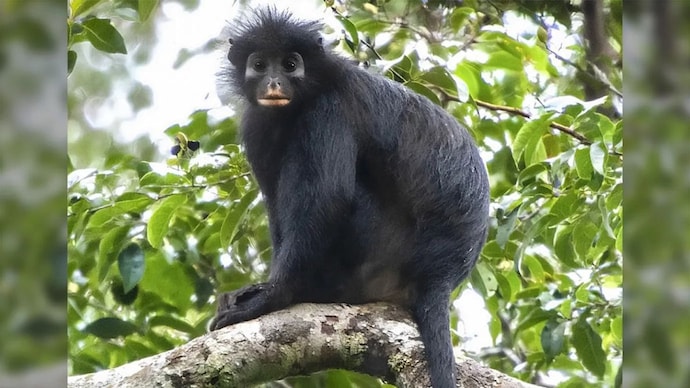
Deep in the rainforests of the Democratic Republic of the Congo, a small black monkey with bright orange lips has been living quietly in the treetops, known to some local communities but, until now, unrecognised by science as a distinct species.
Scientists have finally given it a name: Colobus congoensis. Local communities call it Likweli.
Described in the journal PLOS One on July 15, 2026, it is only the fifth new species of monkey discovered in Africa in the past 75 years.
WHAT DOES THE LIKWELI MONKEY LOOK LIKE?
Likweli is a colobus, a leaf-eating monkey that lives high in the forest canopy.
It is small, weighing about seven kilograms, with glossy black fur, a long sweeping tail and a cape of longer hair over its shoulders.
Its most striking feature is a vivid orange-cream patch around the mouth and nose, set against a black, mask-like face.
A neat white patch sits near the tail, and spiky black hairs frame its dark eyes, giving it a permanently unimpressed expression.
WHERE WAS THE NEW MONKEY DISCOVERED?
Likweli lives in Lomami National Park, between the Lomami and upper Congo rivers in the centre of the country. It was first photographed by accident in 2008, but nobody realised what it was.
Only in 2018, when a park ranger caught it on camera again and noticed its odd markings, did researchers begin to investigate. Strangely, the animal was a mystery to locals too. Of 52 villages surveyed near its range, only eight could describe it accurately.
HOW DO SCIENTISTS KNOW IT IS A NEW SPECIES?
Three separate clues agreed. Its skull, teeth and skeleton differ from every other African colobus. Its deep, roaring call is its own. And its DNA tells the clearest story.
Researchers examined its mitochondrial DNA, the genetic material passed down the mother's line that scientists use to measure how closely animals are related.
Likweli's nearest cousin turned out to be the black colobus, which lives more than 1,200 kilometres away.
The two split from a shared ancestor roughly five million years ago, the deepest divide in the whole colobus family.
IS LIKWELI ENDANGERED?
Almost certainly. Between 2018 and 2022, scientists recorded just 114 sightings across a range of about 1,700 square kilometres. Some colobus species roam areas more than 30 times larger.
Likweli moves in small groups of around six, often travelling alongside other monkeys.
With such a tiny home, and with hunting and shrinking forest closing in, the team has recommended that Likweli be listed as endangered.
It is a quiet reminder that in the world's second-largest rainforest, nature still keeps secrets, and some are running out of time.
Deep in the rainforests of the Democratic Republic of the Congo, a small black monkey with bright orange lips has been living quietly in the treetops, known to some local communities but, until now, unrecognised by science as a distinct species.
Scientists have finally given it a name: Colobus congoensis. Local communities call it Likweli.
Described in the journal PLOS One on July 15, 2026, it is only the fifth new species of monkey discovered in Africa in the past 75 years.
WHAT DOES THE LIKWELI MONKEY LOOK LIKE?
Likweli is a colobus, a leaf-eating monkey that lives high in the forest canopy.
It is small, weighing about seven kilograms, with glossy black fur, a long sweeping tail and a cape of longer hair over its shoulders.
Its most striking feature is a vivid orange-cream patch around the mouth and nose, set against a black, mask-like face.
A neat white patch sits near the tail, and spiky black hairs frame its dark eyes, giving it a permanently unimpressed expression.
WHERE WAS THE NEW MONKEY DISCOVERED?
Likweli lives in Lomami National Park, between the Lomami and upper Congo rivers in the centre of the country. It was first photographed by accident in 2008, but nobody realised what it was.
Only in 2018, when a park ranger caught it on camera again and noticed its odd markings, did researchers begin to investigate. Strangely, the animal was a mystery to locals too. Of 52 villages surveyed near its range, only eight could describe it accurately.
HOW DO SCIENTISTS KNOW IT IS A NEW SPECIES?
Three separate clues agreed. Its skull, teeth and skeleton differ from every other African colobus. Its deep, roaring call is its own. And its DNA tells the clearest story.
Researchers examined its mitochondrial DNA, the genetic material passed down the mother's line that scientists use to measure how closely animals are related.
Likweli's nearest cousin turned out to be the black colobus, which lives more than 1,200 kilometres away.
The two split from a shared ancestor roughly five million years ago, the deepest divide in the whole colobus family.
IS LIKWELI ENDANGERED?
Almost certainly. Between 2018 and 2022, scientists recorded just 114 sightings across a range of about 1,700 square kilometres. Some colobus species roam areas more than 30 times larger.
Likweli moves in small groups of around six, often travelling alongside other monkeys.
With such a tiny home, and with hunting and shrinking forest closing in, the team has recommended that Likweli be listed as endangered.
It is a quiet reminder that in the world's second-largest rainforest, nature still keeps secrets, and some are running out of time.
Deep in the rainforests of the Democratic Republic of the Congo, a small black monkey with bright orange lips has been living quietly in the treetops, known to some local communities but, until now, unrecognised by science as a distinct species.
Scientists have finally given it a name: Colobus congoensis. Local communities call it Likweli.
Described in the journal PLOS One on July 15, 2026, it is only the fifth new species of monkey discovered in Africa in the past 75 years.
WHAT DOES THE LIKWELI MONKEY LOOK LIKE?
Likweli is a colobus, a leaf-eating monkey that lives high in the forest canopy.
It is small, weighing about seven kilograms, with glossy black fur, a long sweeping tail and a cape of longer hair over its shoulders.
Its most striking feature is a vivid orange-cream patch around the mouth and nose, set against a black, mask-like face.
A neat white patch sits near the tail, and spiky black hairs frame its dark eyes, giving it a permanently unimpressed expression.
WHERE WAS THE NEW MONKEY DISCOVERED?
Likweli lives in Lomami National Park, between the Lomami and upper Congo rivers in the centre of the country. It was first photographed by accident in 2008, but nobody realised what it was.
Only in 2018, when a park ranger caught it on camera again and noticed its odd markings, did researchers begin to investigate. Strangely, the animal was a mystery to locals too. Of 52 villages surveyed near its range, only eight could describe it accurately.
HOW DO SCIENTISTS KNOW IT IS A NEW SPECIES?
Three separate clues agreed. Its skull, teeth and skeleton differ from every other African colobus. Its deep, roaring call is its own. And its DNA tells the clearest story.
Researchers examined its mitochondrial DNA, the genetic material passed down the mother's line that scientists use to measure how closely animals are related.
Likweli's nearest cousin turned out to be the black colobus, which lives more than 1,200 kilometres away.
The two split from a shared ancestor roughly five million years ago, the deepest divide in the whole colobus family.
IS LIKWELI ENDANGERED?
Almost certainly. Between 2018 and 2022, scientists recorded just 114 sightings across a range of about 1,700 square kilometres. Some colobus species roam areas more than 30 times larger.
Likweli moves in small groups of around six, often travelling alongside other monkeys.
With such a tiny home, and with hunting and shrinking forest closing in, the team has recommended that Likweli be listed as endangered.
It is a quiet reminder that in the world's second-largest rainforest, nature still keeps secrets, and some are running out of time.

