Watch LIVE: Indian-origin astronaut Anil Menon to launch on eight-month mission
Nasa astronaut Anil Menon is launching on an eight-month International Space Station mission to carry out medical and technology experiments.
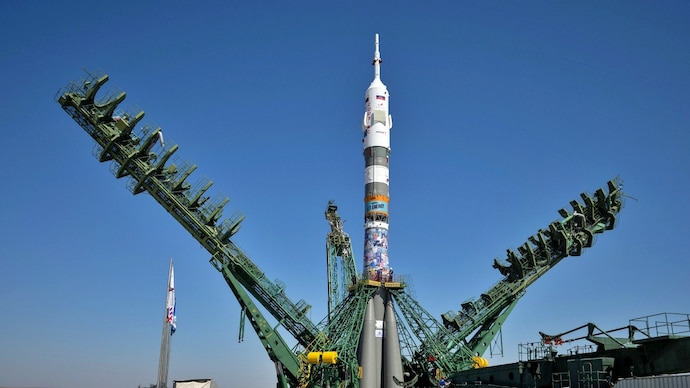
Nasa astronaut Anil Menon is set to embark on an eight-month mission aboard the International Space Station (ISS) tonight, where he will conduct a series of cutting-edge scientific experiments aimed at preparing humanity for future deep-space exploration while advancing technologies that could benefit life on Earth.
A physician specializing in emergency medicine and aerospace medicine, Menon will serve not only as a researcher but also as a test subject during the long-duration mission.
WATCH ASTRONAUT ANIL MENON LAUNCH TO SPACE LIVE HERE
His stay in microgravity is expected to generate valuable data on how extended spaceflight affects the human body, knowledge that will be crucial as Nasa and its international partners prepare for missions to the Moon and Mars.
One of the mission's key investigations will involve AI-assisted ultrasound scanning, a technology designed to help astronauts perform complex medical examinations in space with limited support from doctors on Earth.
The system could eventually become an essential tool for diagnosing medical conditions during deep-space missions where communication delays make real-time guidance impossible.
Menon will also participate in experiments aimed at manufacturing high-quality semiconductors in microgravity. Scientists believe the weightless environment of space could enable the production of more uniform and defect-free semiconductor materials, paving the way for next-generation components used in high-performance computers, advanced electronics and communications systems on Earth.
Human physiology will remain a major focus throughout the expedition. Menon will take part in multiple studies investigating how prolonged exposure to weightlessness alters blood flow, cardiovascular function and overall health. Understanding these changes will help researchers develop better countermeasures to protect astronauts during future long-duration missions beyond low-Earth orbit.
Another major experiment will explore bioprinting in space, where researchers hope microgravity can improve the fabrication of complex biological tissues.
The findings could deepen scientific understanding of the aging process and support the development of new therapies for age-related diseases and regenerative medicine.
Menon's unique background makes him particularly suited for the mission. Before joining Nasa's astronaut corps, he worked as a flight surgeon supporting astronauts and commercial space missions, combining expertise in emergency medicine with years of aerospace medical experience.
Over the next eight months, the data collected from his mission will contribute to Nasa's broader efforts to make human spaceflight safer and more sustainable.
The findings are expected to play a critical role in planning future expeditions to the Moon under the Artemis programme and, eventually, the first human missions to Mars.
Nasa astronaut Anil Menon is set to embark on an eight-month mission aboard the International Space Station (ISS) tonight, where he will conduct a series of cutting-edge scientific experiments aimed at preparing humanity for future deep-space exploration while advancing technologies that could benefit life on Earth.
A physician specializing in emergency medicine and aerospace medicine, Menon will serve not only as a researcher but also as a test subject during the long-duration mission.
WATCH ASTRONAUT ANIL MENON LAUNCH TO SPACE LIVE HERE
His stay in microgravity is expected to generate valuable data on how extended spaceflight affects the human body, knowledge that will be crucial as Nasa and its international partners prepare for missions to the Moon and Mars.
One of the mission's key investigations will involve AI-assisted ultrasound scanning, a technology designed to help astronauts perform complex medical examinations in space with limited support from doctors on Earth.
The system could eventually become an essential tool for diagnosing medical conditions during deep-space missions where communication delays make real-time guidance impossible.
Menon will also participate in experiments aimed at manufacturing high-quality semiconductors in microgravity. Scientists believe the weightless environment of space could enable the production of more uniform and defect-free semiconductor materials, paving the way for next-generation components used in high-performance computers, advanced electronics and communications systems on Earth.
Human physiology will remain a major focus throughout the expedition. Menon will take part in multiple studies investigating how prolonged exposure to weightlessness alters blood flow, cardiovascular function and overall health. Understanding these changes will help researchers develop better countermeasures to protect astronauts during future long-duration missions beyond low-Earth orbit.
Another major experiment will explore bioprinting in space, where researchers hope microgravity can improve the fabrication of complex biological tissues.
The findings could deepen scientific understanding of the aging process and support the development of new therapies for age-related diseases and regenerative medicine.
Menon's unique background makes him particularly suited for the mission. Before joining Nasa's astronaut corps, he worked as a flight surgeon supporting astronauts and commercial space missions, combining expertise in emergency medicine with years of aerospace medical experience.
Over the next eight months, the data collected from his mission will contribute to Nasa's broader efforts to make human spaceflight safer and more sustainable.
The findings are expected to play a critical role in planning future expeditions to the Moon under the Artemis programme and, eventually, the first human missions to Mars.

