8 protesters killed in Pakistan Rangers' firing in PoK ahead of Muzaffarabad march
Ahead of a planned mass march to Muzaffarabad, Pakistani authorities launched a crackdown across PoK, using tear gas and live fire to disperse protesters, with fresh firing also reported in Sudhanoti.
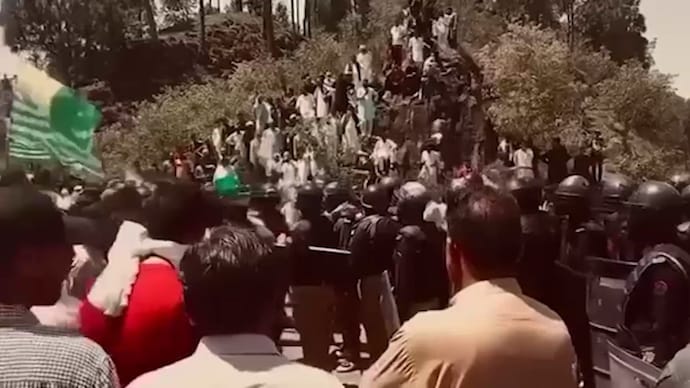
At least eight people were killed after Pakistani Rangers opened fire on protesters in Pakistan-occupied Kashmir on Monday, escalating tensions ahead of a planned mass march to Muzaffarabad on July 15. According to local reports, Rangers fired tear gas shells and live rounds at demonstrators gathered at the Rawalakot bus stand, where a large number of women had assembled.
Fresh firing was also reported from Sudhanoti as security forces attempted to disperse protesters. The crackdown comes on the eve of what organisers have described as a decisive showdown in the regional capital, with hundreds of thousands expected to participate in the march.
The latest crackdown unfolded across multiple parts of PoK as Pakistani authorities moved to prevent protesters from marching towards Muzaffarabad. Visuals from Rawalakot showed Pakistani Rangers firing tear gas shells to disperse large crowds before opening fire as protesters continued to advance.
Thick clouds of tear gas engulfed the area while civilians, including women, ran for safety. Several protesters were seen carrying injured people away from the clashes even as security personnel continued their operation.
Firing was also reported from Sudhanoti, indicating that the crackdown was not confined to a single location.
The violence marks the latest escalation in an anti-government movement that has steadily gathered momentum across Pakistan-occupied Kashmir over the past several weeks.
Thousands of people have been participating in demonstrations across Rawalakot, Muzaffarabad, Bagh, Kotli, Mirpur, Hattian Bala and other districts.
MASS MARCH TO MUZAFFARABAD
Protesters have maintained sit-ins for weeks near the Line of Control (LoC) while mobilising supporters from across the region for what organisers describe as a decisive march to Muzaffarabad to press their 38-point charter of demands.
The demands include subsidised electricity and wheat, employment opportunities, better governance, political representation and an end to what they call administrative oppression.
Led by the Joint Awami Action Committee (JAAC), the protests initially began over soaring electricity tariffs, rising wheat prices and shortages of essential commodities.
However, the agitation has since transformed into a broader campaign against what demonstrators describe as decades of political discrimination, economic exploitation and denial of basic rights by Islamabad.
'PoK NOT PART OF PAKISTAN' CALL
Earlier this month, one of the largest demonstrations was held at Rawalakot's Eidgah Ground, where JAAC leader Sardar Aman Khan openly declared that "PoK is not part of Pakistan" and accused Islamabad of exploiting the region while denying its residents their rights.
He also alleged that Pakistani authorities were attempting to weaken the movement by blocking food supplies and restricting the movement of essential commodities.
Protesters have repeatedly warned that continued repression could push the region towards a deeper political confrontation.
Rather than opening negotiations, Pakistani authorities have intensified their response by banning the JAAC under anti-terrorism laws, filing criminal cases against protest leaders, suspending internet services in several areas and erecting roadblocks to prevent demonstrators from reaching Muzaffarabad.
Protest leaders have also alleged that activists have been detained, and excessive force has been used against unarmed civilians participating in peaceful demonstrations.
NEW DELHI SLAMS ISLAMABAD
India has strongly criticised Pakistan's handling of the unrest, saying the protests are the consequence of decades of "systemic exploitation, denial of fundamental rights and administrative oppression" in territories under Pakistan's illegal occupation.
The Ministry of External Affairs has accused Islamabad of responding to legitimate grievances with police brutality, internet blackouts, restrictions on food and medicine, and lethal force against civilians.
New Delhi has also urged the international community to hold Pakistan accountable for alleged human rights violations in the region.
With fresh deaths reported just hours before the planned Muzaffarabad march, PoK remains on edge. Organisers have vowed to press ahead with the mobilisation despite the crackdown, setting the stage for a potentially larger confrontation between protesters and Pakistani security forces as the region's political unrest enters a critical phase.
At least eight people were killed after Pakistani Rangers opened fire on protesters in Pakistan-occupied Kashmir on Monday, escalating tensions ahead of a planned mass march to Muzaffarabad on July 15. According to local reports, Rangers fired tear gas shells and live rounds at demonstrators gathered at the Rawalakot bus stand, where a large number of women had assembled.
Fresh firing was also reported from Sudhanoti as security forces attempted to disperse protesters. The crackdown comes on the eve of what organisers have described as a decisive showdown in the regional capital, with hundreds of thousands expected to participate in the march.
The latest crackdown unfolded across multiple parts of PoK as Pakistani authorities moved to prevent protesters from marching towards Muzaffarabad. Visuals from Rawalakot showed Pakistani Rangers firing tear gas shells to disperse large crowds before opening fire as protesters continued to advance.
Thick clouds of tear gas engulfed the area while civilians, including women, ran for safety. Several protesters were seen carrying injured people away from the clashes even as security personnel continued their operation.
Firing was also reported from Sudhanoti, indicating that the crackdown was not confined to a single location.
The violence marks the latest escalation in an anti-government movement that has steadily gathered momentum across Pakistan-occupied Kashmir over the past several weeks.
Thousands of people have been participating in demonstrations across Rawalakot, Muzaffarabad, Bagh, Kotli, Mirpur, Hattian Bala and other districts.
MASS MARCH TO MUZAFFARABAD
Protesters have maintained sit-ins for weeks near the Line of Control (LoC) while mobilising supporters from across the region for what organisers describe as a decisive march to Muzaffarabad to press their 38-point charter of demands.
The demands include subsidised electricity and wheat, employment opportunities, better governance, political representation and an end to what they call administrative oppression.
Led by the Joint Awami Action Committee (JAAC), the protests initially began over soaring electricity tariffs, rising wheat prices and shortages of essential commodities.
However, the agitation has since transformed into a broader campaign against what demonstrators describe as decades of political discrimination, economic exploitation and denial of basic rights by Islamabad.
'PoK NOT PART OF PAKISTAN' CALL
Earlier this month, one of the largest demonstrations was held at Rawalakot's Eidgah Ground, where JAAC leader Sardar Aman Khan openly declared that "PoK is not part of Pakistan" and accused Islamabad of exploiting the region while denying its residents their rights.
He also alleged that Pakistani authorities were attempting to weaken the movement by blocking food supplies and restricting the movement of essential commodities.
Protesters have repeatedly warned that continued repression could push the region towards a deeper political confrontation.
Rather than opening negotiations, Pakistani authorities have intensified their response by banning the JAAC under anti-terrorism laws, filing criminal cases against protest leaders, suspending internet services in several areas and erecting roadblocks to prevent demonstrators from reaching Muzaffarabad.
Protest leaders have also alleged that activists have been detained, and excessive force has been used against unarmed civilians participating in peaceful demonstrations.
NEW DELHI SLAMS ISLAMABAD
India has strongly criticised Pakistan's handling of the unrest, saying the protests are the consequence of decades of "systemic exploitation, denial of fundamental rights and administrative oppression" in territories under Pakistan's illegal occupation.
The Ministry of External Affairs has accused Islamabad of responding to legitimate grievances with police brutality, internet blackouts, restrictions on food and medicine, and lethal force against civilians.
New Delhi has also urged the international community to hold Pakistan accountable for alleged human rights violations in the region.
With fresh deaths reported just hours before the planned Muzaffarabad march, PoK remains on edge. Organisers have vowed to press ahead with the mobilisation despite the crackdown, setting the stage for a potentially larger confrontation between protesters and Pakistani security forces as the region's political unrest enters a critical phase.

