Sharmila Dhankar, once victim of domestic abuse, now has a CWG gold
Sharmila Dhankar's CWG gold is more than a sporting milestone. It is the story of a woman who overcame childhood polio and domestic abuse to rewrite her life through para athletics.
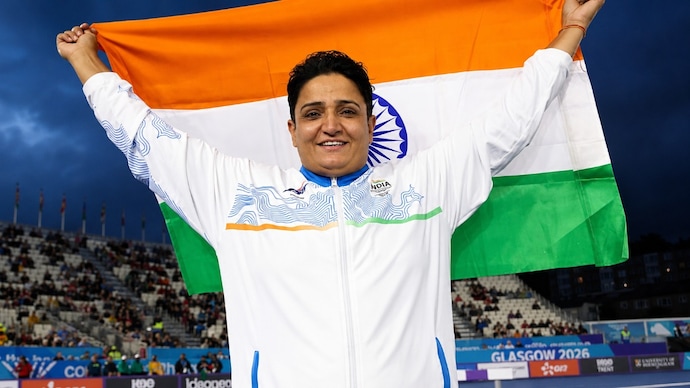
The day Sharmila Dhankar won India's first-ever Commonwealth Games gold medal in para athletics, she remembered another day she could never forget. Fourteen years earlier, she had been stripped naked and thrown out of her home with her two daughters. On Monday night in Glasgow, the 40-year-old completed one of Indian sport's most remarkable journeys with a season-best throw of 9.81m in the women's Shot Put F57 final.
Dhankar's gold ended India's 20-year wait for a Commonwealth Games para athletics gold and marked the biggest achievement of her career. Speaking to The Indian Express minutes after her victory, the Haryana athlete said she hoped her story would encourage women trapped in abusive relationships to fight back.
Commonwealth Games 2026, Day 5: Highlights
"Mere ko nangi kar ke meri betiyon ke sath sadak pe faink diya tha mere pehle husband ne. (My first husband stripped me naked and threw me and my daughters out of the house.) My neighbours wrapped me in a quilt and my parents took us away. I was married at 19; he was a drug addict, and things only got worse after my second daughter was born. As I hold this gold medal in Glasgow, my message to every woman and daughter in India is to fight back against abuse."
Born in Chhithroli village in Haryana, Sharmila's left leg was affected by polio when she was just two years old. She was married at a young age and endured years of domestic abuse before returning to her family with her two children. Her life changed after she remarried Ajit Singh, who introduced her to para athletics in 2020 under coach Tek Chand. Within a year, she became national champion and steadily established herself among India's leading F57 throwers, winning gold at this year's Fazza International Para Athletics Championship before arriving in Glasgow.
Her triumph was about much more than ending India's medal drought. It was the culmination of a journey that saw her battle childhood polio, survive domestic abuse, rebuild her life after divorce and discover para athletics only in her thirties.
"I'd never played any sport. And with my handicap, I couldn't even run. I was also 34 years old. I was going to start at an age where everyone else was ending their career. Despite all this, my husband was very insistent that we explore the idea."
Dhankar delivered under pressure in Glasgow, producing six throws beyond the 9m mark, with her third-round effort of 9.81m securing the gold medal. It was her season's best performance and came after years of near misses, having finished fourth at the Birmingham Commonwealth Games and endured disappointing campaigns at the Asian Para Games and World Para Athletics Championships. India also celebrated a double podium in the event as Shilpa K Shyla claimed bronze.
FROM HELL TO A SECOND CHANCE
Born in Chithhrauli village in Haryana, Sharmila contracted polio at the age of two, leaving her with an impaired left leg. She married young, but years of abuse eventually culminated in the traumatic day she was thrown out of her home with her daughters.
Her parents, Jai Lal and Santosh, took her back home and helped her rebuild her life. Six years later, she married Ajit Singh, a submersible pump technician, who would become the biggest driving force behind her sporting career.
"All I asked of Ajit, when his proposal came, was that he support me and my daughters."
Ajit did much more than that. He introduced her to kabaddi before taking her to Paralympian-coach Tek Chand, convinced that para athletics could change her future. He left his own job, took loans to fund her training and even encouraged her daughters, Anuj and Laxmi, to pursue athletics.
"Narak se swarag banana chahta tha main Sharmila aur betiyon ke liye. (I wanted to turn hell into heaven for Sharmila and our daughters.)"
A FAMILY THAT NEVER STOPPED BELIEVING
The sacrifices extended far beyond her husband. A year before Glasgow, Sharmila lost her father, while her mother Santosh sold half an acre of the family's farmland to keep the dream alive.
"When Sharmila needed money, we sold our land."
Training under coach Virender Dhankar, she rewrote the national record in Dubai before winning gold at the Fazza International Para Athletics Championship, signalling that Glasgow could finally be her breakthrough.
Chief coach Satya Narayana believes the best is still to come.
"She's 40, but the way she trains, she can carry on for another four or five years."
Yet Sharmila's greatest ambition now lies beyond medals.
"I started competing at 33. I want to see both my daughters qualify for the Games too, Anuj in javelin, Laxmi in long jump, so the three of us can compete together one day."
On Monday night, as crackers burst outside their home in Haryana and Santosh waited with Sharmila's favourite dahi churma to celebrate, the Commonwealth champion had already delivered on a promise far greater than sporting success. She had proved that the woman once abandoned on a village road could rise to stand on top of a Commonwealth podium—and inspire countless others to believe they could do the same.
The day Sharmila Dhankar won India's first-ever Commonwealth Games gold medal in para athletics, she remembered another day she could never forget. Fourteen years earlier, she had been stripped naked and thrown out of her home with her two daughters. On Monday night in Glasgow, the 40-year-old completed one of Indian sport's most remarkable journeys with a season-best throw of 9.81m in the women's Shot Put F57 final.
Dhankar's gold ended India's 20-year wait for a Commonwealth Games para athletics gold and marked the biggest achievement of her career. Speaking to The Indian Express minutes after her victory, the Haryana athlete said she hoped her story would encourage women trapped in abusive relationships to fight back.
Commonwealth Games 2026, Day 5: Highlights
"Mere ko nangi kar ke meri betiyon ke sath sadak pe faink diya tha mere pehle husband ne. (My first husband stripped me naked and threw me and my daughters out of the house.) My neighbours wrapped me in a quilt and my parents took us away. I was married at 19; he was a drug addict, and things only got worse after my second daughter was born. As I hold this gold medal in Glasgow, my message to every woman and daughter in India is to fight back against abuse."
Born in Chhithroli village in Haryana, Sharmila's left leg was affected by polio when she was just two years old. She was married at a young age and endured years of domestic abuse before returning to her family with her two children. Her life changed after she remarried Ajit Singh, who introduced her to para athletics in 2020 under coach Tek Chand. Within a year, she became national champion and steadily established herself among India's leading F57 throwers, winning gold at this year's Fazza International Para Athletics Championship before arriving in Glasgow.
Her triumph was about much more than ending India's medal drought. It was the culmination of a journey that saw her battle childhood polio, survive domestic abuse, rebuild her life after divorce and discover para athletics only in her thirties.
"I'd never played any sport. And with my handicap, I couldn't even run. I was also 34 years old. I was going to start at an age where everyone else was ending their career. Despite all this, my husband was very insistent that we explore the idea."
Dhankar delivered under pressure in Glasgow, producing six throws beyond the 9m mark, with her third-round effort of 9.81m securing the gold medal. It was her season's best performance and came after years of near misses, having finished fourth at the Birmingham Commonwealth Games and endured disappointing campaigns at the Asian Para Games and World Para Athletics Championships. India also celebrated a double podium in the event as Shilpa K Shyla claimed bronze.
FROM HELL TO A SECOND CHANCE
Born in Chithhrauli village in Haryana, Sharmila contracted polio at the age of two, leaving her with an impaired left leg. She married young, but years of abuse eventually culminated in the traumatic day she was thrown out of her home with her daughters.
Her parents, Jai Lal and Santosh, took her back home and helped her rebuild her life. Six years later, she married Ajit Singh, a submersible pump technician, who would become the biggest driving force behind her sporting career.
"All I asked of Ajit, when his proposal came, was that he support me and my daughters."
Ajit did much more than that. He introduced her to kabaddi before taking her to Paralympian-coach Tek Chand, convinced that para athletics could change her future. He left his own job, took loans to fund her training and even encouraged her daughters, Anuj and Laxmi, to pursue athletics.
"Narak se swarag banana chahta tha main Sharmila aur betiyon ke liye. (I wanted to turn hell into heaven for Sharmila and our daughters.)"
A FAMILY THAT NEVER STOPPED BELIEVING
The sacrifices extended far beyond her husband. A year before Glasgow, Sharmila lost her father, while her mother Santosh sold half an acre of the family's farmland to keep the dream alive.
"When Sharmila needed money, we sold our land."
Training under coach Virender Dhankar, she rewrote the national record in Dubai before winning gold at the Fazza International Para Athletics Championship, signalling that Glasgow could finally be her breakthrough.
Chief coach Satya Narayana believes the best is still to come.
"She's 40, but the way she trains, she can carry on for another four or five years."
Yet Sharmila's greatest ambition now lies beyond medals.
"I started competing at 33. I want to see both my daughters qualify for the Games too, Anuj in javelin, Laxmi in long jump, so the three of us can compete together one day."
On Monday night, as crackers burst outside their home in Haryana and Santosh waited with Sharmila's favourite dahi churma to celebrate, the Commonwealth champion had already delivered on a promise far greater than sporting success. She had proved that the woman once abandoned on a village road could rise to stand on top of a Commonwealth podium—and inspire countless others to believe they could do the same.
The day Sharmila Dhankar won India's first-ever Commonwealth Games gold medal in para athletics, she remembered another day she could never forget. Fourteen years earlier, she had been stripped naked and thrown out of her home with her two daughters. On Monday night in Glasgow, the 40-year-old completed one of Indian sport's most remarkable journeys with a season-best throw of 9.81m in the women's Shot Put F57 final.
Dhankar's gold ended India's 20-year wait for a Commonwealth Games para athletics gold and marked the biggest achievement of her career. Speaking to The Indian Express minutes after her victory, the Haryana athlete said she hoped her story would encourage women trapped in abusive relationships to fight back.
Commonwealth Games 2026, Day 5: Highlights
"Mere ko nangi kar ke meri betiyon ke sath sadak pe faink diya tha mere pehle husband ne. (My first husband stripped me naked and threw me and my daughters out of the house.) My neighbours wrapped me in a quilt and my parents took us away. I was married at 19; he was a drug addict, and things only got worse after my second daughter was born. As I hold this gold medal in Glasgow, my message to every woman and daughter in India is to fight back against abuse."
Born in Chhithroli village in Haryana, Sharmila's left leg was affected by polio when she was just two years old. She was married at a young age and endured years of domestic abuse before returning to her family with her two children. Her life changed after she remarried Ajit Singh, who introduced her to para athletics in 2020 under coach Tek Chand. Within a year, she became national champion and steadily established herself among India's leading F57 throwers, winning gold at this year's Fazza International Para Athletics Championship before arriving in Glasgow.
Her triumph was about much more than ending India's medal drought. It was the culmination of a journey that saw her battle childhood polio, survive domestic abuse, rebuild her life after divorce and discover para athletics only in her thirties.
"I'd never played any sport. And with my handicap, I couldn't even run. I was also 34 years old. I was going to start at an age where everyone else was ending their career. Despite all this, my husband was very insistent that we explore the idea."
Dhankar delivered under pressure in Glasgow, producing six throws beyond the 9m mark, with her third-round effort of 9.81m securing the gold medal. It was her season's best performance and came after years of near misses, having finished fourth at the Birmingham Commonwealth Games and endured disappointing campaigns at the Asian Para Games and World Para Athletics Championships. India also celebrated a double podium in the event as Shilpa K Shyla claimed bronze.
FROM HELL TO A SECOND CHANCE
Born in Chithhrauli village in Haryana, Sharmila contracted polio at the age of two, leaving her with an impaired left leg. She married young, but years of abuse eventually culminated in the traumatic day she was thrown out of her home with her daughters.
Her parents, Jai Lal and Santosh, took her back home and helped her rebuild her life. Six years later, she married Ajit Singh, a submersible pump technician, who would become the biggest driving force behind her sporting career.
"All I asked of Ajit, when his proposal came, was that he support me and my daughters."
Ajit did much more than that. He introduced her to kabaddi before taking her to Paralympian-coach Tek Chand, convinced that para athletics could change her future. He left his own job, took loans to fund her training and even encouraged her daughters, Anuj and Laxmi, to pursue athletics.
"Narak se swarag banana chahta tha main Sharmila aur betiyon ke liye. (I wanted to turn hell into heaven for Sharmila and our daughters.)"
A FAMILY THAT NEVER STOPPED BELIEVING
The sacrifices extended far beyond her husband. A year before Glasgow, Sharmila lost her father, while her mother Santosh sold half an acre of the family's farmland to keep the dream alive.
"When Sharmila needed money, we sold our land."
Training under coach Virender Dhankar, she rewrote the national record in Dubai before winning gold at the Fazza International Para Athletics Championship, signalling that Glasgow could finally be her breakthrough.
Chief coach Satya Narayana believes the best is still to come.
"She's 40, but the way she trains, she can carry on for another four or five years."
Yet Sharmila's greatest ambition now lies beyond medals.
"I started competing at 33. I want to see both my daughters qualify for the Games too, Anuj in javelin, Laxmi in long jump, so the three of us can compete together one day."
On Monday night, as crackers burst outside their home in Haryana and Santosh waited with Sharmila's favourite dahi churma to celebrate, the Commonwealth champion had already delivered on a promise far greater than sporting success. She had proved that the woman once abandoned on a village road could rise to stand on top of a Commonwealth podium—and inspire countless others to believe they could do the same.

