Amazon is working on satellite service for phones, launch target set for 2028
Amazon has announced plans to connect smartphones directly from space. The company is proposing a constellation of more than 5,000 low Earth orbit satellites that will provide voice, messaging, data and emergency connectivity to compatible phones.
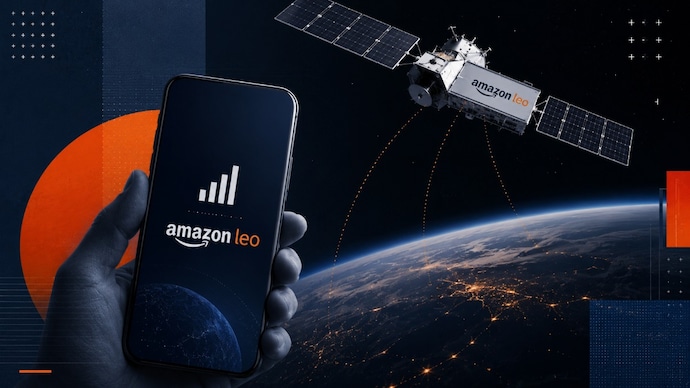
Amazon has big plans to keep your smartphone connected wherever you are. The company has proposed a new direct-to-device network under its Amazon Leo project that will use up to 5,105 low Earth orbit satellites to connect compatible smartphones directly from space. If approved, the service will begin rolling out in 2028 and will support calls, messaging, data and emergency services even outside cellular coverage.
The proposal comes under Amazon's Leo satellite venture, which has filed an application with the US Federal Communications Commission (FCC) to deploy a constellation of up to 5,105 low Earth orbit (LEO) satellites. Unlike Amazon's existing satellite broadband service, which delivers internet to homes and businesses, the new Direct-to-Device (D2D) network is designed to connect directly with compatible smartphones and other mobile devices.
According to Amazon, the service will support voice calls, messaging, mobile data and emergency communications in areas where mobile networks are unavailable. The company says it will work with mobile operators around the world to extend their coverage to remote regions, disaster-hit areas and places where building mobile towers is difficult or too expensive.
The announcement comes a few months after Amazon agreed to acquire Globalstar's satellite operations and spectrum assets. Globalstar already powers satellite features on supported Apple devices, including Emergency SOS via satellite, location sharing, Find My, Messages and Roadside Assistance when users are outside mobile network coverage. Amazon says its new network will use Globalstar's mobile satellite spectrum and that it plans to work with Apple on future satellite services.
Amazon says the new D2D network will complement its existing Leo broadband service rather than replace it. Besides helping people stay connected, the company says the satellites could also support disaster response, remote industrial operations, global fleet management, internet of things (IoT) devices and supply chain monitoring in areas without network coverage. The service is also expected to work with smartphones equipped with satellite-capable chipsets.
How Amazon LEO satellite network will work
The proposed network will include up to 5,105 low Earth orbit (LEO) satellites, spread across five orbital shells to provide coverage across mid-latitude, high-latitude and near-polar regions. The satellites will connect directly with compatible smartphones using L-band and S-band spectrum, while Ka-band and V-band links will carry data between the satellites, Amazon's ground stations and the wider internet.
Amazon says these satellites will be more advanced than traditional communication satellites. Instead of just passing signals back to Earth, they will process some of the data while still in space, helping improve speed and overall performance. The company also plans to use several advanced technologies to make the network more efficient, handle more users at once and reduce signal interference.
Amazon is also continuing to expand its broadband satellite business. The company says it has more than 390 satellites in orbit and plans to begin rolling out fixed broadband services later this year. Speaking at the IAFI Space Policy Conference 2026, Amazon also described India as a key market, citing the country's digital-first economy and the need to improve connectivity in underserved regions.
Amazon has big plans to keep your smartphone connected wherever you are. The company has proposed a new direct-to-device network under its Amazon Leo project that will use up to 5,105 low Earth orbit satellites to connect compatible smartphones directly from space. If approved, the service will begin rolling out in 2028 and will support calls, messaging, data and emergency services even outside cellular coverage.
The proposal comes under Amazon's Leo satellite venture, which has filed an application with the US Federal Communications Commission (FCC) to deploy a constellation of up to 5,105 low Earth orbit (LEO) satellites. Unlike Amazon's existing satellite broadband service, which delivers internet to homes and businesses, the new Direct-to-Device (D2D) network is designed to connect directly with compatible smartphones and other mobile devices.
According to Amazon, the service will support voice calls, messaging, mobile data and emergency communications in areas where mobile networks are unavailable. The company says it will work with mobile operators around the world to extend their coverage to remote regions, disaster-hit areas and places where building mobile towers is difficult or too expensive.
The announcement comes a few months after Amazon agreed to acquire Globalstar's satellite operations and spectrum assets. Globalstar already powers satellite features on supported Apple devices, including Emergency SOS via satellite, location sharing, Find My, Messages and Roadside Assistance when users are outside mobile network coverage. Amazon says its new network will use Globalstar's mobile satellite spectrum and that it plans to work with Apple on future satellite services.
Amazon says the new D2D network will complement its existing Leo broadband service rather than replace it. Besides helping people stay connected, the company says the satellites could also support disaster response, remote industrial operations, global fleet management, internet of things (IoT) devices and supply chain monitoring in areas without network coverage. The service is also expected to work with smartphones equipped with satellite-capable chipsets.
How Amazon LEO satellite network will work
The proposed network will include up to 5,105 low Earth orbit (LEO) satellites, spread across five orbital shells to provide coverage across mid-latitude, high-latitude and near-polar regions. The satellites will connect directly with compatible smartphones using L-band and S-band spectrum, while Ka-band and V-band links will carry data between the satellites, Amazon's ground stations and the wider internet.
Amazon says these satellites will be more advanced than traditional communication satellites. Instead of just passing signals back to Earth, they will process some of the data while still in space, helping improve speed and overall performance. The company also plans to use several advanced technologies to make the network more efficient, handle more users at once and reduce signal interference.
Amazon is also continuing to expand its broadband satellite business. The company says it has more than 390 satellites in orbit and plans to begin rolling out fixed broadband services later this year. Speaking at the IAFI Space Policy Conference 2026, Amazon also described India as a key market, citing the country's digital-first economy and the need to improve connectivity in underserved regions.
Amazon has big plans to keep your smartphone connected wherever you are. The company has proposed a new direct-to-device network under its Amazon Leo project that will use up to 5,105 low Earth orbit satellites to connect compatible smartphones directly from space. If approved, the service will begin rolling out in 2028 and will support calls, messaging, data and emergency services even outside cellular coverage.
The proposal comes under Amazon's Leo satellite venture, which has filed an application with the US Federal Communications Commission (FCC) to deploy a constellation of up to 5,105 low Earth orbit (LEO) satellites. Unlike Amazon's existing satellite broadband service, which delivers internet to homes and businesses, the new Direct-to-Device (D2D) network is designed to connect directly with compatible smartphones and other mobile devices.
According to Amazon, the service will support voice calls, messaging, mobile data and emergency communications in areas where mobile networks are unavailable. The company says it will work with mobile operators around the world to extend their coverage to remote regions, disaster-hit areas and places where building mobile towers is difficult or too expensive.
The announcement comes a few months after Amazon agreed to acquire Globalstar's satellite operations and spectrum assets. Globalstar already powers satellite features on supported Apple devices, including Emergency SOS via satellite, location sharing, Find My, Messages and Roadside Assistance when users are outside mobile network coverage. Amazon says its new network will use Globalstar's mobile satellite spectrum and that it plans to work with Apple on future satellite services.
Amazon says the new D2D network will complement its existing Leo broadband service rather than replace it. Besides helping people stay connected, the company says the satellites could also support disaster response, remote industrial operations, global fleet management, internet of things (IoT) devices and supply chain monitoring in areas without network coverage. The service is also expected to work with smartphones equipped with satellite-capable chipsets.
How Amazon LEO satellite network will work
The proposed network will include up to 5,105 low Earth orbit (LEO) satellites, spread across five orbital shells to provide coverage across mid-latitude, high-latitude and near-polar regions. The satellites will connect directly with compatible smartphones using L-band and S-band spectrum, while Ka-band and V-band links will carry data between the satellites, Amazon's ground stations and the wider internet.
Amazon says these satellites will be more advanced than traditional communication satellites. Instead of just passing signals back to Earth, they will process some of the data while still in space, helping improve speed and overall performance. The company also plans to use several advanced technologies to make the network more efficient, handle more users at once and reduce signal interference.
Amazon is also continuing to expand its broadband satellite business. The company says it has more than 390 satellites in orbit and plans to begin rolling out fixed broadband services later this year. Speaking at the IAFI Space Policy Conference 2026, Amazon also described India as a key market, citing the country's digital-first economy and the need to improve connectivity in underserved regions.

