Anthropic admits Claude has multiple personalities, it is extra warm and friendly with Hindi users
Think AI responds the same in every language? Anthropic says that's not the case. Its latest study found Claude is warmer and friendlier in Hindi, using more humour, politeness and encouragement than it typically does in English.
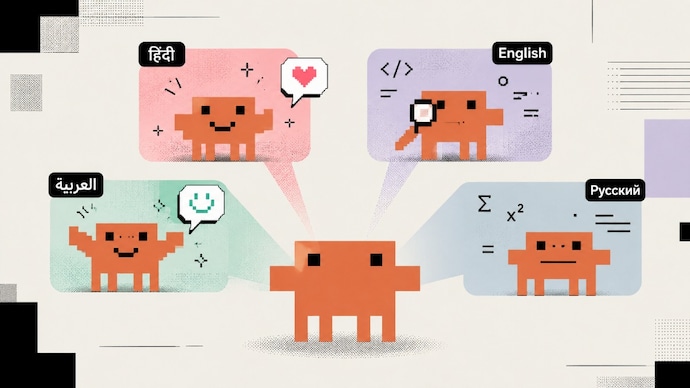
You might think asking Claude the same question in Hindi or English would only change the language of the reply. But a new study by Anthropic suggests it changes the chatbot's behaviour too. According to the company, Claude expresses different behavioural traits depending on the language users choose. In Hindi, for example, the AI is more likely to respond with humour, politeness and encouragement than it typically does in English.
In its latest research, Anthropic analysed more than 309,000 anonymised Claude AI conversations across three Claude models– Sonnet 4.6, Opus 4.6 and Opus 4.7 — and the 20 most commonly used languages on Claude AI. The conversations mostly involved advice, feedback and opinion-based questions, where there is no single correct answer. Instead of measuring accuracy, the company said it wanted to understand how Claude communicates with users.
The results? Anthropic found that Claude came across as warmest when responding in Hindi and Arabic. In contrast, its responses in English and Russian were more analytical and focused on rigour.
To make the results easier to compare, Anthropic grouped Claude's behaviour into four broad categories: Deference vs Caution, Warmth vs Rigor, Depth vs Brevity, and Candor vs Execution. According to the company, this helped researchers focus on Claude's behaviour rather than differences in the questions people asked.
For Indian users, the biggest takeaway from the study is what Anthropic calls the Warmth vs Rigor axis. The company found that Claude expressed the highest levels of warmth in Hindi and Arabic. In Hindi, the AI was more likely to use polite language, humour and playfulness while affirming users' ideas and work. It also tended to offer reassurance without being asked, adapt its tone to a user's emotional state and encourage users to aim higher.
"The largest variation is in the Warmth vs. Rigor axis, with Claude leaning toward expressing warmth-related values most in Arabic and Hindi and rigor-related values most in English and Russian," Anthropic said in its blog post.
English, however, painted a different picture. Anthropic found that Claude was more likely to respond with rigour and caution, challenge assumptions, correct details without being prompted and back up its responses with evidence. Overall, the company said the biggest differences between languages lay in how warm or rigorous Claude appeared, while its other behavioural traits remained relatively consistent.
The study also found that Claude's behaviour changed depending on the model being used. Sonnet 4.6 came across as the warmest, often using humour, matching a user's tone and offering reassurance without judgement. Opus 4.7, on the other hand, was more analytical. It was more likely to challenge assumptions, explain its reasoning, highlight potential risks and openly acknowledge its own limitations. Opus 4.6 sat somewhere in between, generally sticking closely to a user's request and getting straight to the point.
Anthropic notes that the findings do not mean Claude has different beliefs. Instead, the company suggests the results reflected differences in how the AI responds across languages and models. Anthropic added that it is still investigating why these variations exist, but believes the research could help make future AI systems more consistent.
You might think asking Claude the same question in Hindi or English would only change the language of the reply. But a new study by Anthropic suggests it changes the chatbot's behaviour too. According to the company, Claude expresses different behavioural traits depending on the language users choose. In Hindi, for example, the AI is more likely to respond with humour, politeness and encouragement than it typically does in English.
In its latest research, Anthropic analysed more than 309,000 anonymised Claude AI conversations across three Claude models– Sonnet 4.6, Opus 4.6 and Opus 4.7 — and the 20 most commonly used languages on Claude AI. The conversations mostly involved advice, feedback and opinion-based questions, where there is no single correct answer. Instead of measuring accuracy, the company said it wanted to understand how Claude communicates with users.
The results? Anthropic found that Claude came across as warmest when responding in Hindi and Arabic. In contrast, its responses in English and Russian were more analytical and focused on rigour.
To make the results easier to compare, Anthropic grouped Claude's behaviour into four broad categories: Deference vs Caution, Warmth vs Rigor, Depth vs Brevity, and Candor vs Execution. According to the company, this helped researchers focus on Claude's behaviour rather than differences in the questions people asked.
For Indian users, the biggest takeaway from the study is what Anthropic calls the Warmth vs Rigor axis. The company found that Claude expressed the highest levels of warmth in Hindi and Arabic. In Hindi, the AI was more likely to use polite language, humour and playfulness while affirming users' ideas and work. It also tended to offer reassurance without being asked, adapt its tone to a user's emotional state and encourage users to aim higher.
"The largest variation is in the Warmth vs. Rigor axis, with Claude leaning toward expressing warmth-related values most in Arabic and Hindi and rigor-related values most in English and Russian," Anthropic said in its blog post.
English, however, painted a different picture. Anthropic found that Claude was more likely to respond with rigour and caution, challenge assumptions, correct details without being prompted and back up its responses with evidence. Overall, the company said the biggest differences between languages lay in how warm or rigorous Claude appeared, while its other behavioural traits remained relatively consistent.
The study also found that Claude's behaviour changed depending on the model being used. Sonnet 4.6 came across as the warmest, often using humour, matching a user's tone and offering reassurance without judgement. Opus 4.7, on the other hand, was more analytical. It was more likely to challenge assumptions, explain its reasoning, highlight potential risks and openly acknowledge its own limitations. Opus 4.6 sat somewhere in between, generally sticking closely to a user's request and getting straight to the point.
Anthropic notes that the findings do not mean Claude has different beliefs. Instead, the company suggests the results reflected differences in how the AI responds across languages and models. Anthropic added that it is still investigating why these variations exist, but believes the research could help make future AI systems more consistent.

