Government summons Iranian diplomats after Indian sailor killed in Hormuz strikes
The move came a day after the UAE said Iranian cruise missiles struck the tankers Mombasa and Al Bahiyah in the southern shipping lane of the Strait of Hormuz, within Omani waters. The attack killed one Indian crew member and injured eight others.
India has summoned Iran's Deputy Ambassador to the Ministry of External Affairs after an Iranian missile strike on two UAE-flagged tankers in the Strait of Hormuz killed one Indian crew member and injured eight others, government sources said on Monday.
The diplomatic move came a day after the UAE said Iranian cruise missiles struck the tankers Mombasa and Al Bahiyah in the southern shipping lane of the Strait of Hormuz, within Omani waters. The attack killed one Indian crew member and injured eight others.
According to the UAE, those injured included six Indians and two Ukrainians. Four of the injured are still in critical condition. The tankers named in the strike were Mombasa and Al Bahiyah.
After the recent attacks, the IRGC once again accused the US of facilitating the transit of vessels through what it called an "illegal route" closer to the Omani side of the Strait. It also described the route as dangerous, claiming that mines had been laid in those waters.
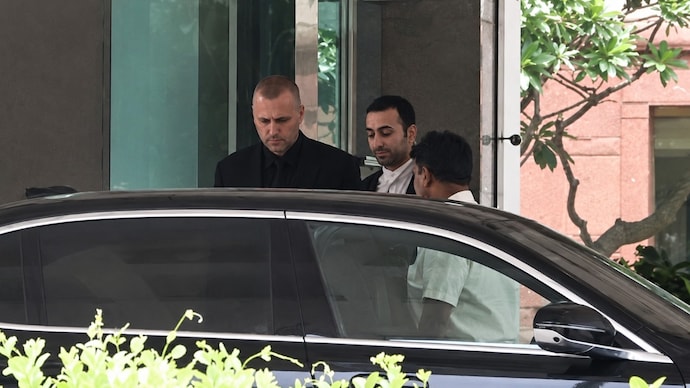
The summoning of Deputy Chief of Mission (DCM) Mohammad Javad Hosseini and other Iranian diplomats came after India voiced concerns and sought reassurances over the attack in Omani territorial waters in the Strait of Hormuz. The strike killed an Indian crew member and injured eight others, including six Indians and two Ukrainians. Four of the injured remain critical.
Following the attacks, the Ministry of External Affairs called for immediate de-escalation and said the repeated incidents were "deeply worrisome."
"We reiterate our call for immediate de-escalation of tensions, and the conclusion of ongoing negotiations for a diplomatic solution so that peace and stability can return to the region," the MEA said.
"The targeting of commercial shipping and civilian infrastructure in the region must end, and free and unimpeded navigation and commerce through the international waterways in the region, in keeping with international law, must be restored at the earliest," it said.
The UAE said two Iranian cruise missiles hit the oil tankers Mombasa and Bahia, setting both on fire. The attack killed an Indian crew member and injured eight others, including four Indians and two Ukrainians, six of them seriously. Abu Dhabi called it a "brazen" violation of international law.
The situation in Hormuz, which handles roughly a fifth of global oil and natural gas shipments, remains volatile as seafarers navigate competing claims over control of the key energy chokepoint. US President Donald Trump has offered US protection to vessels passing through the Strait of Hormuz for a 20% fee. Iran, however, dismissed Trump's proposal, asserting that the strait remains under its control and that it would not impose such an exorbitant charge.
India has summoned Iran's Deputy Ambassador to the Ministry of External Affairs after an Iranian missile strike on two UAE-flagged tankers in the Strait of Hormuz killed one Indian crew member and injured eight others, government sources said on Monday.
The diplomatic move came a day after the UAE said Iranian cruise missiles struck the tankers Mombasa and Al Bahiyah in the southern shipping lane of the Strait of Hormuz, within Omani waters. The attack killed one Indian crew member and injured eight others.
According to the UAE, those injured included six Indians and two Ukrainians. Four of the injured are still in critical condition. The tankers named in the strike were Mombasa and Al Bahiyah.
After the recent attacks, the IRGC once again accused the US of facilitating the transit of vessels through what it called an "illegal route" closer to the Omani side of the Strait. It also described the route as dangerous, claiming that mines had been laid in those waters.
The summoning of Deputy Chief of Mission (DCM) Mohammad Javad Hosseini and other Iranian diplomats came after India voiced concerns and sought reassurances over the attack in Omani territorial waters in the Strait of Hormuz. The strike killed an Indian crew member and injured eight others, including six Indians and two Ukrainians. Four of the injured remain critical.
Following the attacks, the Ministry of External Affairs called for immediate de-escalation and said the repeated incidents were "deeply worrisome."
"We reiterate our call for immediate de-escalation of tensions, and the conclusion of ongoing negotiations for a diplomatic solution so that peace and stability can return to the region," the MEA said.
"The targeting of commercial shipping and civilian infrastructure in the region must end, and free and unimpeded navigation and commerce through the international waterways in the region, in keeping with international law, must be restored at the earliest," it said.
The UAE said two Iranian cruise missiles hit the oil tankers Mombasa and Bahia, setting both on fire. The attack killed an Indian crew member and injured eight others, including four Indians and two Ukrainians, six of them seriously. Abu Dhabi called it a "brazen" violation of international law.
The situation in Hormuz, which handles roughly a fifth of global oil and natural gas shipments, remains volatile as seafarers navigate competing claims over control of the key energy chokepoint. US President Donald Trump has offered US protection to vessels passing through the Strait of Hormuz for a 20% fee. Iran, however, dismissed Trump's proposal, asserting that the strait remains under its control and that it would not impose such an exorbitant charge.

