YouTube and X are directing millions of users to nudify apps, says study
A new study by the Institute for Strategic Dialogue (ISD) says YouTube and X directed millions of users to websites offering so-called nudify tools between December 2025 and March 2026. According to the report, the two platforms became major sources of traffic for services that create non-consensual intimate images by digitally undressing people.
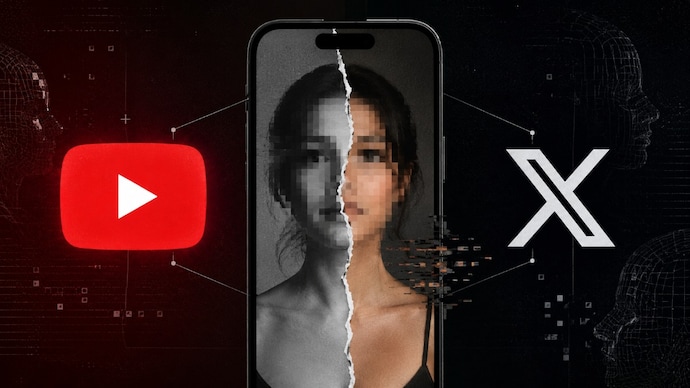
YouTube and X are reportedly directing millions of users to websites offering AI-powered "nudify" tools. A new study by the Institute for Strategic Dialogue (ISD) reveals that these platforms sent millions of users to services that allow people to create non-consensual intimate images over a four-month period. The findings are now raising concerns over how mainstream social media platforms are helping users discover deepfake tools despite having policies that prohibit them.
The study, published by the ISD, examined the 10 most-used apps and websites for creating non-consensual explicit deepfakes and analysed how users were finding them. It found that social media platforms drove more than 5.7 million visits to nudify websites between December 2025 and March 2026. YouTube accounted for 1.82 million visits, or more than 30 per cent of all referrals, while X was the second-largest source, driving more than 1.3 million visits.
According to the report, users searching for terms such as "undress app" and "nudify app" were shown videos reviewing and promoting these tools. Some videos also included links to the apps and promo codes offering free credits, making the services easier to access.
Going against platform policies
The researchers say these findings appear to be in "direct conflict" with YouTube's own policies banning sexually explicit content. They argue that the rules should also apply to websites and tools that generate non-consensual intimate imagery. However, such content remained easy to discover, effectively turning the platform into a gateway to nudify websites.
"It wasn't just that YouTube was a passive source. In a lot of these cases, it was facilitating the use of these tools as well," Melanie Smith, ISD UK's Senior Director of Policy and Research for Information Operations, told Wired.
Smith added that YouTube's policies also prohibit links to or advertising for sexually explicit websites, which should theoretically include services that generate non-consensual intimate imagery. However, those rules apparently do not appear to be enforced consistently.
Meanwhile, in a statement to Wired, YouTube spokesperson Boot Bullwinkle said the company has "strict policies prohibiting content that includes unwanted sexualisation, such as non-consensually shared intimate imagery". He added that the policies apply both to content hosted on YouTube and to external links, and also cover "altered or synthetic content that realistically simulates nudity".
Beyond traffic, the ISD study also looked at how accessible and profitable these AI tools have become. It found that some apps allow users to generate explicit images for as little as $1 per image. The study also found that common targets include current and former girlfriends, while some users also target relatives such as sisters and cousins.
According to Smith, the motivation behind using these tools is often not sexual. She said many requests were aimed at getting people fired from their jobs and compromising their livelihoods and lives in "nefarious ways”. This further highlights how the deepfake technology is increasingly being used for harassment, intimidation and reputational damage, rather than only to create explicit images.
YouTube and X are reportedly directing millions of users to websites offering AI-powered "nudify" tools. A new study by the Institute for Strategic Dialogue (ISD) reveals that these platforms sent millions of users to services that allow people to create non-consensual intimate images over a four-month period. The findings are now raising concerns over how mainstream social media platforms are helping users discover deepfake tools despite having policies that prohibit them.
The study, published by the ISD, examined the 10 most-used apps and websites for creating non-consensual explicit deepfakes and analysed how users were finding them. It found that social media platforms drove more than 5.7 million visits to nudify websites between December 2025 and March 2026. YouTube accounted for 1.82 million visits, or more than 30 per cent of all referrals, while X was the second-largest source, driving more than 1.3 million visits.
According to the report, users searching for terms such as "undress app" and "nudify app" were shown videos reviewing and promoting these tools. Some videos also included links to the apps and promo codes offering free credits, making the services easier to access.
Going against platform policies
The researchers say these findings appear to be in "direct conflict" with YouTube's own policies banning sexually explicit content. They argue that the rules should also apply to websites and tools that generate non-consensual intimate imagery. However, such content remained easy to discover, effectively turning the platform into a gateway to nudify websites.
"It wasn't just that YouTube was a passive source. In a lot of these cases, it was facilitating the use of these tools as well," Melanie Smith, ISD UK's Senior Director of Policy and Research for Information Operations, told Wired.
Smith added that YouTube's policies also prohibit links to or advertising for sexually explicit websites, which should theoretically include services that generate non-consensual intimate imagery. However, those rules apparently do not appear to be enforced consistently.
Meanwhile, in a statement to Wired, YouTube spokesperson Boot Bullwinkle said the company has "strict policies prohibiting content that includes unwanted sexualisation, such as non-consensually shared intimate imagery". He added that the policies apply both to content hosted on YouTube and to external links, and also cover "altered or synthetic content that realistically simulates nudity".
Beyond traffic, the ISD study also looked at how accessible and profitable these AI tools have become. It found that some apps allow users to generate explicit images for as little as $1 per image. The study also found that common targets include current and former girlfriends, while some users also target relatives such as sisters and cousins.
According to Smith, the motivation behind using these tools is often not sexual. She said many requests were aimed at getting people fired from their jobs and compromising their livelihoods and lives in "nefarious ways”. This further highlights how the deepfake technology is increasingly being used for harassment, intimidation and reputational damage, rather than only to create explicit images.

