iQOO Z11 Lite 5G review: Most of what you need, nothing you don't
iQOO Z11 Lite is the latest entrant in India's hotly contested sub-Rs 20,000 segment. India Today Tech put it through the paces and here is what we think about it.
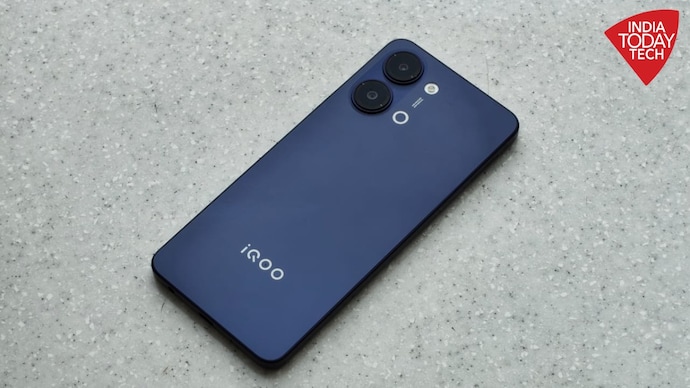
iQOO Z11 Lite 5G review
Pros
- Battery life
- Dynamic Light
- OriginOS 6
Cons
- 720p display
- Bloatware
- No OIS
AI is changing the definition of budget phones. With prices going up, it is becoming more and more difficult to say, what qualifies as a true budget phone in 2026. Take the iQOO Z11 Lite for instance. iQOO would have you believe that it is a budget phone given that it has—somehow—managed to price it under Rs 20,000. Rs 19,499 to be price. But there is a catch. This iQOO Z11 Lite has only 4GB RAM. The 6GB RAM variant with an equivalent amount of storage—128GB—costs Rs 2,000 more.
The problem is not that the entry-level model has 4GB RAM. It is that because it has lesser RAM, it can’t support the full range of features—like the Private Space—that iQOO is promising as core USP of this phone. To use a fully-equipped iQOO Z11 Lite, you’ll have to stretch your budget and spend at least Rs 21,499. The top-end model with 256GB storage will set you back by Rs 24,499.
To be clear, iQOO is not the first brand to do this. We reckon that it won’t be the last either. Smartphone prices are going up across the board and budget phones—presumably like the iQOO Z11 Lite—have been hit the hardest. Even at these prices, iQOO has stiff competition from OnePlus to Realme, all of which are going through the same market churn.
iQOO Z11 Lite design
iQOO has taken an understated approach when it comes to the design of the Z11 Lite. The Midnight Blue variant we have comes in a matte finish which looks quite sleek. You get two camera cutouts, though one is a dummy. The flash is placed beside the main sensor. A “Dynamic Light” sits below.
This Dynamic Light really makes the Z11 Lite stand out. You can turn it on for calls, notifications, or even when you are listening to music. For someone like me who likes to have lights on the back of phones – be it on the Redmi Turbo 5 or the Nothing Phone 4a – this is certainly a good-to-have feature, which is also quite useful.
Coming back to the design, the iQOO Z11 Lite has a rectangular form factor, but with rounded corners that prevent it from being too boxy. The phone is not small by any means with a 6.74-inch display, but it doesn’t feel too wide, making it easier to use with one hand. The device weighs about 209 grams, with a thickness of 8.4mm, and it really doesn’t feel too bulky. You also get support for MicroSD via a hybrid SIM slot.
One thing you will notice, however, is the placement of the buttons. I found that the volume keys sit a bit low, where your fingers would usually expect to have the power button. Though you do get used to it in a day or two. Speaking of the power button, it gets a side-mounted fingerprint scanner with it, which works well enough.
The iQOO Z11 Lite comes with a plastic back and frame. One rare addition you get here is a headphone jack. The Z11 Lite comes with an IP64 rating for dust and splash resistance. That is, it can handle some occasional splashes without any issues.
iQOO Z11 Lite display and sound
Once you boot up the iQOO Z11 Lite, you are greeted to a 6.74-inch HD Plus IPS display with a teardrop notch and a 120Hz refresh rate. The bezels on three sides are quite minimal, but you do get a chin at the bottom. Though this is not a surprise considering the current market situation. To give you some context, the Realme 16T, which costs nearly Rs 30,000 also has a similar HD Plus panel with a chin.
Now on paper, the display may feel underwhelming, but in the real world, it can do the job for you. While using the iQOO Z11 Lite, I never really found the resolution to be an issue. Unless you are specifically pixel-peeping, you may not notice that it is not a full HD panel.
The colours on the Z11 Lite did feel a bit blueish on some occasions, but for the most part the display lives up to what it promises. The screen has a peak brightness of 1,200 nits, and even in daylight, you can see what is on the screen without having to squint your eyes.
I spent a lot of time watching videos on YouTube and shows on Netflix on the iQOO Z11 Lite. And to my surprise, the streaming experience is not bad for the price. You get Widevine L1 support for Netflix (no HDR), and play up to 1440p videos on YouTube. And of course, you can easily scroll through your Instagram Reels.
While a full HD panel would’ve been preferred, the iQOO Z11 Lite does the job, and the video quality is decent enough. If you are coming from a phone with an HD display, you’ll have no issues with it. On the audio front, the Z11 Lite comes with a single top-firing speaker – different from the earpiece – and it gets quite loud. For the most part, you can watch videos without needing earphones, albeit, the sound sometimes felt a bit hollow.
iQOO Z11 Lite performance
Now that we have covered the display, let’s talk about performance. You see, the Z11 Lite uses the MediaTek Dimensity 6300 chipset – a chipset that has become the standard for phones at this price in 2026. Now right off the bat, the Z11 Lite is not a performance focused phone, rather, it is meant for the basic user.
Think scrolling through Instagram or X, texting people on WhatsApp, making calls, and the works. And in this, the iQOO Z11 Lite manages to give you a pleasant experience. As long as you don’t push the phone too much – think multitasking with maps, Bluetooth, social media – the Z11 Lite can keep up. But you may notice a jitter here or there if you do push the device.
But what if you wanted to do some gaming on the iQOO Z11 Lite? In that case, less demanding titles like Subway Surfers are quite smooth as you’d expect. COD Mobile too can be a satisfactory experience. You can play COD Mobile on Medium graphics with Max refresh rate on the Z11 Lite. And the phone only gets a bit warm after a couple of rounds. There is also bypass charging support and Vivo’s game mode for better performance.
In terms of benchmarks, the Z11 Lite scores around 566,000 on AnTuTu. On Geekbench, the device gets 726 points in single-core, and 1,971 points in multi-core. These scores are on par for the chipset.
iQOO Z11 Lite battery life
The Z11 Lite packs a 6,500mAh battery with support for 44W fast charging. Thanks to silicon-carbon, the days of battery anxiety are long gone, and the Z11 Lite adheres to this new normal. I found that the phone would easily give a screen-on time of 7-8 hours even while pushing it with a few gaming sessions.
That is to say, that for an average user, the Z11 Lite should last for as much as two days on a single charge. And even for someone who uses their phone a lot like me, it should easily go past a single day with some juice left in the tank. To top it up, you get a 44W charger in the box. This can charge your phone in just over an hour and ten minutes, which is not bad considering the size of the battery.
iQOO Z11 Lite cameras
The Z11 Lite comes with a single 50-megapixel Sony sensor on the back, paired with a 5-megapixel selfie shooter. When it comes to the main sensor, the photos can turn out quite good, for the price, under good lighting conditions. Colour accuracy is not bad either. Though at nighttime, you do lose out on details, but that is to be expected.
Coming to portraits, there is smoothening of facial features that we often see on iQOO or Vivo phones. But this results in photos that are usually preferred by many. You can also get some good portrait shots of objects or flowers with the Z11 Lite.
It is a similar story for the front camera. The shots in good lighting are decent, with some smoothening of faces. But since it is a 5-megapixel unit, you do lose out on details, and at night, the quality may look grainy.
Click on any image below to view the entire gallery
When it comes to videos, there is no OIS. But the footage from either sensor can be decent given the right conditions. You can only shoot up to 1080p at 30fps on both cameras.
iQOO Z11 Lite user experience
The Z11 Lite runs on OriginOS 6, based on Android 16. iQOO promises 2 years of software updates and 4 years of security patches, taking the device all the way to Android 18.
OriginOS is a big improvement over FunTouch OS, something we have discussed here at India Today Tech before. You get a more modern look when it comes to the notification bar, wallpapers, and the works. While it may not be as sleek as Oppo’s ColorOS just yet, it gives you a decent experience with enough customisation options.
You also get some AI features such as AI captions, AI creation, and Google Gemini. Though Circle to Search does not work on the Z11 Lite.
As is the case with most budget phones, there are a lot of pre-installed third party apps. There are also ads on the lockscreen, and recommendations for apps and games. But you can uninstall the apps, and disable the recommendations.
iQOO Z11 Lite verdict: Covers the bases?
Now that we have gone through everything you get with the iQOO Z11 Lite, how good is it really? You see, given the memory crisis that has rattled phonemakers, the Z11 Lite takes a simple approach. It wants to cover the bases for everything the average user may want, without trying to do too much.
And in that aspect, it does the job. The iQOO Z11 Lite has a big battery, a satisfactory camera setup and a large screen. While the phone won’t win any awards for performance, it is not trying to do that in the first place. The phone simply wants to give you what you really need without cutting a deep hole in your pocket in 2026. Make sure you pick the right variant for your use case though.
AI is changing the definition of budget phones. With prices going up, it is becoming more and more difficult to say, what qualifies as a true budget phone in 2026. Take the iQOO Z11 Lite for instance. iQOO would have you believe that it is a budget phone given that it has—somehow—managed to price it under Rs 20,000. Rs 19,499 to be price. But there is a catch. This iQOO Z11 Lite has only 4GB RAM. The 6GB RAM variant with an equivalent amount of storage—128GB—costs Rs 2,000 more.
The problem is not that the entry-level model has 4GB RAM. It is that because it has lesser RAM, it can’t support the full range of features—like the Private Space—that iQOO is promising as core USP of this phone. To use a fully-equipped iQOO Z11 Lite, you’ll have to stretch your budget and spend at least Rs 21,499. The top-end model with 256GB storage will set you back by Rs 24,499.
To be clear, iQOO is not the first brand to do this. We reckon that it won’t be the last either. Smartphone prices are going up across the board and budget phones—presumably like the iQOO Z11 Lite—have been hit the hardest. Even at these prices, iQOO has stiff competition from OnePlus to Realme, all of which are going through the same market churn.
iQOO Z11 Lite design
iQOO has taken an understated approach when it comes to the design of the Z11 Lite. The Midnight Blue variant we have comes in a matte finish which looks quite sleek. You get two camera cutouts, though one is a dummy. The flash is placed beside the main sensor. A “Dynamic Light” sits below.
This Dynamic Light really makes the Z11 Lite stand out. You can turn it on for calls, notifications, or even when you are listening to music. For someone like me who likes to have lights on the back of phones – be it on the Redmi Turbo 5 or the Nothing Phone 4a – this is certainly a good-to-have feature, which is also quite useful.
Coming back to the design, the iQOO Z11 Lite has a rectangular form factor, but with rounded corners that prevent it from being too boxy. The phone is not small by any means with a 6.74-inch display, but it doesn’t feel too wide, making it easier to use with one hand. The device weighs about 209 grams, with a thickness of 8.4mm, and it really doesn’t feel too bulky. You also get support for MicroSD via a hybrid SIM slot.
One thing you will notice, however, is the placement of the buttons. I found that the volume keys sit a bit low, where your fingers would usually expect to have the power button. Though you do get used to it in a day or two. Speaking of the power button, it gets a side-mounted fingerprint scanner with it, which works well enough.
The iQOO Z11 Lite comes with a plastic back and frame. One rare addition you get here is a headphone jack. The Z11 Lite comes with an IP64 rating for dust and splash resistance. That is, it can handle some occasional splashes without any issues.
iQOO Z11 Lite display and sound
Once you boot up the iQOO Z11 Lite, you are greeted to a 6.74-inch HD Plus IPS display with a teardrop notch and a 120Hz refresh rate. The bezels on three sides are quite minimal, but you do get a chin at the bottom. Though this is not a surprise considering the current market situation. To give you some context, the Realme 16T, which costs nearly Rs 30,000 also has a similar HD Plus panel with a chin.
Now on paper, the display may feel underwhelming, but in the real world, it can do the job for you. While using the iQOO Z11 Lite, I never really found the resolution to be an issue. Unless you are specifically pixel-peeping, you may not notice that it is not a full HD panel.
The colours on the Z11 Lite did feel a bit blueish on some occasions, but for the most part the display lives up to what it promises. The screen has a peak brightness of 1,200 nits, and even in daylight, you can see what is on the screen without having to squint your eyes.
I spent a lot of time watching videos on YouTube and shows on Netflix on the iQOO Z11 Lite. And to my surprise, the streaming experience is not bad for the price. You get Widevine L1 support for Netflix (no HDR), and play up to 1440p videos on YouTube. And of course, you can easily scroll through your Instagram Reels.
While a full HD panel would’ve been preferred, the iQOO Z11 Lite does the job, and the video quality is decent enough. If you are coming from a phone with an HD display, you’ll have no issues with it. On the audio front, the Z11 Lite comes with a single top-firing speaker – different from the earpiece – and it gets quite loud. For the most part, you can watch videos without needing earphones, albeit, the sound sometimes felt a bit hollow.
iQOO Z11 Lite performance
Now that we have covered the display, let’s talk about performance. You see, the Z11 Lite uses the MediaTek Dimensity 6300 chipset – a chipset that has become the standard for phones at this price in 2026. Now right off the bat, the Z11 Lite is not a performance focused phone, rather, it is meant for the basic user.
Think scrolling through Instagram or X, texting people on WhatsApp, making calls, and the works. And in this, the iQOO Z11 Lite manages to give you a pleasant experience. As long as you don’t push the phone too much – think multitasking with maps, Bluetooth, social media – the Z11 Lite can keep up. But you may notice a jitter here or there if you do push the device.
But what if you wanted to do some gaming on the iQOO Z11 Lite? In that case, less demanding titles like Subway Surfers are quite smooth as you’d expect. COD Mobile too can be a satisfactory experience. You can play COD Mobile on Medium graphics with Max refresh rate on the Z11 Lite. And the phone only gets a bit warm after a couple of rounds. There is also bypass charging support and Vivo’s game mode for better performance.
In terms of benchmarks, the Z11 Lite scores around 566,000 on AnTuTu. On Geekbench, the device gets 726 points in single-core, and 1,971 points in multi-core. These scores are on par for the chipset.
iQOO Z11 Lite battery life
The Z11 Lite packs a 6,500mAh battery with support for 44W fast charging. Thanks to silicon-carbon, the days of battery anxiety are long gone, and the Z11 Lite adheres to this new normal. I found that the phone would easily give a screen-on time of 7-8 hours even while pushing it with a few gaming sessions.
That is to say, that for an average user, the Z11 Lite should last for as much as two days on a single charge. And even for someone who uses their phone a lot like me, it should easily go past a single day with some juice left in the tank. To top it up, you get a 44W charger in the box. This can charge your phone in just over an hour and ten minutes, which is not bad considering the size of the battery.
iQOO Z11 Lite cameras
The Z11 Lite comes with a single 50-megapixel Sony sensor on the back, paired with a 5-megapixel selfie shooter. When it comes to the main sensor, the photos can turn out quite good, for the price, under good lighting conditions. Colour accuracy is not bad either. Though at nighttime, you do lose out on details, but that is to be expected.
Coming to portraits, there is smoothening of facial features that we often see on iQOO or Vivo phones. But this results in photos that are usually preferred by many. You can also get some good portrait shots of objects or flowers with the Z11 Lite.
It is a similar story for the front camera. The shots in good lighting are decent, with some smoothening of faces. But since it is a 5-megapixel unit, you do lose out on details, and at night, the quality may look grainy.
Click on any image below to view the entire gallery
When it comes to videos, there is no OIS. But the footage from either sensor can be decent given the right conditions. You can only shoot up to 1080p at 30fps on both cameras.
iQOO Z11 Lite user experience
The Z11 Lite runs on OriginOS 6, based on Android 16. iQOO promises 2 years of software updates and 4 years of security patches, taking the device all the way to Android 18.
OriginOS is a big improvement over FunTouch OS, something we have discussed here at India Today Tech before. You get a more modern look when it comes to the notification bar, wallpapers, and the works. While it may not be as sleek as Oppo’s ColorOS just yet, it gives you a decent experience with enough customisation options.
You also get some AI features such as AI captions, AI creation, and Google Gemini. Though Circle to Search does not work on the Z11 Lite.
As is the case with most budget phones, there are a lot of pre-installed third party apps. There are also ads on the lockscreen, and recommendations for apps and games. But you can uninstall the apps, and disable the recommendations.
iQOO Z11 Lite verdict: Covers the bases?
Now that we have gone through everything you get with the iQOO Z11 Lite, how good is it really? You see, given the memory crisis that has rattled phonemakers, the Z11 Lite takes a simple approach. It wants to cover the bases for everything the average user may want, without trying to do too much.
And in that aspect, it does the job. The iQOO Z11 Lite has a big battery, a satisfactory camera setup and a large screen. While the phone won’t win any awards for performance, it is not trying to do that in the first place. The phone simply wants to give you what you really need without cutting a deep hole in your pocket in 2026. Make sure you pick the right variant for your use case though.
AI is changing the definition of budget phones. With prices going up, it is becoming more and more difficult to say, what qualifies as a true budget phone in 2026. Take the iQOO Z11 Lite for instance. iQOO would have you believe that it is a budget phone given that it has—somehow—managed to price it under Rs 20,000. Rs 19,499 to be price. But there is a catch. This iQOO Z11 Lite has only 4GB RAM. The 6GB RAM variant with an equivalent amount of storage—128GB—costs Rs 2,000 more.
The problem is not that the entry-level model has 4GB RAM. It is that because it has lesser RAM, it can’t support the full range of features—like the Private Space—that iQOO is promising as core USP of this phone. To use a fully-equipped iQOO Z11 Lite, you’ll have to stretch your budget and spend at least Rs 21,499. The top-end model with 256GB storage will set you back by Rs 24,499.
To be clear, iQOO is not the first brand to do this. We reckon that it won’t be the last either. Smartphone prices are going up across the board and budget phones—presumably like the iQOO Z11 Lite—have been hit the hardest. Even at these prices, iQOO has stiff competition from OnePlus to Realme, all of which are going through the same market churn.
iQOO Z11 Lite design
iQOO has taken an understated approach when it comes to the design of the Z11 Lite. The Midnight Blue variant we have comes in a matte finish which looks quite sleek. You get two camera cutouts, though one is a dummy. The flash is placed beside the main sensor. A “Dynamic Light” sits below.
This Dynamic Light really makes the Z11 Lite stand out. You can turn it on for calls, notifications, or even when you are listening to music. For someone like me who likes to have lights on the back of phones – be it on the Redmi Turbo 5 or the Nothing Phone 4a – this is certainly a good-to-have feature, which is also quite useful.
Coming back to the design, the iQOO Z11 Lite has a rectangular form factor, but with rounded corners that prevent it from being too boxy. The phone is not small by any means with a 6.74-inch display, but it doesn’t feel too wide, making it easier to use with one hand. The device weighs about 209 grams, with a thickness of 8.4mm, and it really doesn’t feel too bulky. You also get support for MicroSD via a hybrid SIM slot.
One thing you will notice, however, is the placement of the buttons. I found that the volume keys sit a bit low, where your fingers would usually expect to have the power button. Though you do get used to it in a day or two. Speaking of the power button, it gets a side-mounted fingerprint scanner with it, which works well enough.
The iQOO Z11 Lite comes with a plastic back and frame. One rare addition you get here is a headphone jack. The Z11 Lite comes with an IP64 rating for dust and splash resistance. That is, it can handle some occasional splashes without any issues.
iQOO Z11 Lite display and sound
Once you boot up the iQOO Z11 Lite, you are greeted to a 6.74-inch HD Plus IPS display with a teardrop notch and a 120Hz refresh rate. The bezels on three sides are quite minimal, but you do get a chin at the bottom. Though this is not a surprise considering the current market situation. To give you some context, the Realme 16T, which costs nearly Rs 30,000 also has a similar HD Plus panel with a chin.
Now on paper, the display may feel underwhelming, but in the real world, it can do the job for you. While using the iQOO Z11 Lite, I never really found the resolution to be an issue. Unless you are specifically pixel-peeping, you may not notice that it is not a full HD panel.
The colours on the Z11 Lite did feel a bit blueish on some occasions, but for the most part the display lives up to what it promises. The screen has a peak brightness of 1,200 nits, and even in daylight, you can see what is on the screen without having to squint your eyes.
I spent a lot of time watching videos on YouTube and shows on Netflix on the iQOO Z11 Lite. And to my surprise, the streaming experience is not bad for the price. You get Widevine L1 support for Netflix (no HDR), and play up to 1440p videos on YouTube. And of course, you can easily scroll through your Instagram Reels.
While a full HD panel would’ve been preferred, the iQOO Z11 Lite does the job, and the video quality is decent enough. If you are coming from a phone with an HD display, you’ll have no issues with it. On the audio front, the Z11 Lite comes with a single top-firing speaker – different from the earpiece – and it gets quite loud. For the most part, you can watch videos without needing earphones, albeit, the sound sometimes felt a bit hollow.
iQOO Z11 Lite performance
Now that we have covered the display, let’s talk about performance. You see, the Z11 Lite uses the MediaTek Dimensity 6300 chipset – a chipset that has become the standard for phones at this price in 2026. Now right off the bat, the Z11 Lite is not a performance focused phone, rather, it is meant for the basic user.
Think scrolling through Instagram or X, texting people on WhatsApp, making calls, and the works. And in this, the iQOO Z11 Lite manages to give you a pleasant experience. As long as you don’t push the phone too much – think multitasking with maps, Bluetooth, social media – the Z11 Lite can keep up. But you may notice a jitter here or there if you do push the device.
But what if you wanted to do some gaming on the iQOO Z11 Lite? In that case, less demanding titles like Subway Surfers are quite smooth as you’d expect. COD Mobile too can be a satisfactory experience. You can play COD Mobile on Medium graphics with Max refresh rate on the Z11 Lite. And the phone only gets a bit warm after a couple of rounds. There is also bypass charging support and Vivo’s game mode for better performance.
In terms of benchmarks, the Z11 Lite scores around 566,000 on AnTuTu. On Geekbench, the device gets 726 points in single-core, and 1,971 points in multi-core. These scores are on par for the chipset.
iQOO Z11 Lite battery life
The Z11 Lite packs a 6,500mAh battery with support for 44W fast charging. Thanks to silicon-carbon, the days of battery anxiety are long gone, and the Z11 Lite adheres to this new normal. I found that the phone would easily give a screen-on time of 7-8 hours even while pushing it with a few gaming sessions.
That is to say, that for an average user, the Z11 Lite should last for as much as two days on a single charge. And even for someone who uses their phone a lot like me, it should easily go past a single day with some juice left in the tank. To top it up, you get a 44W charger in the box. This can charge your phone in just over an hour and ten minutes, which is not bad considering the size of the battery.
iQOO Z11 Lite cameras
The Z11 Lite comes with a single 50-megapixel Sony sensor on the back, paired with a 5-megapixel selfie shooter. When it comes to the main sensor, the photos can turn out quite good, for the price, under good lighting conditions. Colour accuracy is not bad either. Though at nighttime, you do lose out on details, but that is to be expected.
Coming to portraits, there is smoothening of facial features that we often see on iQOO or Vivo phones. But this results in photos that are usually preferred by many. You can also get some good portrait shots of objects or flowers with the Z11 Lite.
It is a similar story for the front camera. The shots in good lighting are decent, with some smoothening of faces. But since it is a 5-megapixel unit, you do lose out on details, and at night, the quality may look grainy.
Click on any image below to view the entire gallery
When it comes to videos, there is no OIS. But the footage from either sensor can be decent given the right conditions. You can only shoot up to 1080p at 30fps on both cameras.
iQOO Z11 Lite user experience
The Z11 Lite runs on OriginOS 6, based on Android 16. iQOO promises 2 years of software updates and 4 years of security patches, taking the device all the way to Android 18.
OriginOS is a big improvement over FunTouch OS, something we have discussed here at India Today Tech before. You get a more modern look when it comes to the notification bar, wallpapers, and the works. While it may not be as sleek as Oppo’s ColorOS just yet, it gives you a decent experience with enough customisation options.
You also get some AI features such as AI captions, AI creation, and Google Gemini. Though Circle to Search does not work on the Z11 Lite.
As is the case with most budget phones, there are a lot of pre-installed third party apps. There are also ads on the lockscreen, and recommendations for apps and games. But you can uninstall the apps, and disable the recommendations.
iQOO Z11 Lite verdict: Covers the bases?
Now that we have gone through everything you get with the iQOO Z11 Lite, how good is it really? You see, given the memory crisis that has rattled phonemakers, the Z11 Lite takes a simple approach. It wants to cover the bases for everything the average user may want, without trying to do too much.
And in that aspect, it does the job. The iQOO Z11 Lite has a big battery, a satisfactory camera setup and a large screen. While the phone won’t win any awards for performance, it is not trying to do that in the first place. The phone simply wants to give you what you really need without cutting a deep hole in your pocket in 2026. Make sure you pick the right variant for your use case though.

