Hamas offers disarmament; Israel says no Gaza pullback without genuine disarming
The US-backed proposal envisages a phased disarmament of Hamas alongside a gradual Israeli military withdrawal from Gaza, but deep disagreements over sequencing, security guarantees and political conditions continue to threaten its implementation.
Hamas on Friday said it would begin the process of disarming under a US-backed ceasefire agreement that requires Israel to halt military operations and withdraw from Gaza, but Israel signalled it would not pull back its troops until the Palestinian militant group undergoes what it called "genuine" disarmament, underscoring the hurdles to ending the war.
The group said it would surrender its heavy weapons only at a later stage and only if a Palestinian state is established, a condition firmly rejected by Israel's current government.
The disarmament plan forms part of a US-mediated ceasefire framework unveiled last October, under which Hamas was to disarm and transfer authority to an independent Palestinian administration, while Israel would withdraw its forces and an International Stabilisation Force would be deployed in Gaza.
Implementation of the agreement has remained stalled, with a senior Israeli official on Friday saying that "there will be no IDF withdrawal from the current Yellow Line without the genuine disarmament of Hamas”, while Hamas has accused Israel of violating the ceasefire by continuing military strikes in the enclave.
Any move by Hamas to disarm would mark a major shift for the group, whose founding charter advocates armed resistance against Israel and whose military arsenal, including rockets, anti-tank missiles and explosives, has long been central to its identity. Israel has yet to officially comment on the agreement.
On the Israeli side, significant concessions also appear unlikely ahead of the country's October elections. Prime Minister Benjamin Netanyahu, who is seeking re-election, is under pressure from critics who blame his government for failing to prevent the October 7, 2023, Hamas attack that sparked the war.
Neil Quilliam, a Middle East expert at the London-based Chatham House think tank, said there is little expectation that Hamas will fully disarm or that Israel will withdraw from Gaza in the near term.
"Netanyahu's silence speaks volumes," Quilliam said, describing the proposal as a politically difficult decision for the Israeli leader.
"With elections approaching and several Cabinet ministers as well as opposition leaders advising against the deal, moving ahead with it could seriously damage his re-election prospects," he added.
DEAL TO BE IMPLEMENTED IN STAGES
US President Donald Trump, while announcing the latest Gaza agreement on social media, said the deal would be implemented in "carefully structured phases", with each stage linked to specific security and political commitments.
"As disarmament is completed, Israeli forces will withdraw, and the International Stabilisation Force will work with a new Palestinian police force to take responsibility for Gaza being safe for its residents and its neighbours," he wrote.
According to the Associated Press, the agreement states that weapons held by the Hamas-run police would be transferred to the US-backed National Committee for the Administration of Gaza, a technocratic Palestinian body, once it is established in the enclave.
However, the timeline for its deployment remains uncertain as it depends on the fulfilment of earlier provisions of the deal.
The agreement also envisages the phased decommissioning and storage of Hamas' heavy weapons, military infrastructure and tunnel network after the Palestinian committee takes charge and international forces are deployed. These steps would be synchronised with a phased withdrawal of Israeli troops from Gaza.
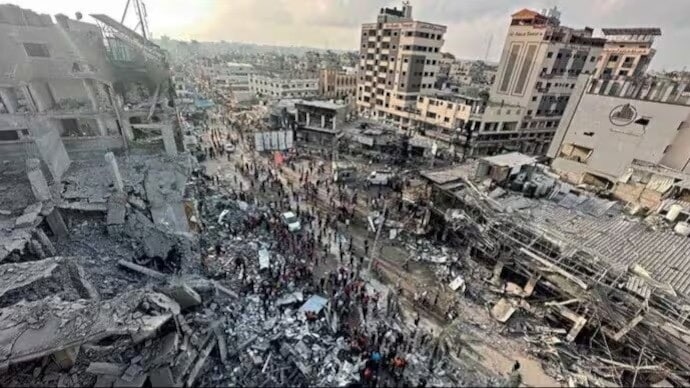
Israel currently controls about 60 per cent of the Gaza Strip, much of which has been devastated by the war and largely depopulated. The enclave's roughly two million residents are concentrated in the remaining areas, where many continue to live in overcrowded tent camps and heavily damaged neighbourhoods.
Despite the proposed framework, Israel has maintained that it will not withdraw its forces until Hamas is fully disarmed and Gaza is demilitarised. An Israeli official reiterated this position on Thursday, speaking on condition of anonymity in accordance with government protocol.
A person familiar with the negotiations said that while Israel has been closely involved in the process, it is not a formal signatory to the agreement, which has been negotiated between Hamas and the mediating countries. The ceasefire framework is being guaranteed by the United States, Turkiye, Egypt and Qatar.
HAMAS DISARMAMENT MAY TAKE YEARS
US officials and representatives of the Board of Peace on Thursday offered an upbeat assessment of the proposed Gaza agreement, describing it as a significant step towards ending the conflict.
Speaking to reporters on condition of anonymity under White House ground rules, the officials said the deal lays out a phased roadmap for disarmament and security arrangements. The Board of Peace was set up by President Donald Trump to oversee the implementation of the Gaza ceasefire.
According to the officials, the agreement initially requires the Hamas-run police force to surrender its weapons, but this does not extend to the group's broader military wing or its heavy arsenal.
The surrender of heavy weapons, along with the dismantling of Hamas' tunnel network and other military infrastructure, would take place in a later phase that could span 200 to 350 days, a Board of Peace official said.
A Hamas official and a regional official involved in the negotiations said Hamas and other armed groups had agreed to collect and store their weapons within Gaza under the supervision of the Palestinian technocratic committee. They said the weapons would not be handed over to Israel or any non-Palestinian entity.
The officials, who also spoke anonymously because they were not authorised to discuss the negotiations publicly, said the process would be implemented gradually and would be linked to the phased withdrawal of Israeli forces from Gaza.
ISRAEL HAS BEEN DEEPLY SCEPTICAL
A US official said Israel had been kept informed throughout the negotiations, despite its longstanding scepticism over Hamas' willingness to disarm or relinquish control of Gaza.
The official added that the agreement does not require Israel to undertake any commitments beyond those it had already accepted under the ceasefire framework announced last October.
A member of the Palestinian technocratic committee told the Associated Press on Friday that the body was ready to assume its role in Gaza but remained concerned that Israel could create obstacles to its deployment. Speaking on condition of anonymity, the official said the committee was unlikely to enter the enclave for at least two months.
While welcoming the progress made under the agreement, the committee acknowledged that restoring public institutions, reviving essential services and rebuilding the war-ravaged territory would be an enormous challenge.
The war began after the Hamas-led attack on southern Israel on October 7, 2023, in which around 1,200 people were killed and 251 were taken hostage.
Israel's subsequent military campaign in Gaza has killed more than 73,000 Palestinians, according to the Gaza Health Ministry. The ministry, which operates under the Hamas-run government, does not differentiate between civilians and combatants in its casualty figures but says women and children account for roughly half of those killed.
Hamas on Friday said it would begin the process of disarming under a US-backed ceasefire agreement that requires Israel to halt military operations and withdraw from Gaza, but Israel signalled it would not pull back its troops until the Palestinian militant group undergoes what it called "genuine" disarmament, underscoring the hurdles to ending the war.
The group said it would surrender its heavy weapons only at a later stage and only if a Palestinian state is established, a condition firmly rejected by Israel's current government.
The disarmament plan forms part of a US-mediated ceasefire framework unveiled last October, under which Hamas was to disarm and transfer authority to an independent Palestinian administration, while Israel would withdraw its forces and an International Stabilisation Force would be deployed in Gaza.
Implementation of the agreement has remained stalled, with a senior Israeli official on Friday saying that "there will be no IDF withdrawal from the current Yellow Line without the genuine disarmament of Hamas”, while Hamas has accused Israel of violating the ceasefire by continuing military strikes in the enclave.
Any move by Hamas to disarm would mark a major shift for the group, whose founding charter advocates armed resistance against Israel and whose military arsenal, including rockets, anti-tank missiles and explosives, has long been central to its identity. Israel has yet to officially comment on the agreement.
On the Israeli side, significant concessions also appear unlikely ahead of the country's October elections. Prime Minister Benjamin Netanyahu, who is seeking re-election, is under pressure from critics who blame his government for failing to prevent the October 7, 2023, Hamas attack that sparked the war.
Neil Quilliam, a Middle East expert at the London-based Chatham House think tank, said there is little expectation that Hamas will fully disarm or that Israel will withdraw from Gaza in the near term.
"Netanyahu's silence speaks volumes," Quilliam said, describing the proposal as a politically difficult decision for the Israeli leader.
"With elections approaching and several Cabinet ministers as well as opposition leaders advising against the deal, moving ahead with it could seriously damage his re-election prospects," he added.
DEAL TO BE IMPLEMENTED IN STAGES
US President Donald Trump, while announcing the latest Gaza agreement on social media, said the deal would be implemented in "carefully structured phases", with each stage linked to specific security and political commitments.
"As disarmament is completed, Israeli forces will withdraw, and the International Stabilisation Force will work with a new Palestinian police force to take responsibility for Gaza being safe for its residents and its neighbours," he wrote.
According to the Associated Press, the agreement states that weapons held by the Hamas-run police would be transferred to the US-backed National Committee for the Administration of Gaza, a technocratic Palestinian body, once it is established in the enclave.
However, the timeline for its deployment remains uncertain as it depends on the fulfilment of earlier provisions of the deal.
The agreement also envisages the phased decommissioning and storage of Hamas' heavy weapons, military infrastructure and tunnel network after the Palestinian committee takes charge and international forces are deployed. These steps would be synchronised with a phased withdrawal of Israeli troops from Gaza.
Israel currently controls about 60 per cent of the Gaza Strip, much of which has been devastated by the war and largely depopulated. The enclave's roughly two million residents are concentrated in the remaining areas, where many continue to live in overcrowded tent camps and heavily damaged neighbourhoods.
Despite the proposed framework, Israel has maintained that it will not withdraw its forces until Hamas is fully disarmed and Gaza is demilitarised. An Israeli official reiterated this position on Thursday, speaking on condition of anonymity in accordance with government protocol.
A person familiar with the negotiations said that while Israel has been closely involved in the process, it is not a formal signatory to the agreement, which has been negotiated between Hamas and the mediating countries. The ceasefire framework is being guaranteed by the United States, Turkiye, Egypt and Qatar.
HAMAS DISARMAMENT MAY TAKE YEARS
US officials and representatives of the Board of Peace on Thursday offered an upbeat assessment of the proposed Gaza agreement, describing it as a significant step towards ending the conflict.
Speaking to reporters on condition of anonymity under White House ground rules, the officials said the deal lays out a phased roadmap for disarmament and security arrangements. The Board of Peace was set up by President Donald Trump to oversee the implementation of the Gaza ceasefire.
According to the officials, the agreement initially requires the Hamas-run police force to surrender its weapons, but this does not extend to the group's broader military wing or its heavy arsenal.
The surrender of heavy weapons, along with the dismantling of Hamas' tunnel network and other military infrastructure, would take place in a later phase that could span 200 to 350 days, a Board of Peace official said.
A Hamas official and a regional official involved in the negotiations said Hamas and other armed groups had agreed to collect and store their weapons within Gaza under the supervision of the Palestinian technocratic committee. They said the weapons would not be handed over to Israel or any non-Palestinian entity.
The officials, who also spoke anonymously because they were not authorised to discuss the negotiations publicly, said the process would be implemented gradually and would be linked to the phased withdrawal of Israeli forces from Gaza.
ISRAEL HAS BEEN DEEPLY SCEPTICAL
A US official said Israel had been kept informed throughout the negotiations, despite its longstanding scepticism over Hamas' willingness to disarm or relinquish control of Gaza.
The official added that the agreement does not require Israel to undertake any commitments beyond those it had already accepted under the ceasefire framework announced last October.
A member of the Palestinian technocratic committee told the Associated Press on Friday that the body was ready to assume its role in Gaza but remained concerned that Israel could create obstacles to its deployment. Speaking on condition of anonymity, the official said the committee was unlikely to enter the enclave for at least two months.
While welcoming the progress made under the agreement, the committee acknowledged that restoring public institutions, reviving essential services and rebuilding the war-ravaged territory would be an enormous challenge.
The war began after the Hamas-led attack on southern Israel on October 7, 2023, in which around 1,200 people were killed and 251 were taken hostage.
Israel's subsequent military campaign in Gaza has killed more than 73,000 Palestinians, according to the Gaza Health Ministry. The ministry, which operates under the Hamas-run government, does not differentiate between civilians and combatants in its casualty figures but says women and children account for roughly half of those killed.
Hamas on Friday said it would begin the process of disarming under a US-backed ceasefire agreement that requires Israel to halt military operations and withdraw from Gaza, but Israel signalled it would not pull back its troops until the Palestinian militant group undergoes what it called "genuine" disarmament, underscoring the hurdles to ending the war.
The group said it would surrender its heavy weapons only at a later stage and only if a Palestinian state is established, a condition firmly rejected by Israel's current government.
The disarmament plan forms part of a US-mediated ceasefire framework unveiled last October, under which Hamas was to disarm and transfer authority to an independent Palestinian administration, while Israel would withdraw its forces and an International Stabilisation Force would be deployed in Gaza.
Implementation of the agreement has remained stalled, with a senior Israeli official on Friday saying that "there will be no IDF withdrawal from the current Yellow Line without the genuine disarmament of Hamas”, while Hamas has accused Israel of violating the ceasefire by continuing military strikes in the enclave.
Any move by Hamas to disarm would mark a major shift for the group, whose founding charter advocates armed resistance against Israel and whose military arsenal, including rockets, anti-tank missiles and explosives, has long been central to its identity. Israel has yet to officially comment on the agreement.
On the Israeli side, significant concessions also appear unlikely ahead of the country's October elections. Prime Minister Benjamin Netanyahu, who is seeking re-election, is under pressure from critics who blame his government for failing to prevent the October 7, 2023, Hamas attack that sparked the war.
Neil Quilliam, a Middle East expert at the London-based Chatham House think tank, said there is little expectation that Hamas will fully disarm or that Israel will withdraw from Gaza in the near term.
"Netanyahu's silence speaks volumes," Quilliam said, describing the proposal as a politically difficult decision for the Israeli leader.
"With elections approaching and several Cabinet ministers as well as opposition leaders advising against the deal, moving ahead with it could seriously damage his re-election prospects," he added.
DEAL TO BE IMPLEMENTED IN STAGES
US President Donald Trump, while announcing the latest Gaza agreement on social media, said the deal would be implemented in "carefully structured phases", with each stage linked to specific security and political commitments.
"As disarmament is completed, Israeli forces will withdraw, and the International Stabilisation Force will work with a new Palestinian police force to take responsibility for Gaza being safe for its residents and its neighbours," he wrote.
According to the Associated Press, the agreement states that weapons held by the Hamas-run police would be transferred to the US-backed National Committee for the Administration of Gaza, a technocratic Palestinian body, once it is established in the enclave.
However, the timeline for its deployment remains uncertain as it depends on the fulfilment of earlier provisions of the deal.
The agreement also envisages the phased decommissioning and storage of Hamas' heavy weapons, military infrastructure and tunnel network after the Palestinian committee takes charge and international forces are deployed. These steps would be synchronised with a phased withdrawal of Israeli troops from Gaza.
Israel currently controls about 60 per cent of the Gaza Strip, much of which has been devastated by the war and largely depopulated. The enclave's roughly two million residents are concentrated in the remaining areas, where many continue to live in overcrowded tent camps and heavily damaged neighbourhoods.
Despite the proposed framework, Israel has maintained that it will not withdraw its forces until Hamas is fully disarmed and Gaza is demilitarised. An Israeli official reiterated this position on Thursday, speaking on condition of anonymity in accordance with government protocol.
A person familiar with the negotiations said that while Israel has been closely involved in the process, it is not a formal signatory to the agreement, which has been negotiated between Hamas and the mediating countries. The ceasefire framework is being guaranteed by the United States, Turkiye, Egypt and Qatar.
HAMAS DISARMAMENT MAY TAKE YEARS
US officials and representatives of the Board of Peace on Thursday offered an upbeat assessment of the proposed Gaza agreement, describing it as a significant step towards ending the conflict.
Speaking to reporters on condition of anonymity under White House ground rules, the officials said the deal lays out a phased roadmap for disarmament and security arrangements. The Board of Peace was set up by President Donald Trump to oversee the implementation of the Gaza ceasefire.
According to the officials, the agreement initially requires the Hamas-run police force to surrender its weapons, but this does not extend to the group's broader military wing or its heavy arsenal.
The surrender of heavy weapons, along with the dismantling of Hamas' tunnel network and other military infrastructure, would take place in a later phase that could span 200 to 350 days, a Board of Peace official said.
A Hamas official and a regional official involved in the negotiations said Hamas and other armed groups had agreed to collect and store their weapons within Gaza under the supervision of the Palestinian technocratic committee. They said the weapons would not be handed over to Israel or any non-Palestinian entity.
The officials, who also spoke anonymously because they were not authorised to discuss the negotiations publicly, said the process would be implemented gradually and would be linked to the phased withdrawal of Israeli forces from Gaza.
ISRAEL HAS BEEN DEEPLY SCEPTICAL
A US official said Israel had been kept informed throughout the negotiations, despite its longstanding scepticism over Hamas' willingness to disarm or relinquish control of Gaza.
The official added that the agreement does not require Israel to undertake any commitments beyond those it had already accepted under the ceasefire framework announced last October.
A member of the Palestinian technocratic committee told the Associated Press on Friday that the body was ready to assume its role in Gaza but remained concerned that Israel could create obstacles to its deployment. Speaking on condition of anonymity, the official said the committee was unlikely to enter the enclave for at least two months.
While welcoming the progress made under the agreement, the committee acknowledged that restoring public institutions, reviving essential services and rebuilding the war-ravaged territory would be an enormous challenge.
The war began after the Hamas-led attack on southern Israel on October 7, 2023, in which around 1,200 people were killed and 251 were taken hostage.
Israel's subsequent military campaign in Gaza has killed more than 73,000 Palestinians, according to the Gaza Health Ministry. The ministry, which operates under the Hamas-run government, does not differentiate between civilians and combatants in its casualty figures but says women and children account for roughly half of those killed.

