Young Hitler once lived in this house. Austria turned it into a police station
The house where Adolf Hitler was born officially reopened as a police station on Wednesday in the town of Braunau am Inn, capping years of political wrangling over what to do with a property that has long been viewed as a reminder of the Nazi leader's dark past.
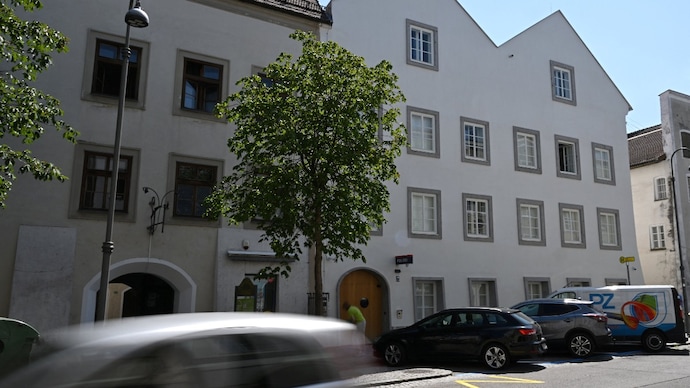
Visitors still stop outside to take photographs, some come out of curiosity, others for reasons locals would rather forget. But the building where Adolf Hitler was born is no longer just a historic address.
Now, Austria is trying to give the building an entirely new identity.
The house where Adolf Hitler was born officially reopened as a police station on Wednesday in the town of Braunau am Inn, capping years of political wrangling over what to do with a property that has long been viewed as a reminder of the Nazi leader's dark past. The government hopes it will finally strip the site of its appeal to far-right extremists and ensure it is remembered not as a shrine, but as an ordinary public building.
Outside, almost nothing hints at its infamous past. A memorial stone from the Mauthausen concentration camp, engraved with the words "Never again fascism", still sits on the pavement. On the building itself, there is only one sign -- "Police."
The decision to convert the property into a police station was anything but accidental.
Officials wanted the building to stand for the exact opposite of what it once represented.
"The aim was to prevent any association with Adolf Hitler, so as to strip it of that mystique," Stephan Mlczoch, head of the Austrian Interior Ministry's history department, told reporters during a tour of the renovated building.
According to Reuters, that 'mystique' did not emerge because Hitler lived there for years. He spent only a few weeks in the house after his birth in 1889 before his family moved elsewhere. But during the Nazi era, the building was elevated into a symbol of the dictator's cult of personality, drawing admirers long after World War II ended.
Interior Minister Gerhard Karner said the building's new purpose sends a powerful message.
"Today's police, our Austrian federal police, is the exact opposite of the symbolism tied to this place. Our police stand ... for democracy and the rule of law," he said during the opening ceremony.
A LONG DEBATE OVER A TROUBLED ADDRESS
The future of the house has divided Austria for years.
Until recently, the property was privately owned and housed a charity for people with disabilities. The Austrian government eventually seized it in 2017 after lengthy legal and political disputes, before announcing plans to convert it into a police station two years later.
The idea was simple: a government office would make the building less accessible and less attractive to extremist visitors than a public institution or museum.
Mayor Johannes Waidbacher, who sat on the commission that weighed the building's future, said keeping a charity there would have meant opening its doors to the public every day.
"I think on the whole the people of Braunau have accepted it and can live with it," he told Reuters.
Still, he admitted nobody knows whether the plan will achieve its ultimate goal.
"I think it isn't a bad approach but whether it works as we all hope and expect, we'll have to wait and see."
CAN HISTORY REALLY BE REBRANDED?
Not everyone is convinced that changing the building's purpose changes what it represents.
Among the strongest critics is the Mauthausen Committee, Austria's leading Holocaust survivors' organisation, which believes the country should confront its history more openly instead of trying to neutralise it.
"Every year at the Mauthausen concentration camp memorial there's a ceremony to say: never again. And in Braunau they're saying: let's forget as soon as possible," said Robert Eiter of the Mauthausen Committee and the Network Against Racism and Right-Wing Extremism, according to Reuters.
"The world won't forget where the worst mass murderer in history was born. Wikipedia won't change its entries," Eiter said, adding there will be no reduction in the number of neo-Nazis making "the pilgrimage to Braunau".
Eiter's criticism reflects a debate Austria has struggled with for decades: how should the country remember its Nazi past? For years after World War II, Austria described itself as Hitler's first victim after Nazi Germany annexed the country in 1938. Only in recent decades has it more openly acknowledged that many Austrians also played a big role in the Nazi regime and its crimes.
Whether the new police station succeeds in ending the building's attraction for extremists remains to be seen. But Austria is betting that the strongest way to deal with one of its haunting landmarks.
Visitors still stop outside to take photographs, some come out of curiosity, others for reasons locals would rather forget. But the building where Adolf Hitler was born is no longer just a historic address.
Now, Austria is trying to give the building an entirely new identity.
The house where Adolf Hitler was born officially reopened as a police station on Wednesday in the town of Braunau am Inn, capping years of political wrangling over what to do with a property that has long been viewed as a reminder of the Nazi leader's dark past. The government hopes it will finally strip the site of its appeal to far-right extremists and ensure it is remembered not as a shrine, but as an ordinary public building.
Outside, almost nothing hints at its infamous past. A memorial stone from the Mauthausen concentration camp, engraved with the words "Never again fascism", still sits on the pavement. On the building itself, there is only one sign -- "Police."
The decision to convert the property into a police station was anything but accidental.
Officials wanted the building to stand for the exact opposite of what it once represented.
"The aim was to prevent any association with Adolf Hitler, so as to strip it of that mystique," Stephan Mlczoch, head of the Austrian Interior Ministry's history department, told reporters during a tour of the renovated building.
According to Reuters, that 'mystique' did not emerge because Hitler lived there for years. He spent only a few weeks in the house after his birth in 1889 before his family moved elsewhere. But during the Nazi era, the building was elevated into a symbol of the dictator's cult of personality, drawing admirers long after World War II ended.
Interior Minister Gerhard Karner said the building's new purpose sends a powerful message.
"Today's police, our Austrian federal police, is the exact opposite of the symbolism tied to this place. Our police stand ... for democracy and the rule of law," he said during the opening ceremony.
A LONG DEBATE OVER A TROUBLED ADDRESS
The future of the house has divided Austria for years.
Until recently, the property was privately owned and housed a charity for people with disabilities. The Austrian government eventually seized it in 2017 after lengthy legal and political disputes, before announcing plans to convert it into a police station two years later.
The idea was simple: a government office would make the building less accessible and less attractive to extremist visitors than a public institution or museum.
Mayor Johannes Waidbacher, who sat on the commission that weighed the building's future, said keeping a charity there would have meant opening its doors to the public every day.
"I think on the whole the people of Braunau have accepted it and can live with it," he told Reuters.
Still, he admitted nobody knows whether the plan will achieve its ultimate goal.
"I think it isn't a bad approach but whether it works as we all hope and expect, we'll have to wait and see."
CAN HISTORY REALLY BE REBRANDED?
Not everyone is convinced that changing the building's purpose changes what it represents.
Among the strongest critics is the Mauthausen Committee, Austria's leading Holocaust survivors' organisation, which believes the country should confront its history more openly instead of trying to neutralise it.
"Every year at the Mauthausen concentration camp memorial there's a ceremony to say: never again. And in Braunau they're saying: let's forget as soon as possible," said Robert Eiter of the Mauthausen Committee and the Network Against Racism and Right-Wing Extremism, according to Reuters.
"The world won't forget where the worst mass murderer in history was born. Wikipedia won't change its entries," Eiter said, adding there will be no reduction in the number of neo-Nazis making "the pilgrimage to Braunau".
Eiter's criticism reflects a debate Austria has struggled with for decades: how should the country remember its Nazi past? For years after World War II, Austria described itself as Hitler's first victim after Nazi Germany annexed the country in 1938. Only in recent decades has it more openly acknowledged that many Austrians also played a big role in the Nazi regime and its crimes.
Whether the new police station succeeds in ending the building's attraction for extremists remains to be seen. But Austria is betting that the strongest way to deal with one of its haunting landmarks.
Visitors still stop outside to take photographs, some come out of curiosity, others for reasons locals would rather forget. But the building where Adolf Hitler was born is no longer just a historic address.
Now, Austria is trying to give the building an entirely new identity.
The house where Adolf Hitler was born officially reopened as a police station on Wednesday in the town of Braunau am Inn, capping years of political wrangling over what to do with a property that has long been viewed as a reminder of the Nazi leader's dark past. The government hopes it will finally strip the site of its appeal to far-right extremists and ensure it is remembered not as a shrine, but as an ordinary public building.
Outside, almost nothing hints at its infamous past. A memorial stone from the Mauthausen concentration camp, engraved with the words "Never again fascism", still sits on the pavement. On the building itself, there is only one sign -- "Police."
The decision to convert the property into a police station was anything but accidental.
Officials wanted the building to stand for the exact opposite of what it once represented.
"The aim was to prevent any association with Adolf Hitler, so as to strip it of that mystique," Stephan Mlczoch, head of the Austrian Interior Ministry's history department, told reporters during a tour of the renovated building.
According to Reuters, that 'mystique' did not emerge because Hitler lived there for years. He spent only a few weeks in the house after his birth in 1889 before his family moved elsewhere. But during the Nazi era, the building was elevated into a symbol of the dictator's cult of personality, drawing admirers long after World War II ended.
Interior Minister Gerhard Karner said the building's new purpose sends a powerful message.
"Today's police, our Austrian federal police, is the exact opposite of the symbolism tied to this place. Our police stand ... for democracy and the rule of law," he said during the opening ceremony.
A LONG DEBATE OVER A TROUBLED ADDRESS
The future of the house has divided Austria for years.
Until recently, the property was privately owned and housed a charity for people with disabilities. The Austrian government eventually seized it in 2017 after lengthy legal and political disputes, before announcing plans to convert it into a police station two years later.
The idea was simple: a government office would make the building less accessible and less attractive to extremist visitors than a public institution or museum.
Mayor Johannes Waidbacher, who sat on the commission that weighed the building's future, said keeping a charity there would have meant opening its doors to the public every day.
"I think on the whole the people of Braunau have accepted it and can live with it," he told Reuters.
Still, he admitted nobody knows whether the plan will achieve its ultimate goal.
"I think it isn't a bad approach but whether it works as we all hope and expect, we'll have to wait and see."
CAN HISTORY REALLY BE REBRANDED?
Not everyone is convinced that changing the building's purpose changes what it represents.
Among the strongest critics is the Mauthausen Committee, Austria's leading Holocaust survivors' organisation, which believes the country should confront its history more openly instead of trying to neutralise it.
"Every year at the Mauthausen concentration camp memorial there's a ceremony to say: never again. And in Braunau they're saying: let's forget as soon as possible," said Robert Eiter of the Mauthausen Committee and the Network Against Racism and Right-Wing Extremism, according to Reuters.
"The world won't forget where the worst mass murderer in history was born. Wikipedia won't change its entries," Eiter said, adding there will be no reduction in the number of neo-Nazis making "the pilgrimage to Braunau".
Eiter's criticism reflects a debate Austria has struggled with for decades: how should the country remember its Nazi past? For years after World War II, Austria described itself as Hitler's first victim after Nazi Germany annexed the country in 1938. Only in recent decades has it more openly acknowledged that many Austrians also played a big role in the Nazi regime and its crimes.
Whether the new police station succeeds in ending the building's attraction for extremists remains to be seen. But Austria is betting that the strongest way to deal with one of its haunting landmarks.

