Iran's weapons of mass distraction
Top US officials believe that the Strait of Hormuz, which Iran has declared closed, is heavily mined. No vessel has hit a mine as of date, leading to the question if the mines were laid in the first place.
The 2003 US invasion of Iran revolved around one acronym – Weapons of Mass Destruction (WMDs) – which Iraqi dictator Saddam Hussein was believed to possess. Then Secretary of State Colin Powell made the case for the US invasion of Iraq by waving a small vial of powder in the United Nations – the quantity of anthrax he estimated would take to kill tens of thousands of people. It was later revealed that those WMDs never existed. Powell deeply regretted that speech and called it a “blot” on his record. It was one of the biggest hoaxes of the 21st century, and a cruel one at that. Over 200,000 Iraqis and 4,431 US soldiers died over the eight-year course of the war.
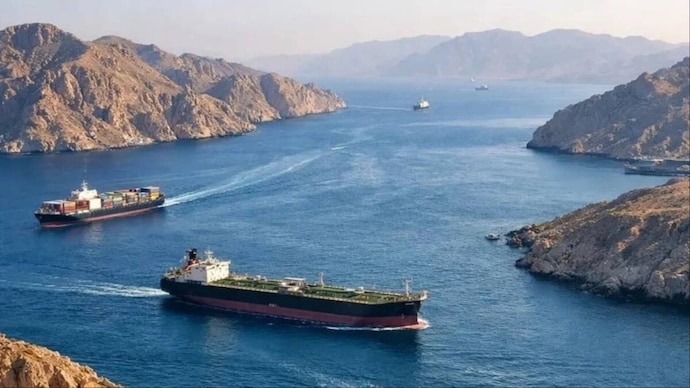
Twenty-three years later, could we be looking at another hoax? This time, Iranian WMDs – sea mines which the Iranian regime is believed to have laid to block the Strait of Hormuz, the world’s most critical energy chokepoint – over 20 per cent of the world’s crude oil passes through here. Commercial shipping traffic has plummeted since the US-Iran war began – only 14 ships cross per day as compared to a pre-war average of 140 ships per day. The reason? Iran has blocked the Strait of Hormuz since the war began on February 28. The strait is just 33 kilometres at its narrowest point between Iran and Oman. Iran is believed to have used among the nastiest of naval weapons – anti-ship sea.
Large explosive-filled metal containers lie in wait on the sea bed or moored just below the surface, awakened by magnetic, acoustic and pressure changes caused when ships move through water. Designed to disable and destroy warships and merchantmen, they are among the cheapest asymmetric tools of naval warfare, enforcing maritime blockades. The mere declaration of a minefield causes merchant shipping to avoid certain areas, which is what Iran is believed to have implied with its statements.
That Iran has a massive arsenal of sea mines is not in doubt – it is believed to possess between 2,000 and 6,000 such weapons including the most lethal – rocket mines which launch themselves into the underbelly of a passing ship. Between 1987-1988, the US Navy intervened to protect shipping in the strait, destroying several Iranian mine-laying craft. This time around, things are slightly different. Over the past four decades, the Islamic Revolutionary Guard Corps (IRGC) has invested heavily in capabilities to shut the strait – swarming speedboats, unmanned surface vessels and drones. But interestingly, none of the Iranian statements until now have claimed to have mined the strait.
Official statements from the IRGC have only formally declared the strait closed. In April this year, the IRGC released a map of the Strait of Hormuz with a giant red circle bang in the middle of the shipping channels marked “Hazardous Area, restricted for all traffic”. The only safe route were two channels north of this hazardous area under Iranian control, the newly announced Persian Gulf Strait Authority (PGSA).
Yet, despite recent searches, the US military hasn’t been able to find any mines in this hazardous area. Top US officials, however, believe they’re still there. Admiral Daryl Caudle, the US Navy’s Chief of Operations, told Bloomberg News that he believes Iran’s mines are meant to funnel commercial shipping into sea lanes close to Iran’s coast: “There’s no chance they’re not there.”
Other reports quote US officials saying that “Iran cannot locate all the mines it laid in the waterway and lacks the capability to remove them,” which they say, are complicating efforts to fully reopen the strait.
Since the conflict began, Iran has targeted or damaged more than 20 commercial vessels in the strait. Most attacks have used unmanned speed boats, unidentified missiles and projectiles which have damaged engine rooms and caused fires. No vessel has hit a mine as of date, leading to question whether the mines were laid in the first place. There is genuine uncertainty. Until mines have been found, Tehran can lay claim for successfully planting another kind of WMDs – Weapons of Mass Distraction.
The 2003 US invasion of Iran revolved around one acronym – Weapons of Mass Destruction (WMDs) – which Iraqi dictator Saddam Hussein was believed to possess. Then Secretary of State Colin Powell made the case for the US invasion of Iraq by waving a small vial of powder in the United Nations – the quantity of anthrax he estimated would take to kill tens of thousands of people. It was later revealed that those WMDs never existed. Powell deeply regretted that speech and called it a “blot” on his record. It was one of the biggest hoaxes of the 21st century, and a cruel one at that. Over 200,000 Iraqis and 4,431 US soldiers died over the eight-year course of the war.
Twenty-three years later, could we be looking at another hoax? This time, Iranian WMDs – sea mines which the Iranian regime is believed to have laid to block the Strait of Hormuz, the world’s most critical energy chokepoint – over 20 per cent of the world’s crude oil passes through here. Commercial shipping traffic has plummeted since the US-Iran war began – only 14 ships cross per day as compared to a pre-war average of 140 ships per day. The reason? Iran has blocked the Strait of Hormuz since the war began on February 28. The strait is just 33 kilometres at its narrowest point between Iran and Oman. Iran is believed to have used among the nastiest of naval weapons – anti-ship sea.
Large explosive-filled metal containers lie in wait on the sea bed or moored just below the surface, awakened by magnetic, acoustic and pressure changes caused when ships move through water. Designed to disable and destroy warships and merchantmen, they are among the cheapest asymmetric tools of naval warfare, enforcing maritime blockades. The mere declaration of a minefield causes merchant shipping to avoid certain areas, which is what Iran is believed to have implied with its statements.
That Iran has a massive arsenal of sea mines is not in doubt – it is believed to possess between 2,000 and 6,000 such weapons including the most lethal – rocket mines which launch themselves into the underbelly of a passing ship. Between 1987-1988, the US Navy intervened to protect shipping in the strait, destroying several Iranian mine-laying craft. This time around, things are slightly different. Over the past four decades, the Islamic Revolutionary Guard Corps (IRGC) has invested heavily in capabilities to shut the strait – swarming speedboats, unmanned surface vessels and drones. But interestingly, none of the Iranian statements until now have claimed to have mined the strait.
Official statements from the IRGC have only formally declared the strait closed. In April this year, the IRGC released a map of the Strait of Hormuz with a giant red circle bang in the middle of the shipping channels marked “Hazardous Area, restricted for all traffic”. The only safe route were two channels north of this hazardous area under Iranian control, the newly announced Persian Gulf Strait Authority (PGSA).
Yet, despite recent searches, the US military hasn’t been able to find any mines in this hazardous area. Top US officials, however, believe they’re still there. Admiral Daryl Caudle, the US Navy’s Chief of Operations, told Bloomberg News that he believes Iran’s mines are meant to funnel commercial shipping into sea lanes close to Iran’s coast: “There’s no chance they’re not there.”
Other reports quote US officials saying that “Iran cannot locate all the mines it laid in the waterway and lacks the capability to remove them,” which they say, are complicating efforts to fully reopen the strait.
Since the conflict began, Iran has targeted or damaged more than 20 commercial vessels in the strait. Most attacks have used unmanned speed boats, unidentified missiles and projectiles which have damaged engine rooms and caused fires. No vessel has hit a mine as of date, leading to question whether the mines were laid in the first place. There is genuine uncertainty. Until mines have been found, Tehran can lay claim for successfully planting another kind of WMDs – Weapons of Mass Distraction.

