Pay Trump's Hormuz hafta or risk sleeping with the fishes
After igniting the Middle East conflict and imperilling the Strait of Hormuz, US President Donald Trump said ships will be charged a fee for safe passage through the critical trade route. The proposal is not just brazen but downright fanciful.
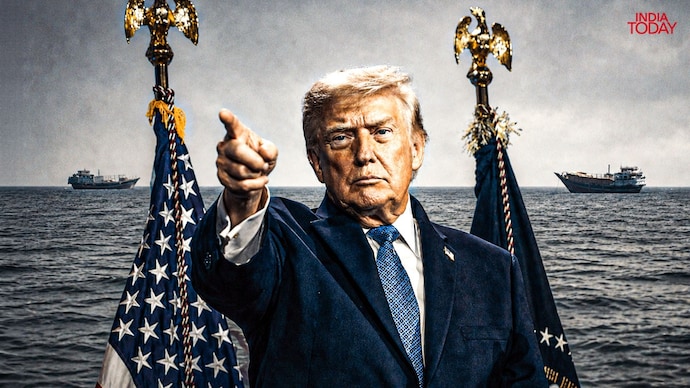
The US and Iran are once again on the verge of all-out war. Besides trading tit-for-tat missile and drone strikes, the two adversaries have announced rival blockades of the Strait of Hormuz, the world's most critical oil passageway.
Amid this, US President Donald Trump has unveiled a proposal that is as extraordinary as it is dangerous. For overseeing the maritime trade route at the centre of the conflict, Trump wants the US to be reimbursed "at the rate of 20 per cent on all cargo shipped" through the strait for "providing safety and security to this very volatile section of the World."
It’s a reversal of US policy, which maintained that the Strait of Hormuz should remain open to all without tolls -- precisely as it was before the US and Israel attacked Iran on February 28.
"We will become guardians of the strait," the US President declared while making it clear that if you want safe passage, you gotta pay up first.
Trump, the self-proclaimed master of the art of the deal, now sounds like a local thug collecting ‘hafta’, or protection money.
The problem is that any attempt to charge a transit fee would violate long-standing principles of freedom of navigation, undermine international maritime law and inject even greater instability into an already volatile region.
THE PROTECTION RACKET
The latest round of fighting was triggered by Iranian attacks on shipping. Washington responded by reinstating its naval blockade of Iran. Even as Trump announced the move, two oil tankers came under Iranian fire in the Strait of Hormuz, killing an Indian crew member.
Since the US-Israeli war with Iran erupted, shipping companies have demanded stronger protection to move vessels safely through Hormuz. Trump now says the US is willing to provide that security -- but only in exchange for a 20 per cent levy on cargo.
"I want to be reimbursed because we're protecting a VERY rich portion of the world," Trump said. "We're spending money... we are going to be reimbursed for protection."
Later, he told Fox News that the US "guarded the strait for 50 years and never got paid for it. We want to be reimbursed for this, for putting our people in danger."
He specifically named Saudi Arabia, Qatar, the United Arab Emirates, Kuwait and Bahrain, arguing that Gulf nations should bear the cost of moving their oil under the protection of US naval and air power.
The US, Trump insisted, does not even "need" these countries because "we have more oil than any other country in the world."
This begs the question: If America neither depends on Gulf oil nor seeks territorial control over Hormuz, why should it claim the right to tax international shipping?
True to form, the announcement is also glaringly devoid of substance. Trump has offered next to no details on how such a system would work. It remains unclear how the 20 per cent fee would be calculated. He has not explained what protection the US would provide, who would collect the money, or what consequences ships would face if they simply refused to pay.
More importantly, if a merchant vessel pays the fee but is still struck by an Iranian projectile, who bears the liability? Would Washington compensate shipowners for the loss of cargo or lives?
Trump's offer sounds less like an insurance policy and more of a protection racket: pay up, hope for the best, and if your ship still ends up on the seabed, make your peace with sleeping with the fishes.
MY WAR, YOU FOOT THE BILL
Iranian state media declared the Strait of Hormuz closed "until further notice," a claim Trump dismissed by boasting that the US had "bombed the hell out of them." Monday marked the third straight day of US strikes on Iran after Trump declared the ceasefire “over”.
Diplomatic talks continue in name, but they are hanging by a thread. Iranian officials have categorically rejected any US role in managing the strait, declaring they would never allow Washington to interfere in its administration.
Against this backdrop, Trump's proposal is not just fanciful but downright brazen.
Transit through Hormuz was free and relatively secure before the US and Israel chose to wage war against Iran. The conflict has already cost lives, caused one of the biggest oil shocks in recent years and sent energy and commodity prices soaring across the globe.
Now Trump wants the rest of the world to pay for the consequences of a war he ignited.
The proposal also lays bare Washington's staggering double standards. Back in June, US Secretary of State Marco Rubio forcefully rejected the idea of Iran charging tolls in Hormuz.
"That's an international waterway. There isn't a nation on Earth that supports having to pay money to go through the straits," Rubio said during a visit to Bahrain.
He added there was "zero support among the Gulf countries for any sort of toll or fees" and insisted that "the president's made it clear that's not going to happen."
Apparently, that principle applies only when Iran is collecting the money.
TRUMP'S PLAN COULD EMBOLDEN IRAN
For decades, the US has portrayed itself as the global champion of freedom of navigation. Now, Washington appears willing to abandon its own long-held position if there is money to be made, or leverage to be gained.
By squeezing regional shipping and Iranian exports, Trump hopes to deprive Tehran of revenue, weaken its war effort and force it into concessions over Hormuz.
Instead, he risks legitimising Iran’s position.
At the outset of the war, Iran lay mines and virtually closed down the strait. It then reportedly began demanding up to $2 million per vessel for guarantees of safe passage. Iran’s parliament is now advancing legislation asserting the Islamic Republic’s sovereignty over Hormuz that would allow it to impose tolls, particularly on ships from hostile countries.
Ironically, the interim understanding reached between the two sides recognised Iran's influence over the strait while stipulating that neither side would collect tolls for 60 days, implicitly leaving the possibility open thereafter.
Trump's announcement has handed Tehran exactly what it wanted -- an argument that if Washington can charge for safe passage, so can Iran.
Iranian Foreign Minister Abbas Araghchi wasted no time mocking the US President.
"20% is of course too much," he wrote on X. "We will be fair."
The Strait of Hormuz is an international waterway where ships enjoy the right of transit passage under international law. It was never designed to become a toll booth for whichever military power happens to dominate it at a given moment.
The UN's shipping agency has already dismissed Trump’s proposal, saying there is "no legal basis through which to introduce mandatory tolls simply to transit through a strait."
Whether the demand comes from Tehran or Washington, charging mandatory fees for passage through Hormuz is extortion dressed up as foreign policy.
The US and Iran are once again on the verge of all-out war. Besides trading tit-for-tat missile and drone strikes, the two adversaries have announced rival blockades of the Strait of Hormuz, the world's most critical oil passageway.
Amid this, US President Donald Trump has unveiled a proposal that is as extraordinary as it is dangerous. For overseeing the maritime trade route at the centre of the conflict, Trump wants the US to be reimbursed "at the rate of 20 per cent on all cargo shipped" through the strait for "providing safety and security to this very volatile section of the World."
It’s a reversal of US policy, which maintained that the Strait of Hormuz should remain open to all without tolls -- precisely as it was before the US and Israel attacked Iran on February 28.
"We will become guardians of the strait," the US President declared while making it clear that if you want safe passage, you gotta pay up first.
Trump, the self-proclaimed master of the art of the deal, now sounds like a local thug collecting ‘hafta’, or protection money.
The problem is that any attempt to charge a transit fee would violate long-standing principles of freedom of navigation, undermine international maritime law and inject even greater instability into an already volatile region.
THE PROTECTION RACKET
The latest round of fighting was triggered by Iranian attacks on shipping. Washington responded by reinstating its naval blockade of Iran. Even as Trump announced the move, two oil tankers came under Iranian fire in the Strait of Hormuz, killing an Indian crew member.
Since the US-Israeli war with Iran erupted, shipping companies have demanded stronger protection to move vessels safely through Hormuz. Trump now says the US is willing to provide that security -- but only in exchange for a 20 per cent levy on cargo.
"I want to be reimbursed because we're protecting a VERY rich portion of the world," Trump said. "We're spending money... we are going to be reimbursed for protection."
Later, he told Fox News that the US "guarded the strait for 50 years and never got paid for it. We want to be reimbursed for this, for putting our people in danger."
He specifically named Saudi Arabia, Qatar, the United Arab Emirates, Kuwait and Bahrain, arguing that Gulf nations should bear the cost of moving their oil under the protection of US naval and air power.
The US, Trump insisted, does not even "need" these countries because "we have more oil than any other country in the world."
This begs the question: If America neither depends on Gulf oil nor seeks territorial control over Hormuz, why should it claim the right to tax international shipping?
True to form, the announcement is also glaringly devoid of substance. Trump has offered next to no details on how such a system would work. It remains unclear how the 20 per cent fee would be calculated. He has not explained what protection the US would provide, who would collect the money, or what consequences ships would face if they simply refused to pay.
More importantly, if a merchant vessel pays the fee but is still struck by an Iranian projectile, who bears the liability? Would Washington compensate shipowners for the loss of cargo or lives?
Trump's offer sounds less like an insurance policy and more of a protection racket: pay up, hope for the best, and if your ship still ends up on the seabed, make your peace with sleeping with the fishes.
MY WAR, YOU FOOT THE BILL
Iranian state media declared the Strait of Hormuz closed "until further notice," a claim Trump dismissed by boasting that the US had "bombed the hell out of them." Monday marked the third straight day of US strikes on Iran after Trump declared the ceasefire “over”.
Diplomatic talks continue in name, but they are hanging by a thread. Iranian officials have categorically rejected any US role in managing the strait, declaring they would never allow Washington to interfere in its administration.
Against this backdrop, Trump's proposal is not just fanciful but downright brazen.
Transit through Hormuz was free and relatively secure before the US and Israel chose to wage war against Iran. The conflict has already cost lives, caused one of the biggest oil shocks in recent years and sent energy and commodity prices soaring across the globe.
Now Trump wants the rest of the world to pay for the consequences of a war he ignited.
The proposal also lays bare Washington's staggering double standards. Back in June, US Secretary of State Marco Rubio forcefully rejected the idea of Iran charging tolls in Hormuz.
"That's an international waterway. There isn't a nation on Earth that supports having to pay money to go through the straits," Rubio said during a visit to Bahrain.
He added there was "zero support among the Gulf countries for any sort of toll or fees" and insisted that "the president's made it clear that's not going to happen."
Apparently, that principle applies only when Iran is collecting the money.
TRUMP'S PLAN COULD EMBOLDEN IRAN
For decades, the US has portrayed itself as the global champion of freedom of navigation. Now, Washington appears willing to abandon its own long-held position if there is money to be made, or leverage to be gained.
By squeezing regional shipping and Iranian exports, Trump hopes to deprive Tehran of revenue, weaken its war effort and force it into concessions over Hormuz.
Instead, he risks legitimising Iran’s position.
At the outset of the war, Iran lay mines and virtually closed down the strait. It then reportedly began demanding up to $2 million per vessel for guarantees of safe passage. Iran’s parliament is now advancing legislation asserting the Islamic Republic’s sovereignty over Hormuz that would allow it to impose tolls, particularly on ships from hostile countries.
Ironically, the interim understanding reached between the two sides recognised Iran's influence over the strait while stipulating that neither side would collect tolls for 60 days, implicitly leaving the possibility open thereafter.
Trump's announcement has handed Tehran exactly what it wanted -- an argument that if Washington can charge for safe passage, so can Iran.
Iranian Foreign Minister Abbas Araghchi wasted no time mocking the US President.
"20% is of course too much," he wrote on X. "We will be fair."
The Strait of Hormuz is an international waterway where ships enjoy the right of transit passage under international law. It was never designed to become a toll booth for whichever military power happens to dominate it at a given moment.
The UN's shipping agency has already dismissed Trump’s proposal, saying there is "no legal basis through which to introduce mandatory tolls simply to transit through a strait."
Whether the demand comes from Tehran or Washington, charging mandatory fees for passage through Hormuz is extortion dressed up as foreign policy.

