Karnataka to set up India's first government-driven AI university
Karnataka has announced plans to establish India's first government-driven Artificial Intelligence University and an AI Hub to strengthen research, innovation and industry partnerships. The state also outlined a wider vision to integrate AI across governance, education, healthcare and agriculture.
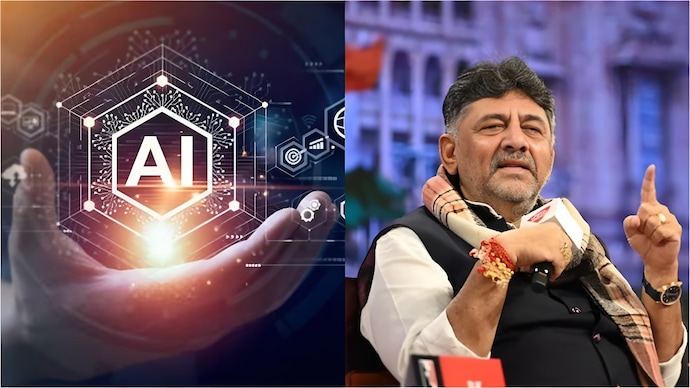
Artificial Intelligence is set to become a key focus of Karnataka's development roadmap, with Chief Minister D K Shivakumar announcing that the state will establish India's first government-driven Artificial Intelligence (AI) University.
The announcement was made while inaugurating Google I/O Connect India 2026 at the Bangalore International Exhibition Centre (BIEC) in Bengaluru.
The proposed university will focus on creating world-class AI talent, promoting advanced research and encouraging collaboration between academia, industry and government. Alongside the university, Karnataka will also establish an AI Hub that will function as an incubation centre for startups, researchers, companies and academic institutions working in artificial intelligence.
BUILDING AN AI-FIRST STATE
Speaking at the event, Shivakumar said Karnataka wants to become an "AI-native State", where artificial intelligence is used to improve governance and everyday public services rather than remaining only a technological concept.
He said AI would be integrated into sectors including:
Education through AI-assisted teaching
Healthcare with early diagnosis and better medical support
Agriculture using AI-based advisory services
Citizen services for faster government delivery
Small businesses through AI-powered solutions
Calling AI the defining technological revolution of the current generation, Shivakumar said Karnataka is well-positioned to lead this transformation.
WHY KARNATAKA BELIEVES IT CAN LEAD
The Chief Minister highlighted that Karnataka contributes nearly 40 per cent of India's software exports and is home to more than 17,000 startups along with thousands of Global Capability Centres (GCCs).
To strengthen this ecosystem further, the government also plans to expand digital infrastructure, including data centres, to support AI research, cloud computing and next-generation technologies.
According to the government, the university and AI Hub will help bridge research, innovation and industry requirements while creating skilled professionals for the rapidly growing AI sector.
GOOGLE INVITED TO PARTNER
During his address, Shivakumar invited Google to deepen its collaboration with Karnataka by supporting AI research, startup innovation and education.
He proposed cooperation in five major areas:
AI solutions for education, healthcare and agriculture
Support for AI startups
AI learning opportunities for students
Responsible AI research
Long-term investment in Karnataka's technology ecosystem
He also praised Google's long-standing presence in Bengaluru, saying the company has played a major role in strengthening the city's global technology ecosystem.
LOOKING AT THE BIGGER PICTURE
The announcement reflects Karnataka's broader ambition to position itself as a global centre for responsible and inclusive AI innovation.
By combining higher education, startup incubation, research and public-sector adoption, the state aims to build an ecosystem where AI supports economic growth while improving everyday life.
Artificial Intelligence is set to become a key focus of Karnataka's development roadmap, with Chief Minister D K Shivakumar announcing that the state will establish India's first government-driven Artificial Intelligence (AI) University.
The announcement was made while inaugurating Google I/O Connect India 2026 at the Bangalore International Exhibition Centre (BIEC) in Bengaluru.
The proposed university will focus on creating world-class AI talent, promoting advanced research and encouraging collaboration between academia, industry and government. Alongside the university, Karnataka will also establish an AI Hub that will function as an incubation centre for startups, researchers, companies and academic institutions working in artificial intelligence.
BUILDING AN AI-FIRST STATE
Speaking at the event, Shivakumar said Karnataka wants to become an "AI-native State", where artificial intelligence is used to improve governance and everyday public services rather than remaining only a technological concept.
He said AI would be integrated into sectors including:
Education through AI-assisted teaching
Healthcare with early diagnosis and better medical support
Agriculture using AI-based advisory services
Citizen services for faster government delivery
Small businesses through AI-powered solutions
Calling AI the defining technological revolution of the current generation, Shivakumar said Karnataka is well-positioned to lead this transformation.
WHY KARNATAKA BELIEVES IT CAN LEAD
The Chief Minister highlighted that Karnataka contributes nearly 40 per cent of India's software exports and is home to more than 17,000 startups along with thousands of Global Capability Centres (GCCs).
To strengthen this ecosystem further, the government also plans to expand digital infrastructure, including data centres, to support AI research, cloud computing and next-generation technologies.
According to the government, the university and AI Hub will help bridge research, innovation and industry requirements while creating skilled professionals for the rapidly growing AI sector.
GOOGLE INVITED TO PARTNER
During his address, Shivakumar invited Google to deepen its collaboration with Karnataka by supporting AI research, startup innovation and education.
He proposed cooperation in five major areas:
AI solutions for education, healthcare and agriculture
Support for AI startups
AI learning opportunities for students
Responsible AI research
Long-term investment in Karnataka's technology ecosystem
He also praised Google's long-standing presence in Bengaluru, saying the company has played a major role in strengthening the city's global technology ecosystem.
LOOKING AT THE BIGGER PICTURE
The announcement reflects Karnataka's broader ambition to position itself as a global centre for responsible and inclusive AI innovation.
By combining higher education, startup incubation, research and public-sector adoption, the state aims to build an ecosystem where AI supports economic growth while improving everyday life.

